Understanding prefixes Normal Writing Worksheets for Ages 5-8
6 filtered results
-
From - To
Unlock the power of language with our "Understanding Prefixes" normal writing worksheets! Designed for children aged 5-8, these engaging exercises help young learners explore the concept of prefixes and enhance their vocabulary. Each worksheet promotes critical thinking and creativity as students learn how adding prefixes can change the meanings of words. With a variety of fun activities, children will connect language skills with enjoyable exercises, making learning a joy. Perfect for classroom or home use, these worksheets are ideal for early grade teachers and parents looking to support their children’s literacy development. Foster a love for words today!
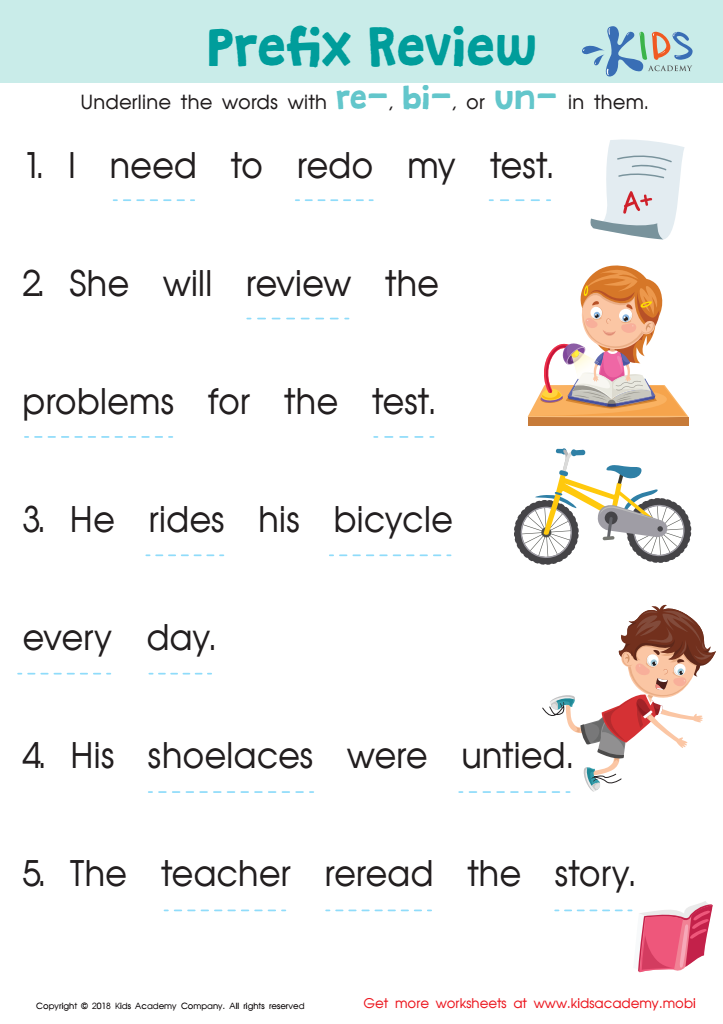
Prefix Review Worksheet
 Assign to My Students
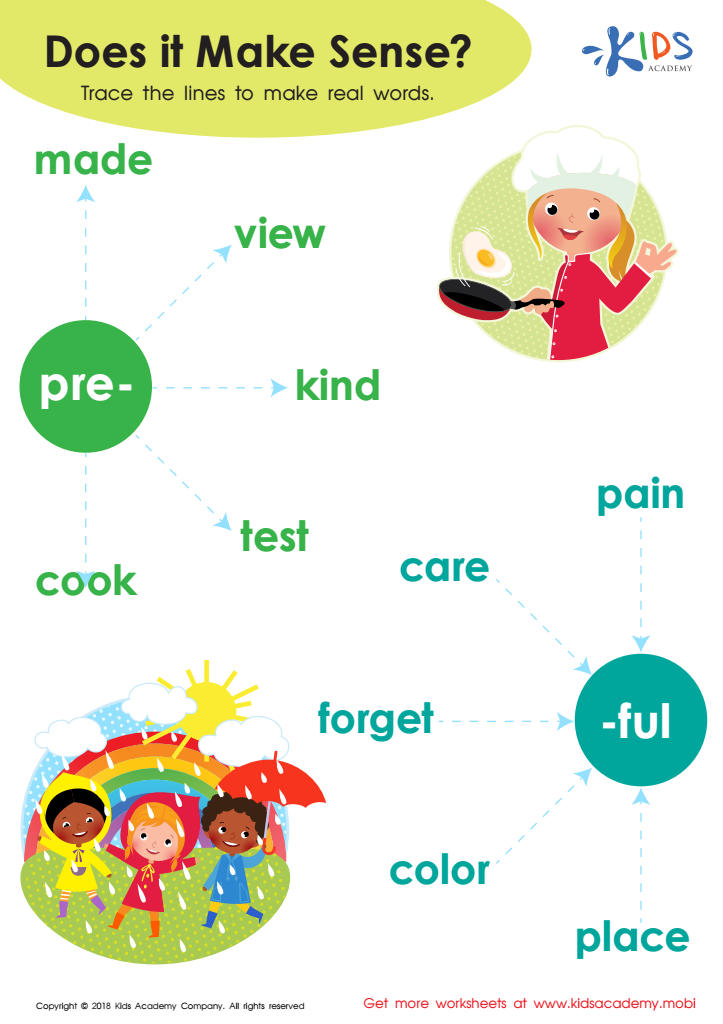
Prefix pre– and Suffix ful– Worksheet
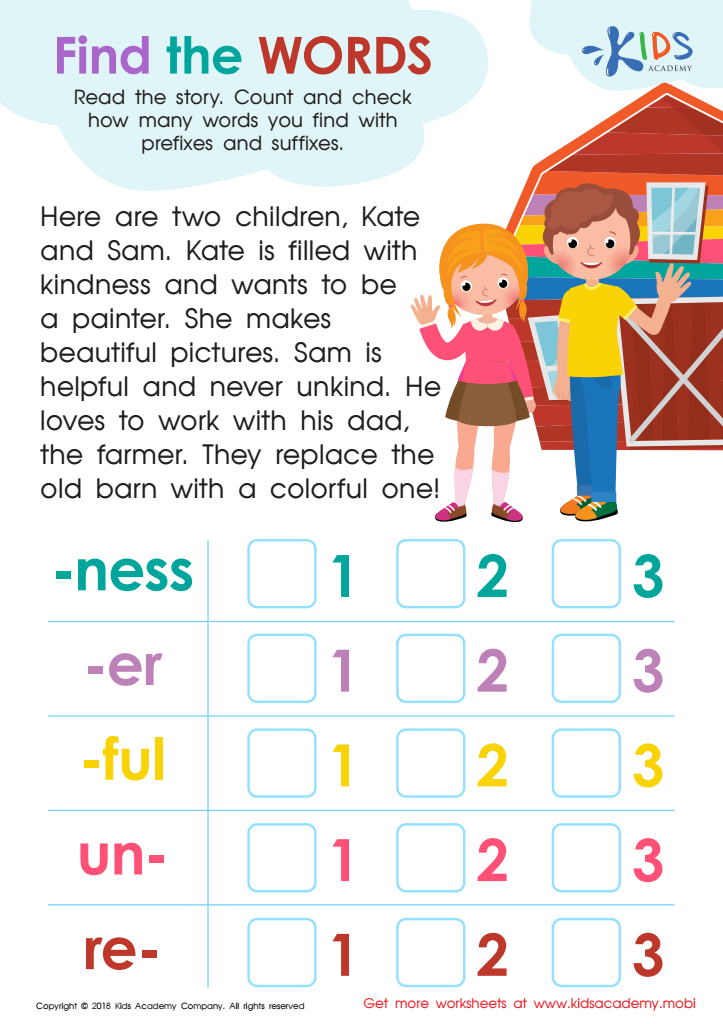
Prefix and Suffix Worksheet For Grade 3
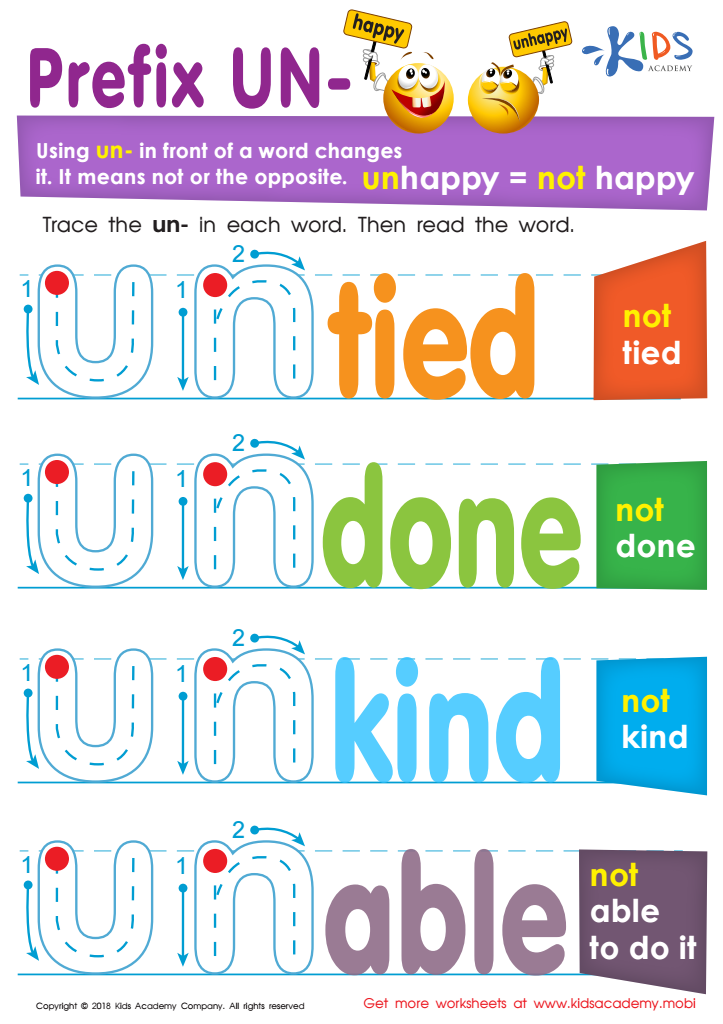
Prefix Un- Worksheet
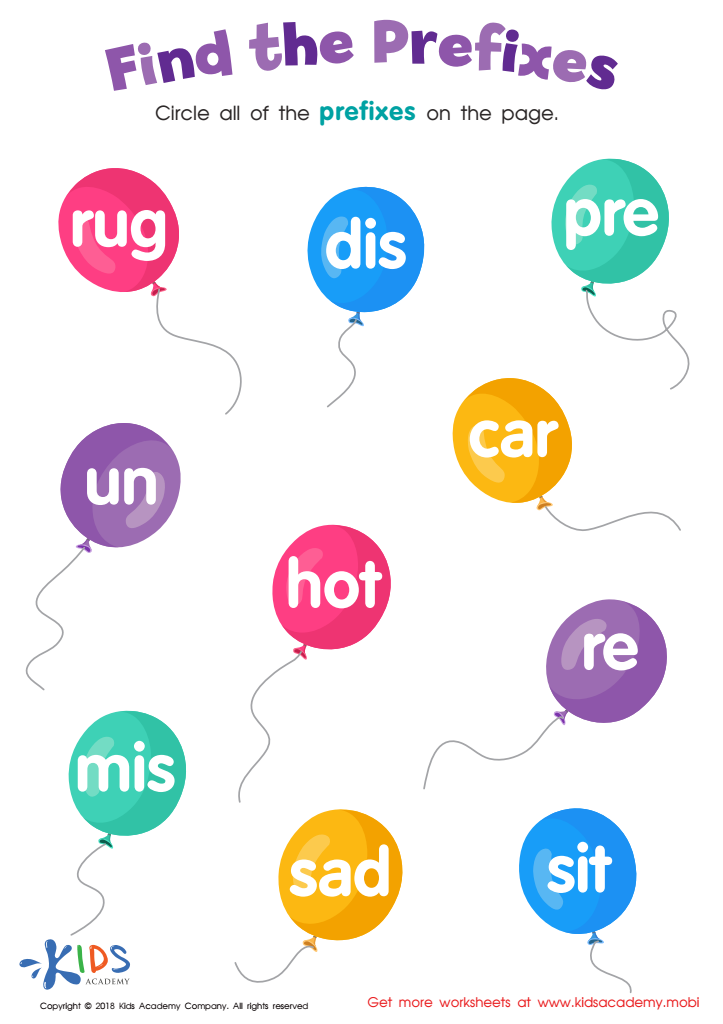
Reading: Find the Prefixes Worksheet
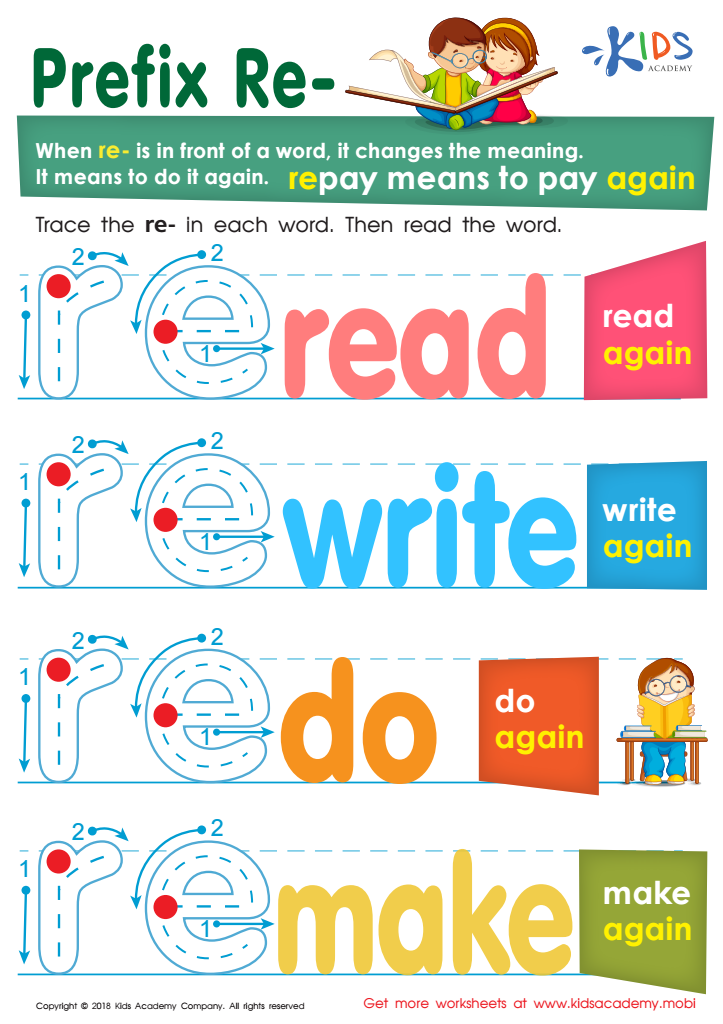
Prefix Re- Worksheet






Understanding prefixes is important for young learners aged 5-8 because it enhances their language skills and promotes reading comprehension. Prefixes, which are added to the beginning of words, can change the meaning entirely. For instance, the prefix "un-" turns "happy" into "unhappy," which teaches children about opposites and nuances in language.
When parents and teachers help children grasp prefixes, they empower them to decode new words and make educated guesses while reading. This not only builds vocabulary but also boosts confidence in their reading abilities. Featuring prefixes in everyday activities—like reading books or playing word games—turns learning into a fun and engaging experience.
Moreover, understanding prefixes contributes to a stronger foundation in grammar and word formation. As children expand their vocabulary, they develop better communication skills, giving them the ability to express their thoughts more clearly.
Ultimately, a solid grasp of prefixes lays the groundwork for lifelong literacy, aiding children in school and beyond. By prioritizing this skill, parents and teachers nurture not just competent readers but also enthusiastic learners, setting the stage for academic success.