Understanding suffixes Normal Writing Worksheets for Ages 5-8
6 filtered results
-
From - To
Enhance your child's writing skills with our "Understanding Suffixes Normal Writing Worksheets" tailored for ages 5-8. These engaging worksheets offer a fun way for young learners to explore how suffixes can change word meanings and their grammatical functions. Ideal for early grade learners, these activities are designed to build a solid foundation in vocabulary and language arts. Each worksheet includes clear explanations, examples, and practice exercises. As kids progress, they'll gain confidence and proficiency in adding suffixes to base words, enhancing both their writing and comprehension. Unlock their potential with Kids Academy's expert-crafted educational resources.
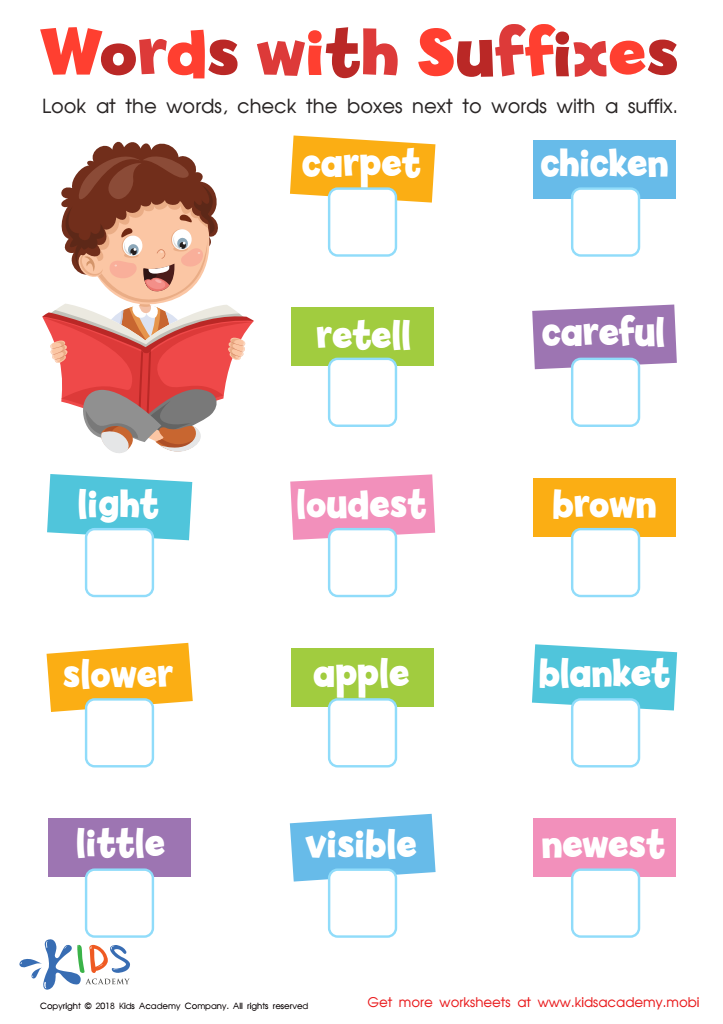
Reading: Words With Suffixes Worksheet
 Assign to My Students
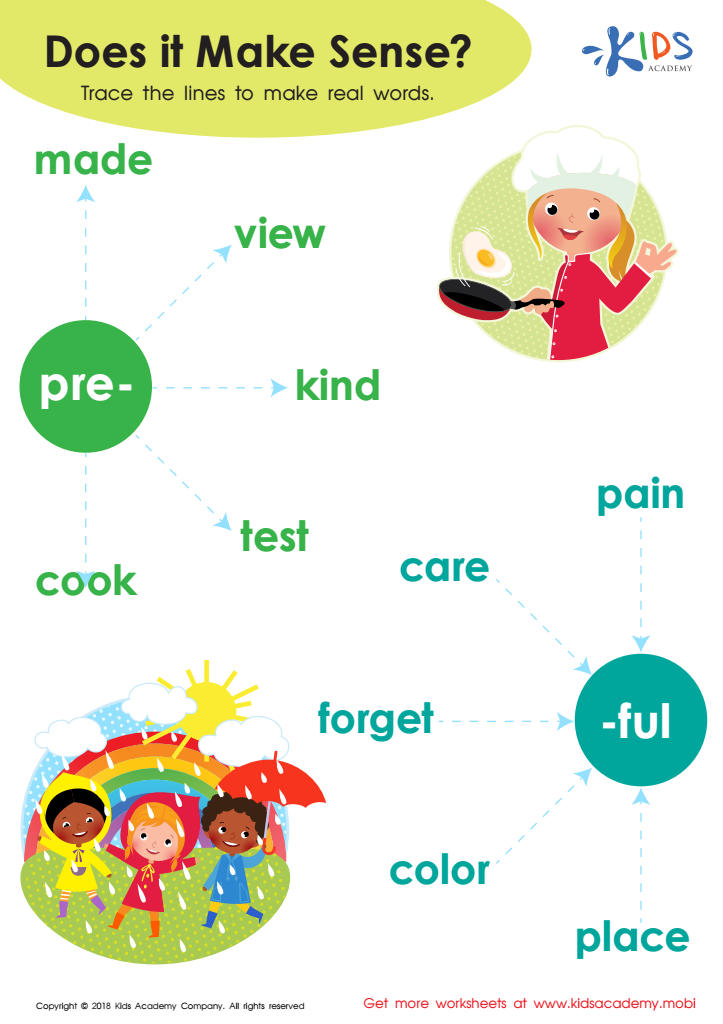
Prefix pre– and Suffix ful– Worksheet
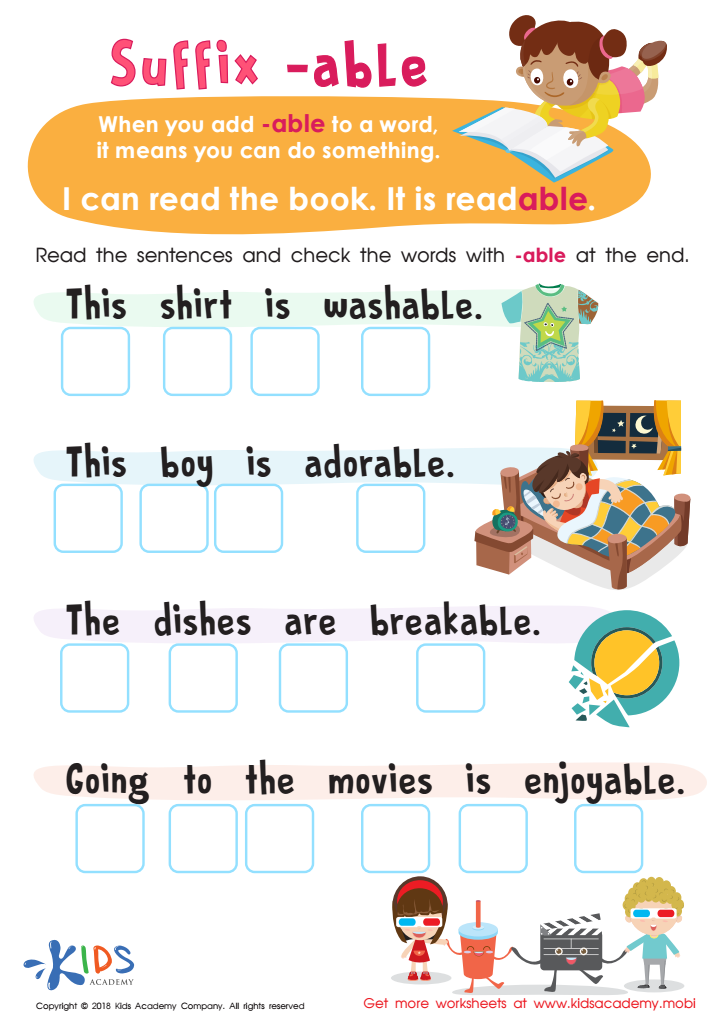
Suffix -Able Worksheet
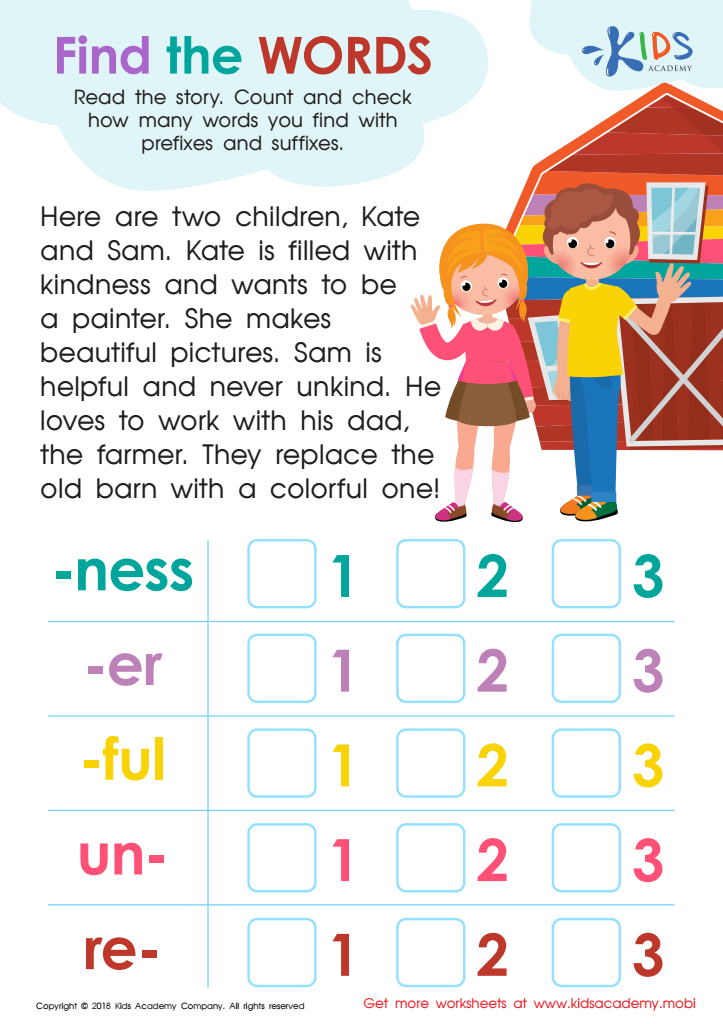
Prefix and Suffix Worksheet For Grade 3
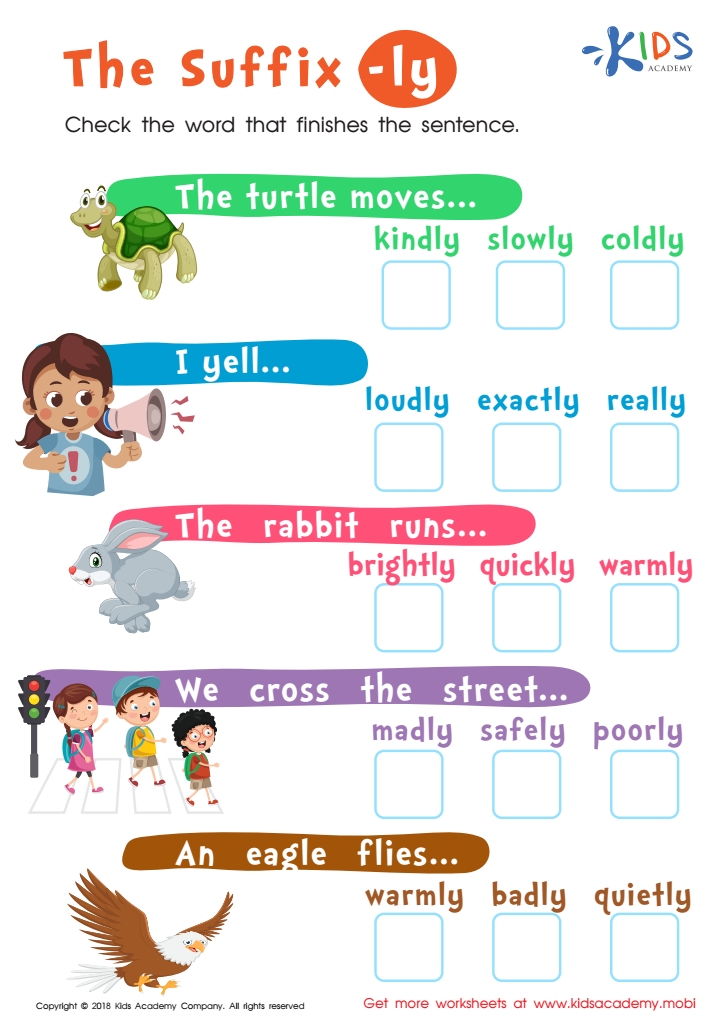
The Suffix -Ly Worksheet
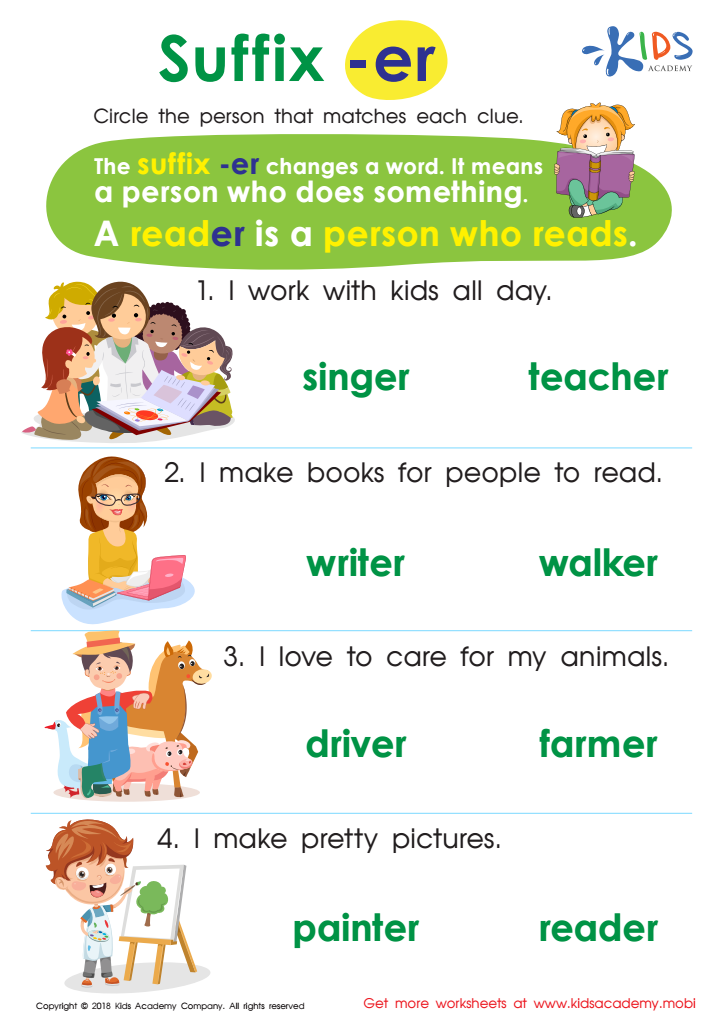
Suffix –er Printable Worksheet



.jpg)


Understanding suffixes is crucial for young children ages 5-8 because it fundamentally enhances their language development and literacy skills. Suffixes, the letters added to the end of a word to change its meaning or grammatical function, are essential building blocks in vocabulary expansion and comprehension.
Firstly, learning suffixes helps children decode and spell new words more effectively. For example, understanding that adding "-ed" to a verb makes it past tense (like "jump" to "jumped") can help kids read and write with better accuracy and confidence.
Secondly, suffixes improve reading fluency. When children recognize common suffixes, they can quickly infer the meaning of new words, making reading less daunting and more fluid. This sets the stage for smoother, more enjoyable reading experiences and fosters a love for reading.
Additionally, suffixes contribute to better grammar and writing skills. Knowing that adding "-ly" can turn an adjective into an adverb (e.g., "quick" into "quickly") enables children to express themselves more precisely and diversify their sentence structures.
Finally, understanding suffixes boosts children’s comprehension and critical thinking. When kids grasp how suffixes modify meaning, they become more adept at understanding context and nuances in both their reading and conversation, making them more articulate and adaptable communicators.
In summary, early exposure to suffixes plays a vital role in shaping proficient and creative young readers and writers.