Basic geometry understanding Normal Worksheets for Ages 5-9
4 filtered results
-
From - To
Welcome to our Basic Geometry Understanding Worksheets for ages 5-9! Designed to spark young learners' interest in shapes, sizes, and spatial relationships, these engaging worksheets provide a perfect blend of fun and education. Ideal for preschool and early-grade students, they include activities focused on identifying shapes, measuring dimensions, and recognizing patterns. Each worksheet is crafted to foster critical thinking and problem-solving skills, encouraging kids to explore the world of geometry through interactive exercises. Enhance your child’s learning experience with our easy-to-use, printable resources that make mastering basic geometry an enjoyable adventure! Join us in transforming learning into a journey of discovery!
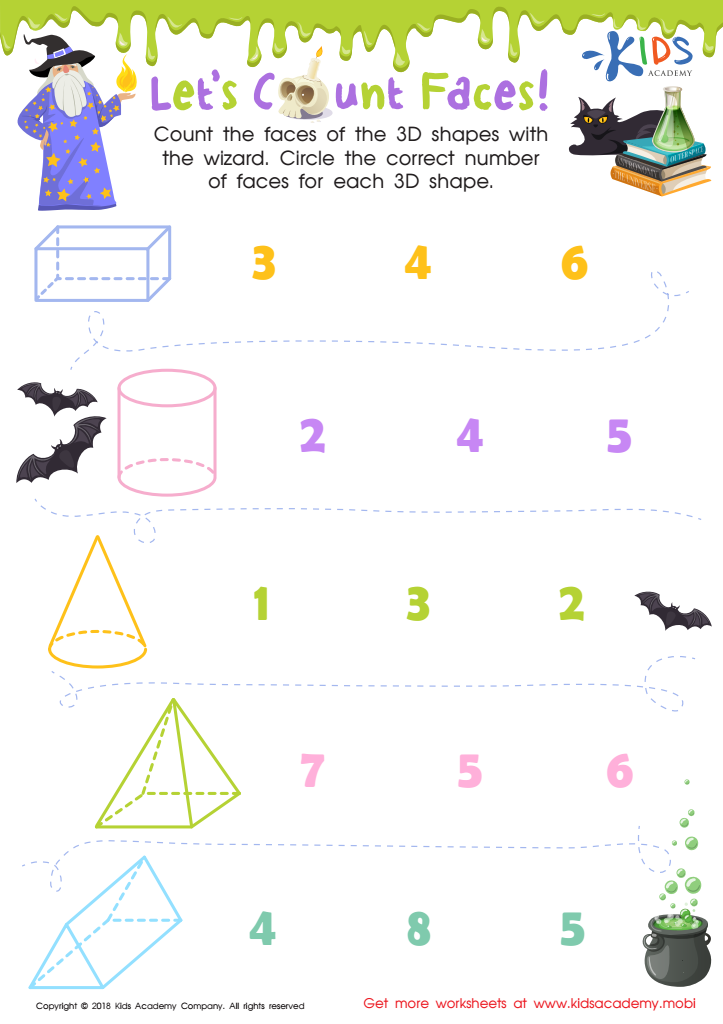
Let's Count Faces! Worksheet
 Assign to My Students
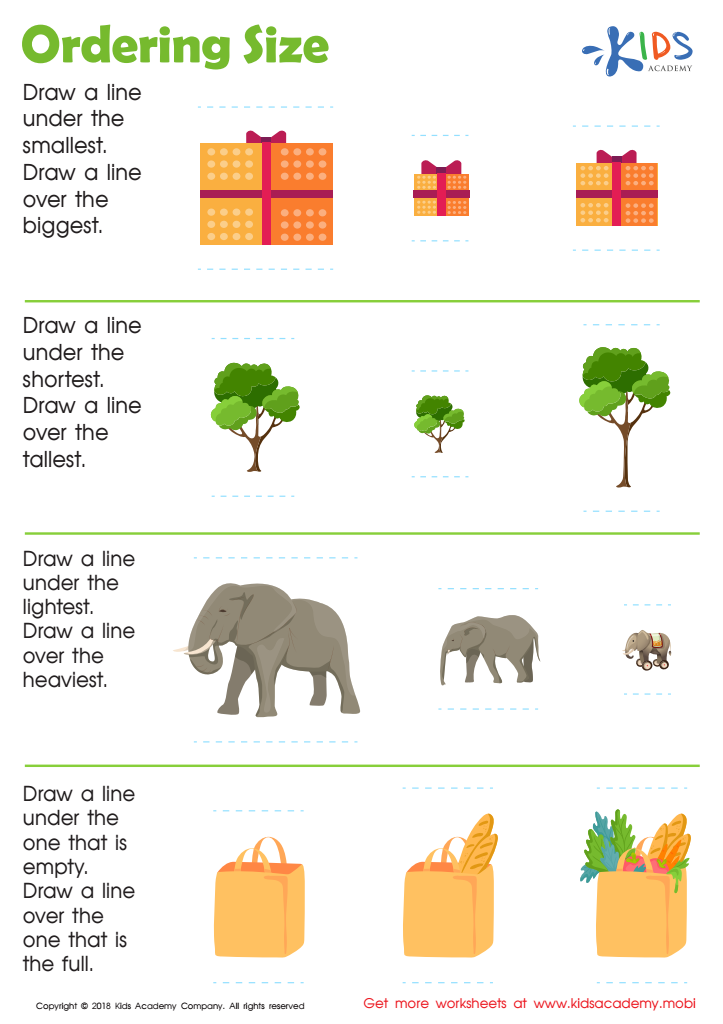
Ordering Size Worksheet
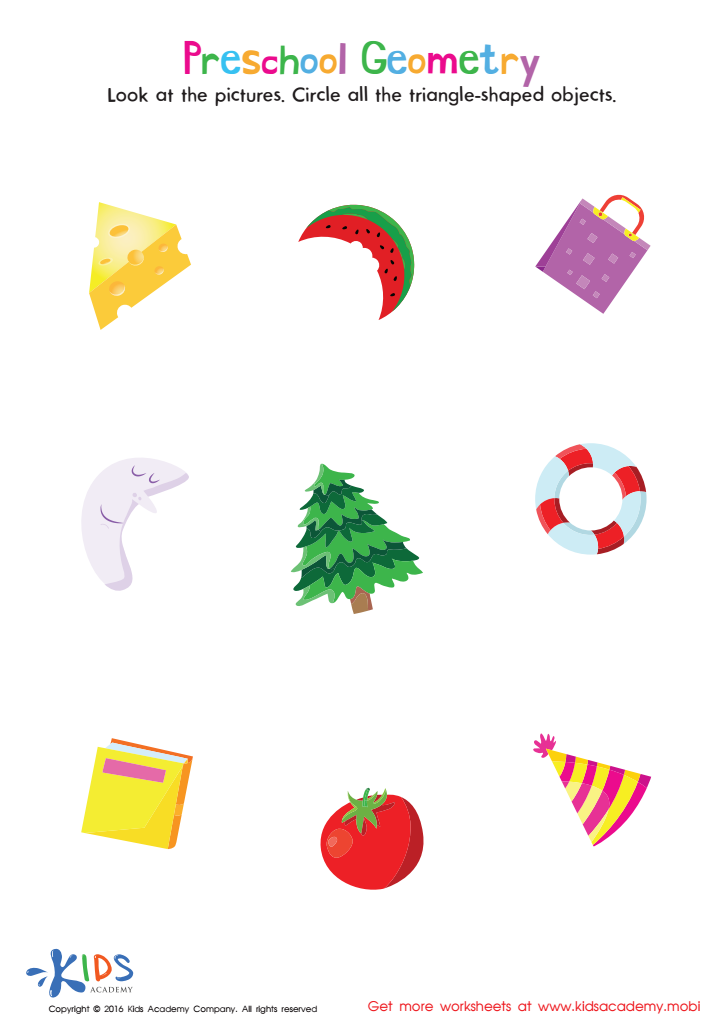
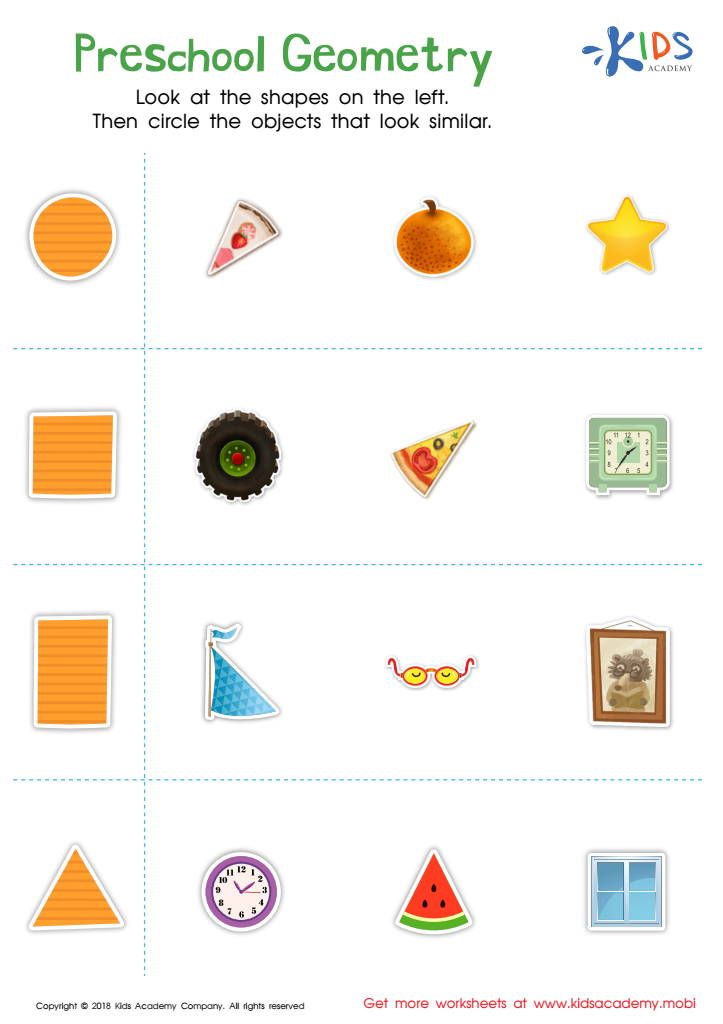
Preschool Geometry Worksheet







Basic geometry understanding is crucial for children ages 5-9 for several reasons. Firstly, it lays the foundation for mathematical literacy. Understanding shapes, sizes, and spatial relationships helps children grasp more complex mathematical concepts in later years.
Secondly, geometry fosters critical thinking and problem-solving skills. When children explore geometric shapes and their properties, they engage in reasoning and logical thinking, enhancing their cognitive development. These skills are transferable and applicable in various subjects and real-life situations.
Moreover, geometry promotes visual-spatial skills, which are important for activities ranging from reading maps to engaging in arts and crafts. Mastery of basic geometry helps children develop a sense of the world around them, facilitating better navigation in both literal and metaphorical terms.
Additionally, early exposure to geometric concepts can spark interest in STEM (Science, Technology, Engineering, and Mathematics) fields. As technology continues to advance, a solid foundation in geometry can open doors for children in future educational and career paths.
Ultimately, by fostering basic geometry understanding, parents and teachers contribute to a well-rounded education that nurtures curiosity, builds confidence, and prepares children for future challenges in mathematics and beyond.








