Comparing sizes Normal Worksheets for Ages 5-9
3 filtered results
-
From - To
Our "Comparing Sizes" worksheets for ages 5-9 offer engaging activities designed to strengthen skills in identifying and comparing different sizes. Perfect for early learners, these worksheets combine educational fun with essential skills building. Kids will learn to measure, categorize, and differentiate objects based on size, enhancing their observational and analytical abilities. Whether used in the classroom or at home, these interactive worksheets support foundational math concepts and critical thinking. Delight your young learner with activities that inspire curiosity and make comparison fun. Start building your child’s confidence and competence today with our expertly designed worksheets.
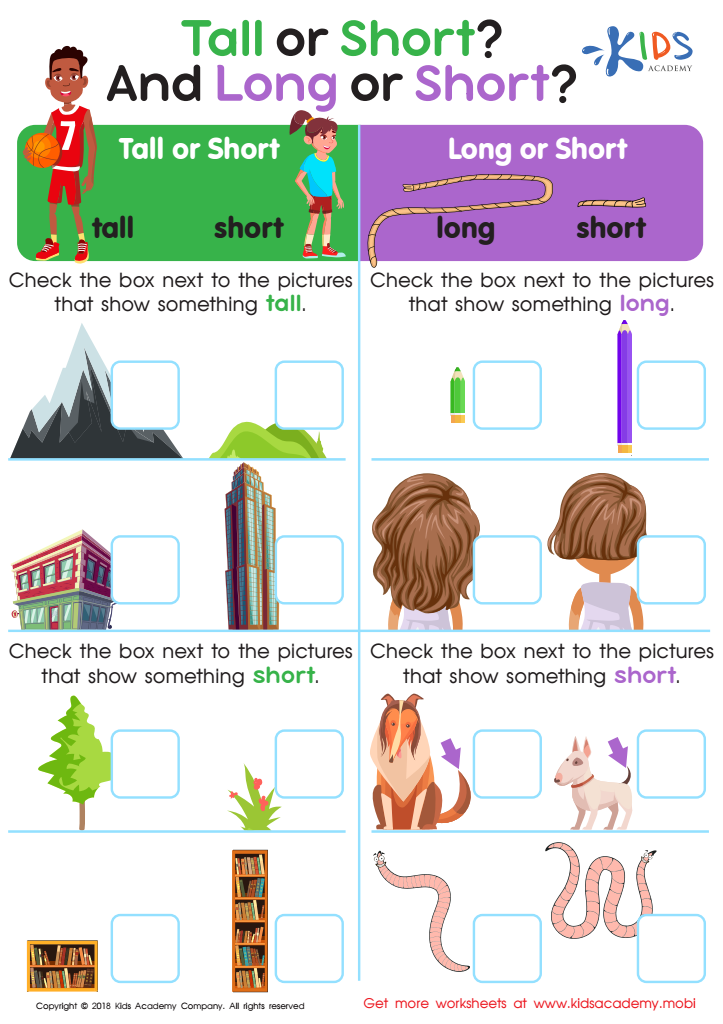
Tall or Short and Long or Short? Worksheet
 Assign to My Students
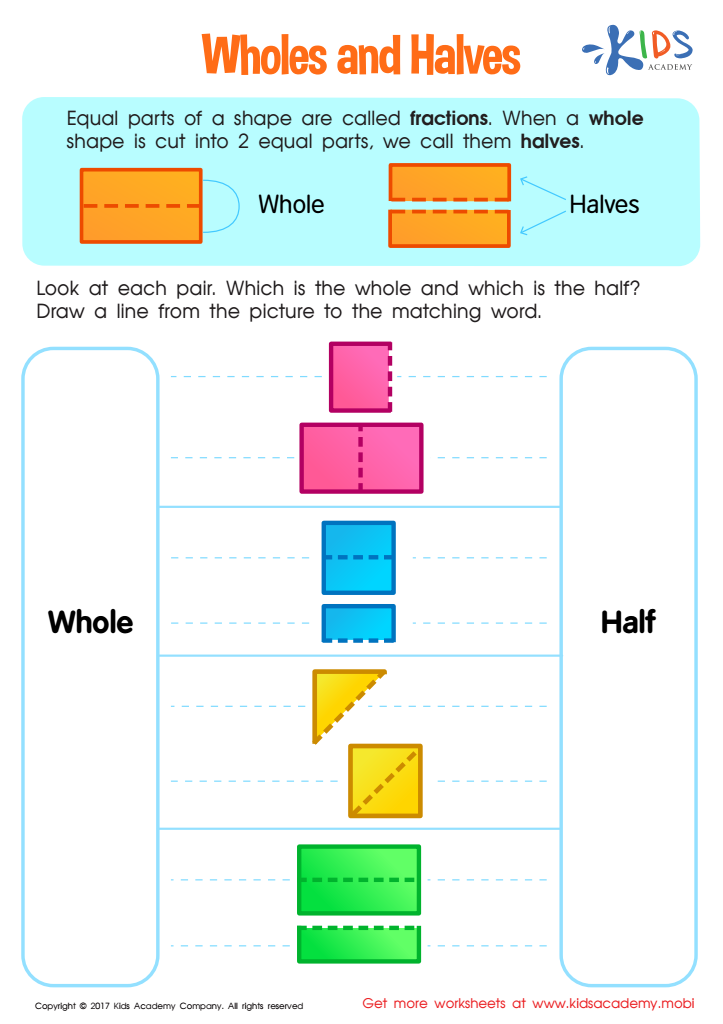
Wholes and Halves Worksheet
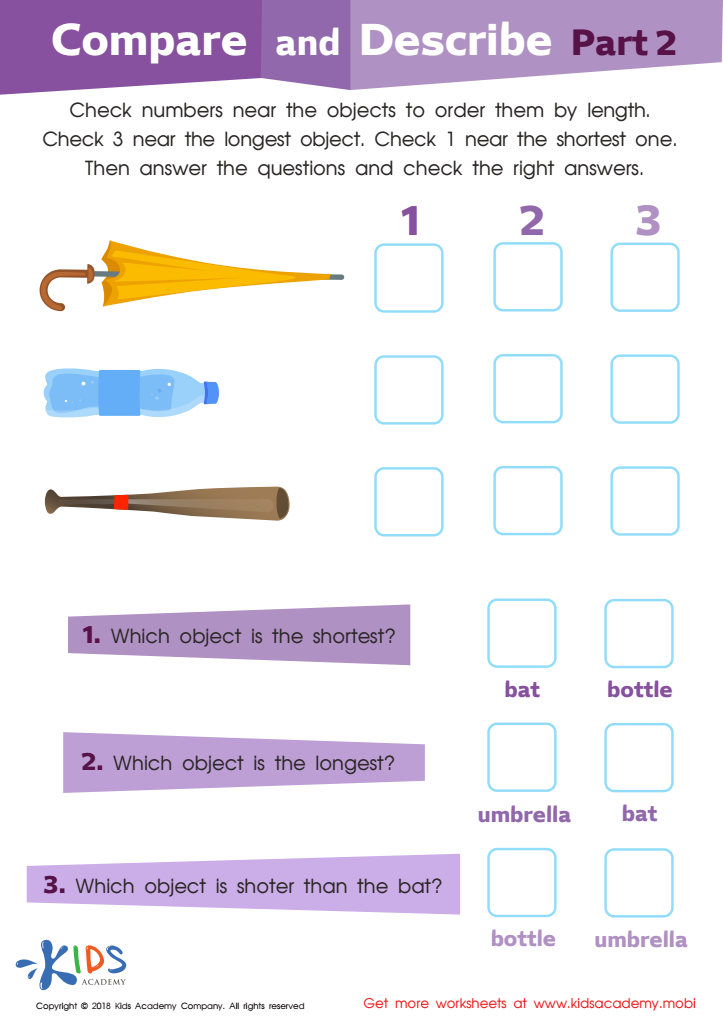
Compare and Describe: Part 2 Worksheet






Understanding and comparing sizes is a fundamental part of early childhood development. For children ages 5-9, mastering this concept is essential for several reasons. First, it forms a crucial foundation for later mathematical skills. When children learn to compare sizes—such as determining whether objects are longer, shorter, bigger, or smaller—they are essentially learning how to think critically about numbers and their relationships. This is an early step towards understanding more complex mathematical principles like measurement, volume, and weight.
Second, comparing sizes helps children develop spatial awareness, a key component in subjects like geometry as well as in everyday activities. Being able to judge distances and navigate spaces is important for tasks ranging from sports to walking through crowded areas.
Moreover, comparing sizes can aid in language development. Descriptive language such as "large," "tiny," "tall," and "short" enriches a child's vocabulary and helps them communicate more effectively.
Lastly, these skills can enhance problem-solving abilities. For instance, when deciding which object is the best fit for a particular space or determining how to best organize their belongings, using size as a criterion encourages logical thought processes.
Therefore, integrating lessons on comparing sizes into early education promotes a wide range of cognitive, linguistic, and practical life skills, ensuring a well-rounded development for young children.








