Directional understanding Normal Worksheets for Ages 5-9
3 filtered results
-
From - To
Explore our engaging Directional Understanding Worksheets designed for children ages 5-9! These fun and interactive activities help young learners master concepts like left vs. right, up vs. down, and forward vs. backward. Each worksheet promotes spatial awareness and enhances problem-solving skills through entertaining illustrations and real-life scenarios. Perfect for home or classroom use, these resources support early childhood development by encouraging kids to think critically about directions and positions. Help your child confidently navigate their environment with our easy-to-use, printable worksheets that make learning directional concepts captivating and enjoyable! Start your journey towards building essential skills today!
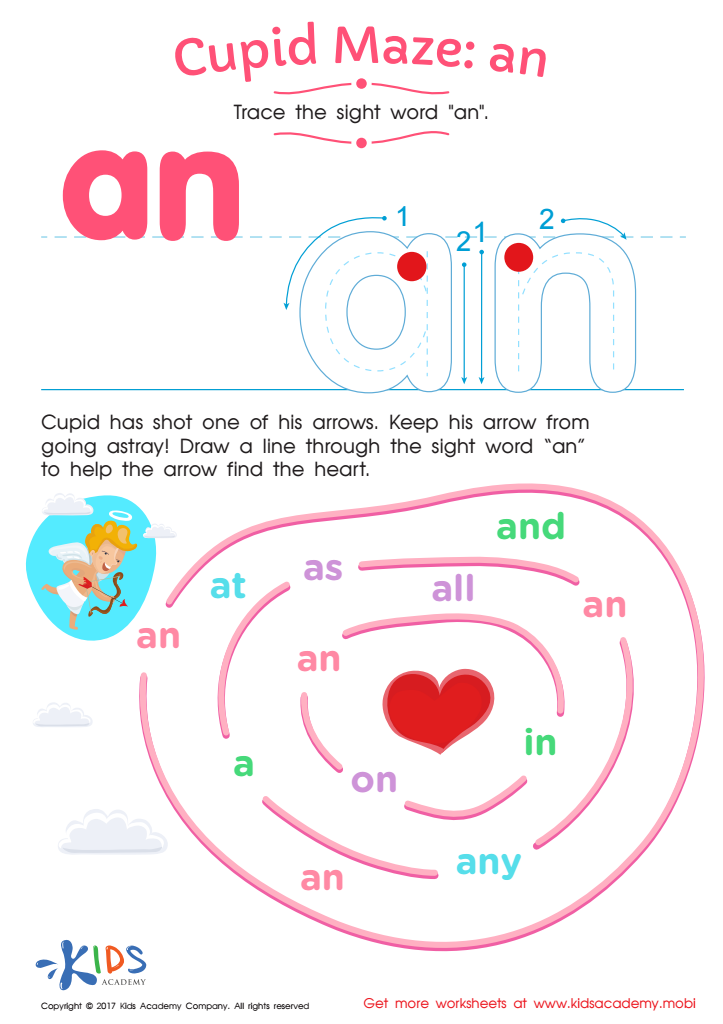
Cupid Maze: An Printable
 Assign to My Students
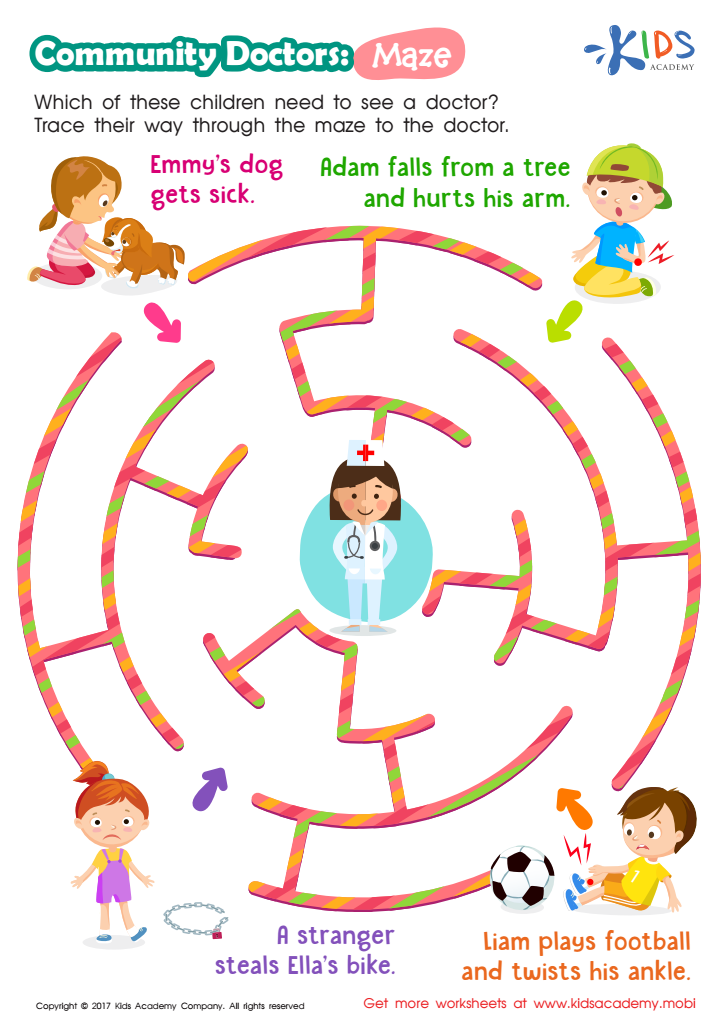
Community Doctors: Maze Printable
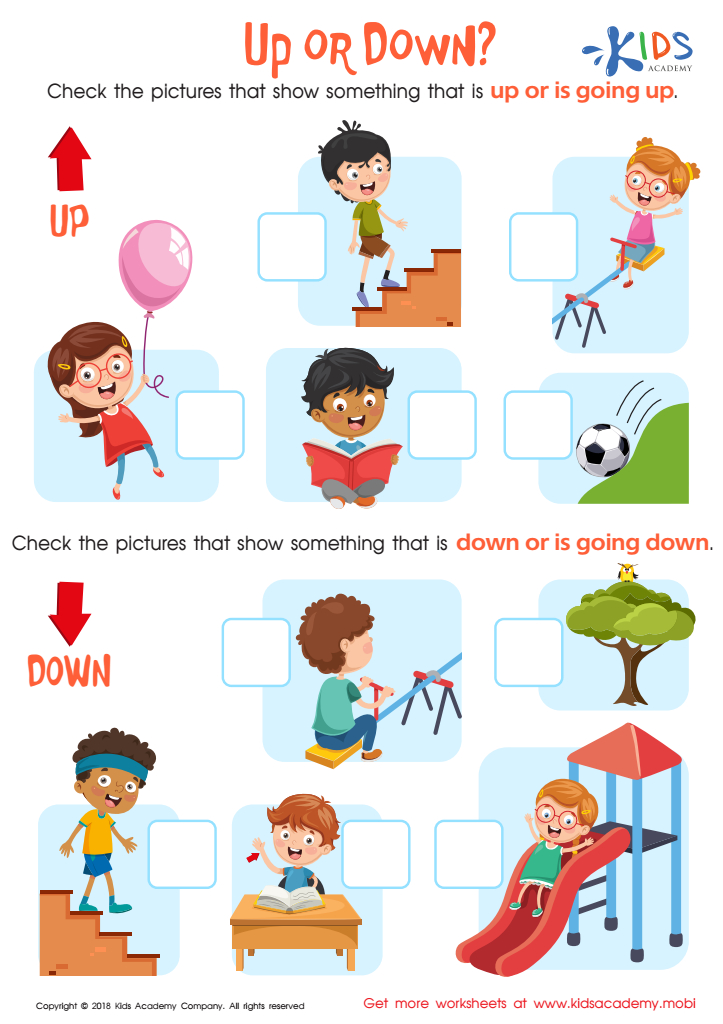
Up or Down Worksheet



.jpg)




Directional understanding is fundamental for children aged 5-9 as it lays the groundwork for essential life skills and academic success. At this developmental stage, children begin to learn how to navigate their environment, which is crucial for safety and independence. Recognizing directions like left, right, up, and down aids in tasks as simple as following directions in games and more complex activities like reading and writing.
Parents and teachers should prioritize directional understanding because it influences mathematical concepts, spatial reasoning, and problem-solving skills. For example, children need to grasp directional terms to understand geometry, symmetry, and maps. A solid grasp of these skills improves cognitive abilities, enhancing their overall learning experience.
In addition, supporting children's directional skills fosters their confidence. Children who can navigate their surroundings and understand directions feel more empowered in their exploration and engagement with the world. This sense of independence encourages curiosity, which is foundational for lifelong learning.
Furthermore, as children advance in age, strong directional skills contribute to teamwork and cooperation in group activities, facilitating social development. In summary, fostering directional understanding in early education is vital for cognitive and social growth, helping children successfully transition into more complex tasks in their academic journeys.








