Division practice Normal Worksheets for Ages 5-9
9 filtered results
-
From - To
Discover engaging Division Practice Normal Worksheets designed specifically for children ages 5-9! Our carefully crafted resources aim to develop foundational division skills through fun and approachable exercises. Ideal for early learners, these worksheets incorporate vibrant illustrations and age-appropriate problems to make math enjoyable. Parents and teachers will appreciate the structured format that promotes independent practice while reinforcing core concepts. With a variety of challenges, children will gain confidence in their division abilities, threading crucial problem-solving skills into their educational journey. Explore our collection today and help your child master division in a playful, interactive way! Perfect for home or classroom use.
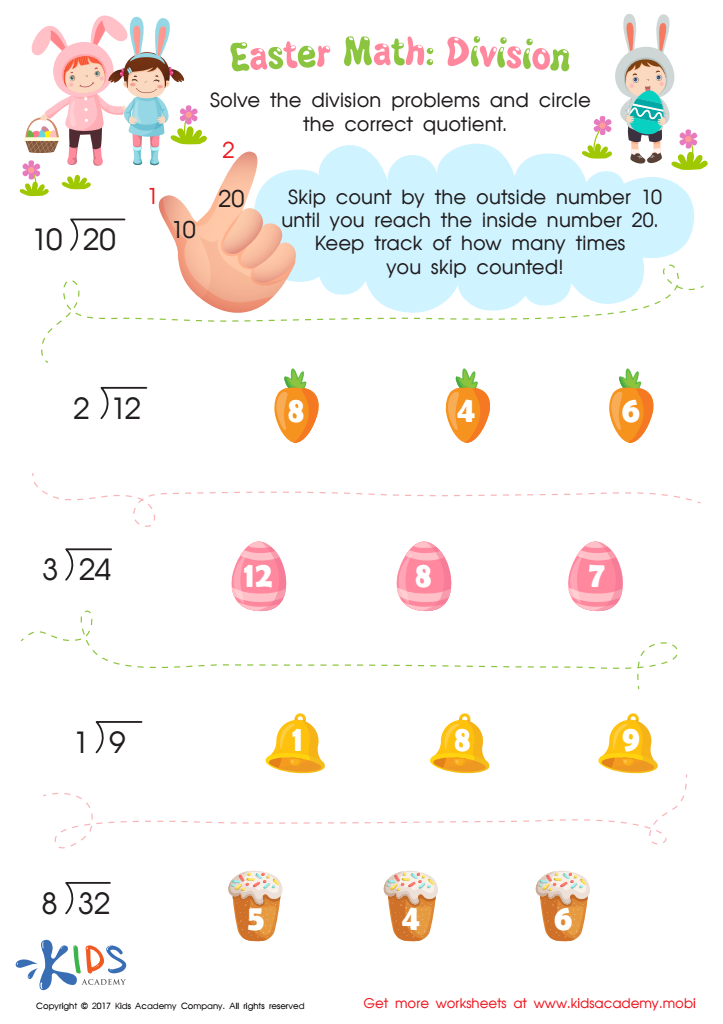
Division Worksheet
 Assign to My Students
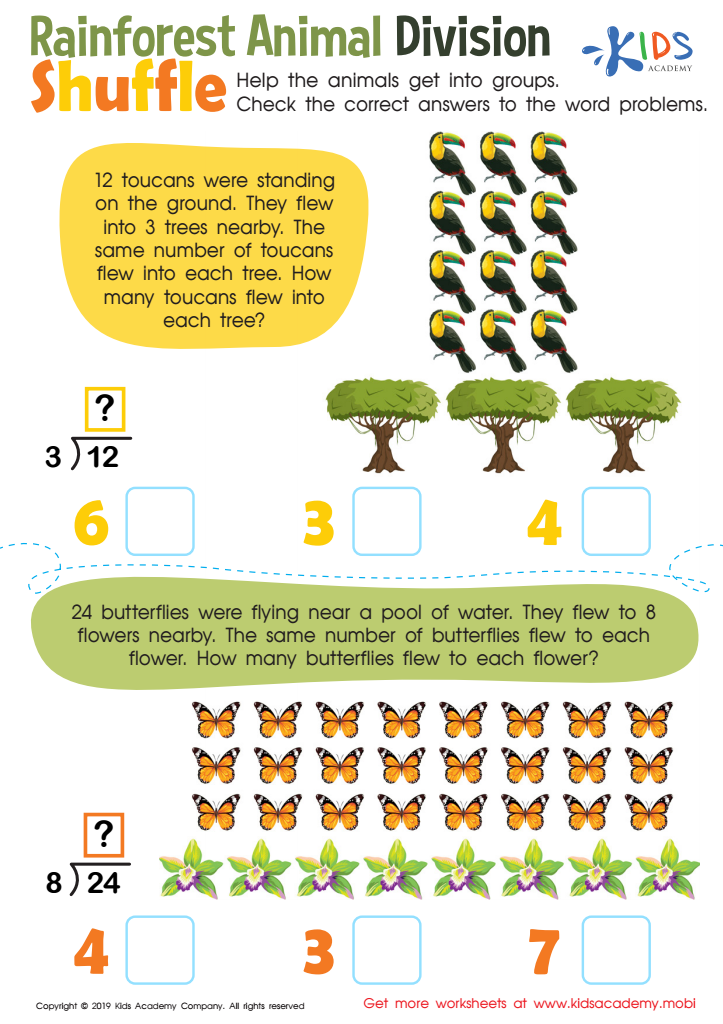
Rainforest Animal Division Worksheet
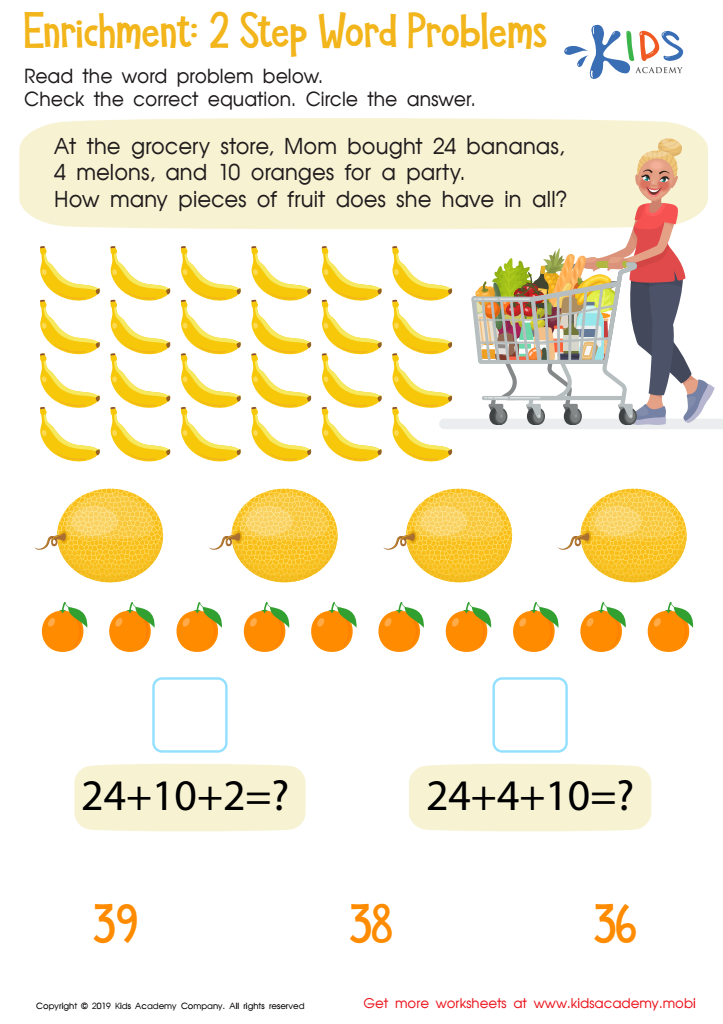
Enrichment -2 Step Word Problems Worksheet
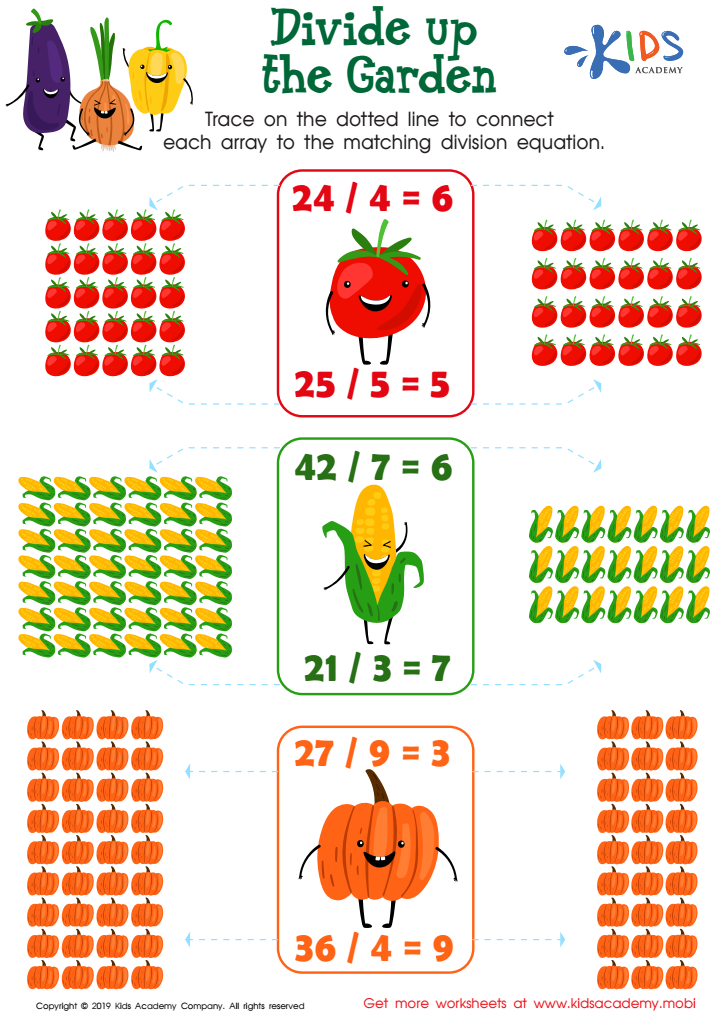
Divide up the Garden Worksheet
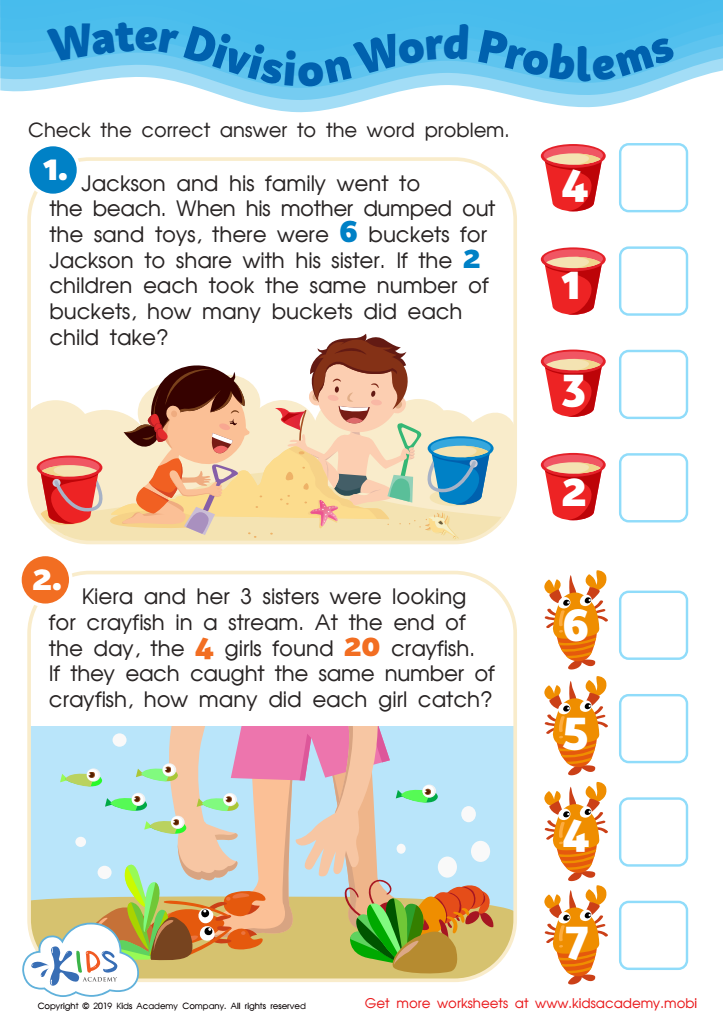
Water Division Word Problems Worksheet
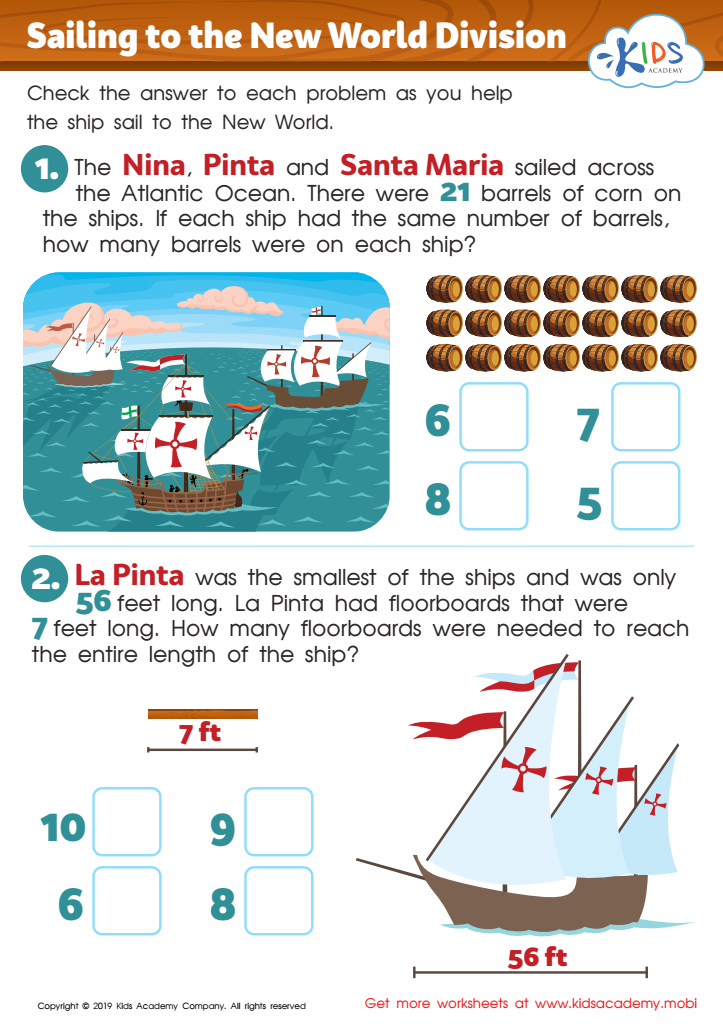
Sailing to the New World Division Worksheet
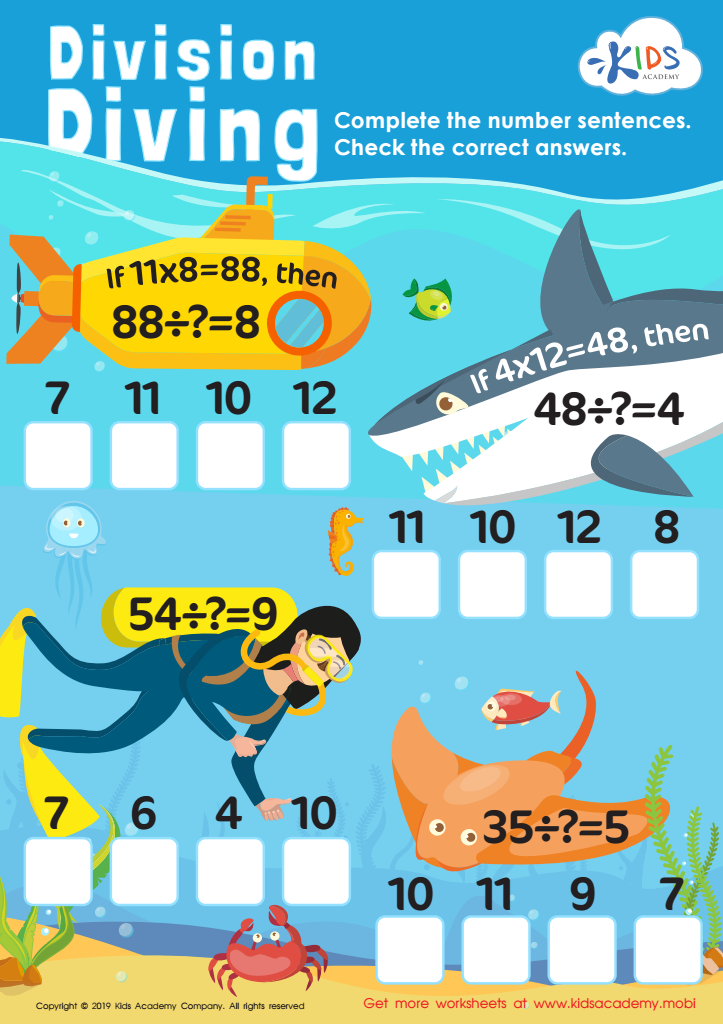
Division Diving Worksheet
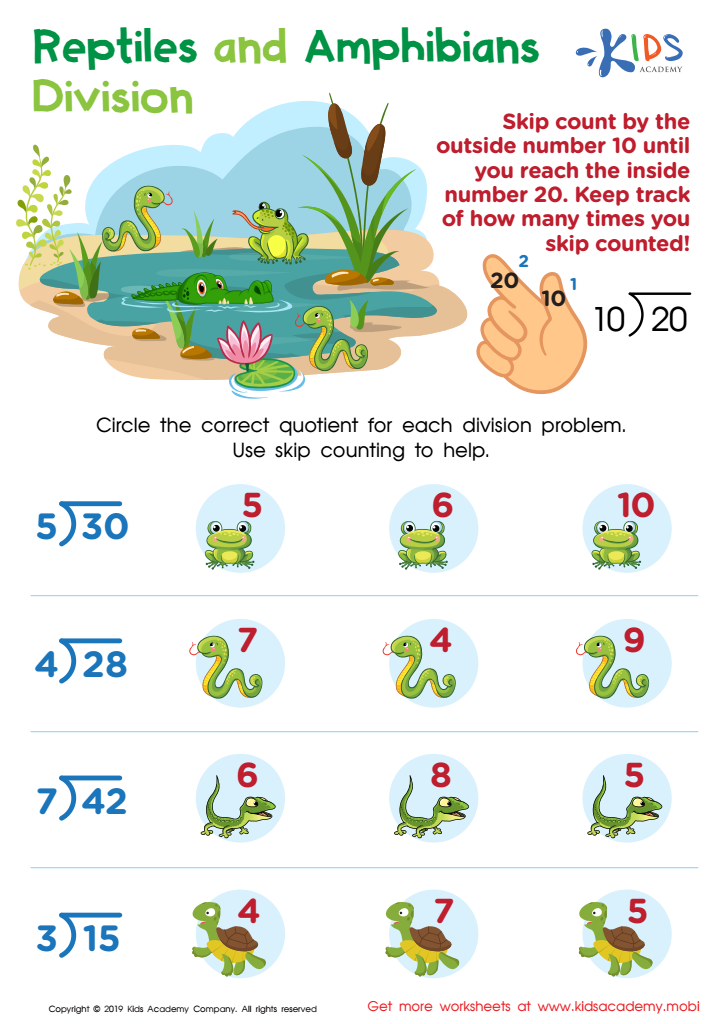
Reptile and Amphibians Division Worksheet
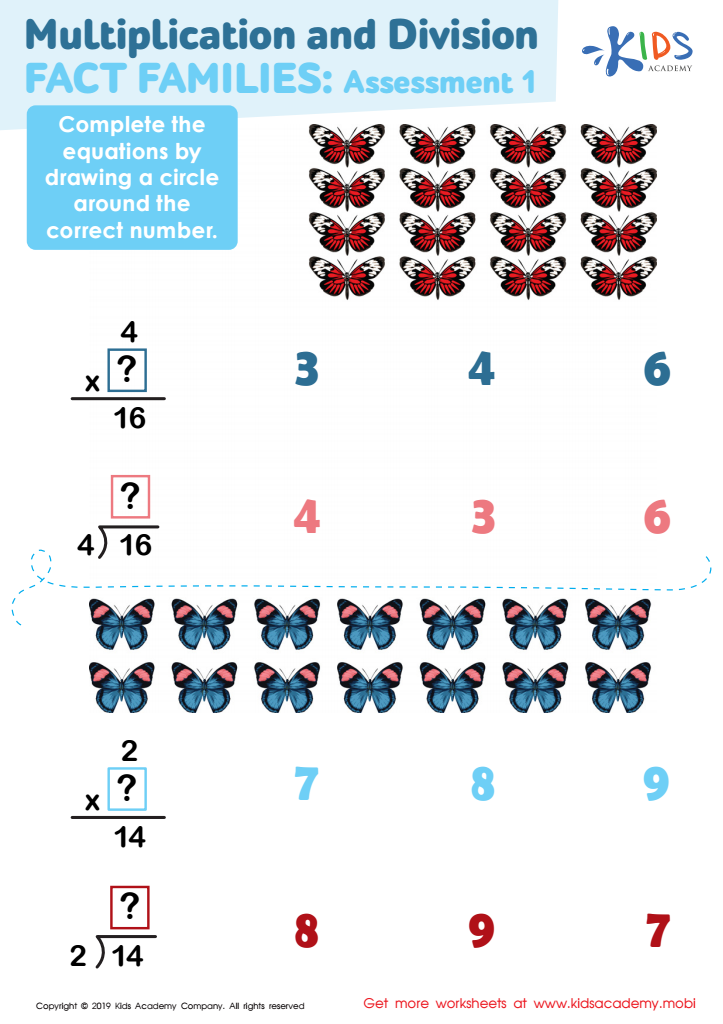
Multiplication and Division Fact Families Assessment 1 Worksheet







Division practice is essential for children aged 5-9 as it lays the foundation for their mathematical understanding and skills development. During this formative stage, children are not only learning to recognize numbers but also how to manipulate them in meaningful ways. Division helps them understand concepts of sharing, grouping, and the relationship between numbers, fostering critical thinking and problem-solving skills.
Furthermore, mastering division by breaking it down into smaller, manageable steps can reduce math anxiety and build confidence. Engaging in fun, interactive activities during division practice encourages a positive attitude towards math and enhances retention through active learning.
Parents and teachers should also recognize that division is interconnected with other mathematical operations like multiplication, addition, and subtraction. A strong grasp of division paves the way for more advanced mathematical concepts later on, essential for academic success.
Additionally, incorporating real-life examples, such as sharing snacks or dividing toys among friends, makes division relatable and reinforces its importance in daily situations. Ultimately, fostering a solid understanding and enjoyment of division during these early years sets the stage for lifelong mathematical learning and proficiency.








