Map reading skills Normal Worksheets for Ages 5-9
11 filtered results
-
From - To
Enhance your child’s geographical knowledge with our "Map Reading Skills Normal Worksheets" tailored for kids aged 5-9. These engaging and educational sheets help young learners master key mapping concepts, such as identifying map symbols, understanding directions, and recognizing landmarks. With vibrant visuals and age-appropriate tasks, our worksheets make learning interactive and fun. Whether used in classrooms or at home, these tools prepare children to navigate the world around them confidently. Discover the joy of exploration while building essential life skills in an easy and enjoyable way. Start your child's mapping adventure today at Kids Academy!
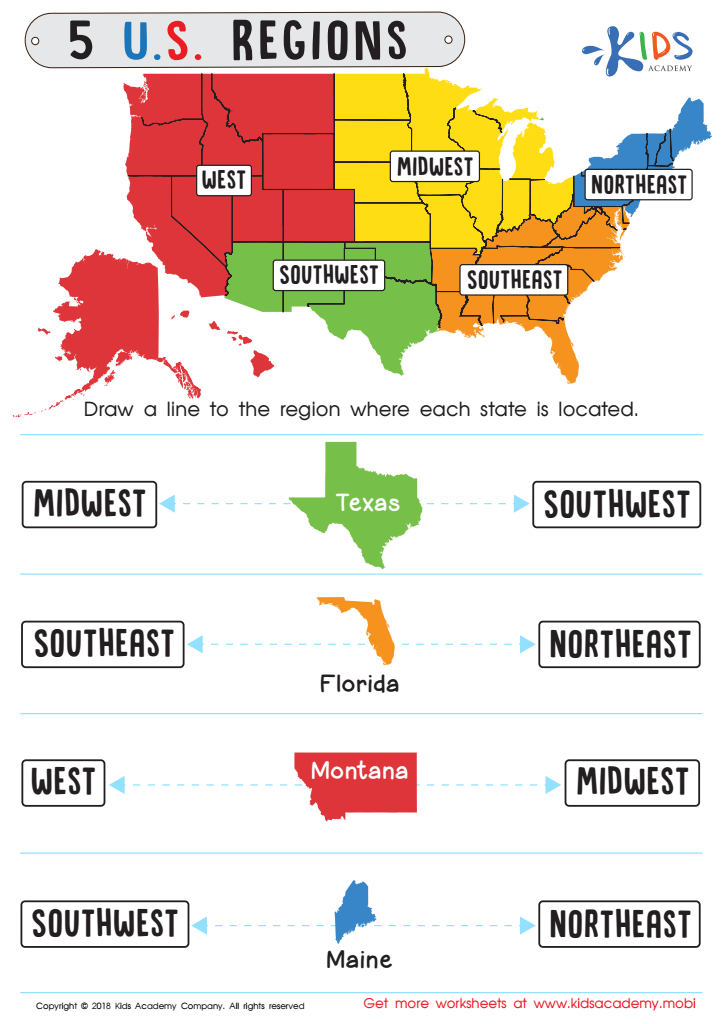
5 U.S. Regions Worksheet
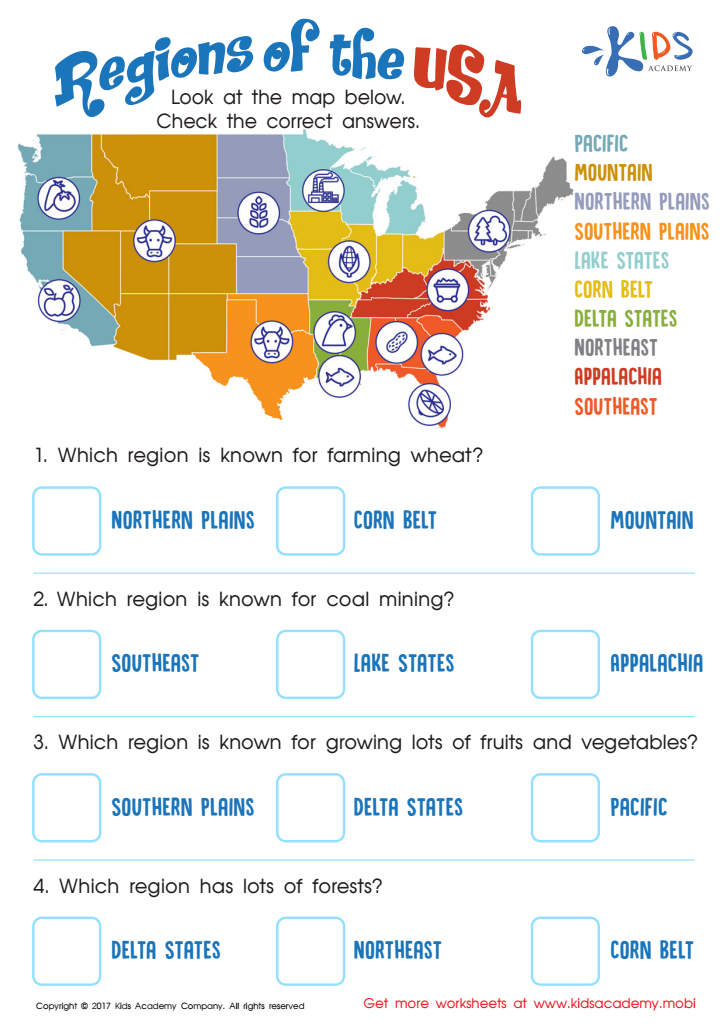
Regions of the USA Worksheet
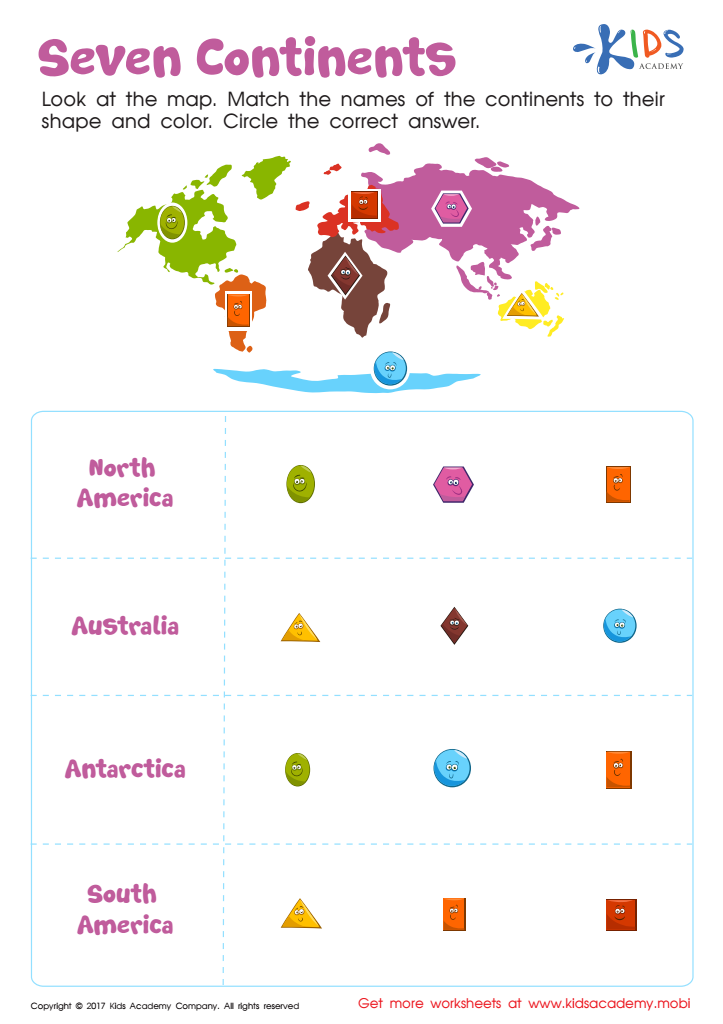
Seven Continents Worksheet
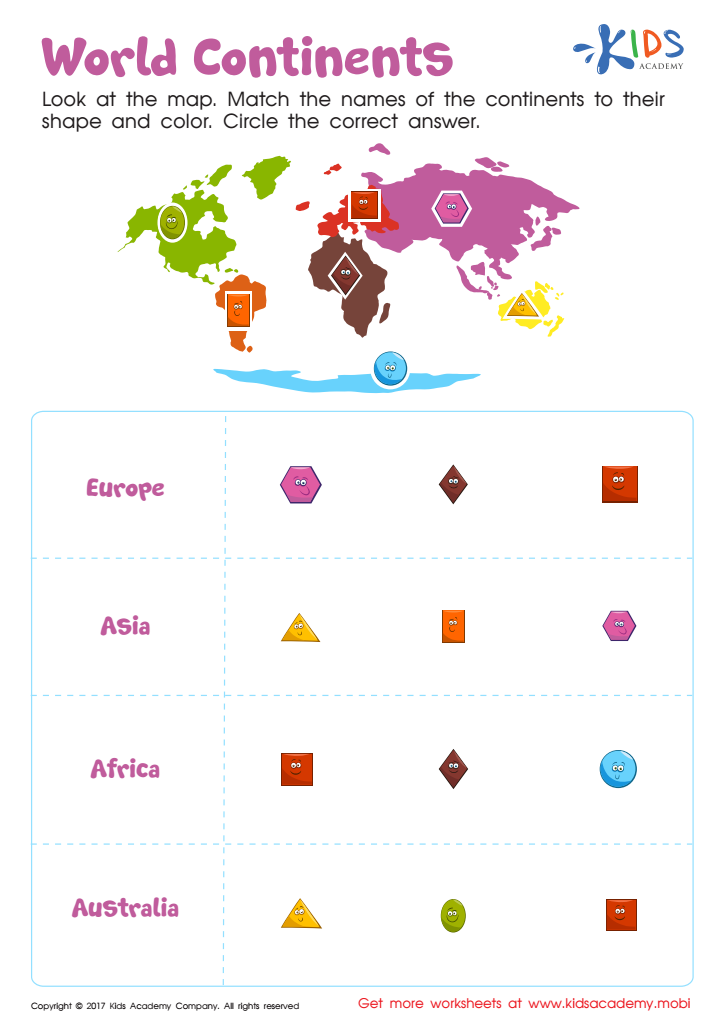
World Continents Worksheet
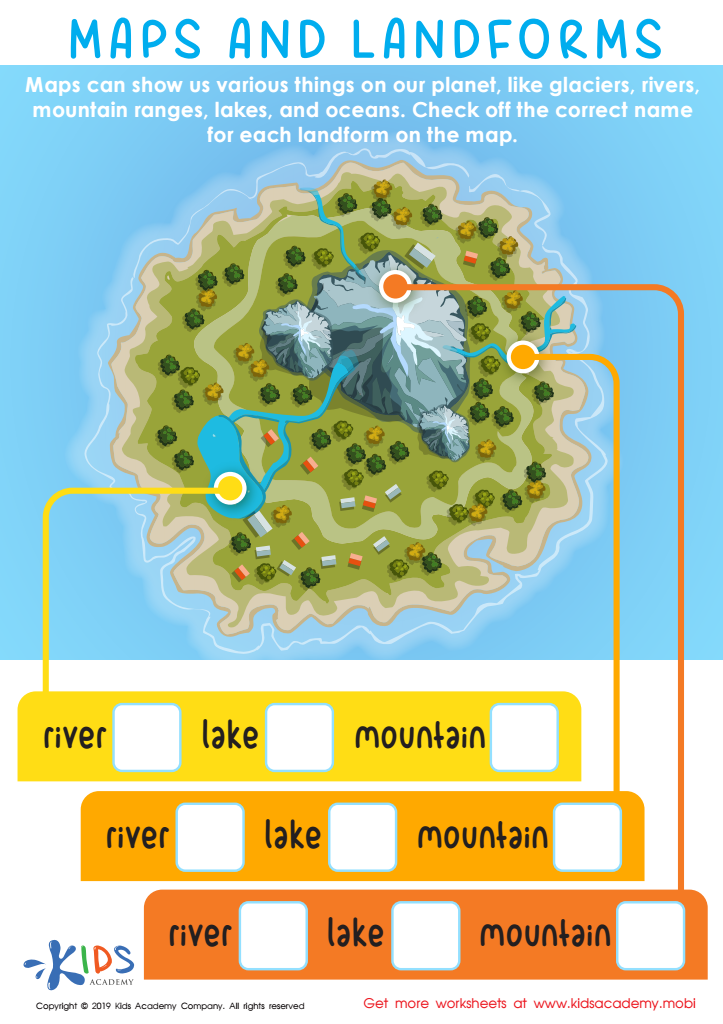
Maps and Landforms Worksheet
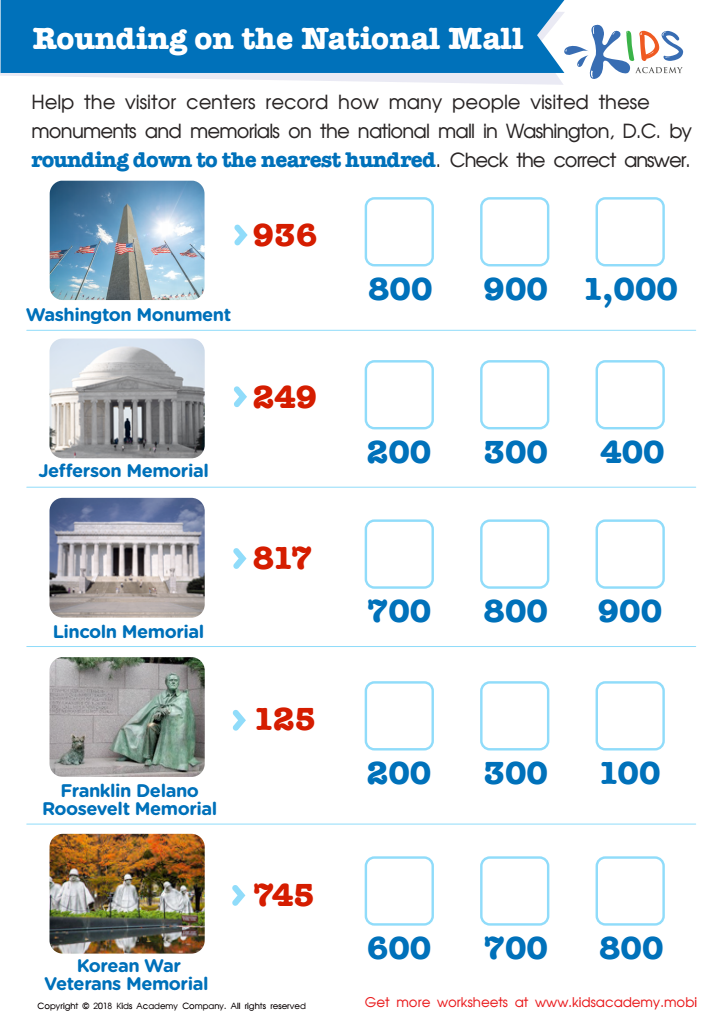
Rounding on the National Mall Worksheet
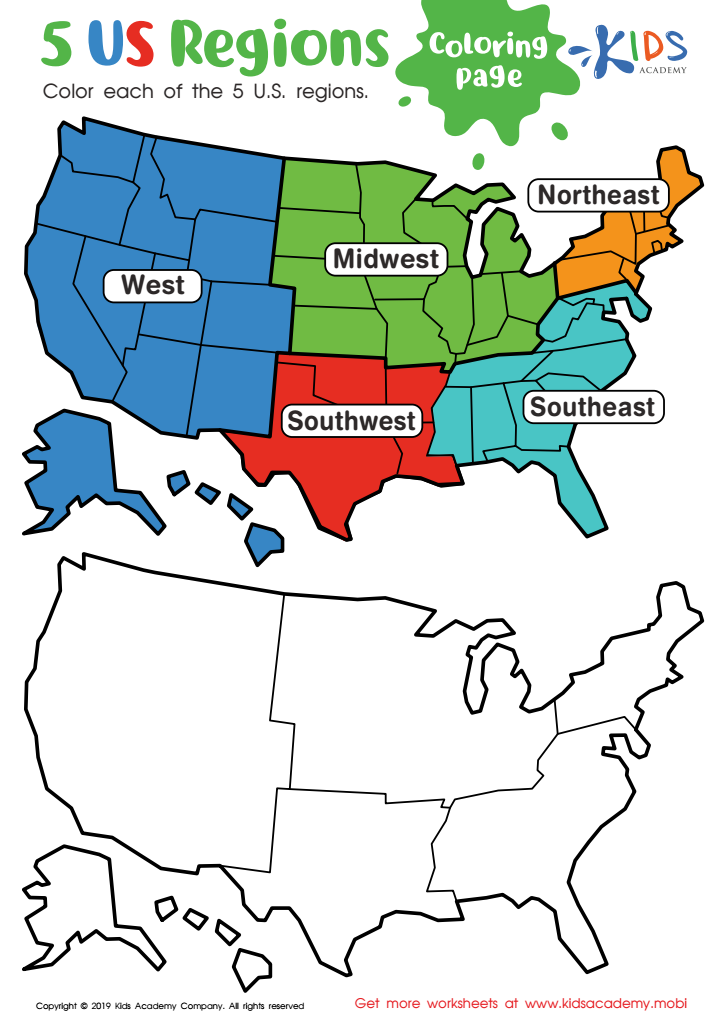
US Regions Coloring Page Worksheet
 Assign to My Students
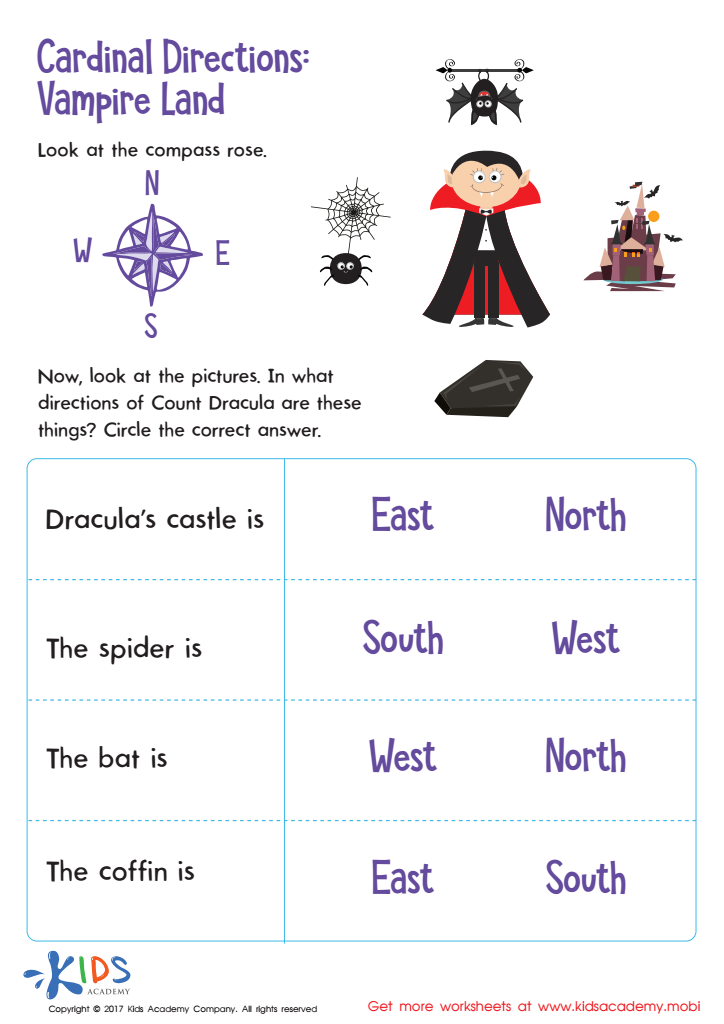
Cardinal Directions Printable
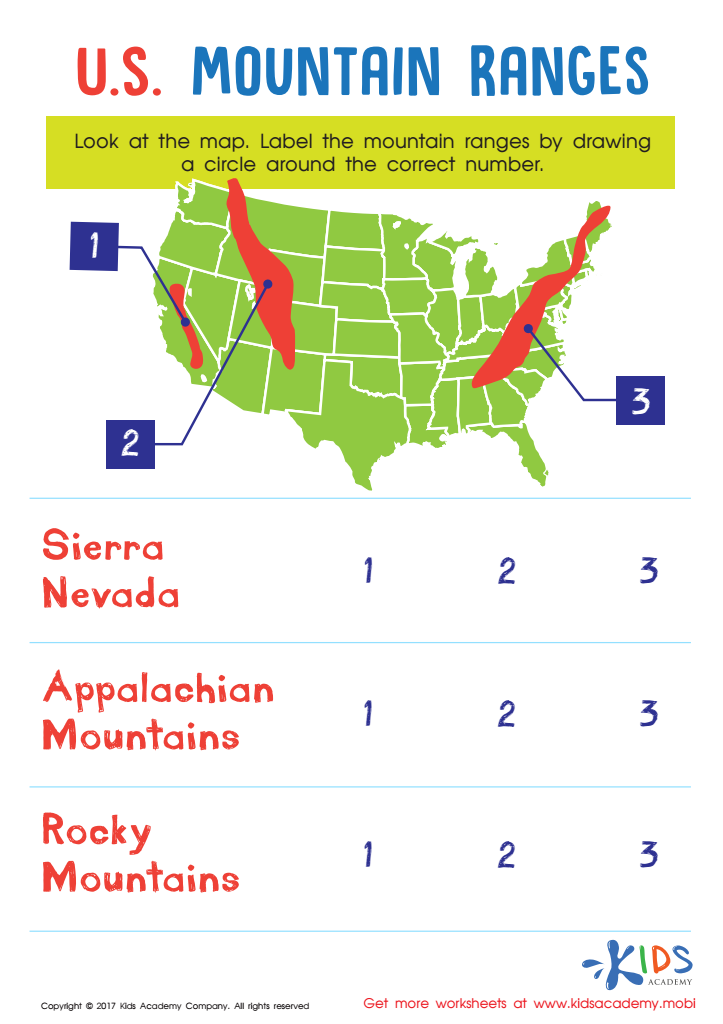
US Mountain Ranges Worksheet

Towns Worksheet
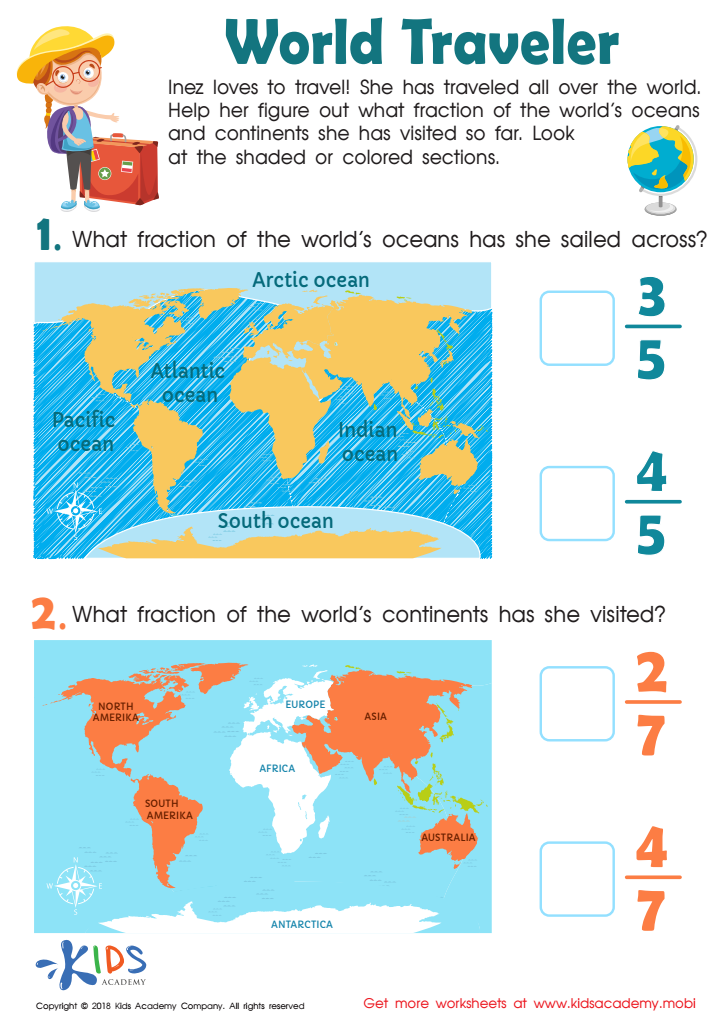
World Traveler Worksheet



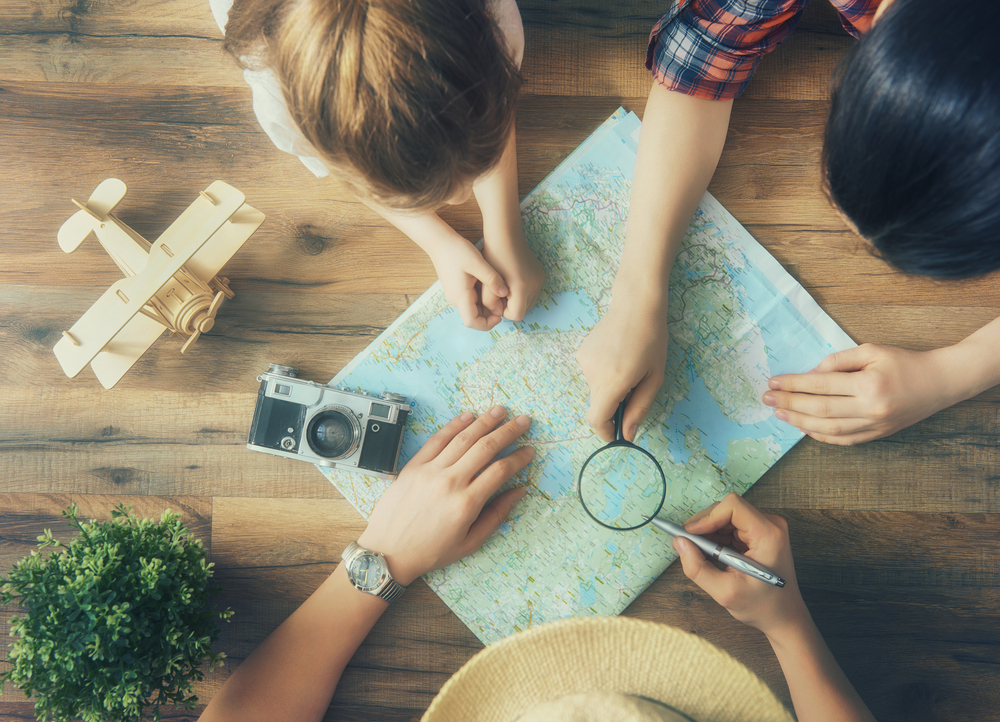

Map reading skills are crucial for young children aged 5-9 because they significantly contribute to various developmental areas. At this age, children's brains are particularly receptive to learning spatial awareness and orientation, which are essential for understanding their environment. By teaching map reading, parents and teachers can enhance a child's ability to navigate, understand directions, and make sense of the world around them.
Moreover, reading maps fosters critical thinking and problem-solving skills. Decoding symbols, legends, and scales on a map requires analytical thinking and interpretation, thereby boosting cognitive abilities. It also encourages attention to detail and improves memory retention as they remember and apply particular symbols and directions.
Beyond cognitive development, map reading integrates elements of both geography and mathematics, making it an interdisciplinary learning tool. It introduces young learners to geographical concepts and enhances their understanding of distances and scales, contributing to their mathematical reasoning skills.
Furthermore, map reading can boost self-confidence and independence in young children. When they successfully read a map or navigate space, it reinforces a sense of accomplishment and autonomy.
Ultimately, map reading skills lay the foundation for future learning and practical life skills. Encouraging these abilities early on prepares children for more complex tasks in their personal, academic, and eventually professional lives.








