
Phonetics understanding Normal Worksheets for Ages 5-9
3 filtered results
Difficulty Level
Grade
Age
-
From - To
Subject
Activity
Standards
Unlock the power of phonetics for kids aged 5-9 with our expertly crafted worksheets! Focused on enhancing early literacy, these engaging and age-appropriate materials are designed to help young learners master key phonetic concepts such as letter-sound relationships, blending phonemes, and decoding words. Our worksheets are not only educational but also fun, offering a variety of exercises that stimulate critical thinking and phonemic awareness. Perfect for classroom or at-home use, these printable resources make learning phonetics both effective and enjoyable, setting a solid foundation for lifelong reading and communication skills. Boost phonetic understanding today!
Favorites
With answer key
Interactive
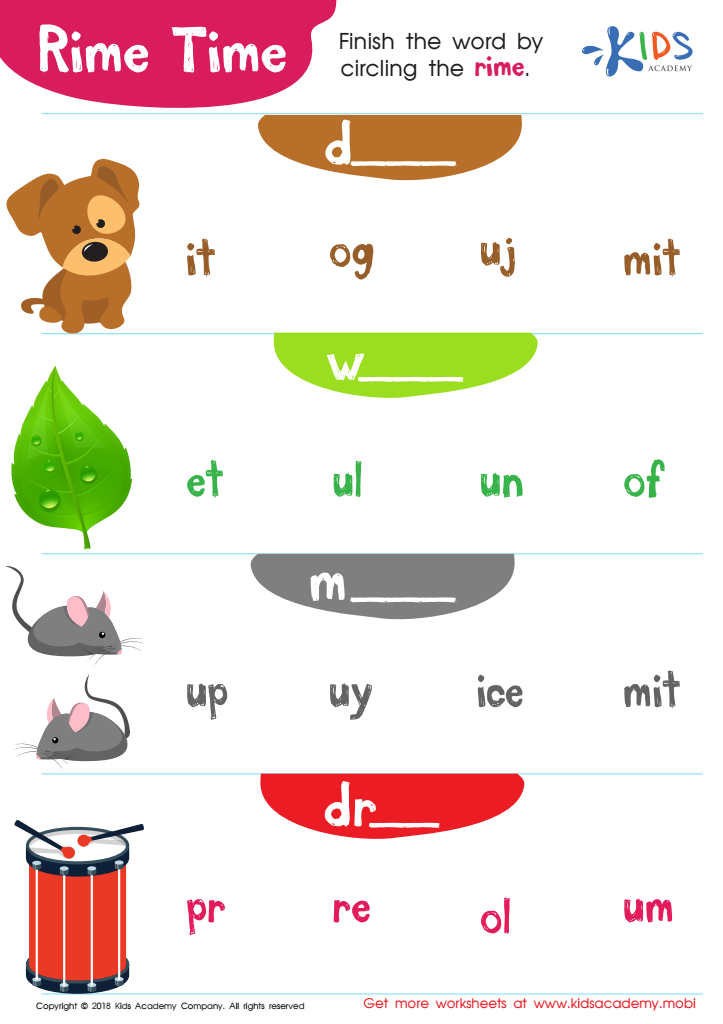
Rime Time Worksheet
This free PDF worksheet helps new and emerging readers identify rimes (the letters after initial consonants) and practice fine motor skills. Kids trace the correct rimes for each picture and increase their fluency and decoding skills with each one!
 Assign to My Students
Rime Time Worksheet
Worksheet
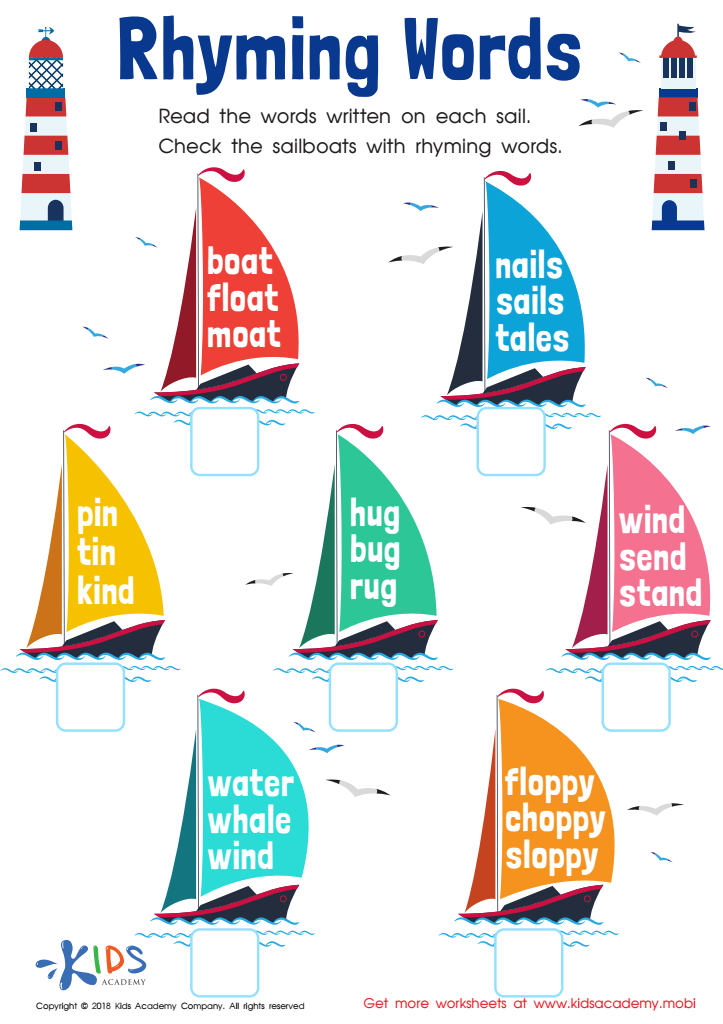
Rhyming Words Worksheet
Does your child know about rhyming words? Get them interested in poetry and explain that these words have similar sounds when pronounced. Read the words on each sailboat to your child and ask them to identify the rhyming pairs. Guide them to check the sailboats.
Rhyming Words Worksheet
Worksheet
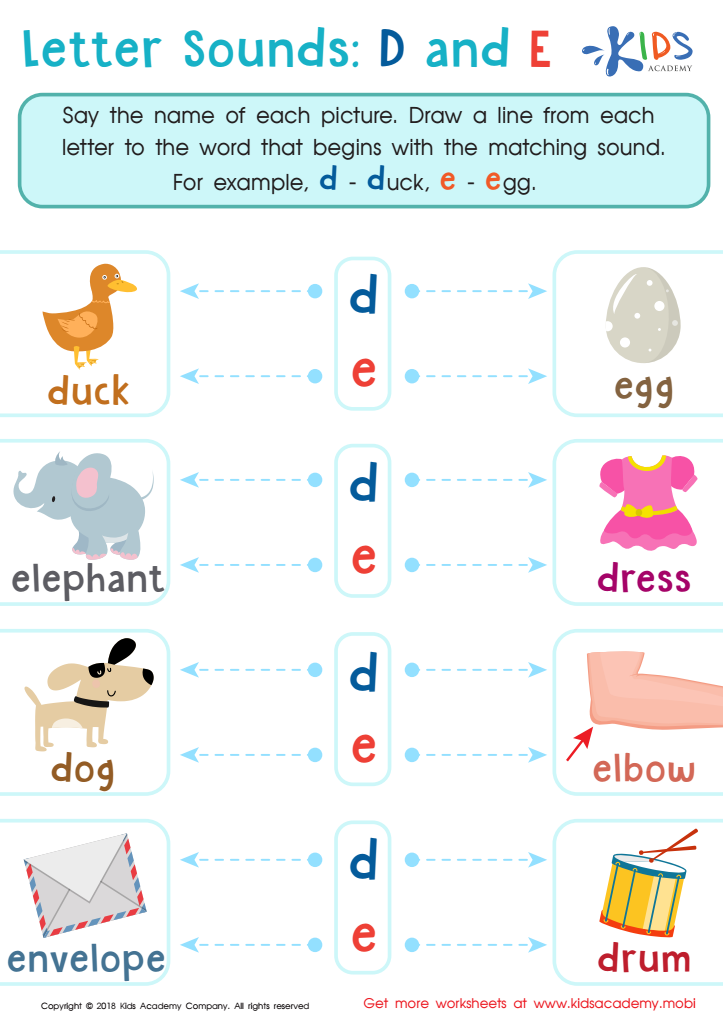
Letter D and E Sounds Worksheet
Kids can use picture clues and visual discrimination to name cheerful pics and isolate the beginning sound. This free PDF worksheet will help them develop phonological awareness, differentiate between "D" and "E", and hone fine-motor skills. It'll also boost their confidence as they become readers.
Letter D and E Sounds Worksheet
Worksheet
Join Kids Academy for Free
Who is primarily going to use this learning content?








Phonetics understanding in children aged 5-9 is foundational for developing key literacy skills. At this stage, children are transitioning from learning to talk to learning to read and write, making phonetics – the study of sounds – crucial. Phonetics education helps children recognize and manipulate phonemes, the smallest units of sound in speech, which is essential for decoding words during reading.
When a child understands phonetics, they can better understand the relationship between letters and sounds, improving their ability to spell and read new words accurately. This skill is especially important for reading fluency. A strong phonetic foundation aids in sounding out unfamiliar words, which fosters confidence and encourages a love for reading.
Moreover, phonetics understanding influences vocabulary development and overall language proficiency. Children who grasp phonetics can more effectively pick up nuances of pronunciation and rhythm in speech, crucial for effective communication and listening skills.
For teachers, focusing on phonetics can help identify and support students with potential reading difficulties, setting the stage for timely interventions. For parents, engaging in phonetic activities at home, such as reading aloud and playing sound games, promotes literacy in a fun, engaging manner. Ultimately, a solid grasp of phonetics enhances a child's overall academic journey, enabling success across multiple subjects.








