Understanding shapes Normal Worksheets for Ages 5-9
5 filtered results
-
From - To
"Understanding Shapes Normal Worksheets for Ages 5-9" are expertly designed to engage young learners in geometric exploration. These printable resources from Kids Academy help children recognize, compare, and classify a variety of shapes through fun and interactive activities. Tailored for kids aged 5 to 9, the worksheets blend visual learning with hands-on practice to build foundational math skills. Ideal for home or classroom use, they nurture spatial reasoning and cognitive development while keeping kids entertained. By exploring different shapes and their properties, your child will gain confidence in their math abilities and enjoy the learning journey!
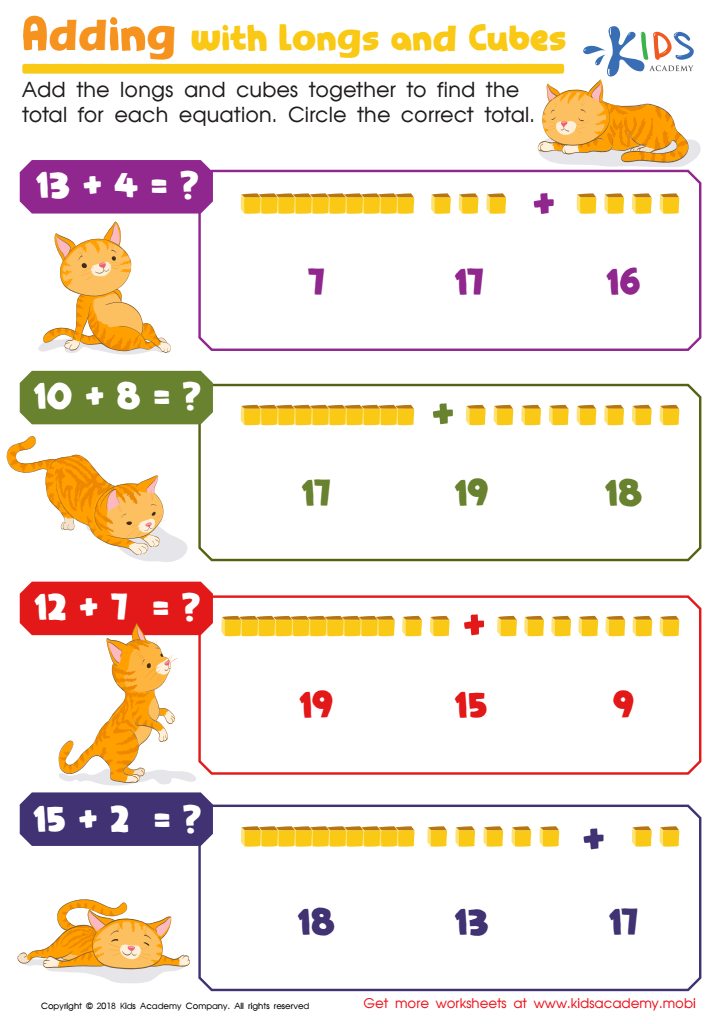
Adding With Longs and Cubes Worksheet
 Assign to My Students
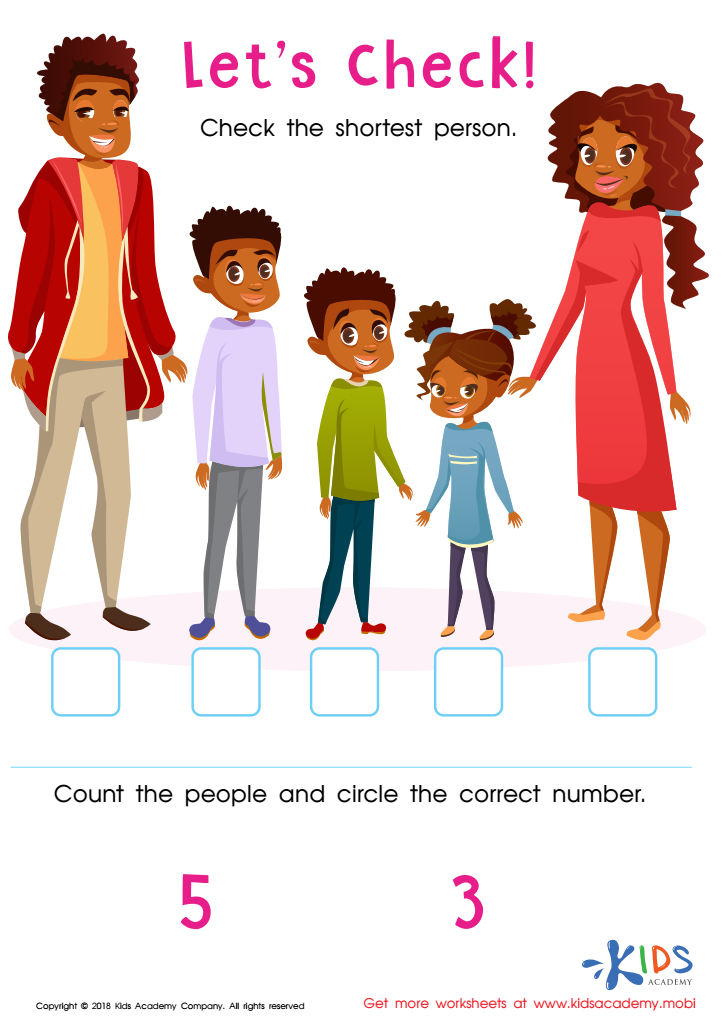
Let's Check! Assessment Worksheet
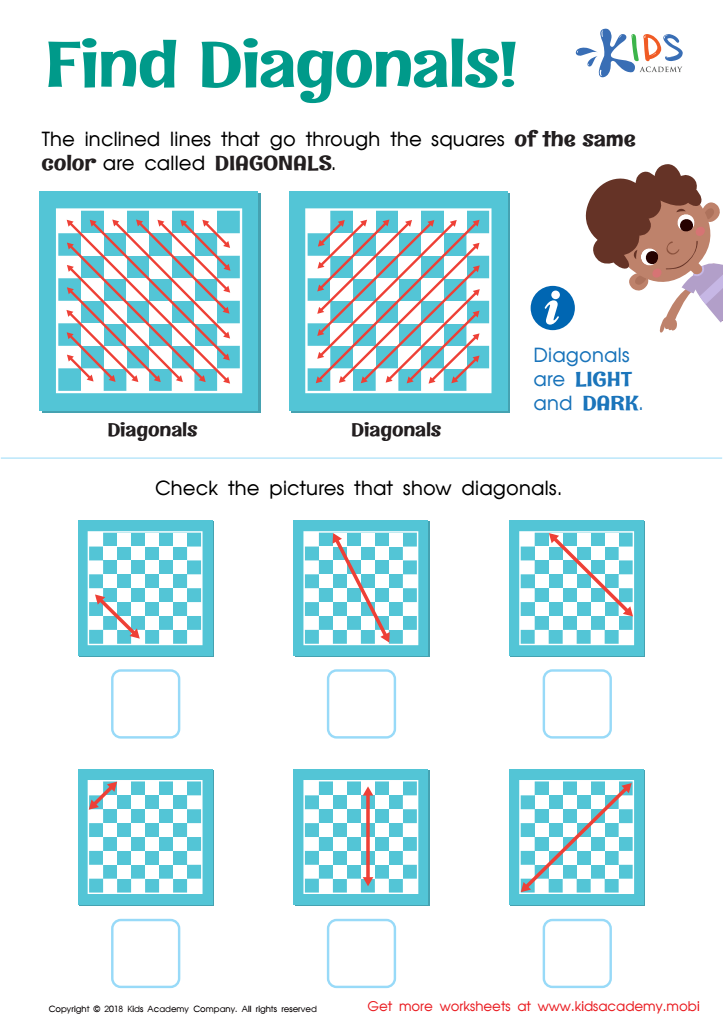
Find Diagonals Worksheet
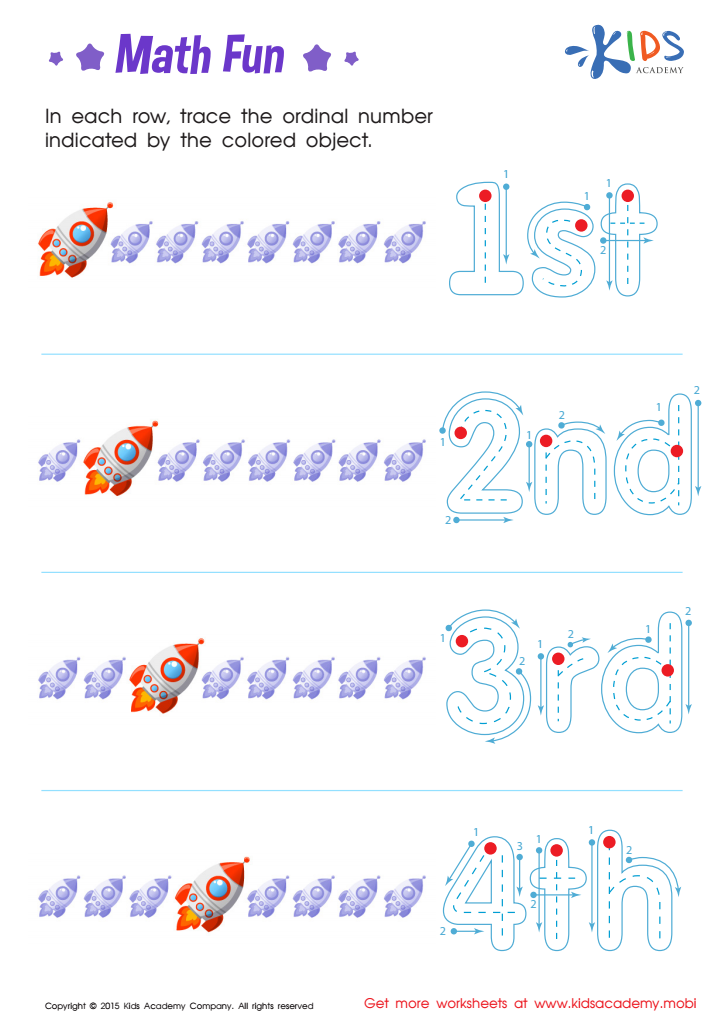
Ordinal Numbers: Math Fun Worksheet
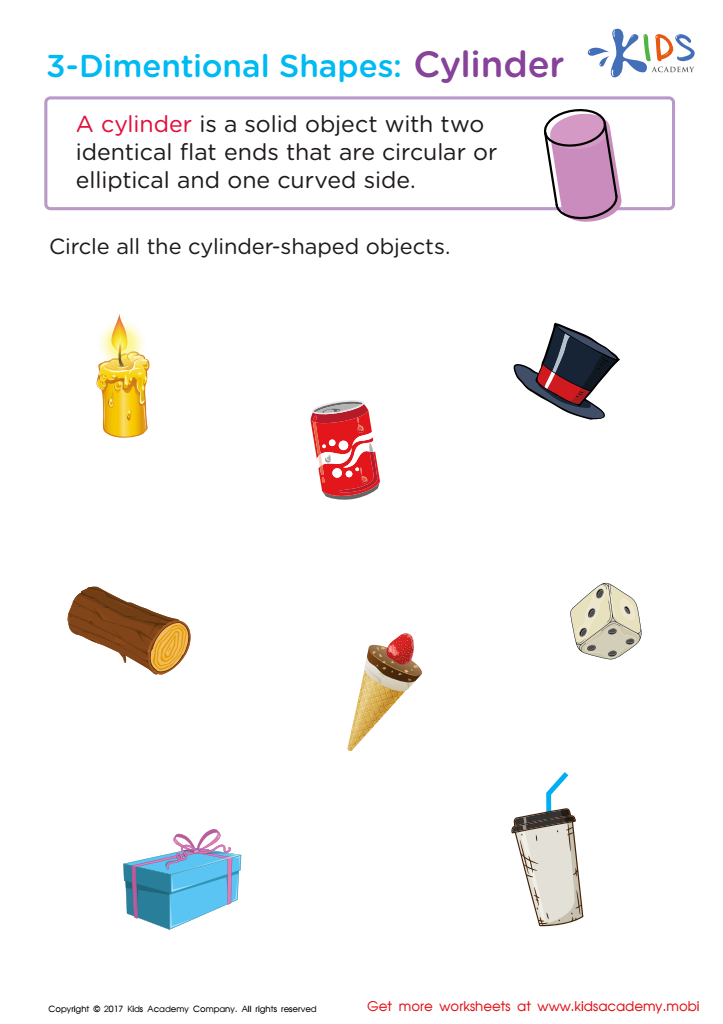
Three–Dimensional Shapes: Cylinder Worksheet





Understanding shapes is foundational for children aged 5-9 as it plays a crucial role in their overall cognitive development. For parents and teachers, fostering this understanding isn't just about recognizing circles and squares—it's about nurturing critical thinking and problem-solving skills. Shapes are the building blocks of geometry, and early knowledge in this area sets the groundwork for more complex mathematical concepts that children will encounter later.
By learning about shapes, children develop spatial awareness, which is important not only in math but also in everyday life. It helps them to understand and interact with their environment, such as fitting pieces into a puzzle or recognizing patterns in nature. This period of learning can also enhance their vocabulary and verbal skills as they describe the characteristics and differences between shapes.
Furthermore, integrating shapes into play and learning activities enriches their creativity and fine motor skills—think of drawing, building with blocks, or sorting objects. These activities are instrumental in building hand-eye coordination and precision.
Understanding shapes at an early age is therefore much more than an academic exercise; it is a multifaceted developmental tool that aids in the holistic growth of a child, preparing them for future academic success and everyday tasks. For these reasons, parents and educators should prioritize and actively engage children in geometric learning activities.








