Vowel Recognition Normal Worksheets for Ages 5-9
13 filtered results
-
From - To
Enhance your child's reading proficiency with our Vowel Recognition Normal Worksheets, designed specifically for ages 5-9. These engaging and educational worksheets from Kids Academy aid young learners in identifying and practicing vowel sounds, crucial for building foundational literacy skills. Each worksheet combines fun activities and vibrant illustrations to make learning vowels enjoyable and effective. Help your child master short and long vowels, enhance their phonemic awareness, and boost their reading fluency. Perfect for both classroom and home use, these worksheets cater to diverse learning styles and stages. Unlock your child's potential in literacy with our expertly crafted vowel recognition resources.
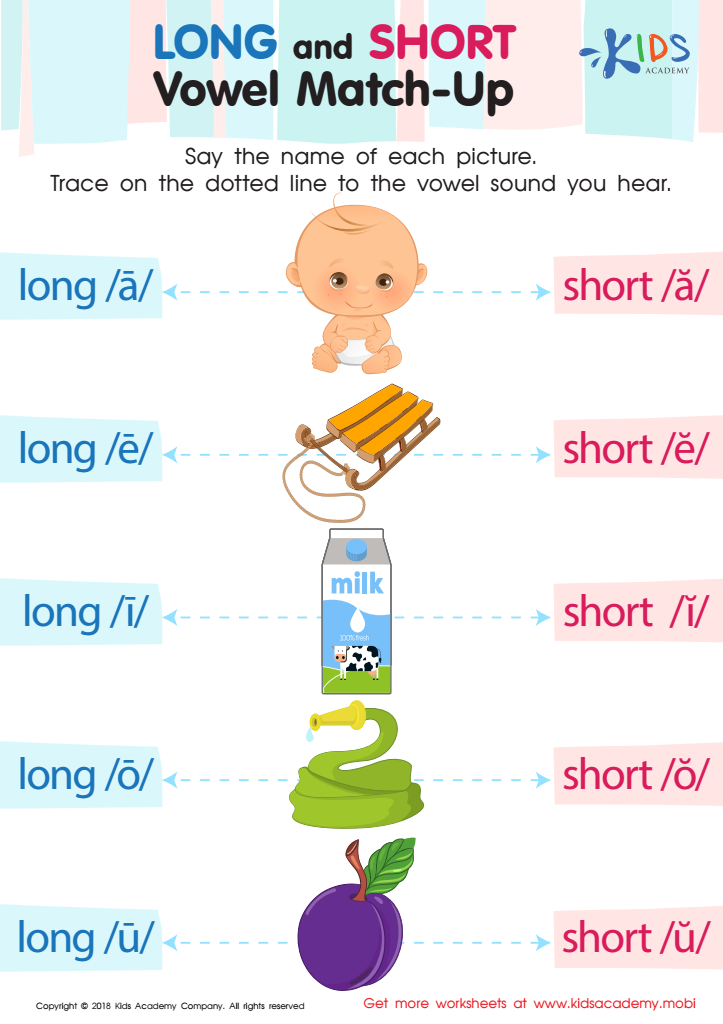
Long and Short Vowel Match up Reading Worksheet
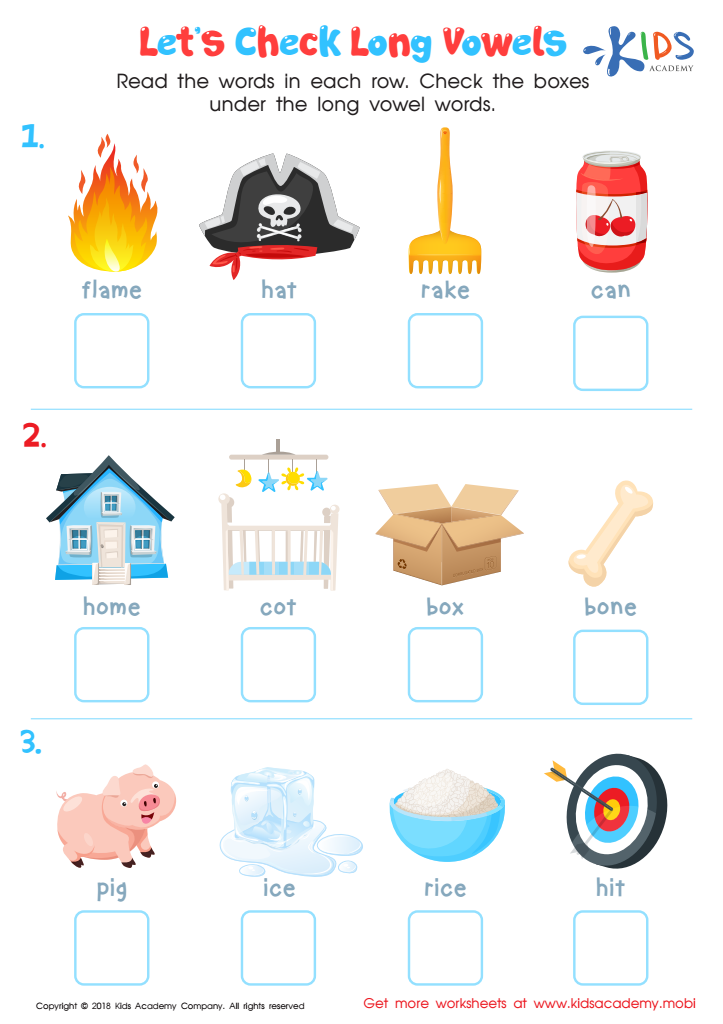
Let's Check Long Vowels: Assessment Worksheet
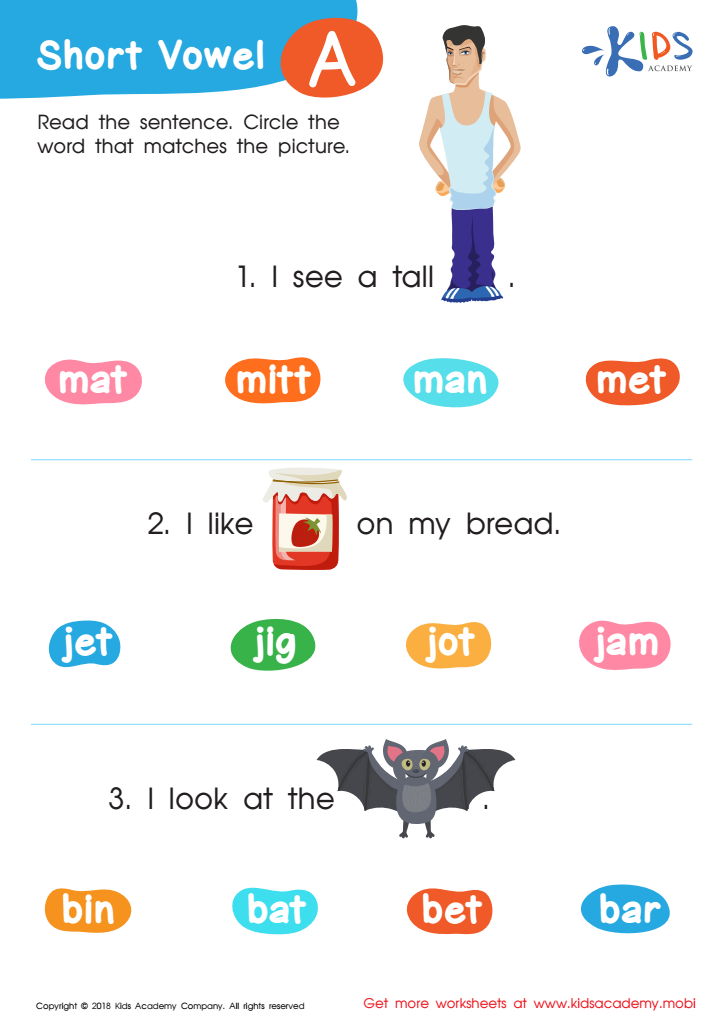
Short Vowel /a/ Worksheet
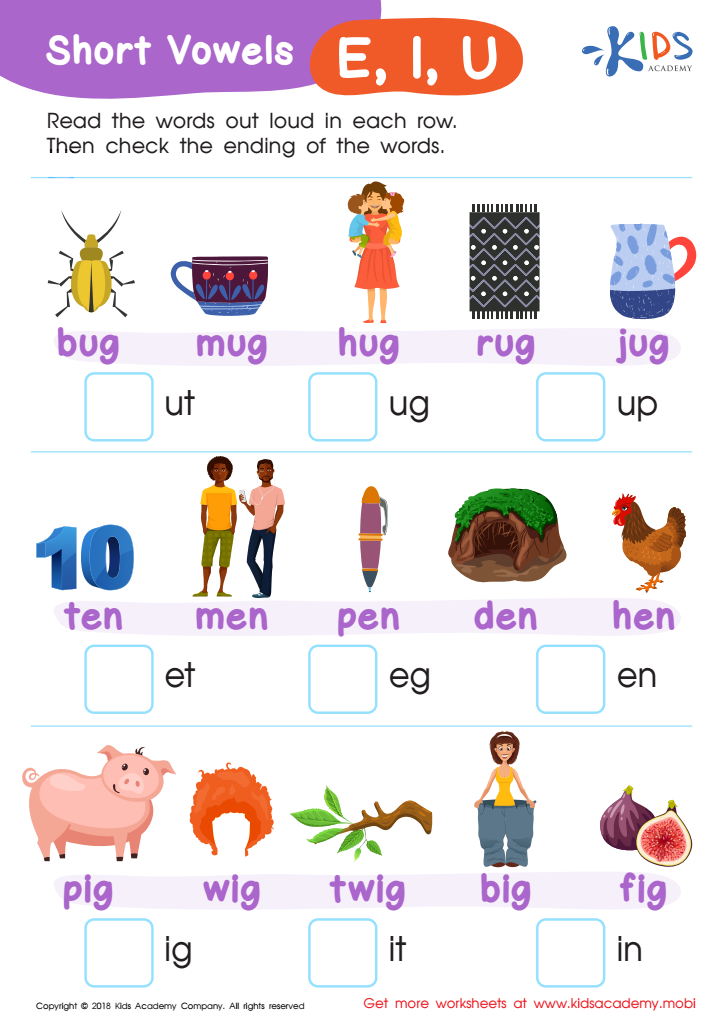
Short Vowels /e/, /i/, and /u/ Worksheet
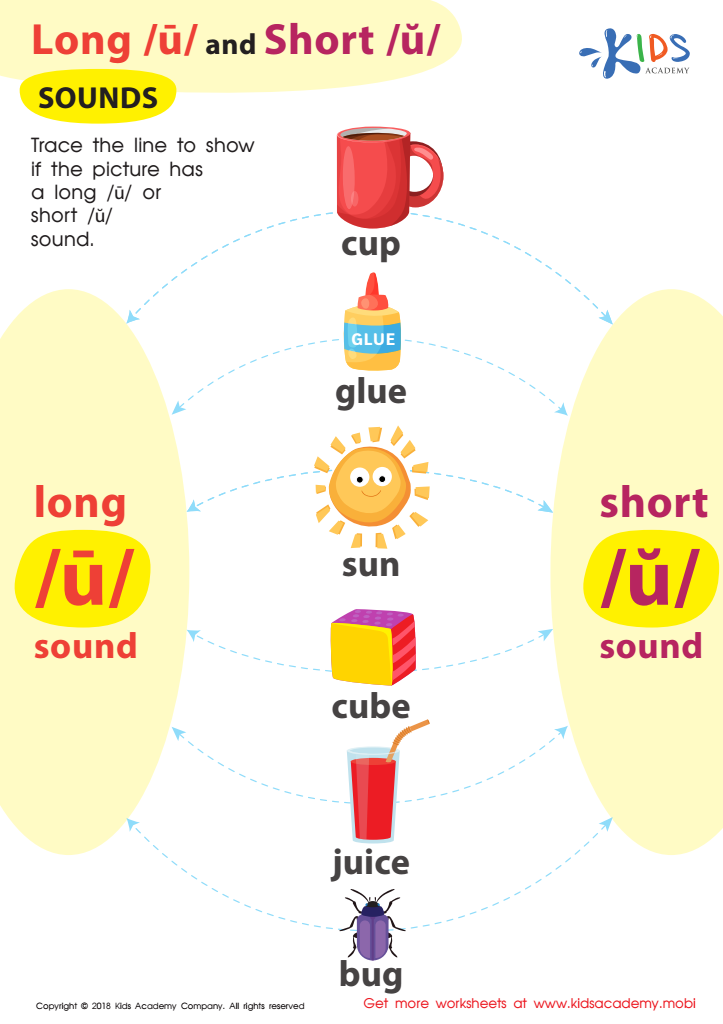
Reading: Long U and Short U Sounds Worksheet
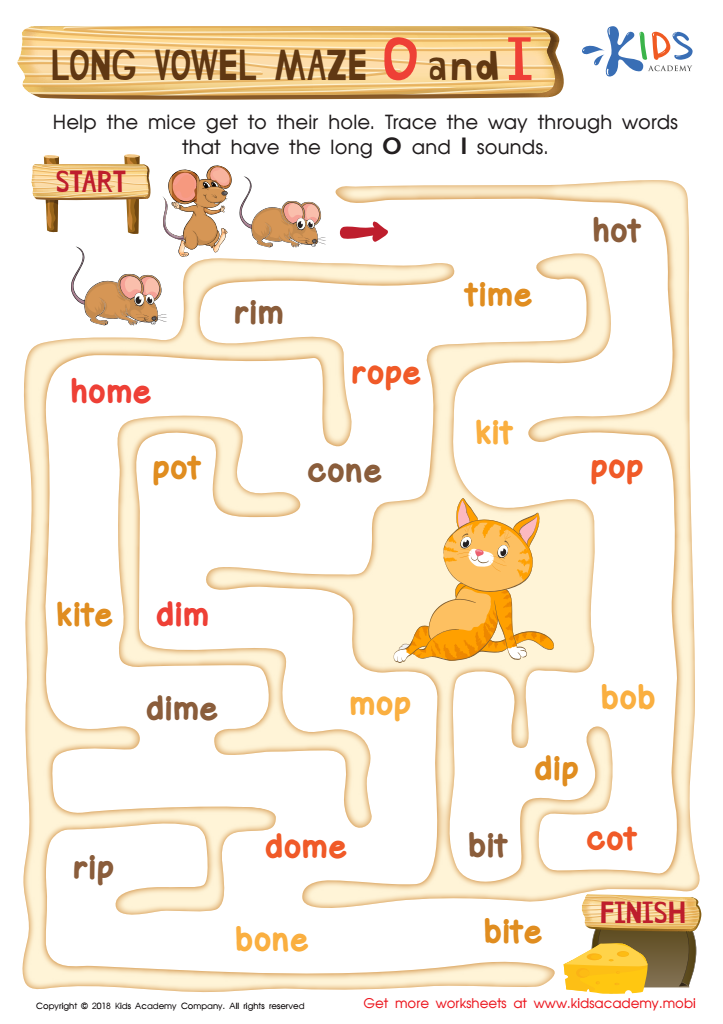
Long Vowel Maze /o/ and /i/ Worksheet
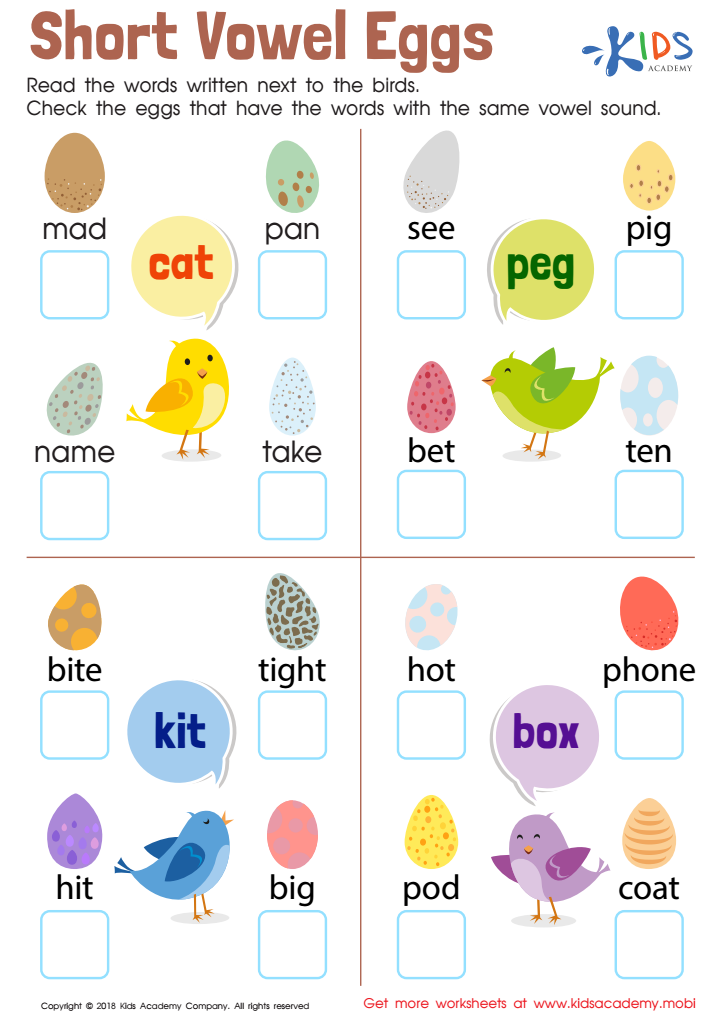
Short Vowel Eggs Worksheet
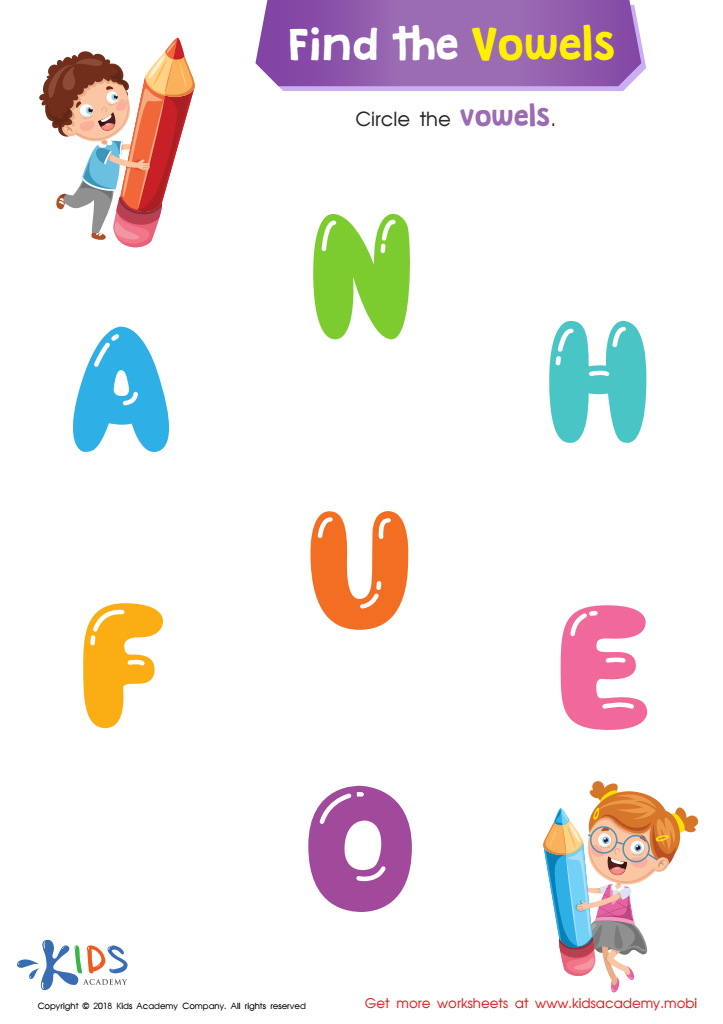
Find the Vowels Reading Worksheet
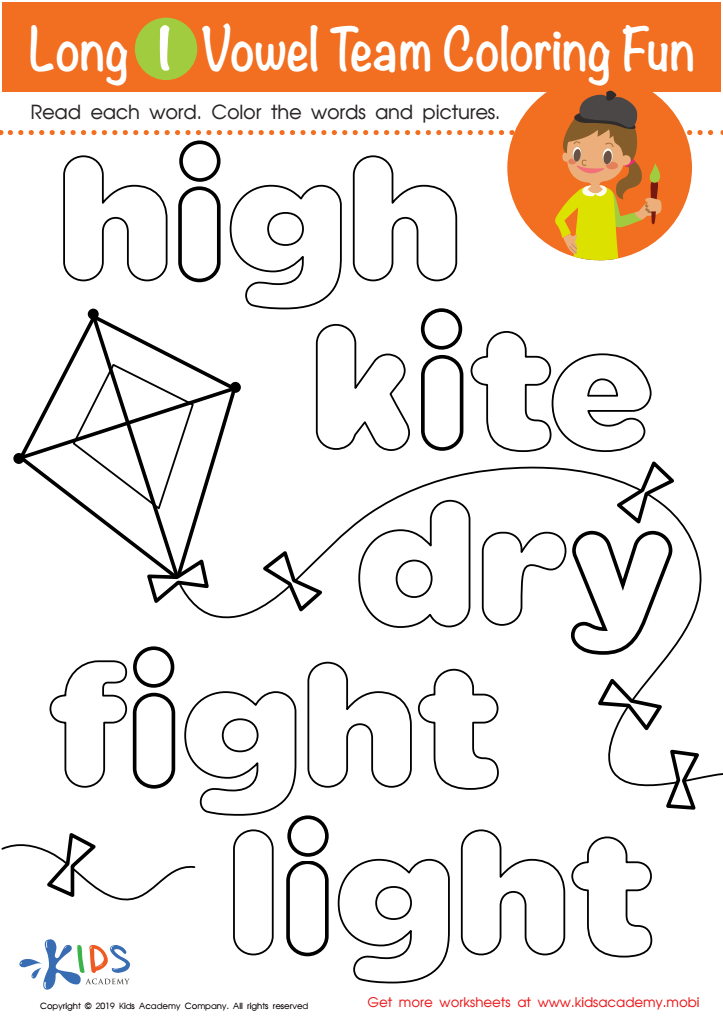
Long I Vowel Team Coloring Worksheet
 Assign to My Students
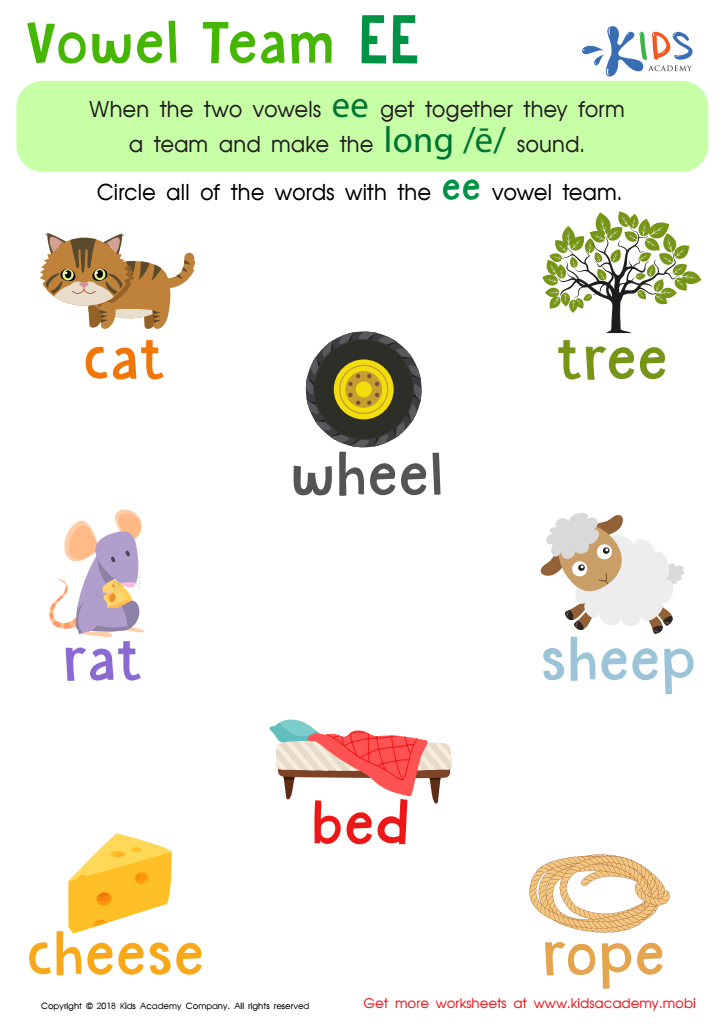
Reading: Vowel Team EE Worksheet
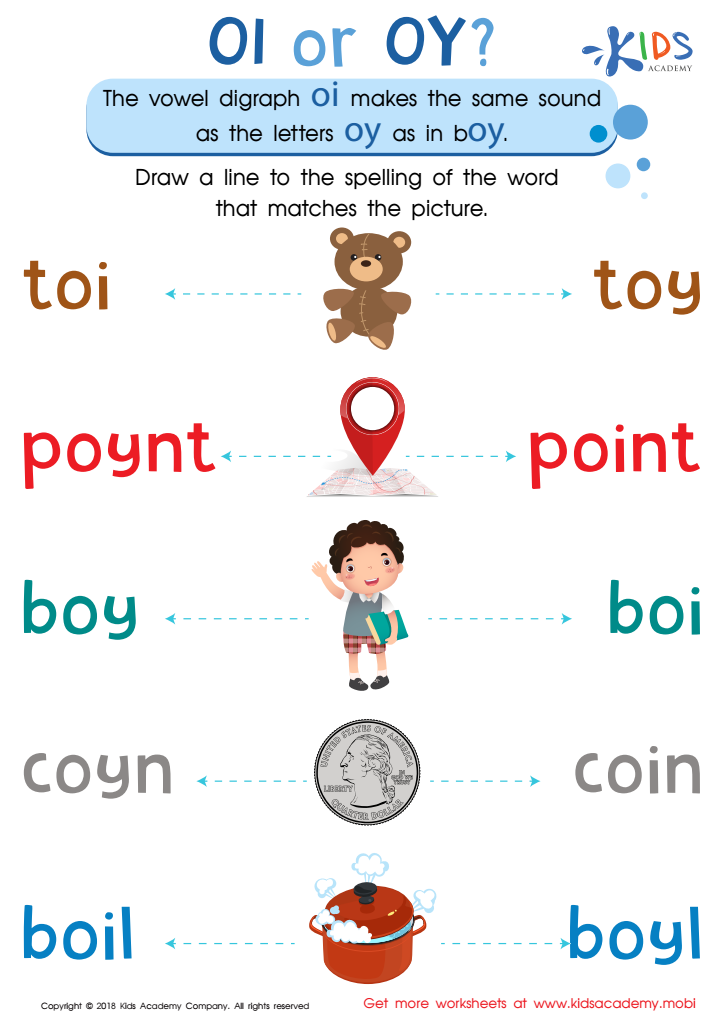
Reading: OI and OY Worksheet
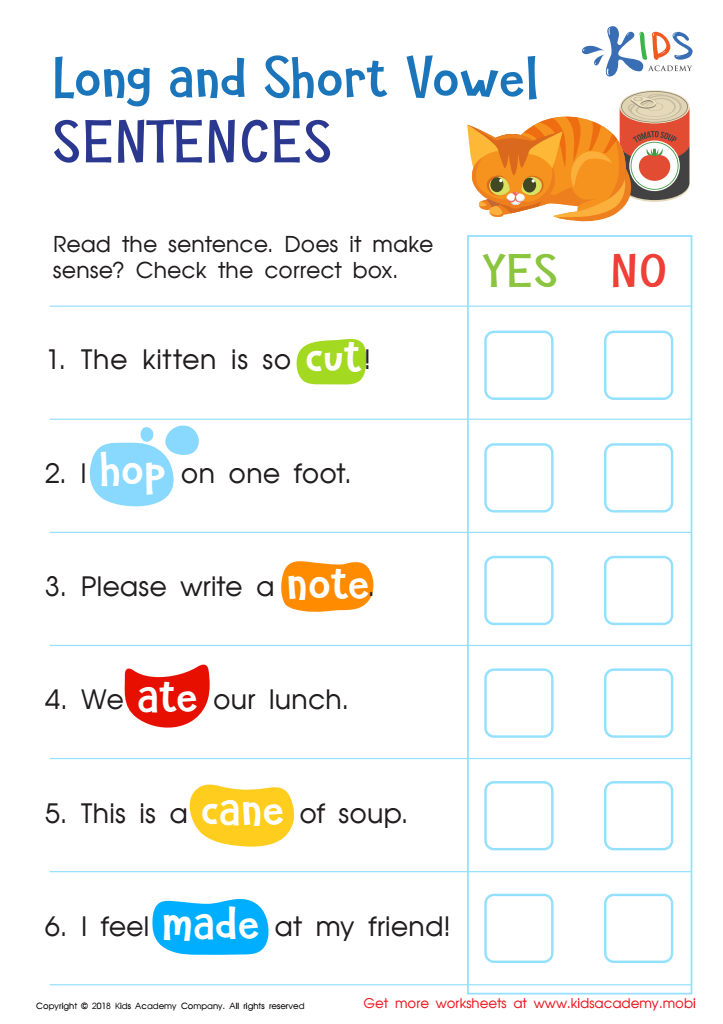
Long and Short Vowel Sentences: Assessment Worksheet
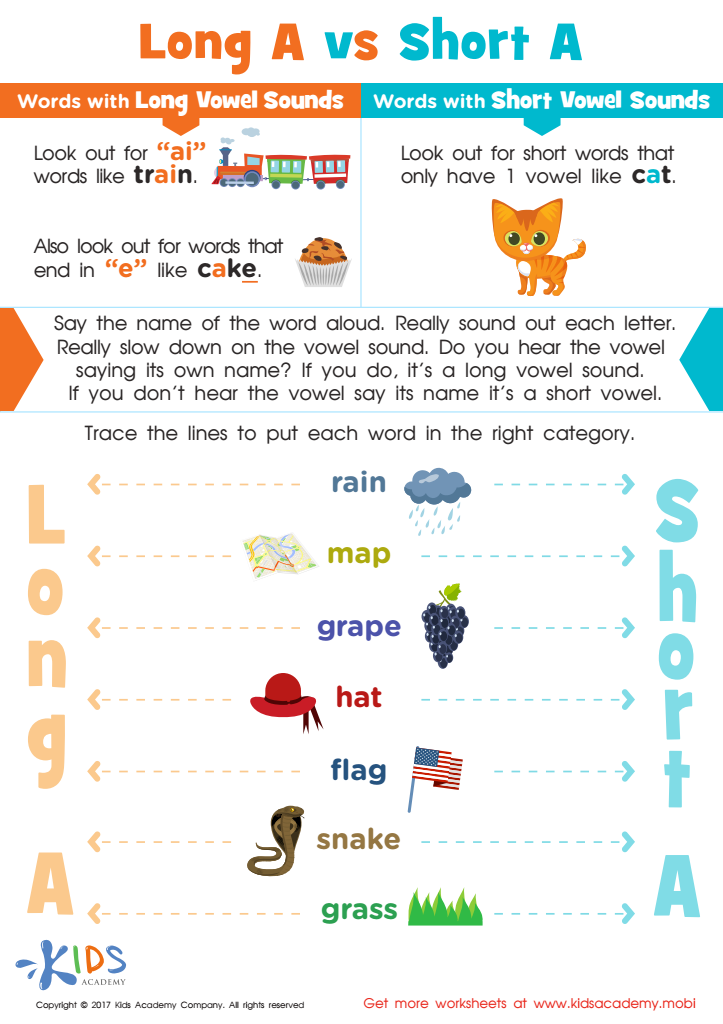
Long and Short Vowel A Spelling Worksheet








Vowel recognition is a crucial component of early literacy development, especially for children aged 5-9. By understanding and identifying vowels correctly, young learners can greatly improve their reading and writing abilities. Parents and teachers should place significant emphasis on vowel recognition because it serves as a foundation for phonemic awareness—a critical skill for decoding words. When children can correctly identify vowel sounds, they can effectively learn to spell, pronounce, and understand words.
Proficiency in vowel recognition helps minimize reading and writing errors. This early skill acts as a building block for more advanced literacy skills such as fluency, comprehension, and critical thinking. Strong vowel recognition promotes confidence and a keen interest in reading, which in turn augments a child’s academic success.
For parents, being proactive in supporting this development can lead to engaging, shared reading experiences that enrich the parent-child bond. For teachers, early identification of difficulties in vowel recognition can provide opportunities for targeted intervention, helping students catch up with peers and reducing future academic disparities. Thus, focusing on vowel recognition now offers long-term benefits, supporting overall educational development and laying the groundwork for lifelong learning.








