Cognitive Development Normal 2D Shapes Worksheets for Ages 5-9
5 filtered results
-
From - To
Enhance your child's cognitive development with our engaging 2D Shapes worksheets designed for ages 5-9. These printable resources focus on recognizing, identifying, and understanding basic shapes, fostering critical thinking and problem-solving skills. Each worksheet encourages children to explore their creativity while reinforcing key concepts in a fun and interactive way. Ideal for both classroom and home learning, these exercises help young learners build a strong foundation in geometry. With various activities to choose from, your child will enjoy developing essential cognitive skills while mastering 2D shapes. Download now and watch your little one thrive in their mathematical journey!
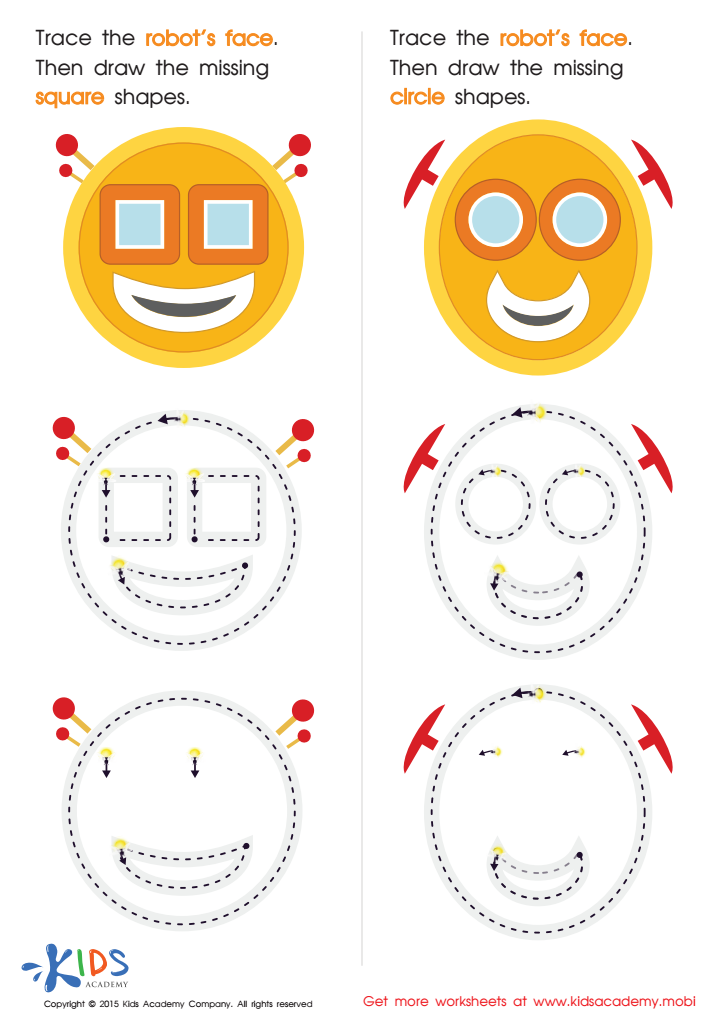
Practicing to Draw Circles And Squares Printable
 Assign to My Students











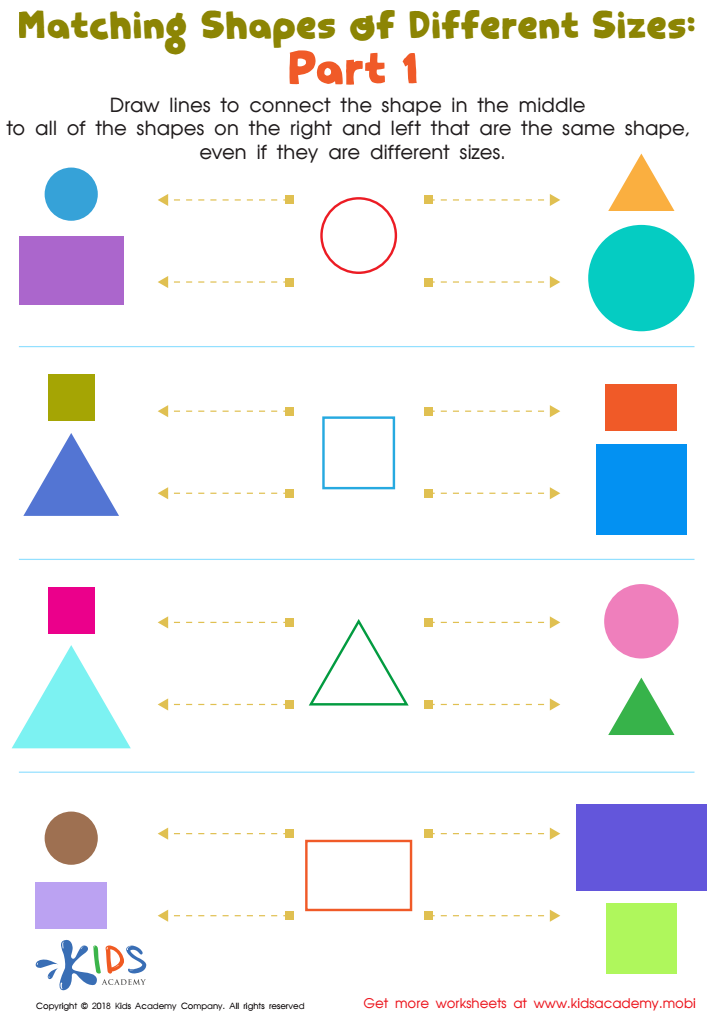
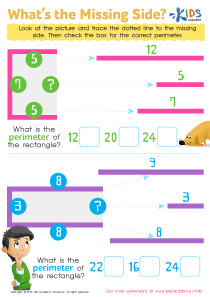
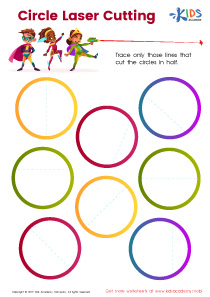
Geometry: part 1 Worksheet
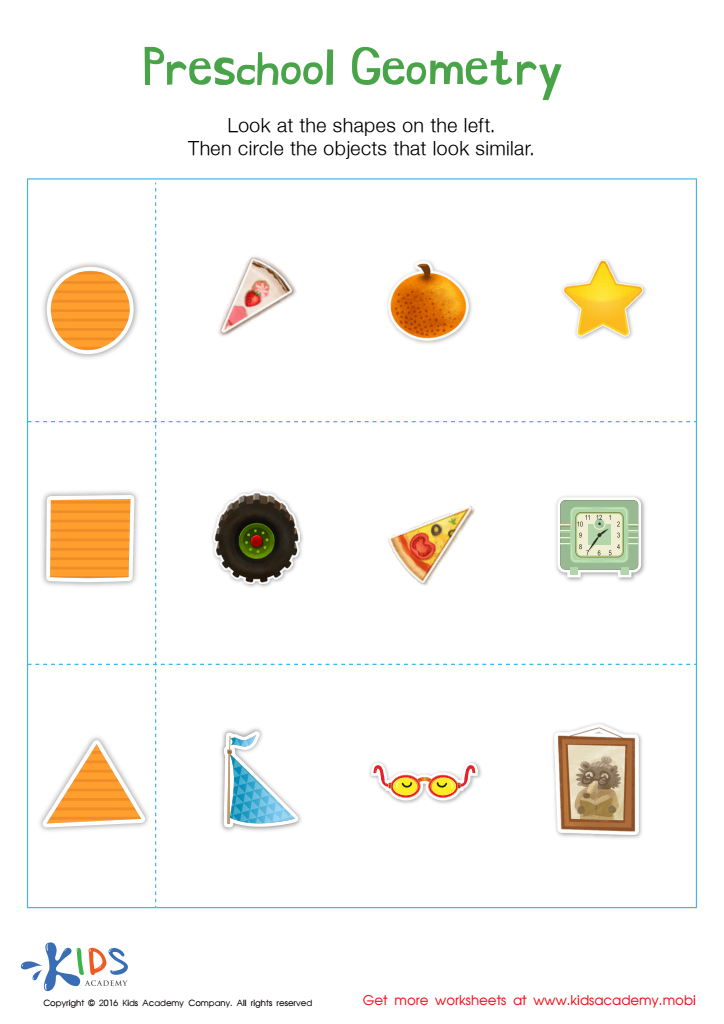
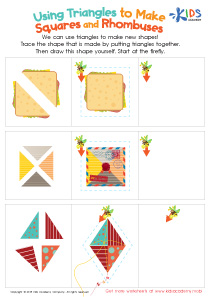
Preschool Geometry Match Up Worksheet
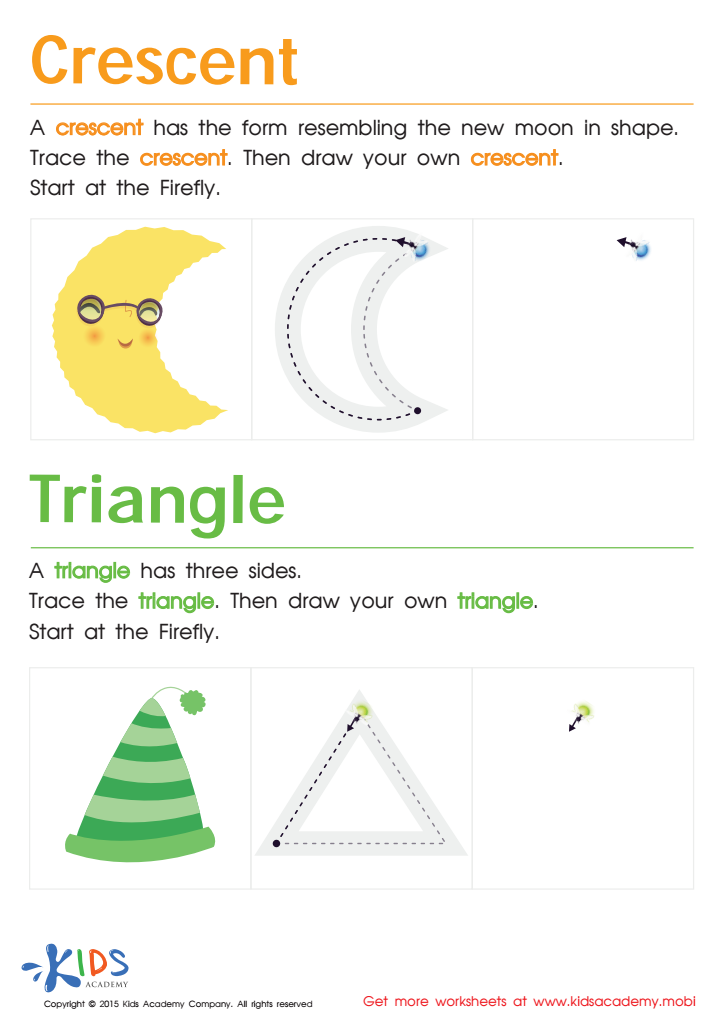
Learning to Draw Crescents And Triangles Worksheet
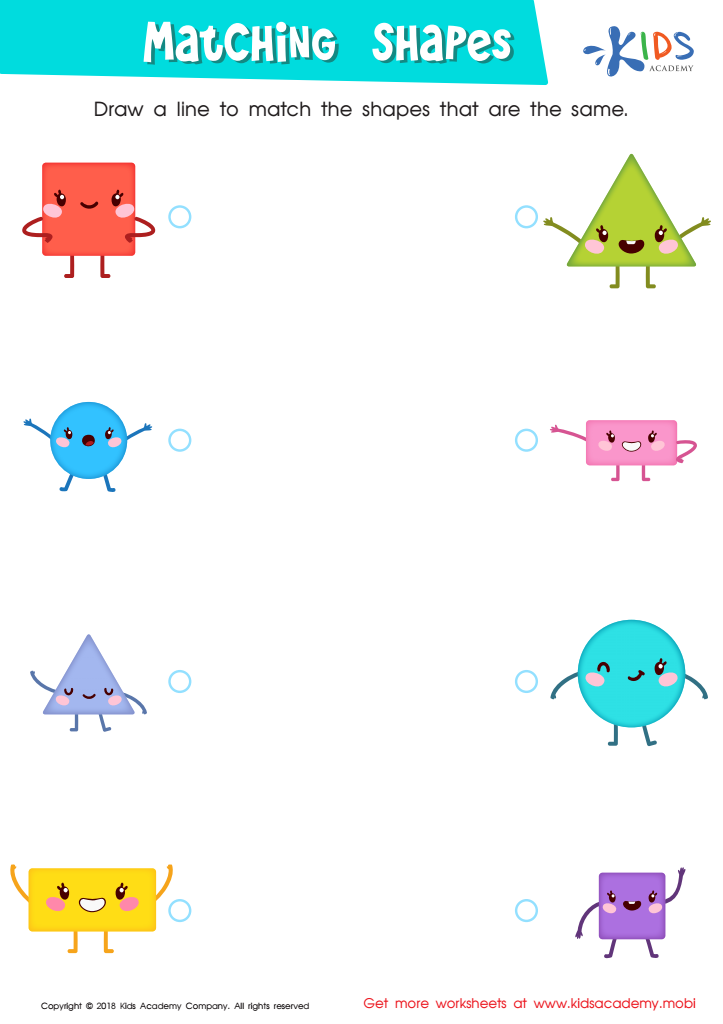
Matching Shapes Worksheet








Cognitive development in children aged 5-9 is a crucial period where they begin to understand and interact with the world around them more independently. Normal 2D shapes play a significant role in this development. Recognizing and manipulating shapes enhances spatial awareness, which is essential for problem-solving and logical thinking.
Parents and teachers should care because proficiency in shapes transcends mere geometry; it lays the groundwork for later mathematical concepts. When children enjoy activities that involve 2D shapes, such as drawing, constructing, or sorting, they build their cognitive skills while engaging in hands-on learning. These experiences boost critical thinking and creativity as children learn to categorize and differentiate shapes.
Moreover, familiarity with shapes aids in developing vocabulary and communication skills. By describing shapes and their attributes, children refine their ability to articulate ideas. Encouraging activities centered around 2D shapes helps reinforce classroom learning and promotes bonding between children and their caregivers. Recognizing the importance of cognitive development through shapes fosters a solid foundation, preparing children for more complex tasks in school and life. Thus, engaging with 2D shapes is vital for parents and teachers looking to optimize children's learning and cognitive growth during these formative years.