Critical Thinking Normal 2D Shapes Worksheets for Ages 5-9
5 filtered results
-
From - To
Our "Critical Thinking Normal 2D Shapes Worksheets for Ages 5-9" are designed to hone young learners' problem-solving and analytical skills. Featuring a diverse array of activities, these worksheets will engage children in identifying, sorting, and manipulating various 2D shapes. By encouraging exploration and questioning, they promote a deeper understanding of shapes and their properties. Ideal for both classroom and home use, these resources support key learning skills while making math fun and interactive. Perfect for enhancing spatial awareness, logical reasoning, and critical thinking in children aged 5-9. Explore now to inspire a love for learning in your kids!
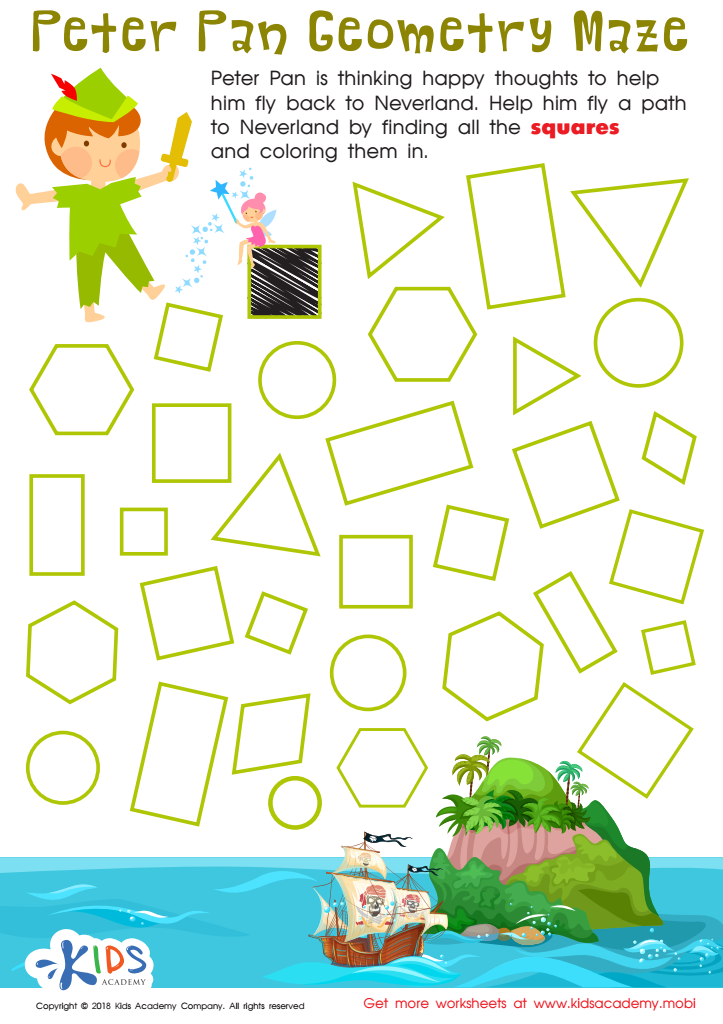
Peter Pan Worksheet
 Assign to My Students



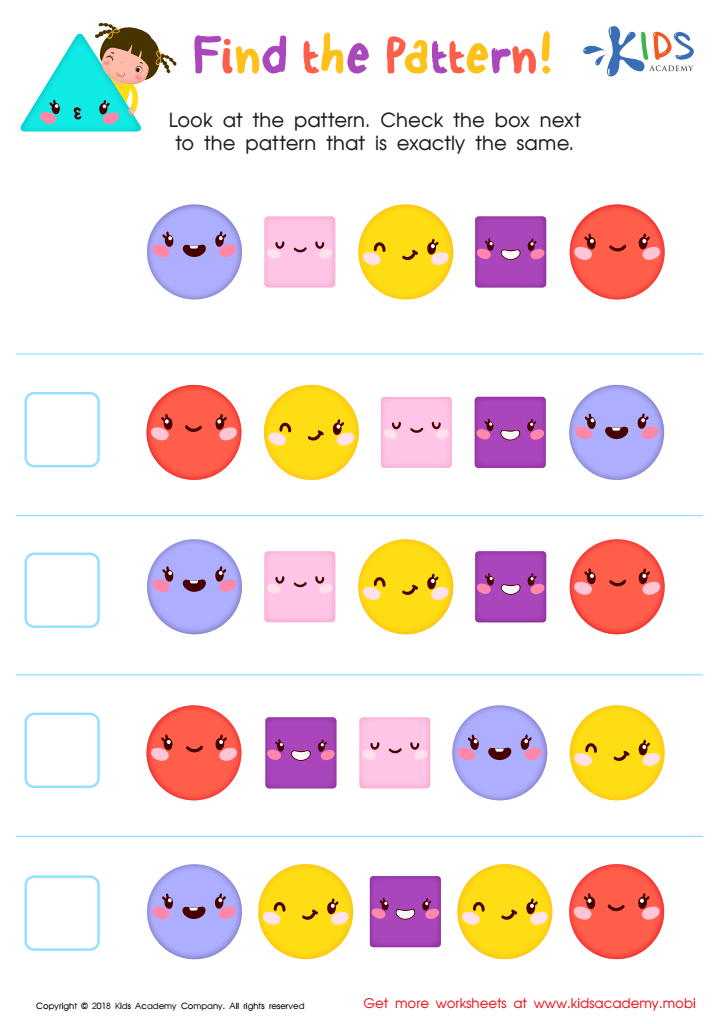
Find the Pattern Worksheet
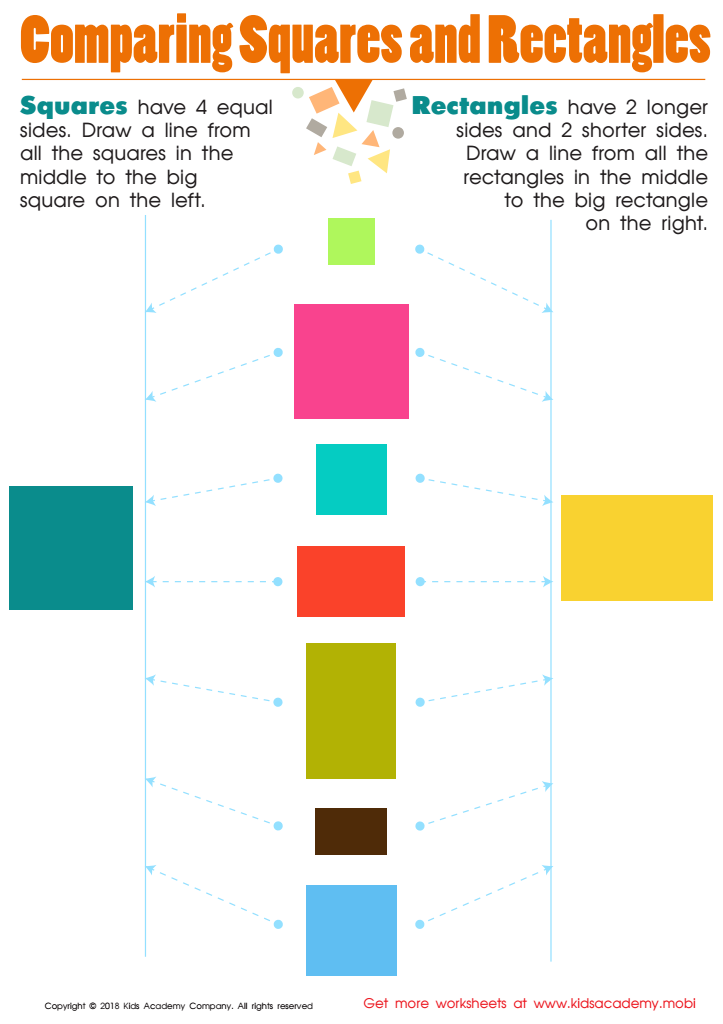
Comparing Squares Rectangles Worksheet
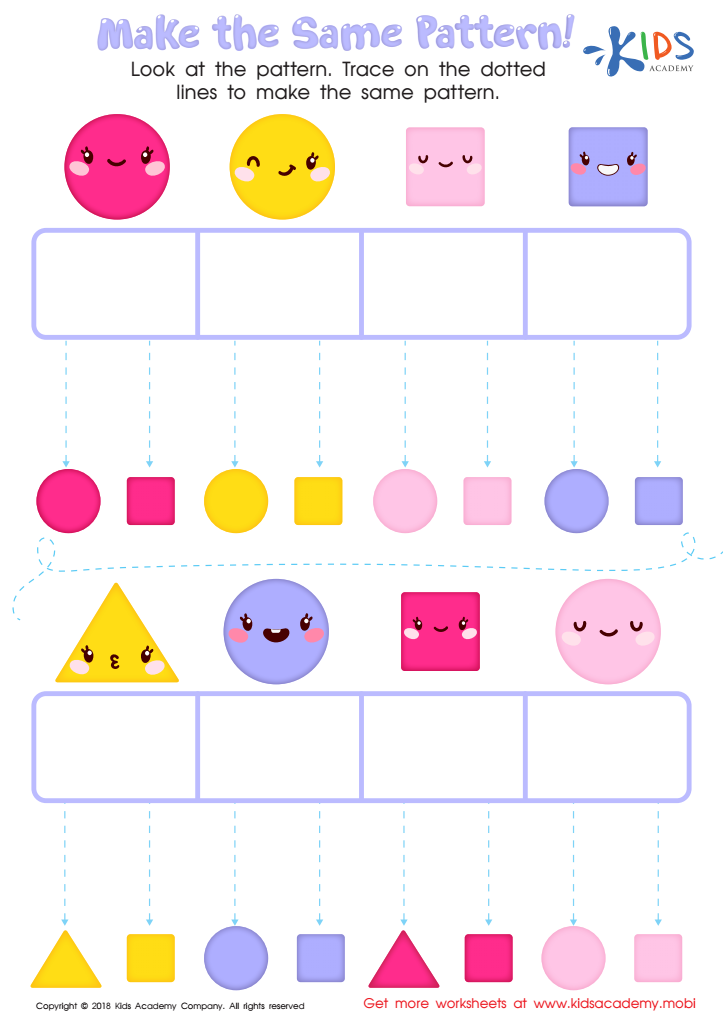
Make the Same Pattern Worksheet
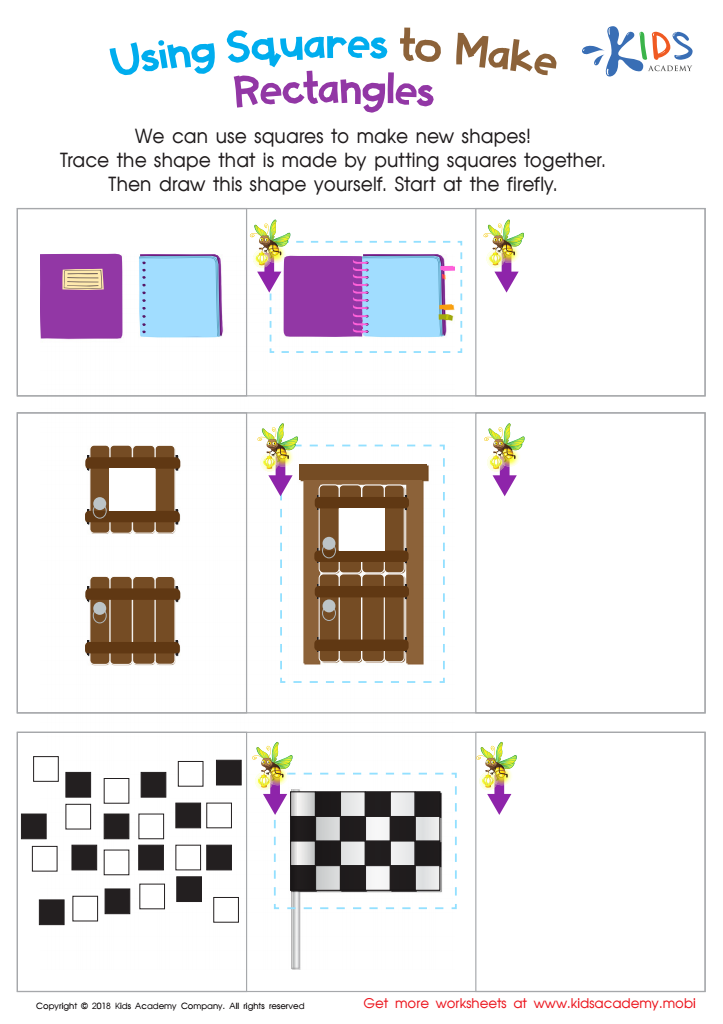
Using Squares to Make Rectangles Worksheet








Critical thinking is an essential life skill, and introducing it through the study of 2D shapes for children aged 5-9 can provide significant developmental benefits. At this early stage, children are naturally curious and absorb information rapidly. Learning about normal 2D shapes, such as circles, squares, and triangles, isn't just about recognizing and naming geometric figures. It's also about cultivating analytical thinking and problem-solving skills.
When children examine the properties of these shapes, they're encouraged to compare, contrast, and categorize them based on various attributes, such as the number of sides or angles. This process sharpens their ability to observe details and think systematically. For instance, asking questions like "How is a square different from a rectangle?" prompts children to delve deeper into characteristics and relationships, enhancing their cognitive abilities.
Furthermore, hands-on activities involving shapes, like drawing or constructing shapes with blocks, improve fine motor skills and hand-eye coordination. Collaborative tasks also encourage teamwork and communication, fostering social skills and emotional intelligence.
By prioritizing critical thinking through 2D shapes, parents and teachers can lay a strong academic foundation, making abstract mathematical concepts more accessible and less intimidating in later years. This multidisciplinary approach ensures that children are well-prepared not just for academic success but for everyday problem-solving.