Filters

8 filtered results

Clear all filters
Favorites
With answer key
Interactive

8 filtered results

Difficulty Level

Grade


Enhance your child's fine motor skills while mastering addition and subtraction with our engaging worksheets designed for ages 5-9! These carefully crafted activities promote hand-eye coordination and dexterity through fun, interactive exercises. Children will enjoy tracing numbers, drawing shapes, and completing addition and subtraction problems, all while improving their grip and control. Whether used at home or in the classroom, these worksheets provide an excellent opportunity for little learners to develop essential math skills alongside their motor abilities. Download our resources today and watch your child flourish in both mathematics and fine motor proficiency! Perfect for early learners to gain confidence.

Check out this FREE Trial Lesson on Addition & Subtraction for age 5-9!

Add within 20 and Memorize all Sums

Favorites
With answer key
Interactive
  • 5-9
  • Fine Motor Skills
  • Addition & Subtraction
  • Normal
Valentine’s Day word problem PDF worksheet

Valentines Day 2 Printable

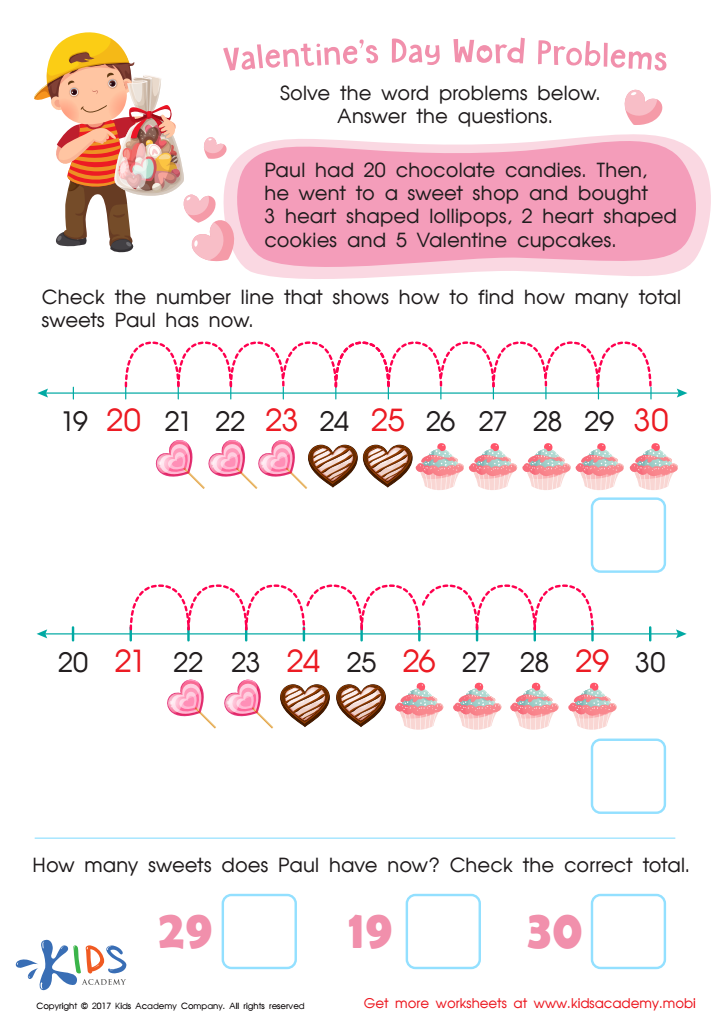
This PDF worksheet uses a number line to help solve the problems. Your child will be ready for Valentine's Day after completing it. Counting and adding from 20 is also reinforced.
Valentines Day 2 Printable
Worksheet
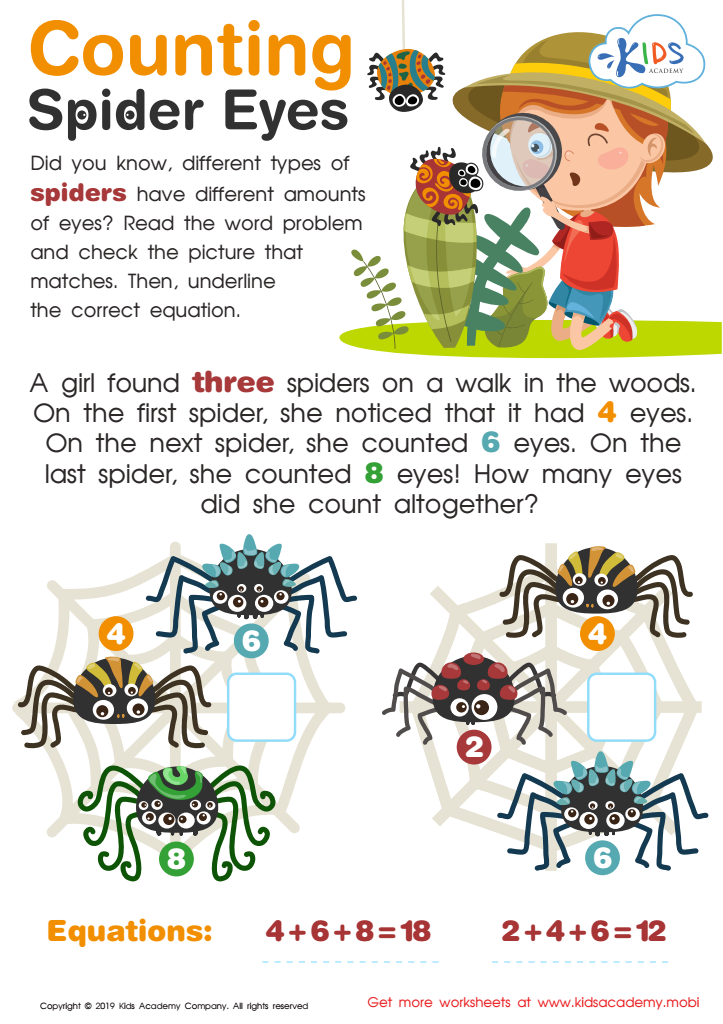
Counting Spider Eyes Worksheet

Counting Spider Eyes Worksheet

Did you know different spiders have different eye numbers? Kids will love learning this fact and solving the spider word problems on this free worksheet! Word problems promote a deeper understanding of the concept, plus they get to add up the spiders’ eyes while solving addition problems with more than one addend. Fun and math all in one!
Counting Spider Eyes Worksheet
Worksheet
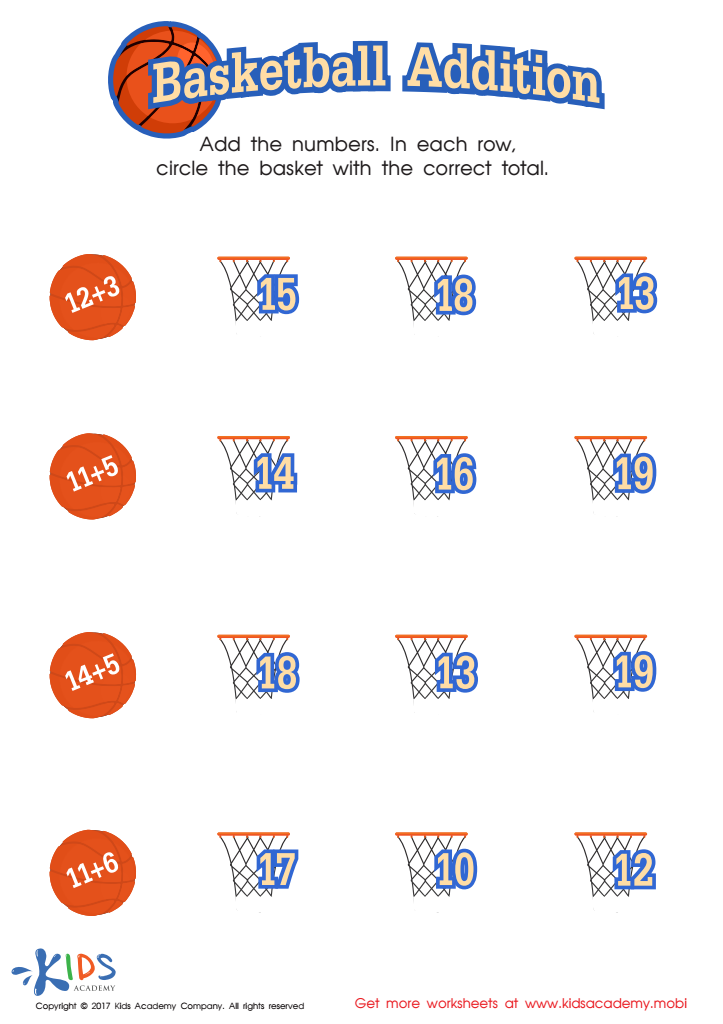
Basketball Addition Worksheet

Basketball Addition Worksheet

Basketball Addition Worksheet
Worksheet
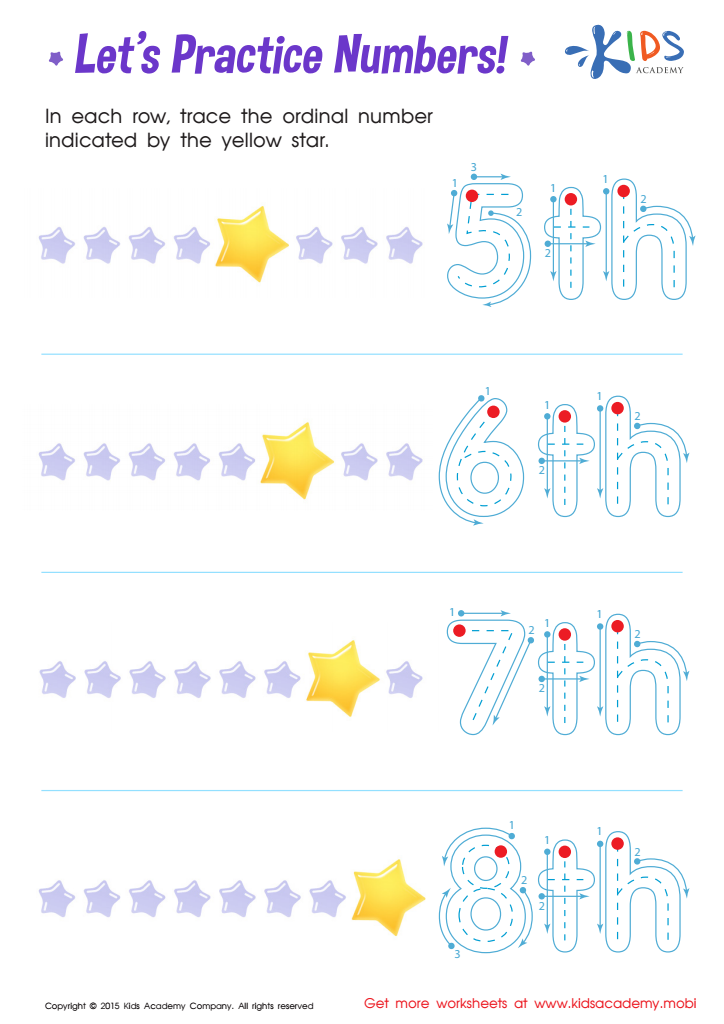
Practice Ordinal Numbers Worksheets PDF
Ordinal Numbers: Let's Practice Numbers Printable
Worksheet
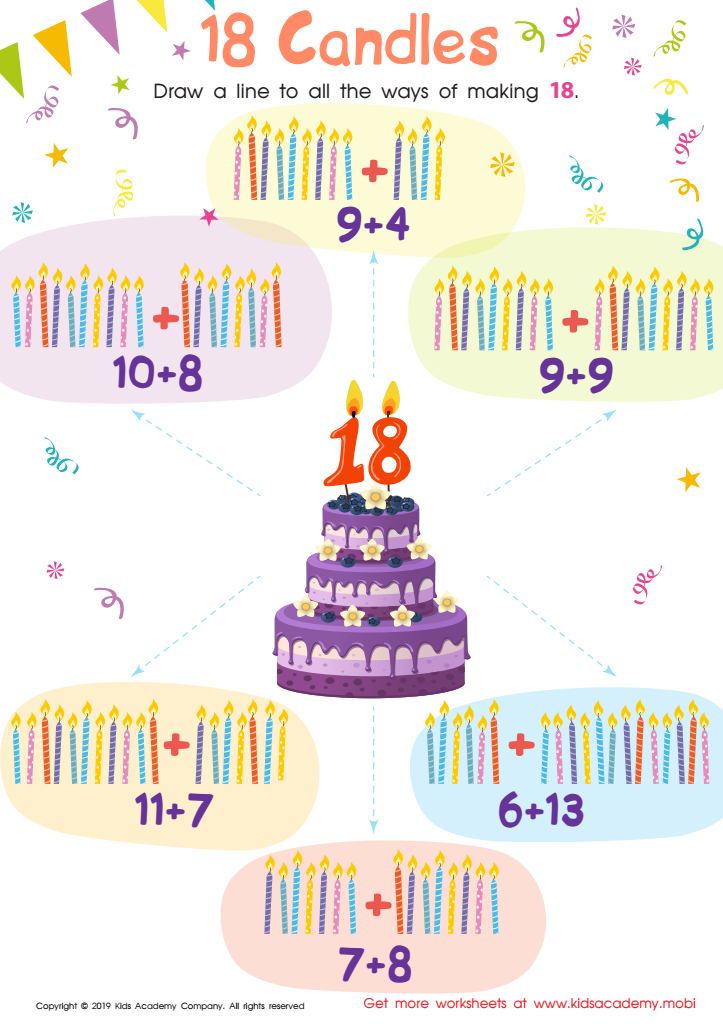
18 Candles Worksheet

18 Candles Worksheet

This worksheet is great for introducing your students to addition and subtraction. Help your kids solve the simple equations on it and draw a line from the birthday cake with 18 on it to all the solutions. Practice like this will prepare them to tackle more complex math problems.
18 Candles Worksheet
Worksheet
Counting Eggs Worksheet

Counting Eggs Worksheet

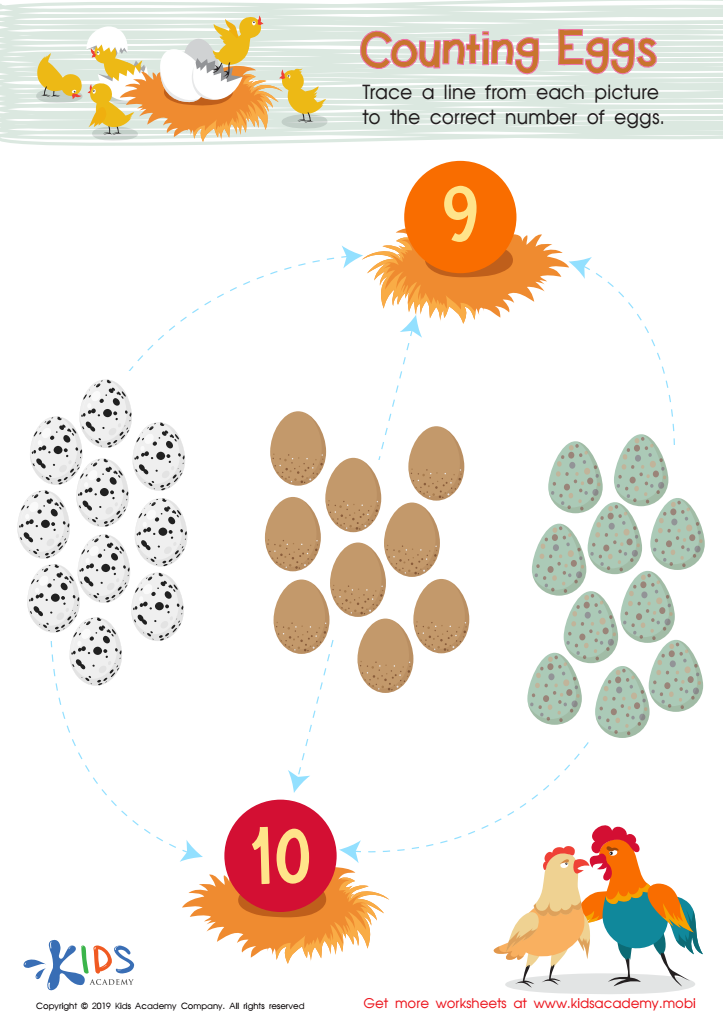
This worksheet is great for teaching kindergarteners to count and add numbers. It includes colorful pictures of eggs with numbers to trace. Help students count the eggs and draw a line to the right number. This will make learning fun and easy!
Counting Eggs Worksheet
Worksheet
Help the Bee Find 16 Flowers Worksheet

Help the Bee Find 16 Flowers Worksheet

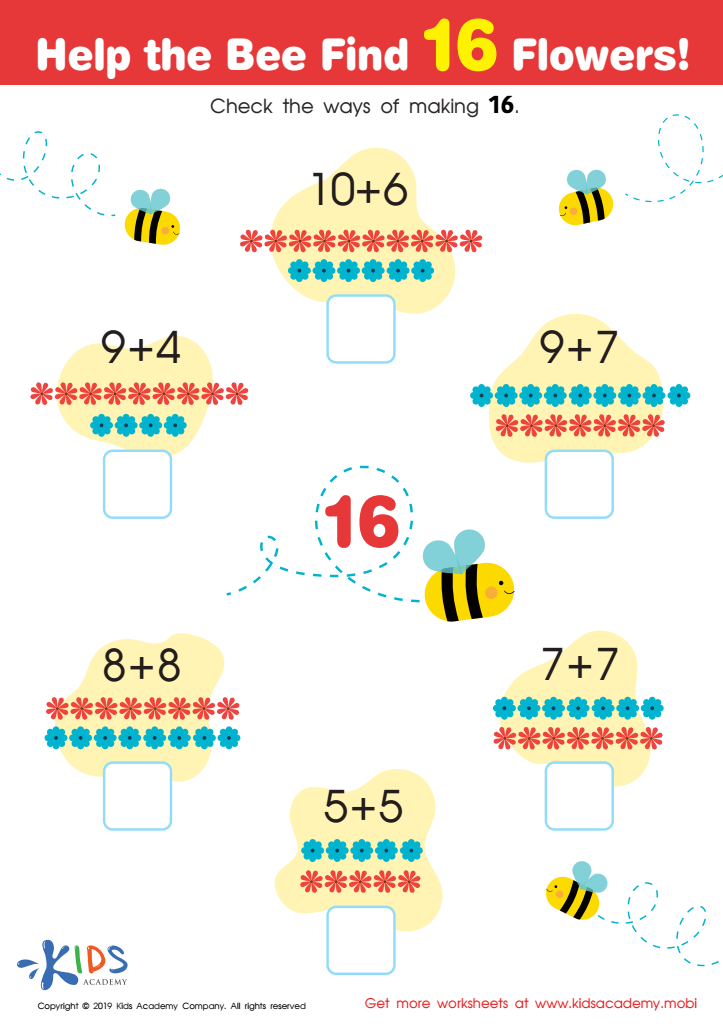
Ask your students to count as high as they can. Show them that different numbers can equal the same figure with examples like 2+2=4 and 3+1=4. Ask for more examples, then help the bees find 16 flowers by checking the ways of making 16.
Help the Bee Find 16 Flowers Worksheet
Worksheet
Addition Robot Sorter Worksheet


Addition Robot Sorter Worksheet

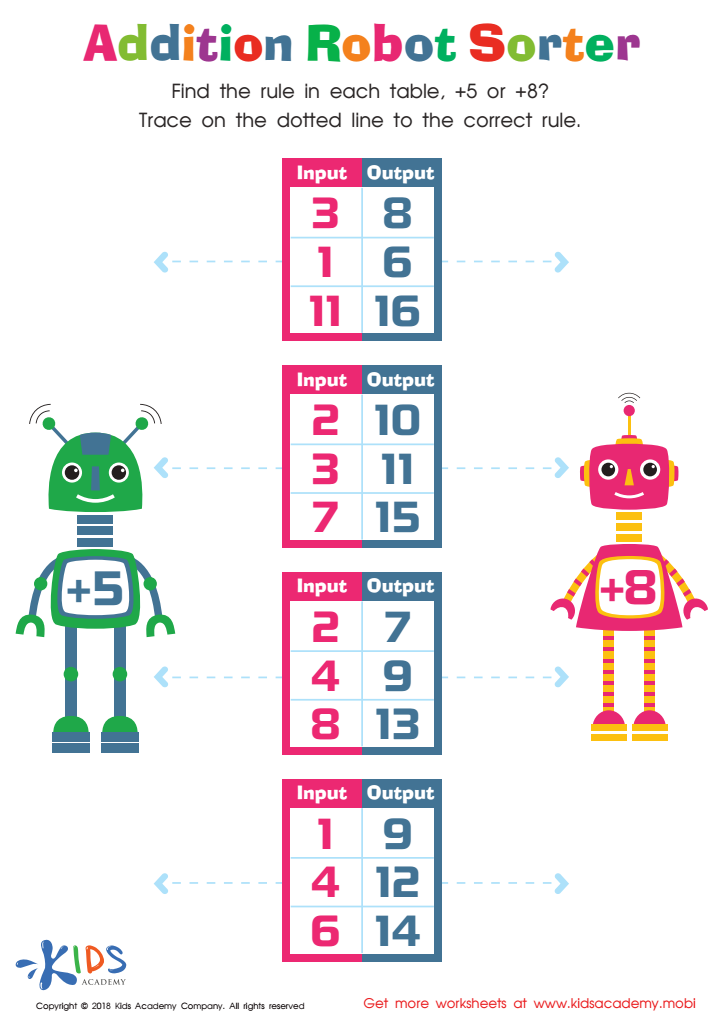
This worksheet helps your child understand addition. Have them trace the dotted lines to the correct equations: +8 and +5. It's a great way to aid their mathematical comprehension and get them comfortable with adding equations.
Addition Robot Sorter Worksheet

Worksheet


Fine motor skills are essential for children aged 5-9 as they form the foundation for various everyday tasks, including writing, drawing, and self-care. These skills involve the coordinated use of small muscles in the hands and fingers, allowing for precise movements. Proper development of fine motor skills directly influences a child's academic success, particularly in learning concepts like addition and subtraction.

When children engage in activities that enhance fine motor skills—such as using manipulatives, drawing numbers, or practicing writing—they improve their hand-eye coordination and dexterity. This development is crucial for grasping mathematical concepts like addition and subtraction, as these tasks often depend on the ability to manipulate objects or write numbers accurately.

Furthermore, strong fine motor skills boost a child's confidence, making them more willing to tackle challenging tasks and engage actively in learning. Parents and teachers play a vital role in facilitating this growth by providing engaging activities and supportive environments. Understanding this connection encourages them to prioritize fine motor skill development, recognizing its significant impact on a child's overall learning journey and confidence in mathematics. By nurturing these skills, adults set the stage for a child's academic success and lifelong learning.