Mathematical operations Normal Addition & Subtraction Worksheets for Ages 5-9
3 filtered results
-
From - To
Enhance your child's mathematical skills with our engaging Normal Addition & Subtraction Worksheets, designed specifically for ages 5-9. These worksheets provide a fun and interactive way for young learners to master basic addition and subtraction concepts. Each activity is tailored to foster critical thinking and problem-solving abilities while building a solid foundation in mathematics. With colorful illustrations and age-appropriate exercises, kids will enjoy practicing their math skills and gaining confidence in their abilities. These resources are perfect for at-home practice or classroom use, ensuring children develop their mathematical operations in a lively and supportive environment. Start their math journey today!
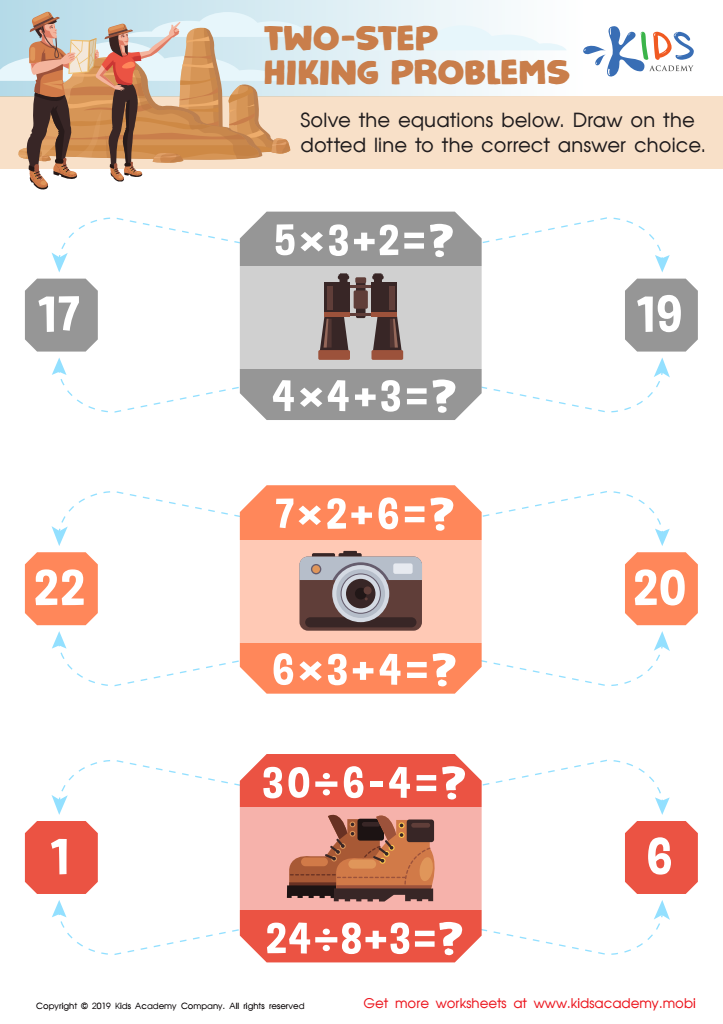
Two-Step Hiking Problems Worksheet
 Assign to My Students
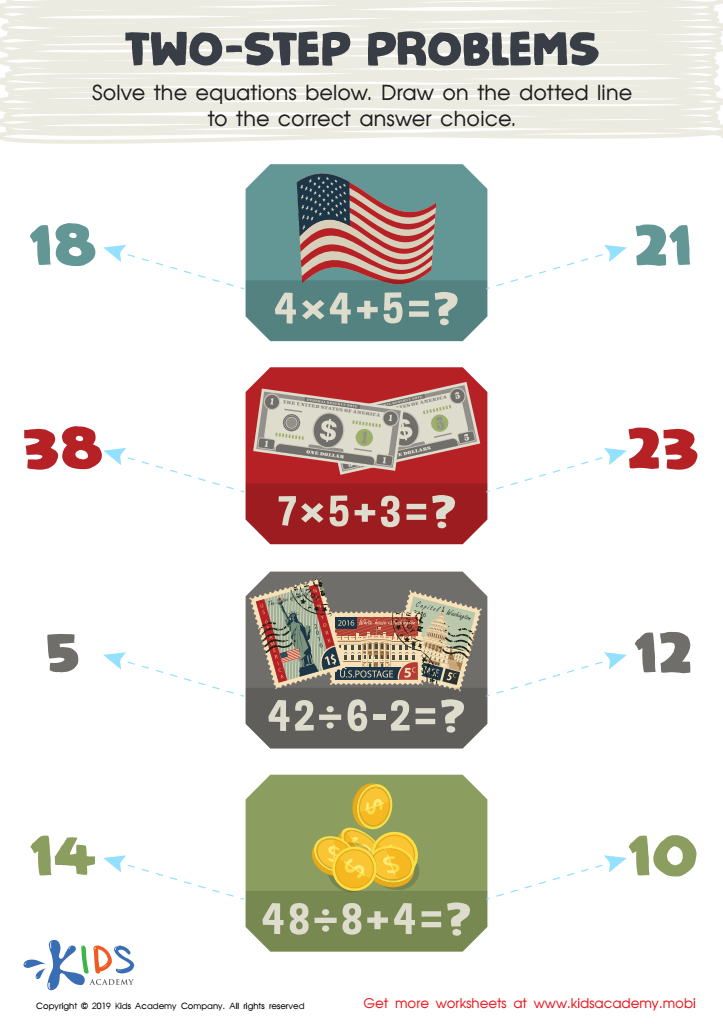
Two-Step Problems Worksheet
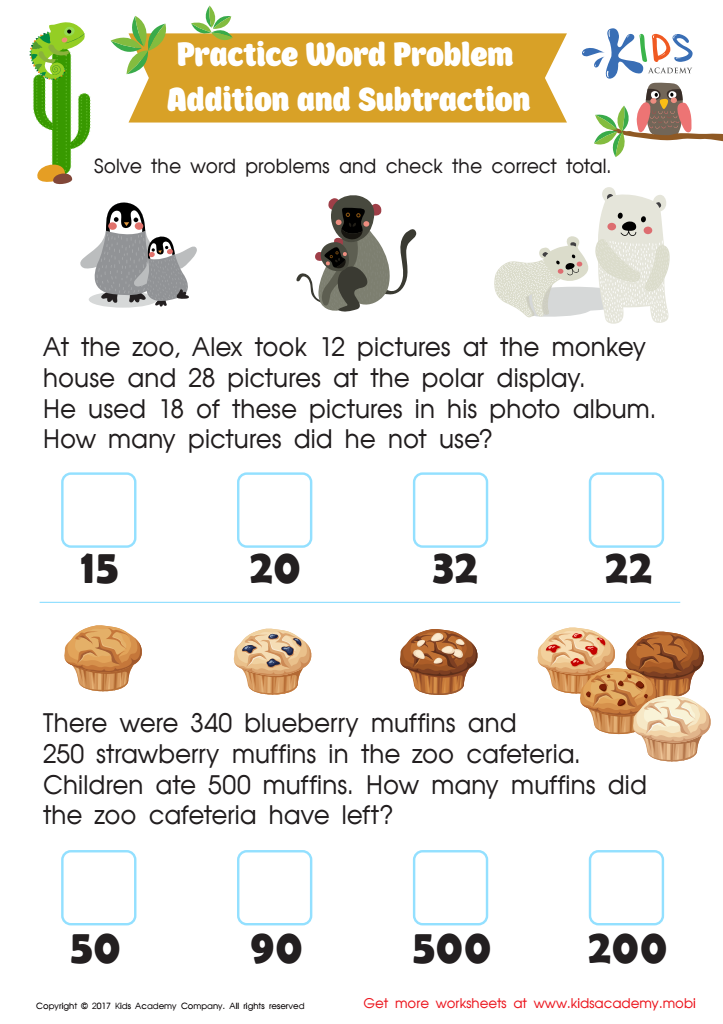
Addition and Subtraction: Word Problems Worksheet








Parents and teachers should prioritize mathematical operations like normal addition and subtraction for children aged 5-9 because these skills form the foundation of numerical understanding, which is critical for later academic success. Mastery of basic addition and subtraction supports the development of essential problem-solving skills and logical thinking, enabling children to tackle more complex mathematical concepts in their later years.
Furthermore, grasping these operations enhances a child’s confidence in their abilities, fostering a positive attitude towards math. It also aids in the development of spatial awareness and even paves the way for skills such as estimation and mental math. Learning these foundational operations during the formative years intertwines math with everyday experiences, making learning relevant and engaging.
Moreover, proficiency in addition and subtraction is not just significant for academic purposes; it is also vital for everyday activities, such as budgeting allowance or grocery shopping. Engaging in these operations helps children understand the world around them, promoting critical thinking and decision-making abilities. Thus, encouraging strong competencies in addition and subtraction equips children with both intellectual tools and practical life skills, ensuring they are better prepared for future academic challenges and everyday interactions.








