Color recognition Normal Numbers Worksheets for Ages 5-9
4 filtered results
Difficulty Level
Grade
Age
-
From - To
Subject
Activity
Standards
Enhance your child's learning journey with our engaging Color Recognition Normal Numbers Worksheets designed specifically for ages 5-9. These worksheets combine vibrant colors with number recognition activities, encouraging young learners to explore and master essential math skills in a fun, interactive way. Your child will enjoy tracing numbers, identifying colors, and completing vibrant illustrations that facilitate learning through play. Perfect for reinforcing classroom lessons or providing additional practice at home, our worksheets promote cognitive development and visual discrimination. Foster a love for learning in your child and watch them gain confidence in their ability to recognize numbers and colors together!
Favorites
With answer key
Interactive
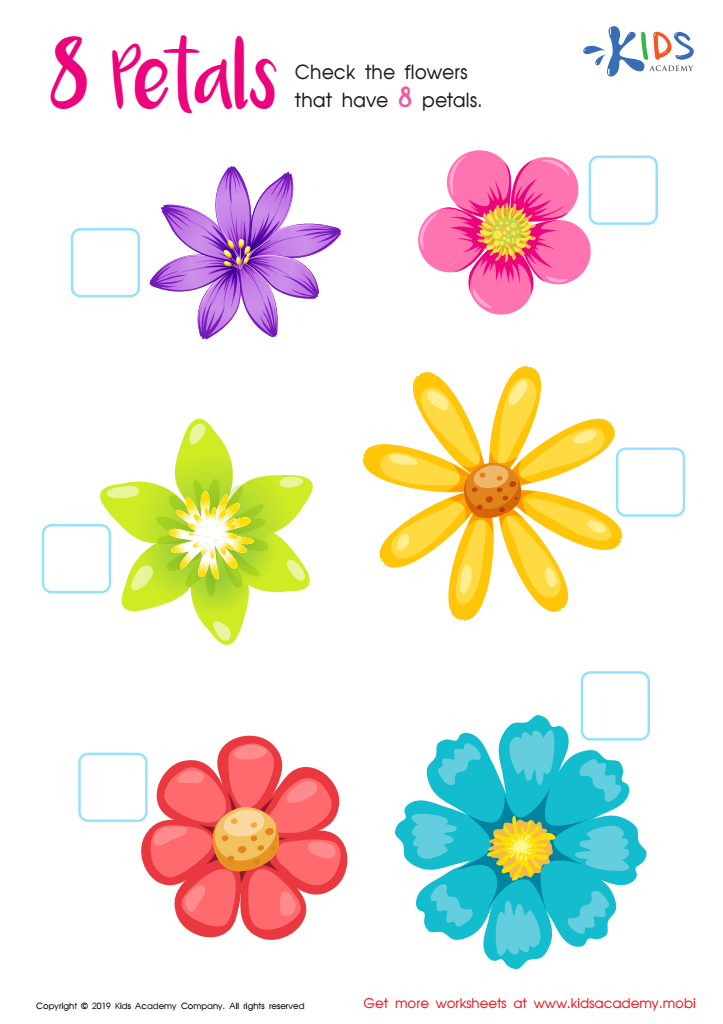
8 Petals Worksheet
Help your children master counting with this fun worksheet. It's filled with colorful flowers and they must count the petals and check the flowers with 8 petals. It's a great way to practice their counting skills and have some fun too!
 Assign to My Students
8 Petals Worksheet
Worksheet
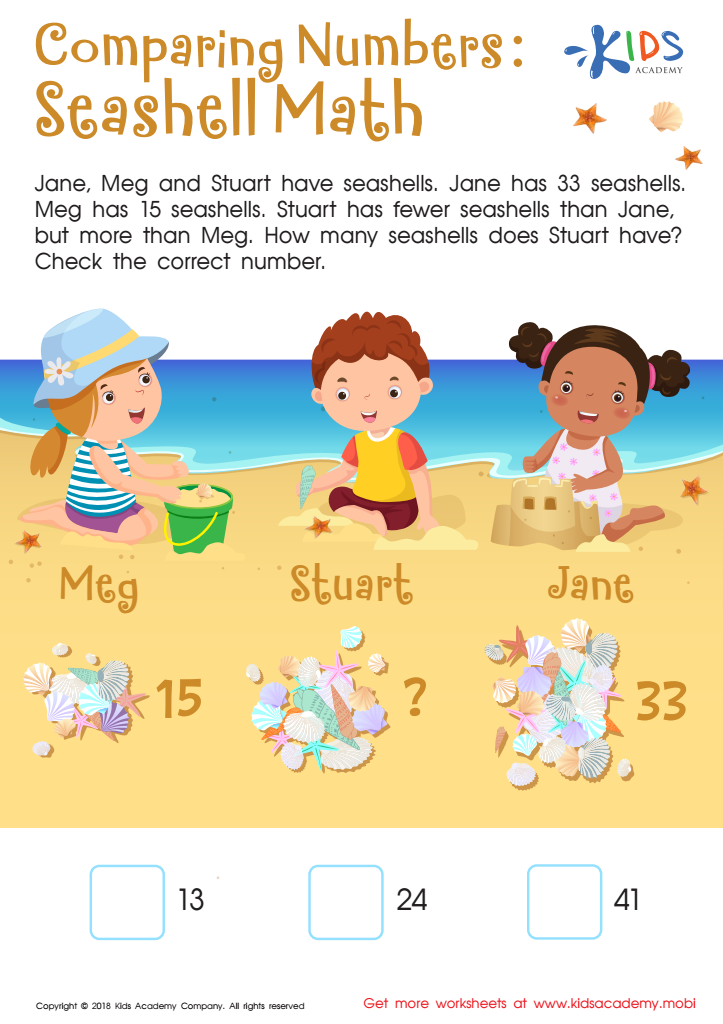
Seashell Collectors Worksheet
Bring beach fun into math with this printable worksheet! Carefully read the text with your child and figure out how many seashells Stuart has - more than Meg's, less than Jane's. Forget boring indoor math; your child won't want to miss out on this fun activity!
Seashell Collectors Worksheet
Worksheet
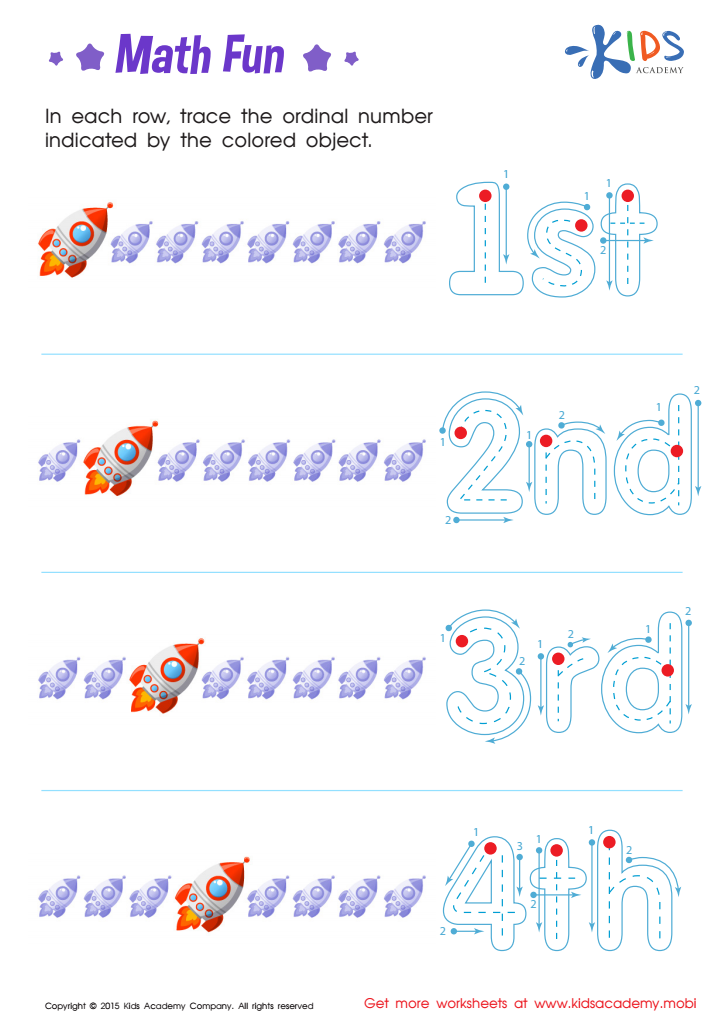
Ordinal Numbers: Math Fun Worksheet
Have fun learning ordinal numbers with our spaceship worksheet! Kids learn best while having fun and with repetition. Featuring vibrant spaceships, your child will understand placement, recognize and write ordinal numbers, and make connections. Understanding ordinal numbers leads to more advanced math concepts. Get your math whiz ready for preschool with our addition/subtraction worksheets! Have fun learning ordinal numbers and master them in no time!
Ordinal Numbers: Math Fun Worksheet
Worksheet
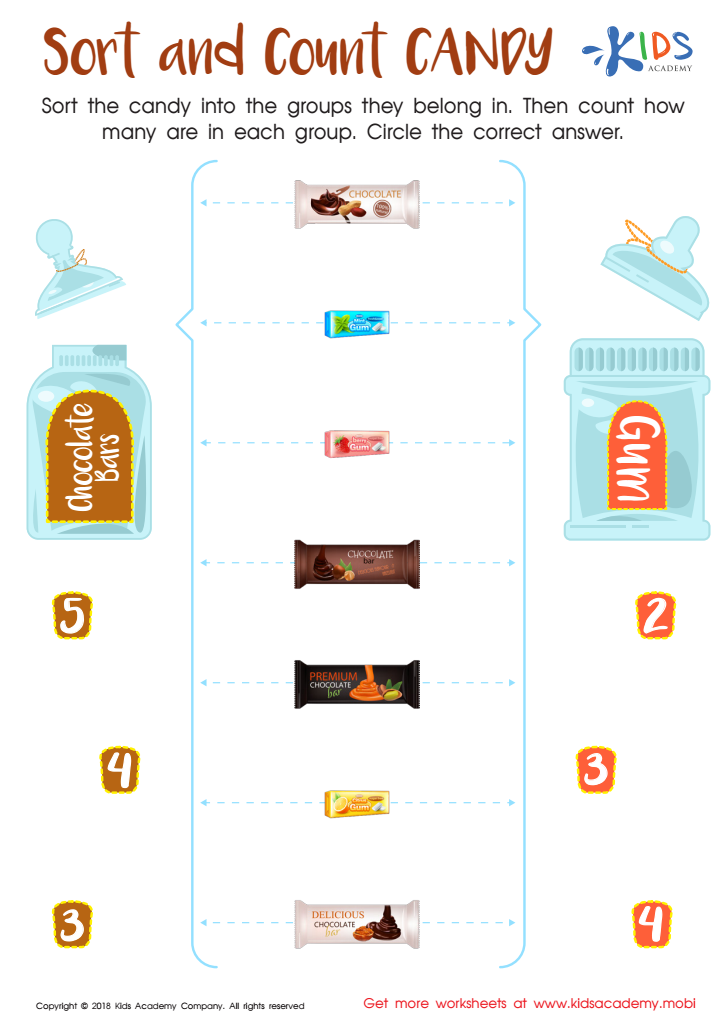
Sort and Count Candy Worksheet
Sort chocolate and candy with your kids! Help them use recognizable items and pictures to sort, practice counting with one-to-one representation, and develop their fine motor skills with the traceable lines. Download this free worksheet to get started. Yum!
Sort and Count Candy Worksheet
Worksheet
Join Kids Academy for Free
Who is primarily going to use this learning content?








Color recognition and normal number identification are foundational skills in early childhood education for children aged 5–9. Parents and teachers should care about these areas because they lay the groundwork for critical cognitive development. Recognizing colors helps children understand the world around them, enhancing their ability to categorize objects and express their creativity. This skill supports early learning in art, science, and language, enabling children to communicate and articulate their feelings, thoughts, and observations.
Similarly, understanding normal numbers is vital for mental math, problem-solving, and logical thinking. These competencies form the basis for future mathematics learning, which is crucial for academic success. When children grasp numerical concepts, they develop confidence in their abilities and are more likely to engage in mathematical tasks with enthusiasm.
Moreover, both color recognition and number identification play a significant role in daily life activities, from counting objects to matching colors in their environment. By prioritizing these skills, parents and teachers foster an engaging and interactive learning environment that supports holistic development, paving the way for a child's success both inside and outside the classroom. Thus, they direct their focus on promoting early literacy in these essential domains for a solid educational foundation.