Geography knowledge Normal Math Worksheets for Ages 5-9
6 filtered results
-
From - To
Unlock the world of learning with our Geography Knowledge Normal Math Worksheets designed for ages 5-9. These engaging and educational worksheets seamlessly blend geography and math skills, fostering an appreciation for maps, landmarks, and directions while enhancing numerical abilities. Perfect for young learners, each worksheet is crafted to support the development of critical thinking, spatial awareness, and problem-solving skills. With colorful, age-appropriate content, our worksheets make learning fun and interactive. Empower your child’s education journey with resources that promote both geographic literacy and math proficiency. Discover the world through math and geography today!
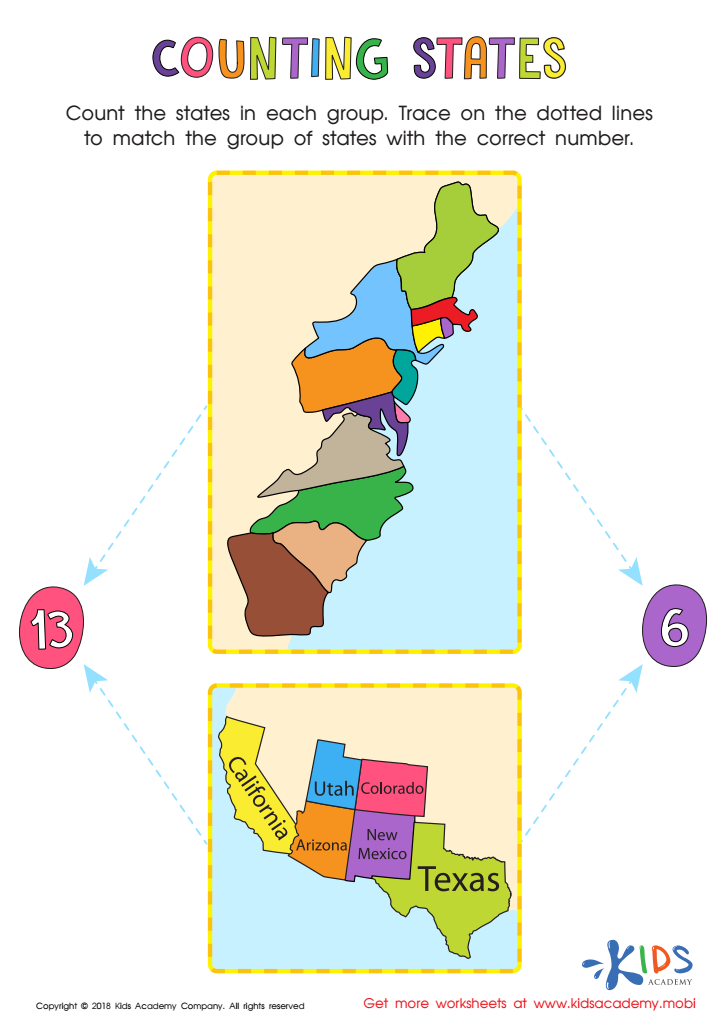
Counting States Worksheet
 Assign to My Students
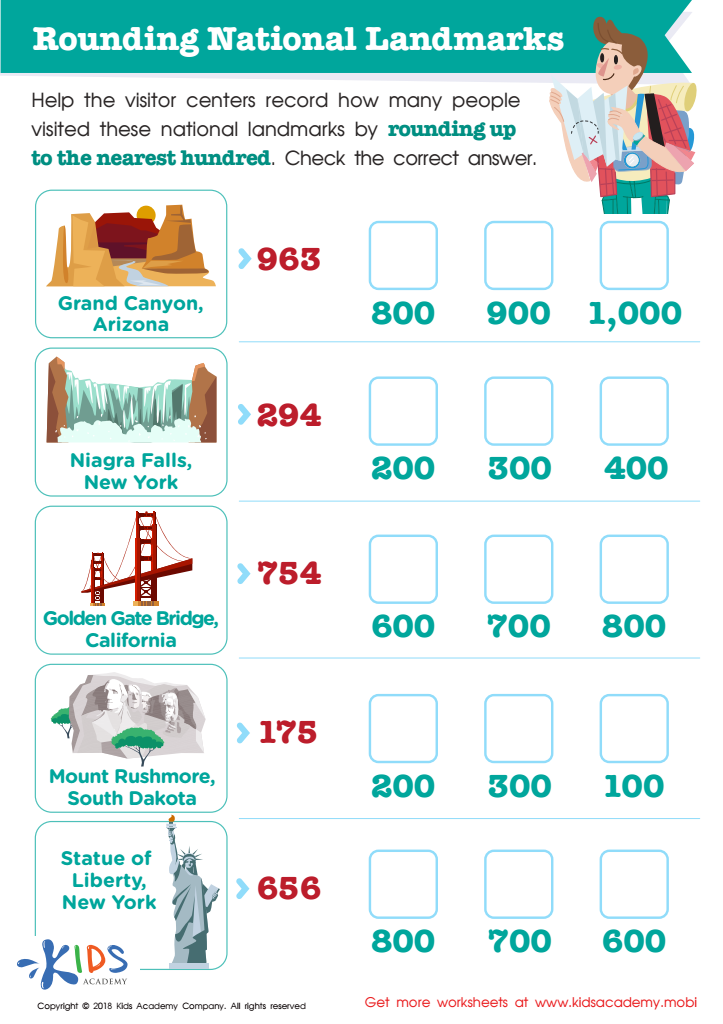
Rounding National Landmarks Worksheet
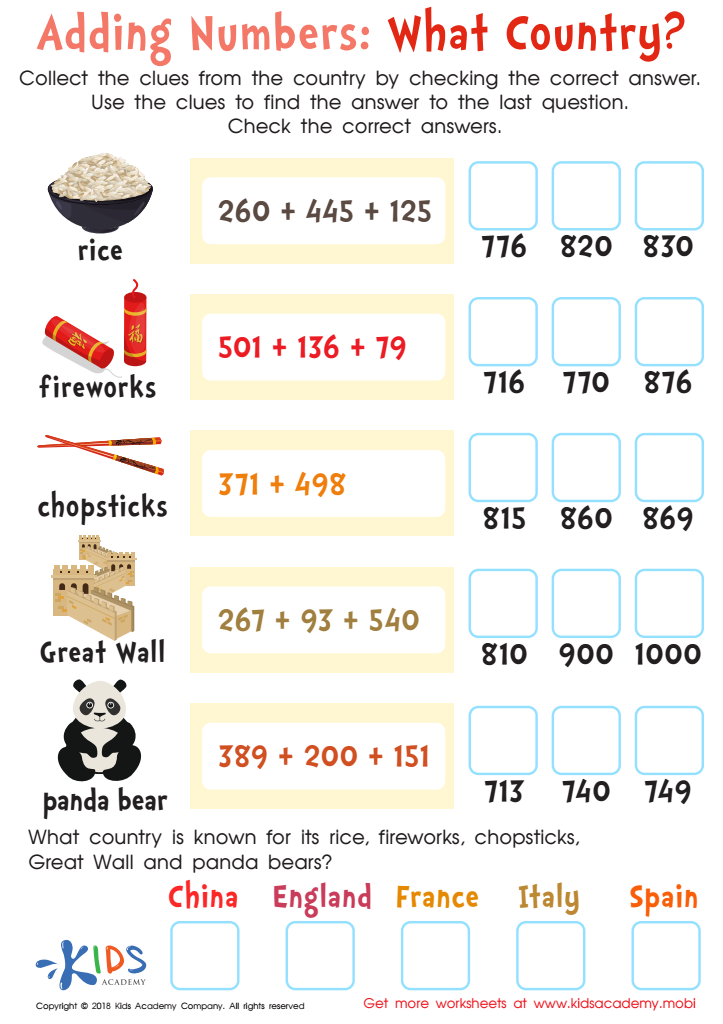
Adding Numbers: What Country Worksheet
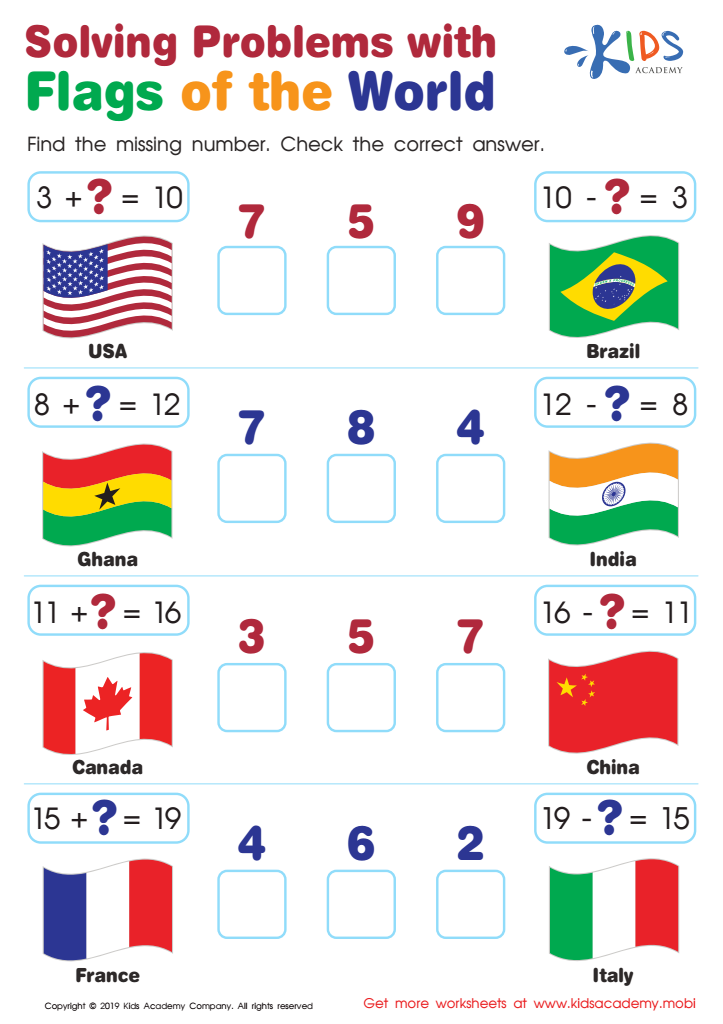
Solving Problems with Flags of the World Worksheet
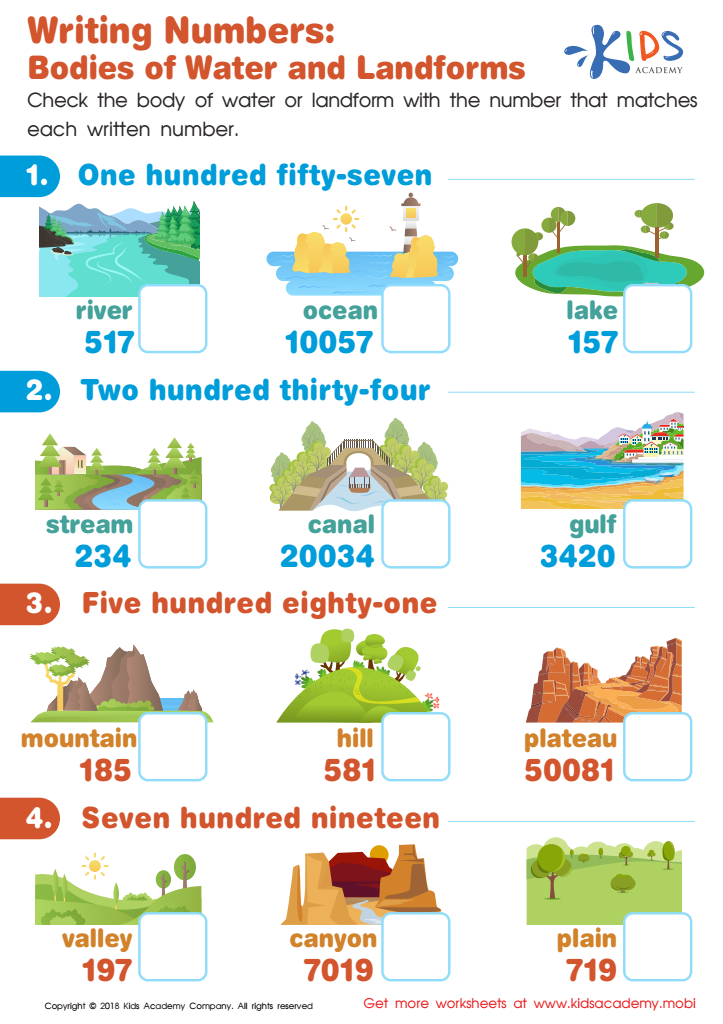
Bodies of Water and Landforms Writing Numbers Worksheet
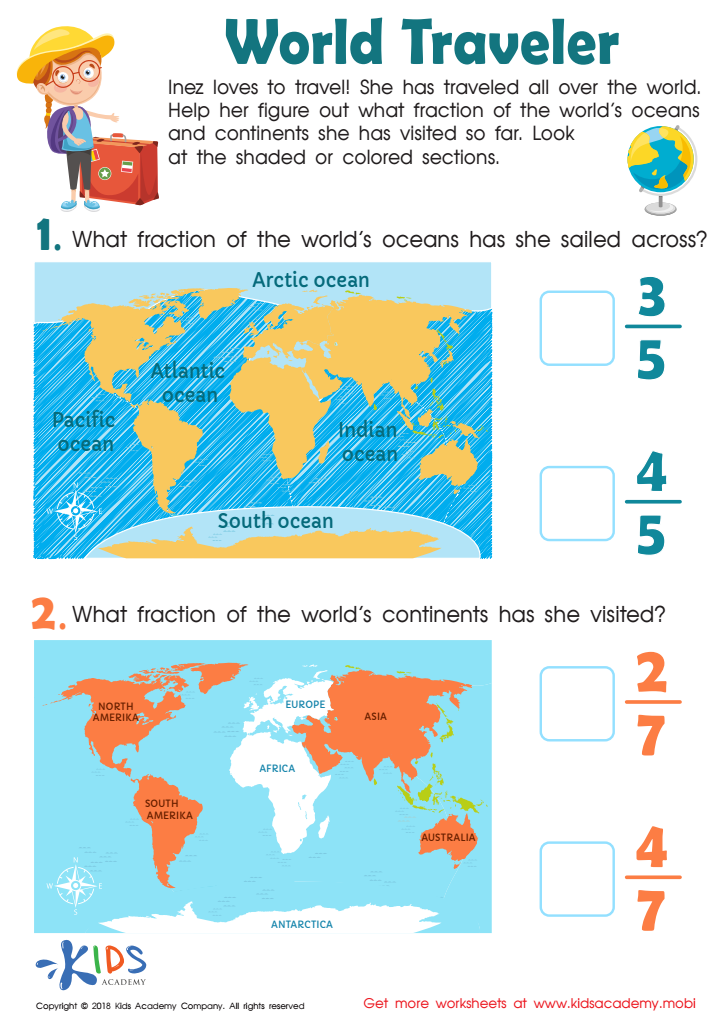
World Traveler Worksheet






Geography and math are vital cornerstones of early education for children ages 5-9, laying the foundation for holistic learning and cognitive growth. Integrating geography with normal math for young learners makes abstract concepts more tangible and engaging. Understanding geography enhances children’s spatial perception, teaching them to identify continents, countries, and states. It fosters a sense of global awareness and cultural appreciation, paving the way to becoming informed and empathetic global citizens.
Conversely, math provides critical thinking tools, problem-solving skills, and analytical abilities essential for academic success and practical living. By connecting geographical knowledge with mathematical concepts like number lines, counting, measuring distances, and charts, children see the real-world applications of both subjects. For instance, learning about weather patterns in different regions can help explain basic statistical concepts, while mapping exercises can enhance a child's ability to measure and calculate distance, reinforcing key math skills.
By fostering a well-rounded education, parents and teachers can nurture a child's innate curiosity while equipping them with the skills needed to navigate an increasingly interconnected world. Thus, emphasizing geography and math for young learners promotes cognitive development, cultural literacy, and lifelong learning habits crucial in a growingly globalized society.








