Critical Thinking Normal Matching Worksheets for Ages 5-9
4 filtered results
Difficulty Level
Grade
Age
-
From - To
Subject
Activity
Standards
Explore our engaging "Critical Thinking Normal Matching Worksheets" designed specifically for children aged 5-9! These worksheets foster essential reasoning and deduction skills while keeping learning fun and interactive. Young learners will enjoy practicing their critical thinking abilities through stimulating matching exercises that challenge their understanding and promote problem-solving. Our thoughtfully crafted content encourages kids to make connections between ideas, enhancing cognitive development at an early age. Ideal for classrooms or home learning, these worksheets support educational growth by blending creative thinking with foundational knowledge. Start nurturing your child's critical thinking skills today by downloading our printable worksheets!
Favorites
With answer key
Interactive
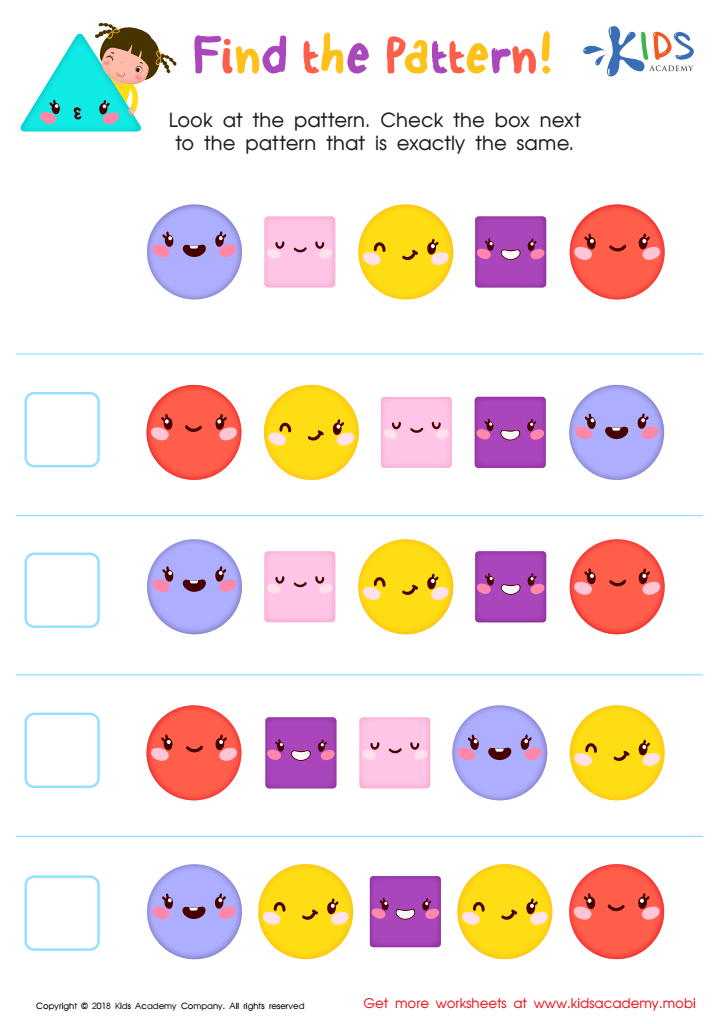
Find the Pattern Worksheet
This colorful pattern worksheet is perfect for testing your kids' pattern recognition. The bright colors will keep them engaged, while they check the box next to the pattern that is the same. Ask your kids to identify the colors used and see how well they can spot similarities!
 Assign to My Students
Find the Pattern Worksheet
Worksheet
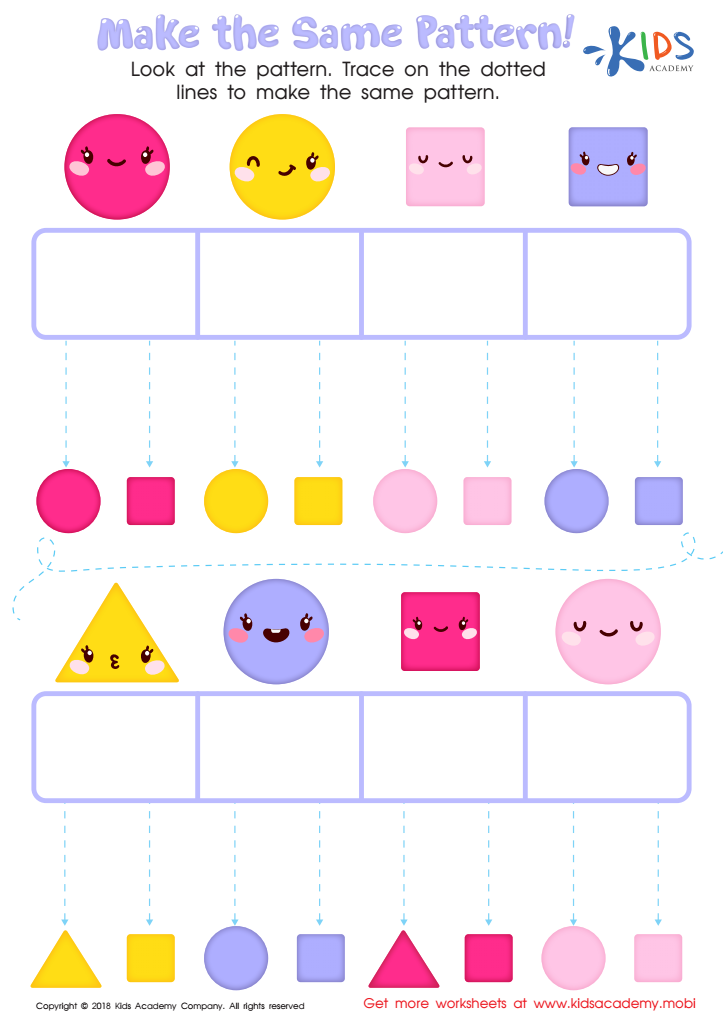
Make the Same Pattern Worksheet
Help your child look at the patterns in the tracing sheet and guide them to trace the dotted lines to match the shapes. This exercise tests their ability to copy pictures correctly, so emphasize the importance of paying attention to the instructions and details.
Make the Same Pattern Worksheet
Worksheet
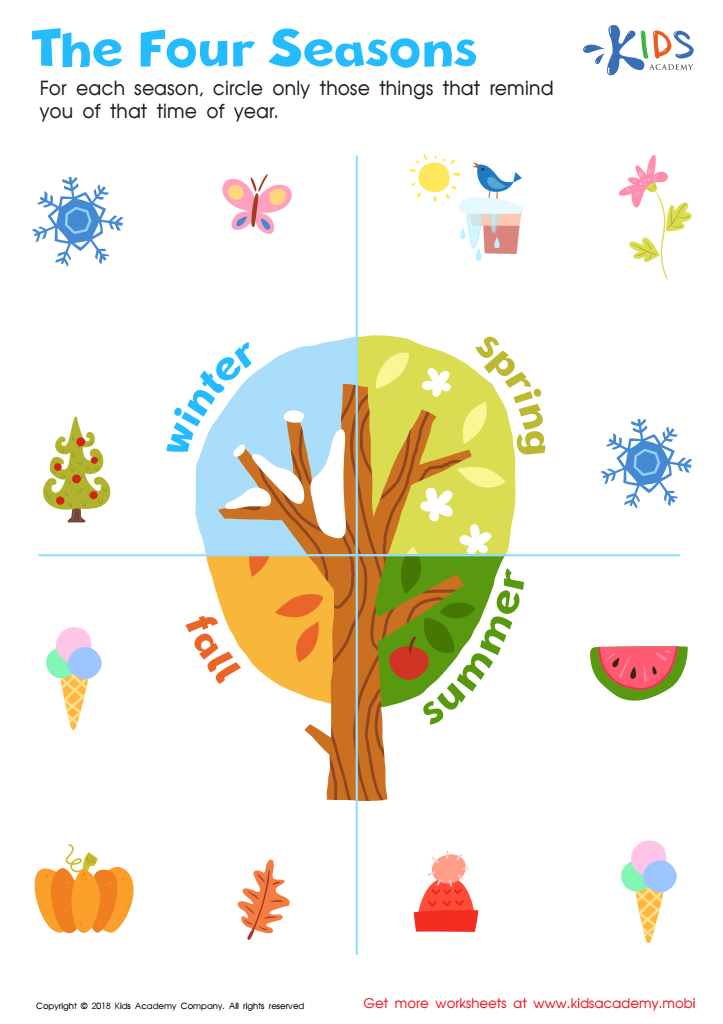
The Four Seasons Worksheet
Tell your child to circle things that remind them of each season. The tree has four squares, one for each season. Some things in each square match the season, others don't. Ask if any are out of place. Help them circle only items that remind them of that season.
The Four Seasons Worksheet
Worksheet
Join Kids Academy for Free
Who is primarily going to use this learning content?








Critical Thinking Normal Matching (CTNM) is essential for children aged 5-9 because it fosters foundational skills in reasoning, problem-solving, and analytical thinking. During early childhood, the brain is immensely adaptable, making it an ideal time to cultivate critical thinking skills. Engaging in CTNM activities helps children make connections between concepts, fostering an ability to compare, contrast, and categorize information effectively.
Parents and teachers should care about this because critical thinking is integral for academic success and lifelong learning. Children who can orient themselves in varied scenarios, ask questions, and evaluate information will navigate challenges better both in school and beyond. Furthermore, in a world inundated with information, the ability to discern valid information from misinformation is crucial.
Additionally, CTNM nurtures creativity and innovation. By encouraging children to think critically about the world around them, educators and parents can raise independent thinkers who approach learning with curiosity. This prepares them not only for academic assessments but empowers them to become thoughtful, responsible citizens. In essence, integrating critical thinking skills through facilitated activities in early education sets the stage for young learners to thrive in a complex, fast-paced, and interrelated world.