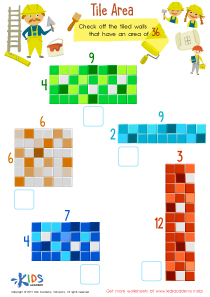
Problem-Solving Skills Normal Matching Worksheets for Ages 5-9
5 filtered results
-
From - To
Unlock your child's potential with our engaging Problem-Solving Skills Normal Matching Worksheets designed specifically for ages 5-9. These interactive worksheets promote critical thinking while enhancing cognitive abilities through fun and practical matching exercises. Perfect for early learners, our resources help children identify patterns, make connections, and develop essential problem-solving strategies. Each worksheet encourages logical reasoning and boosts confidence in mathematical concepts. Kids will enjoy the captivating illustrations and stimulating activities that inspire independent thinking. Ideal for use at home or in the classroom, these worksheets are a fantastic tool to support your child's educational journey. Start fostering problem-solving skills today!
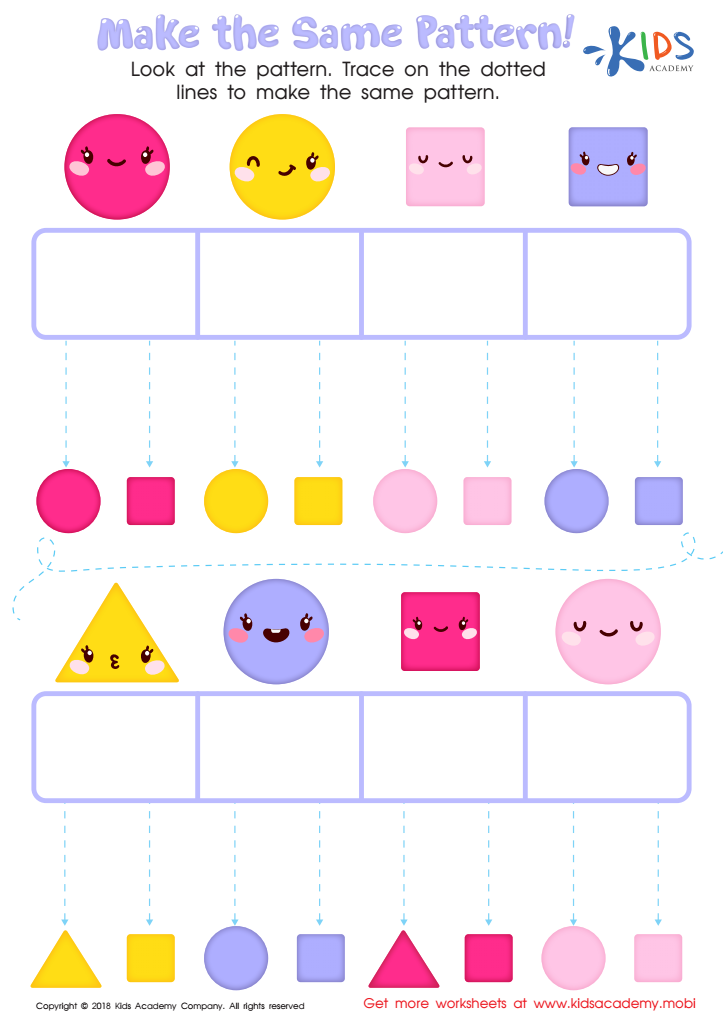
Make the Same Pattern Worksheet
 Assign to My Students

Cinderella Geometry Maze Worksheet
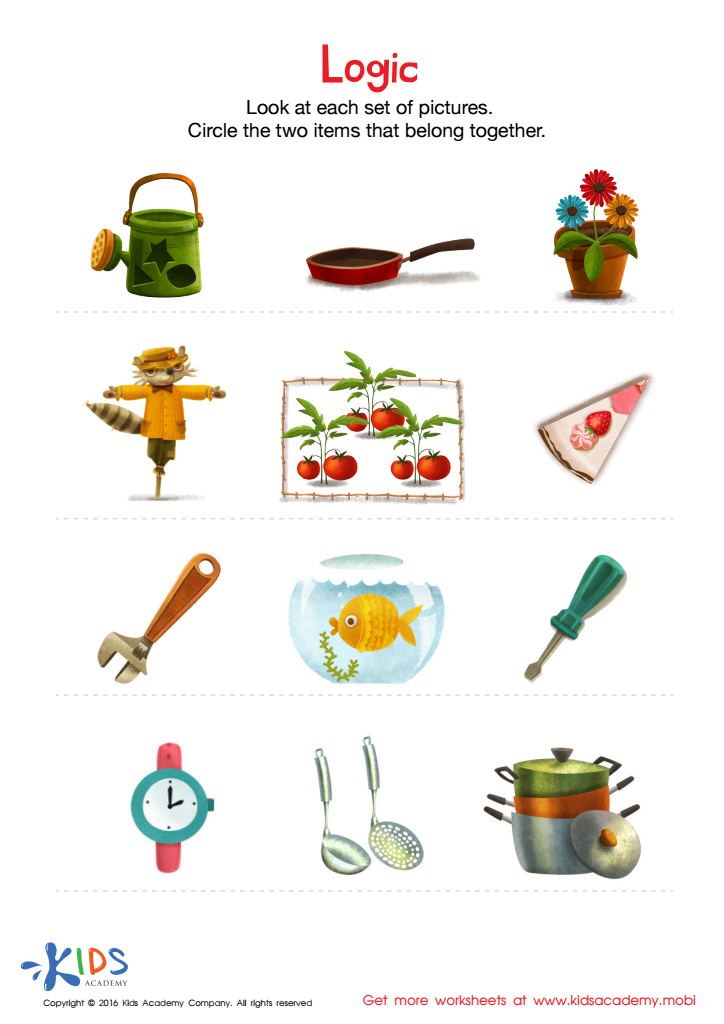
Logic Game Sorting Worksheet
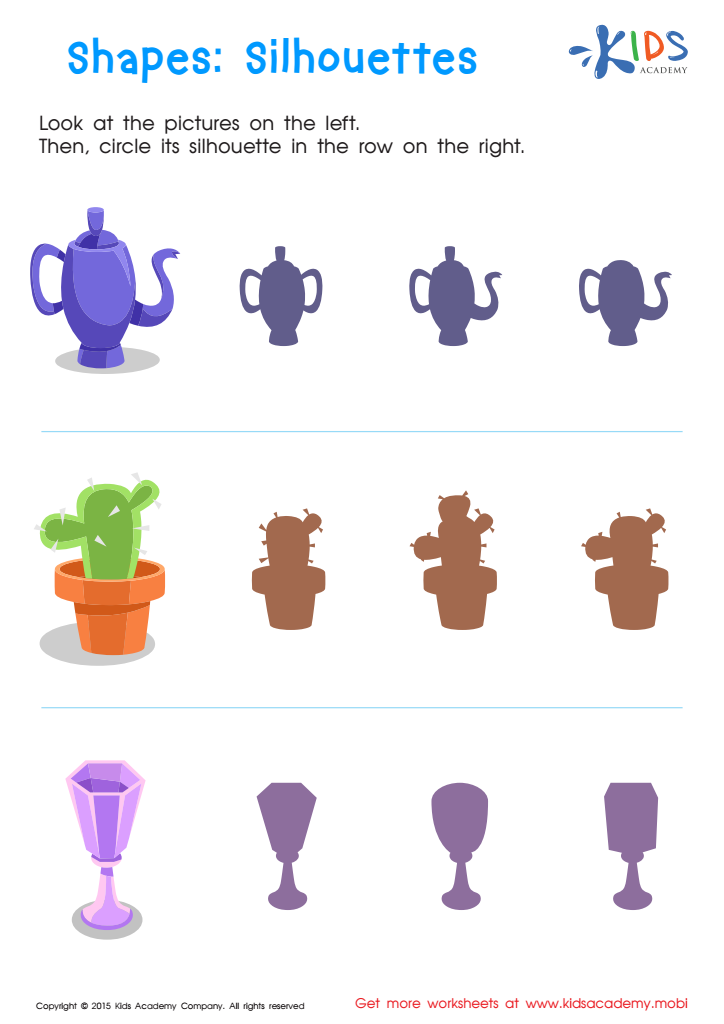
Silhouettes – Shapes Worksheet
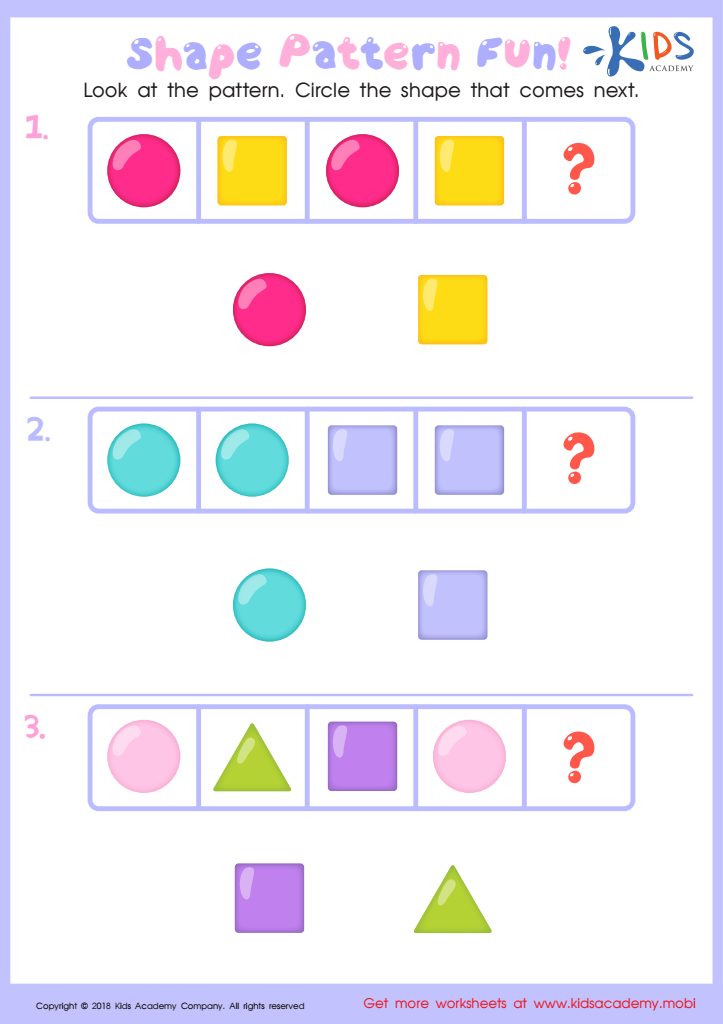
Shape Pattern Fun Worksheet








Parents and teachers should prioritize developing problem-solving skills in children aged 5-9 because these foundational abilities set the stage for lifelong learning and success. At this age, children are naturally curious and eager to explore, making it an ideal time to foster their critical thinking and reasoning capabilities. Problem-solving skills enhance creativity and enable children to approach challenges with confidence.
Engaging in normal matching activities, where children compare and pair similar items or concepts, encourages them to identify patterns, make connections, and draw conclusions. These activities boost cognitive development by promoting analytical thinking and improving memory. Additionally, children learn resilience as they encounter and navigate obstacles, understanding that mistakes can be valuable learning experiences.
Moreover, problem-solving skills are crucial for social development. Children learn to collaborate with peers, share ideas, and develop communication skills through teamwork in solving problems. These skills support emotional intelligence and prepare children for more complex challenges as they transition to higher grades.
Ultimately, investing in problem-solving skills during the early years equips children with essential tools to navigate their academic journey and everyday life, fostering a growth mindset that benefits their overall development. Parents and teachers play a pivotal role in nurturing these skills, ensuring a brighter future for our children.