Number Recognition Normal Subtraction Worksheets for Ages 5-9
4 filtered results
Difficulty Level
Grade
Age
-
From - To
Subject
Activity
Standards
Unlock your child’s potential with our engaging Number Recognition Normal Subtraction Worksheets designed for ages 5-9. These printable worksheets help children master number recognition while practicing subtraction concepts. Tailored to captivate young learners, each worksheet incorporates colorful illustrations and interactive exercises that make learning fun and effective. By combining visual aids with hands-on practices, these resources help students identify numbers and develop essential subtraction skills. Create a solid math foundation for your child with our thoughtfully designed worksheets, perfect for home or classroom use. Foster a love for learning and watch your child's confidence grow in their mathematical abilities!
Favorites
With answer key
Interactive
Adding Numbers: Conservation Worksheet
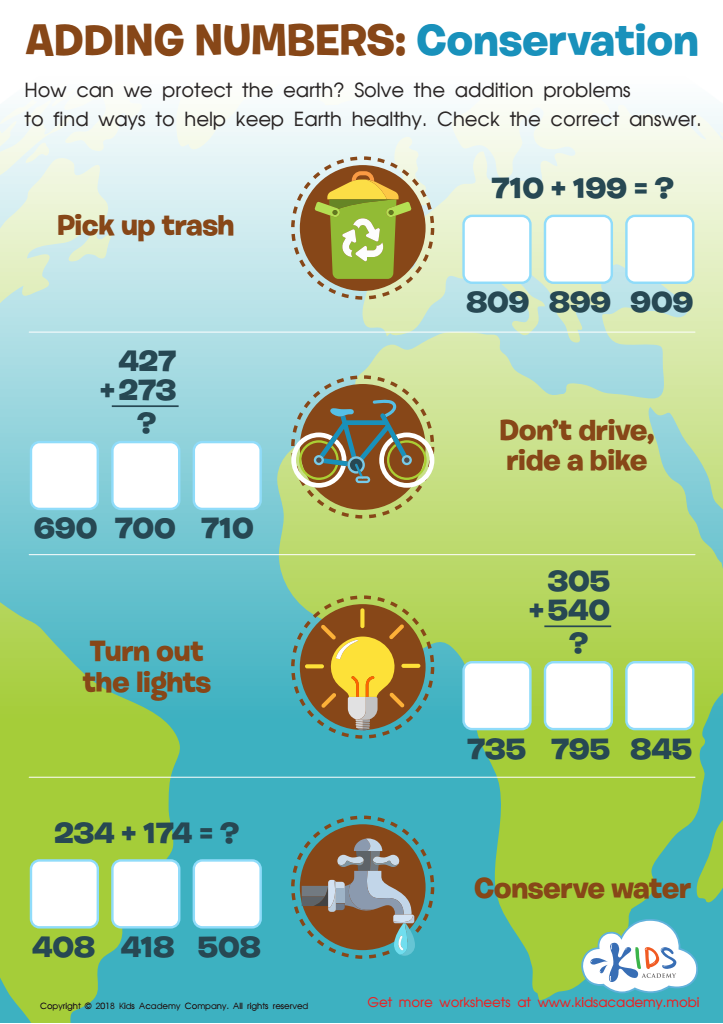
We all live on the Earth, which provides us with the vital necessities for survival. Unfortunately, we too often take advantage of this, causing pollution, water wastage and global warming. Help teach your kids how we can protect our planet - ask them to come up with good ideas and work together to find solutions. Challenge them to solve the subtraction problems to see what they can do to help keep the Earth healthy.
 Assign to My Students
Adding Numbers: Conservation Worksheet
Worksheet
Counting in Your Community Worksheet
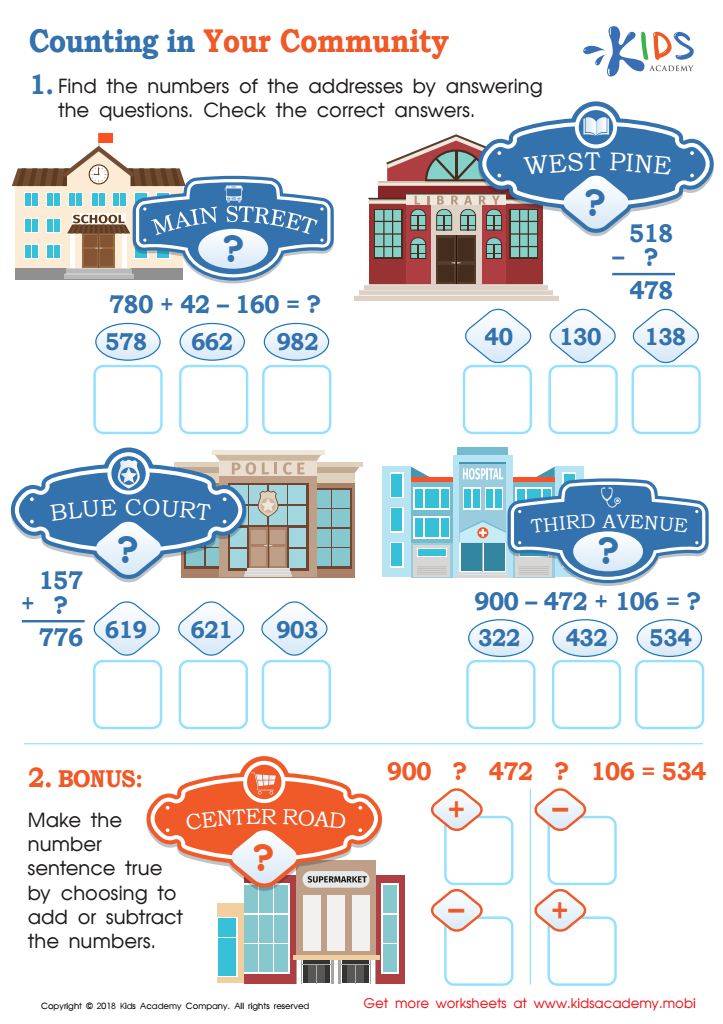
Introduce your kids to the idea of a community, where different people and buildings co-exist, each playing their part for the community's progress. Ask them to name the buildings they see in their community. Then work through this worksheet to find the numbers of the addresses by answering the questions. Check the answers once they've solved the equations.
Counting in Your Community Worksheet
Worksheet
Fact Families: Easter Math Worksheet
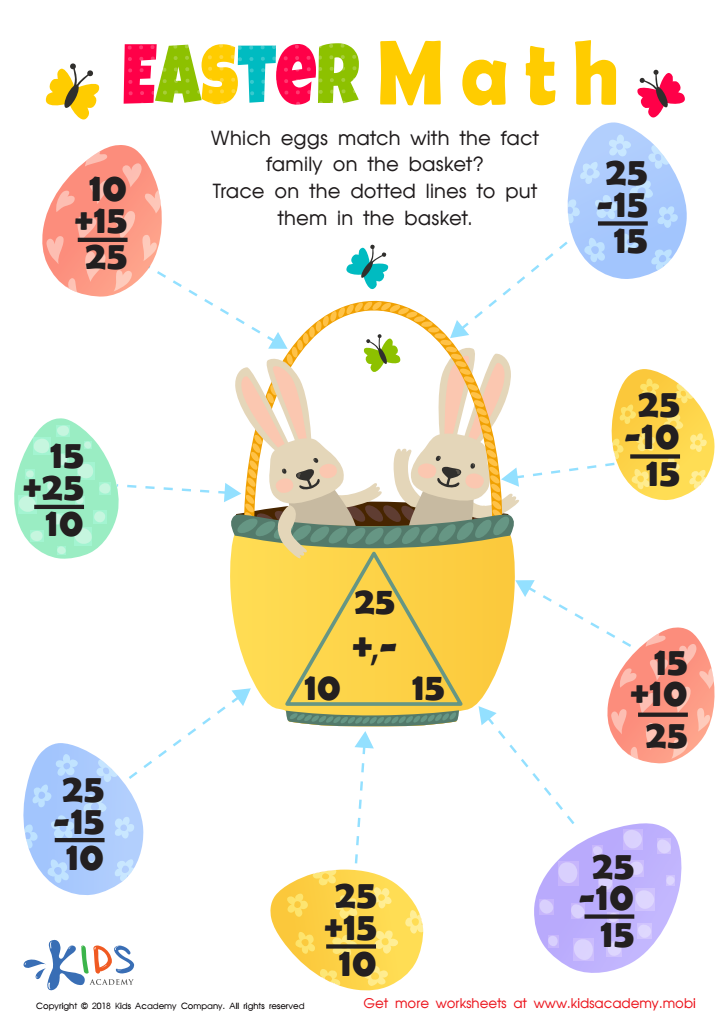
Kids will love this vibrant PDF packed with Easter math fun! Match facts with the colorful eggs, add and subtract multiples of five to boost automaticity, and have a blast with the bunny friends!
Fact Families: Easter Math Worksheet
Worksheet
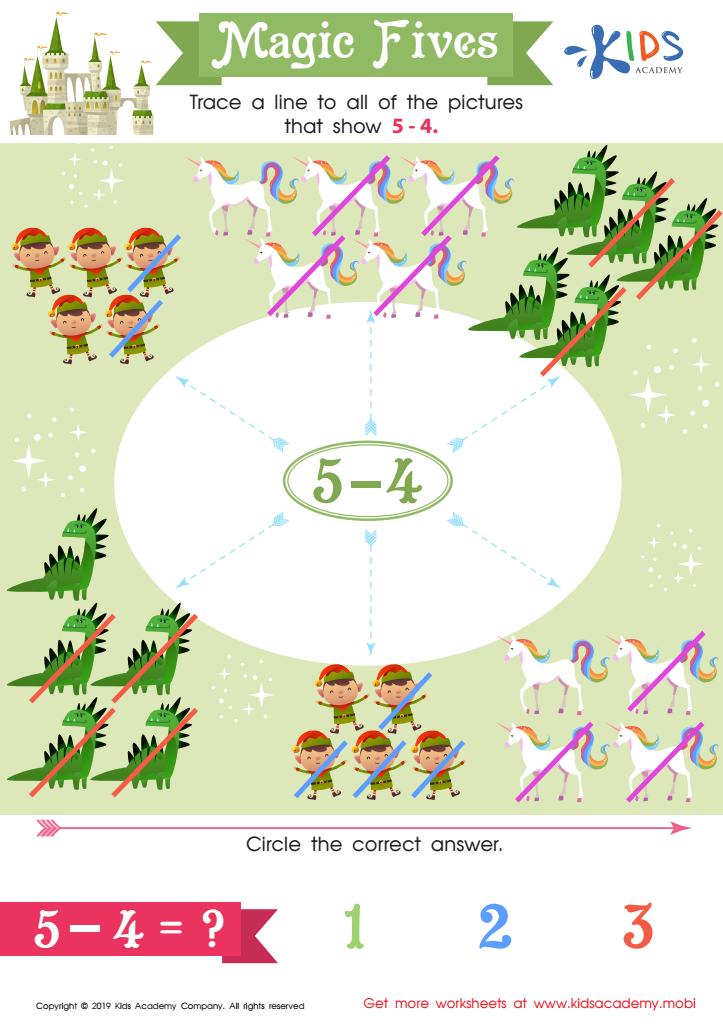
Magic Fives Worksheet
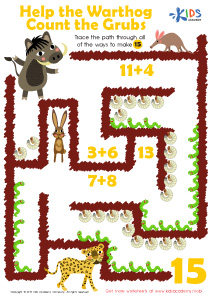
Help your students identify the objects & people in the worksheet. Point to the equation 5 -4 in the center, then get them to count the items and trace a line connecting those that add up to 5 - 4.
Magic Fives Worksheet
Worksheet
Join Kids Academy for Free
Who is primarily going to use this learning content?








Number recognition and subtraction skills are foundational elements of early mathematics education for children aged 5-9. Understanding these concepts is pivotal in helping young learners develop critical thinking and problem-solving abilities essential for lifelong learning.
Firstly, number recognition forms the basis of all mathematical learning. When students can identify and work with numbers fluently, they become more confident in tackling more complex arithmetic concepts. Without a solid grasp of numbers, students may struggle with future math lessons, leading to gaps in understanding that can hinder academic progress.
Moreover, normal subtraction equips children with the ability to understand the concept of taking away, which is fundamental in everyday life. Mastering subtraction enhances their cognitive skills, including logical reasoning and comprehension of quantities and value. This foundational skill is vital for real-world applications, from managing money to basic problem-solving tasks.
By ensuring children are proficient in number recognition and normal subtraction, parents and teachers can foster a positive math mindset. Creating a supportive environment that emphasizes these skills will not only boost children's academic performance but also encourage a love for learning and inquiry that can positively affect other subjects as well. Therefore, investing time in these areas is crucial for holistic child development.