
Learning about ecosystems Normal Animals Worksheets for Ages 5-9
3 filtered results
Difficulty Level
Grade
Age
-
From - To
Subject
Activity
Standards
Explore the fascinating world of ecosystems with our "Learning about Ecosystems Normal Animals Worksheets" designed for children ages 5-9. These engaging worksheets introduce young learners to various habitats, animal interactions, and the critical roles each species plays in their environment. Through captivating illustrations and fun activities, kids will discover the connections between plants and animals while enhancing their observation and critical thinking skills. Ideal for use in the classroom or at home, these resources foster a love for nature and encourage children to become eco-conscious thinkers. Dive in and help your child unlock the wonders of the natural world today!
Favorites
With answer key
Interactive
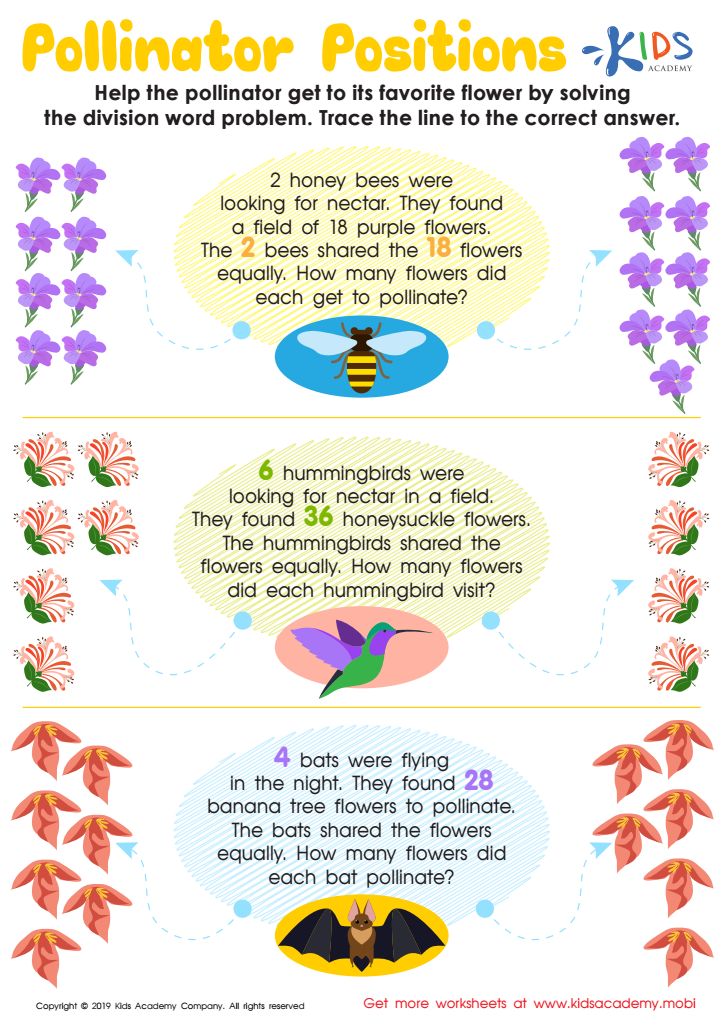
Pollinator Positions Worksheet
Kids will love learning about pollinators and how vital they are. Help their favorite friends get to the right flowers with this fun PDF. Children can solve the problems without even knowing they're doing division; just read the word problems and use the highlighted numbers. Finish by tracing the lines to the correct quotient!
 Assign to My Students
Pollinator Positions Worksheet
Worksheet
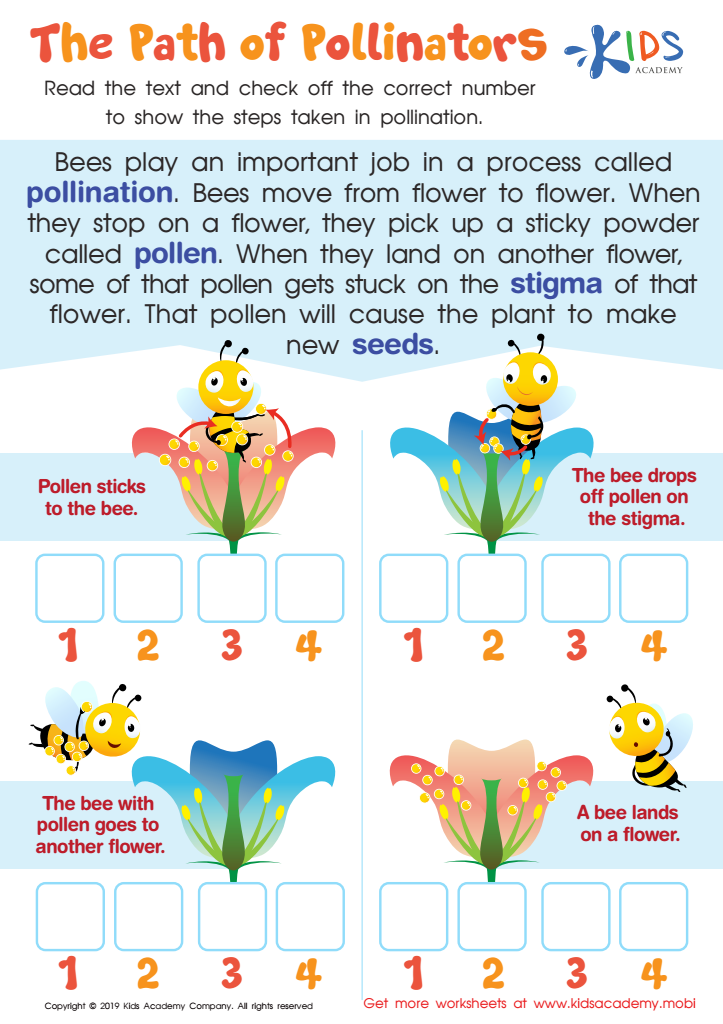
The Path of Pollinators Worksheet
Bees play a vital role in pollination: they transfer pollen between flowers, allowing them to produce new seeds. Without bees, we'd have less flowers and vegetation. Explain the process to your students and have them check off the right number to show the steps in pollination.
The Path of Pollinators Worksheet
Worksheet
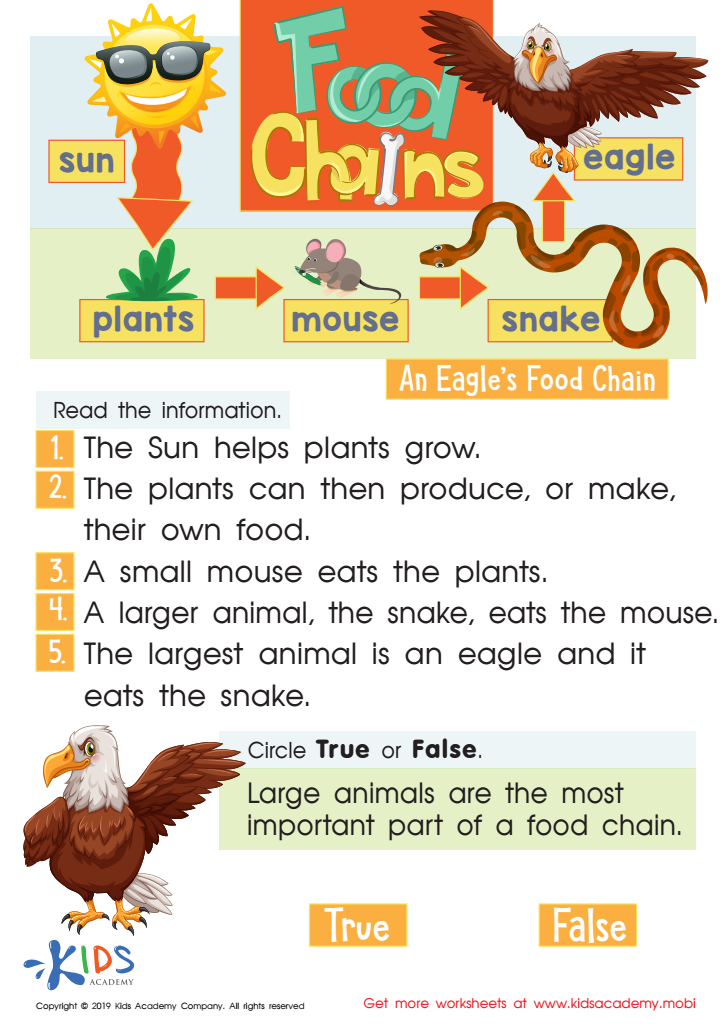
Food Chains Worksheet
This worksheet gets your child thinking about the sun's key role in the food chain. Read the info on the page, then discuss the true/false question. Are large animals the most important? Explain that without the sun, the other organisms would not exist. Have them circle the correct answer to finish.
Food Chains Worksheet
Worksheet
Join Kids Academy for Free
Who is primarily going to use this learning content?








Learning about ecosystems and normal animals is crucial for children ages 5-9 for several reasons. Firstly, this knowledge fosters a fundamental understanding of the environment and the interdependence of living organisms. Children begin to recognize the vital role that animals, plants, and even microorganisms play within their surroundings. This can spark curiosity, encourage exploration, and instill a sense of wonder about nature.
Secondly, engaging with ecosystems promotes critical thinking and problem-solving skills. As children learn how ecosystems function, they may contemplate the impact of human activities on the environment, leading to discussions about conservation and sustainability. Such conversations can nurture responsible citizenship in young learners, empowering them to make informed choices later in life.
Additionally, studying normal animals helps children develop empathy toward living creatures. Recognizing and respecting other forms of life nurtures compassion, while interactive learning experiences, such as observing animals in their habitats, create lasting impressions.
Lastly, integrating this knowledge into the curriculum supports cross-disciplinary learning, combining science, art, and ethics while aligning with educational standards. Emphasizing ecosystems and animals is not just about education; it's about building a generation that values and protects our planet.








