Learning about ecosystems Normal Science Worksheets for Ages 5-9
3 filtered results
-
From - To
Discover the fascinating world of ecosystems with our expertly designed Normal Science Worksheets for ages 5-9. Our engaging printable worksheets introduce essential concepts such as habitats, food chains, and animal adaptations, fostering a love for nature and science. Tailored specifically for young learners, these fun-filled activities accommodate various learning styles while promoting critical thinking and creativity. Ideal for both classroom and home use, our worksheets support foundational skills in reading, writing, and observation. Embark on an educational adventure with Kids Academy and cultivate a deeper understanding of the interconnectedness of our natural world!
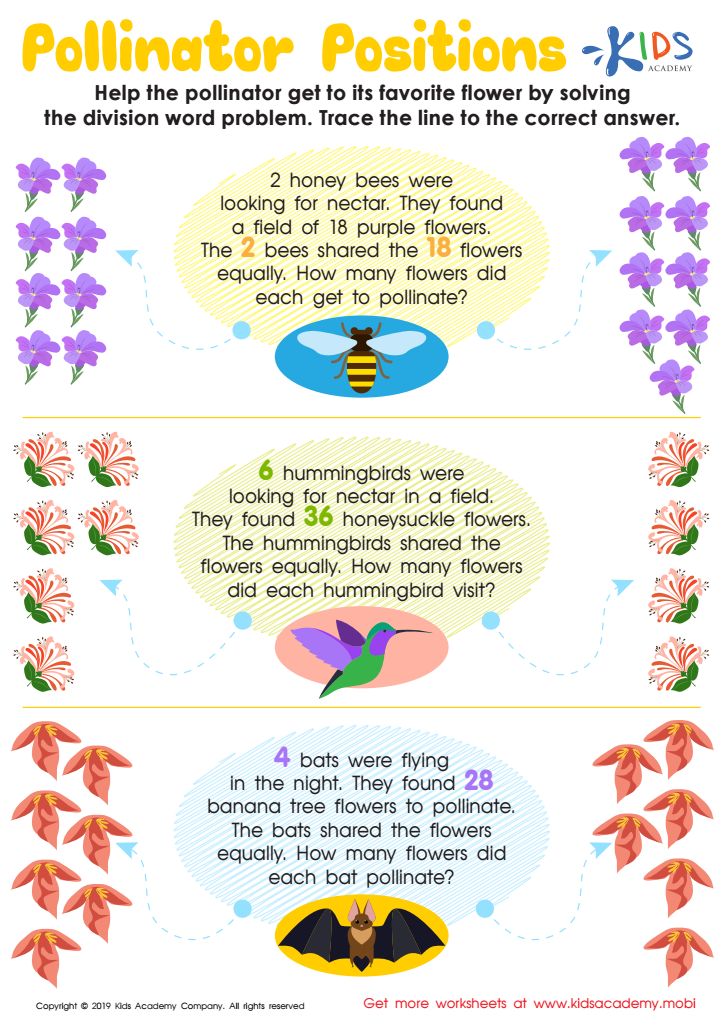
Pollinator Positions Worksheet
 Assign to My Students
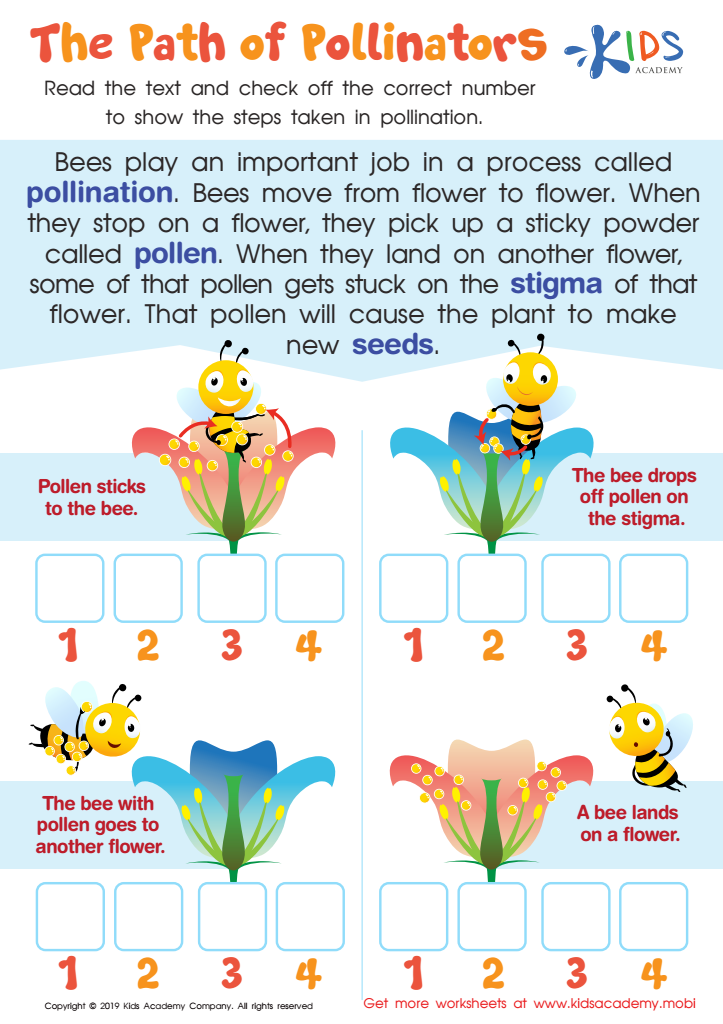
The Path of Pollinators Worksheet
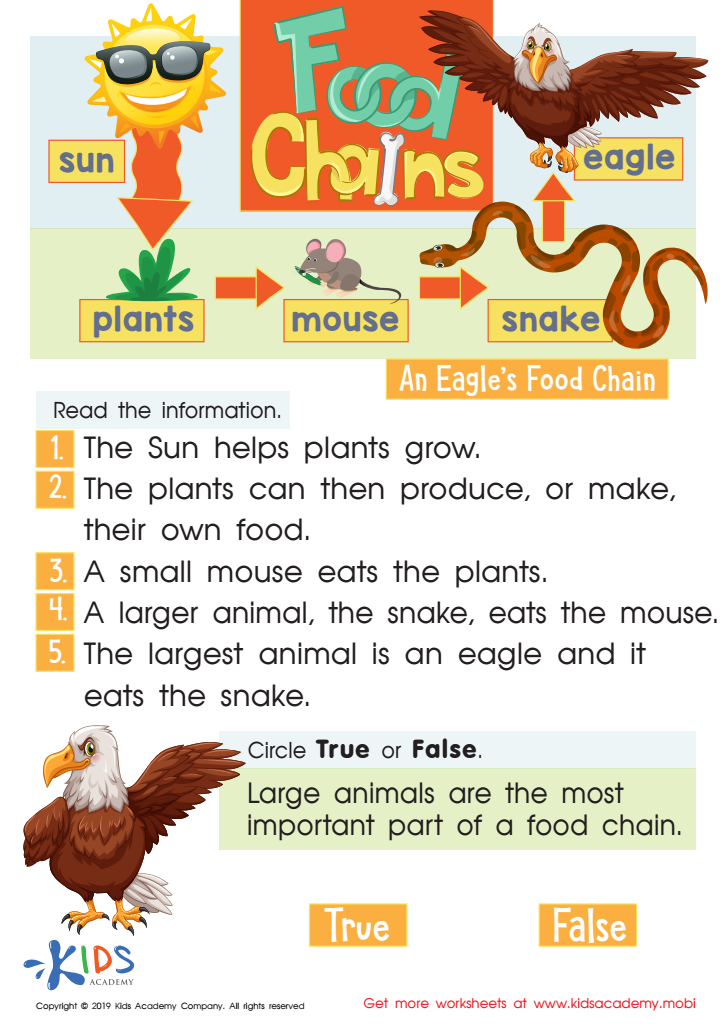
Food Chains Worksheet







Understanding ecosystems at an early age provides essential benefits for children developmentally and intellectually. For starters, the simple concept of ecosystems—a community of living organisms interacting with their environment—introduces basic scientific principles that build a foundation for more complex scientific learning. This foundational knowledge nurtures curiosity and an appreciation for nature, which can inspire lifelong learning and environmental stewardship.
Furthermore, learning about ecosystems facilitates critical thinking and problem-solving skills. As children explore how plants, animals, and other organisms coexist and depend on each other, they also learn about balance, interdependence, and the consequences of disrupting these systems. These lessons are invaluable in honing analytical skills and fostering an understanding of cause and effect.
On a social level, collaborative activities, such as group projects about local ecosystems, encourage teamwork, communication, and empathy. This can contribute to social-emotional development, teaching children to respect the contributions and roles of others, not just within ecosystems, but within human communities as well.
Additionally, early exposure to concepts like animal habitats and plant life cycles makes learning engaging and relevant, immersing children in real-world examples they can observe directly. This real-world connection not only makes learning fun but also establishes a personal connection and sense of responsibility toward protecting the natural world. For these reasons, parents and teachers should prioritize teaching children about ecosystems.







