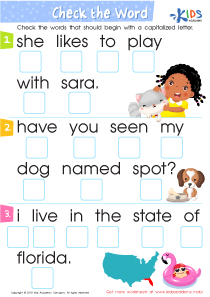
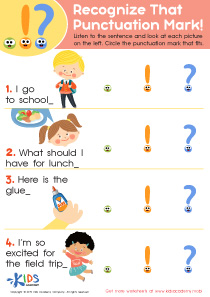
Word identification Normal Grammar Worksheets for Ages 5-9
5 filtered results
-
From - To
Discover our engaging "Word Identification Normal Grammar Worksheets" designed specifically for children ages 5-9! These worksheets help young learners master word recognition and grammar skills through fun, interactive exercises. Each resource focuses on improving language abilities by reinforcing vocabulary and encouraging critical thinking. With a variety of activities—from matching words to their meanings to tracking down specific parts of speech—these worksheets cater to different learning styles. They provide a solid foundation for language development that supports literacy in every child. Perfect for teachers and parents, our easy-to-use worksheets make learning grammar enjoyable and effective! Unlock your child’s potential today!
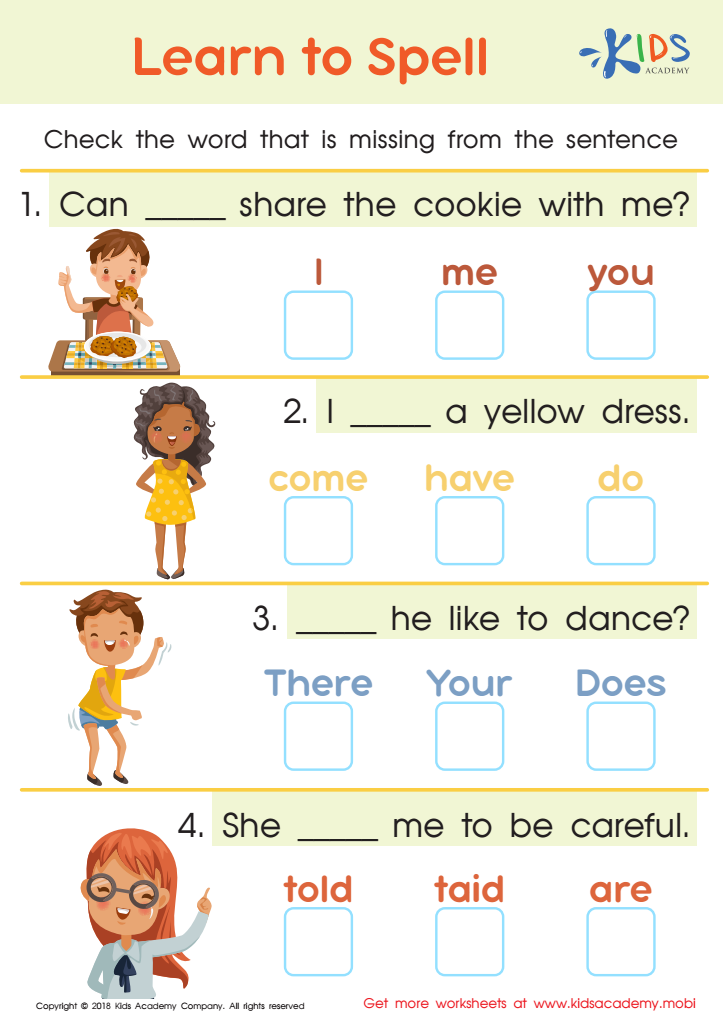
Learn to Spell Worksheet
 Assign to My Students
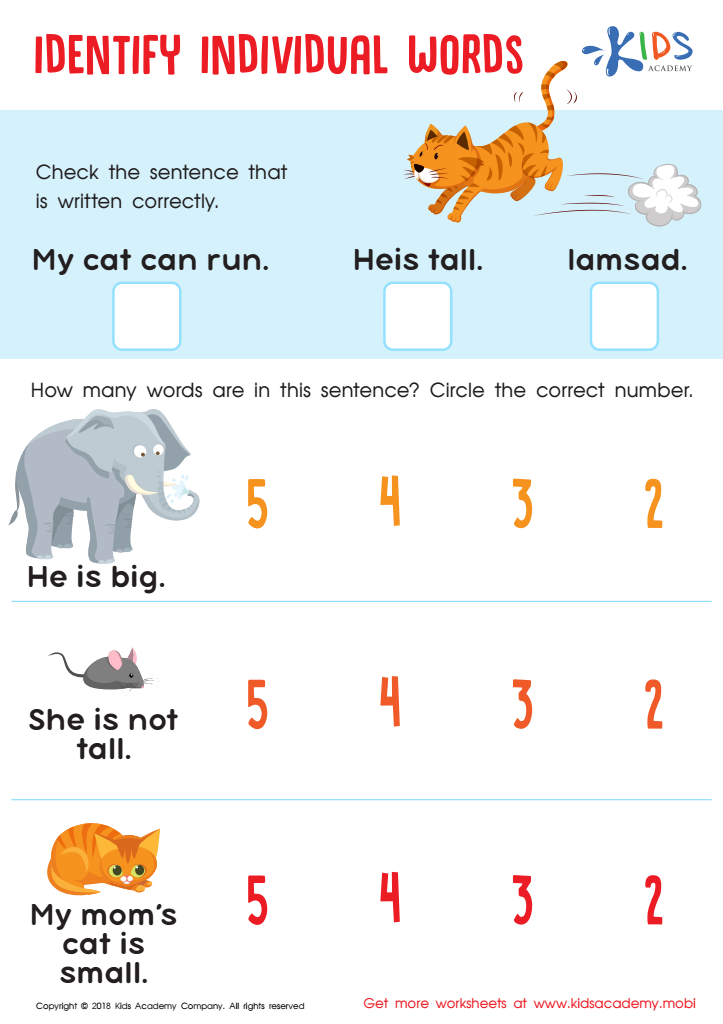
Identify Individual Words Worksheet
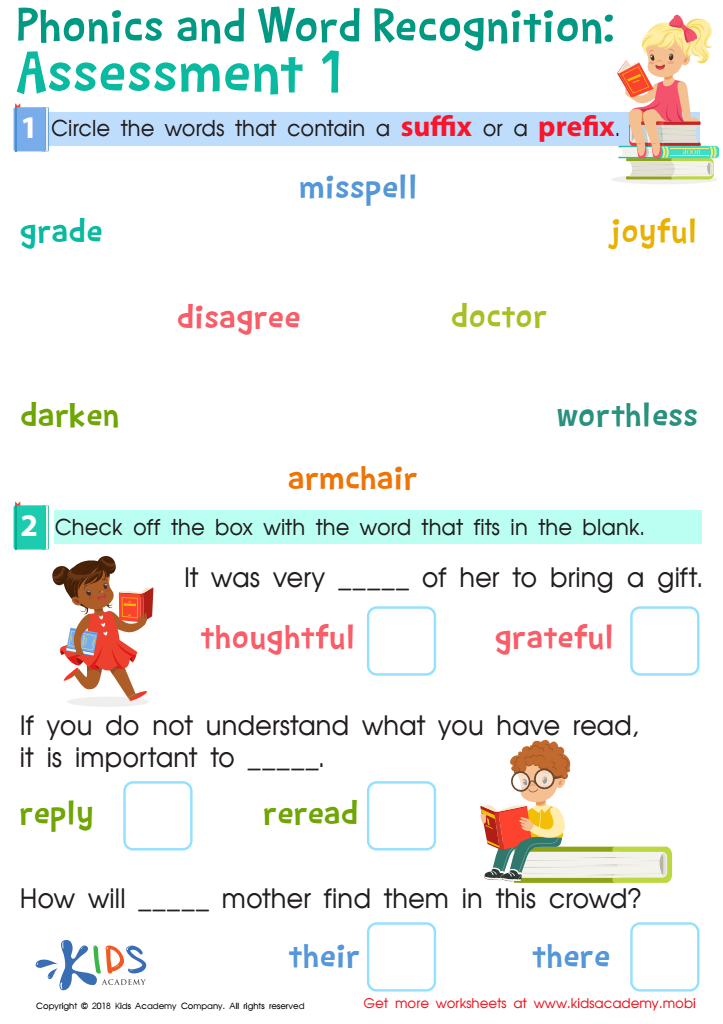
Phonics and Word Recognition: Assessment 1 Worksheet
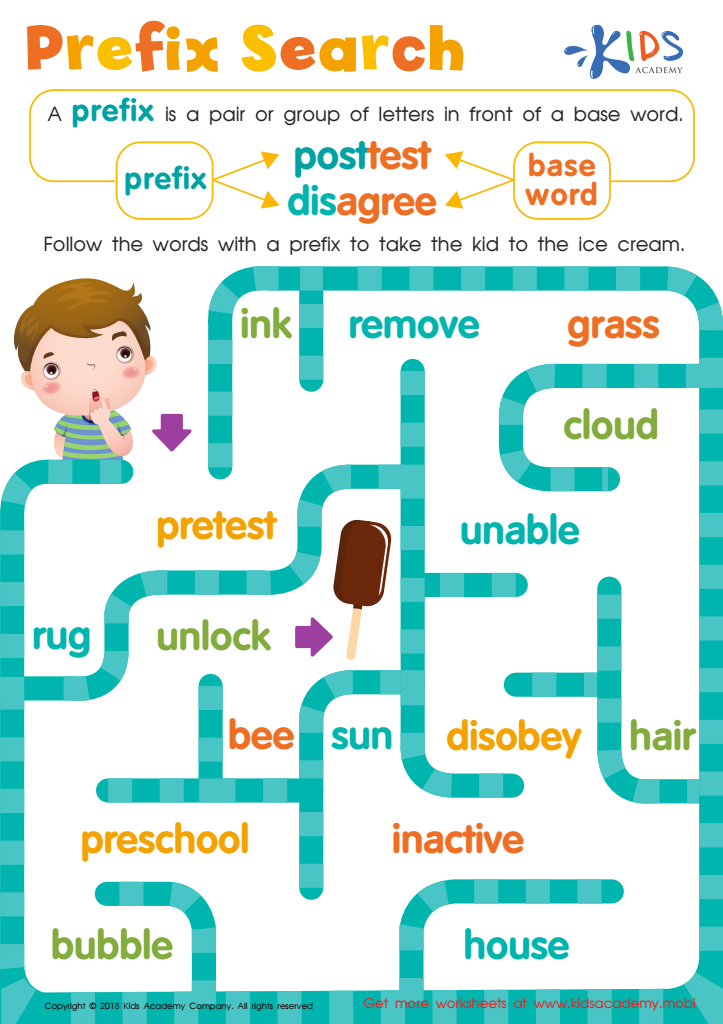
Reading: Prefix Search Worksheet
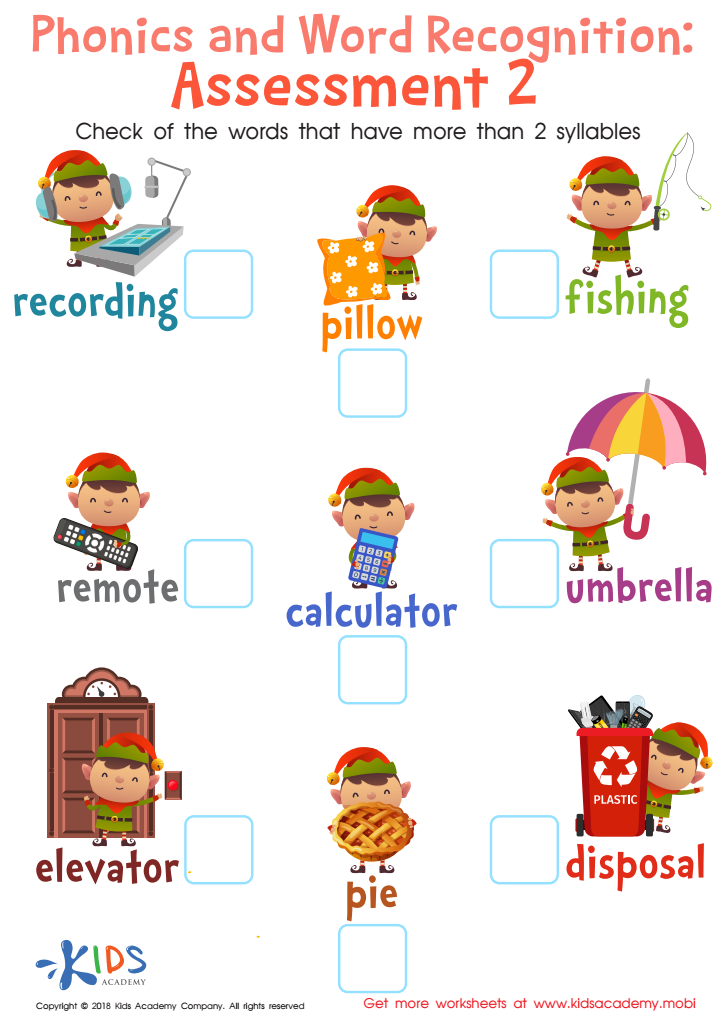
Phonics and Word Recognition: Assessment 2 Worksheet



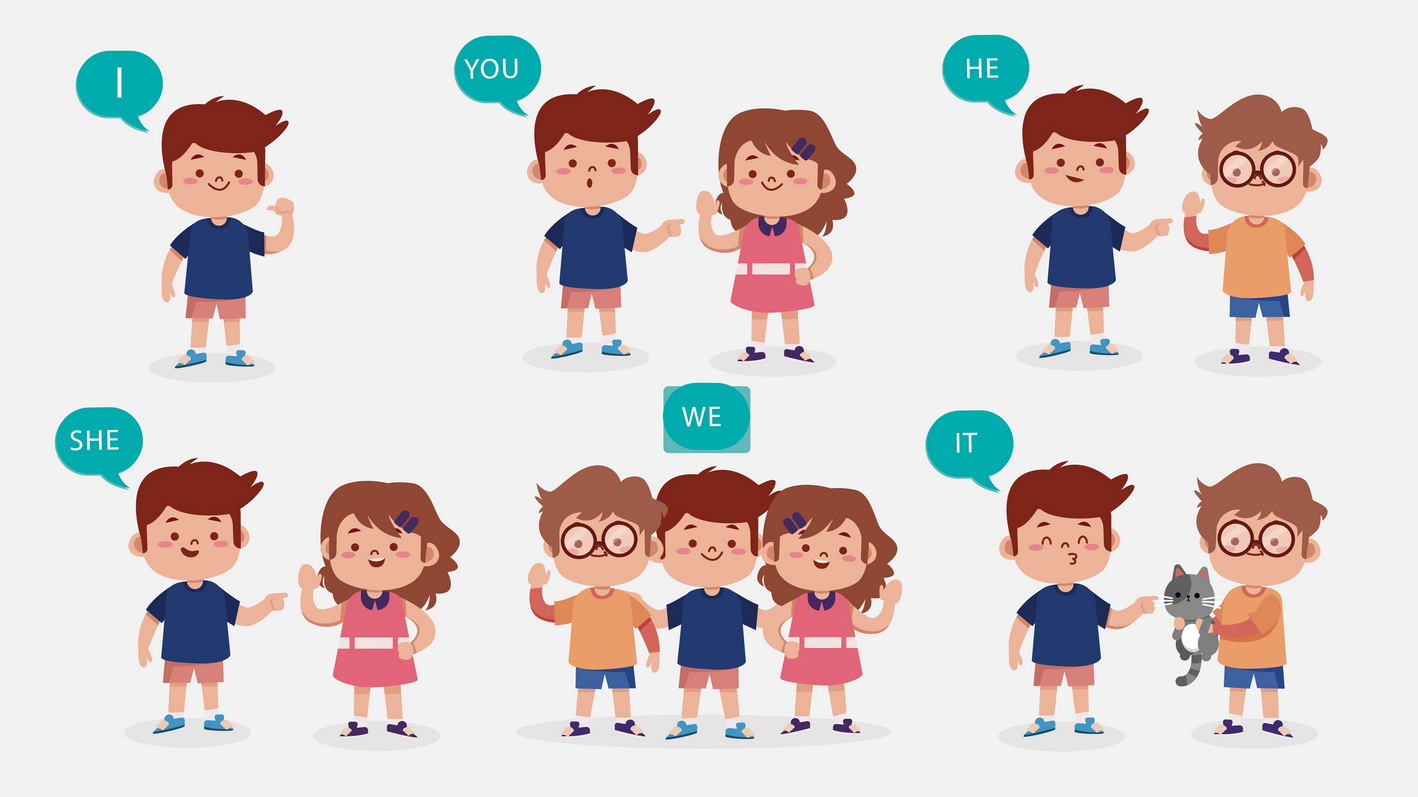

.jpg)

Word identification, particularly in the context of Normal Grammar for ages 5-9, is crucial for the linguistic development of young learners. At this stage, children are building foundational reading and writing skills that serve as the bedrock for all future learning. Understanding how to identify words allows them to decode text effectively, leading to improved comprehension and enjoyment of reading.
Parents and teachers should be particularly concerned with word identification because it fosters vocabulary acquisition and enhances overall language skills. By mastering word identification, children can recognize sight words and phonetic patterns, gradually gaining confidence as independent readers. Moreover, Normal Grammar exposes them to essential grammatical structures, helping them construct sentences correctly and express their thoughts clearly.
As children progress in their literacy journey, proficient word identification skills enable them to engage with grade-level texts, ultimately influencing their academic success. Beyond the classroom, these skills instill a lifelong love for reading and learning. Encouraging practices that support word identification—such as reading aloud, playing word games, and engaging in conversation—helps create an enriching language environment. Thus, investing time and resources into developing these skills is a significant gift for a child's educational and personal growth.