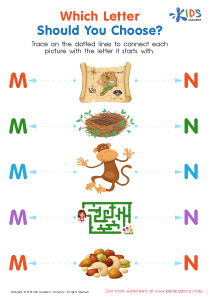
Letter recognition Normal Lowercase/Small Letters Worksheets for 5-Year-Olds
10 filtered results
-
From - To
Our “Letter Recognition Normal Lowercase/Small Letters Worksheets for 5-Year-Olds” offer an engaging and interactive way for young learners to master the alphabet. Designed specifically for preschoolers, these worksheets help children recognize and familiarize themselves with lowercase letters through fun exercises. Each activity promotes letter identification and strengthens fine motor skills while keeping learning enjoyable. From tracing exercises to matching games, our worksheets are perfect for both classroom settings and at-home practice. Foster a love for learning and build a strong foundation in literacy with our vibrant and appealing materials crafted for early learners. Explore today and spark your child’s curiosity!
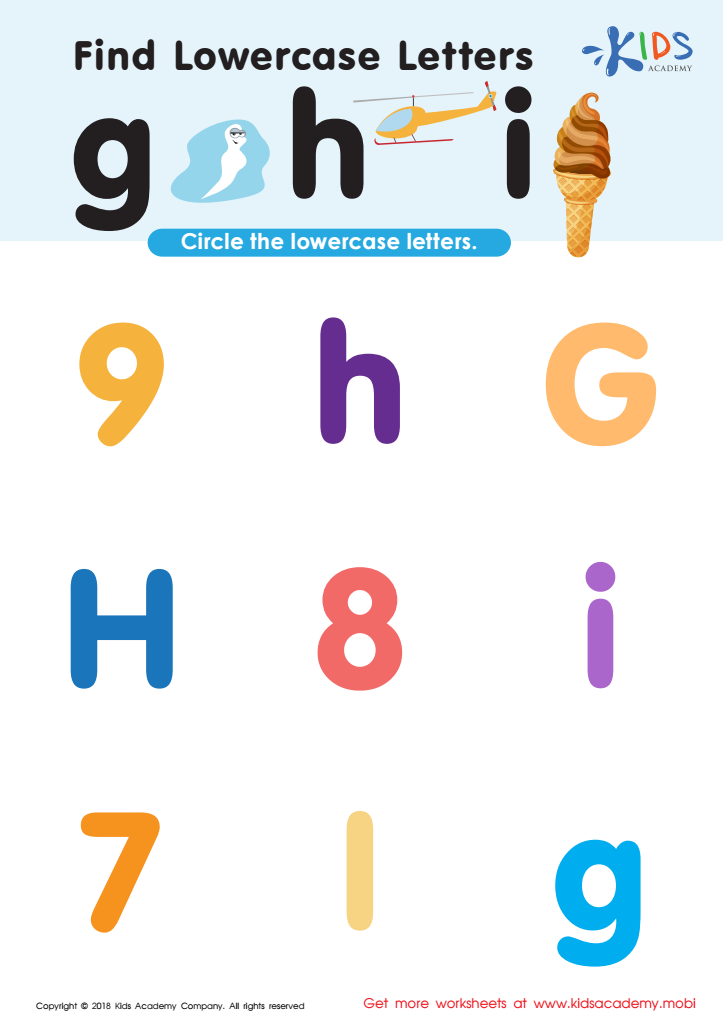
Find Lowercase Letters g h i Worksheet
 Assign to My Students
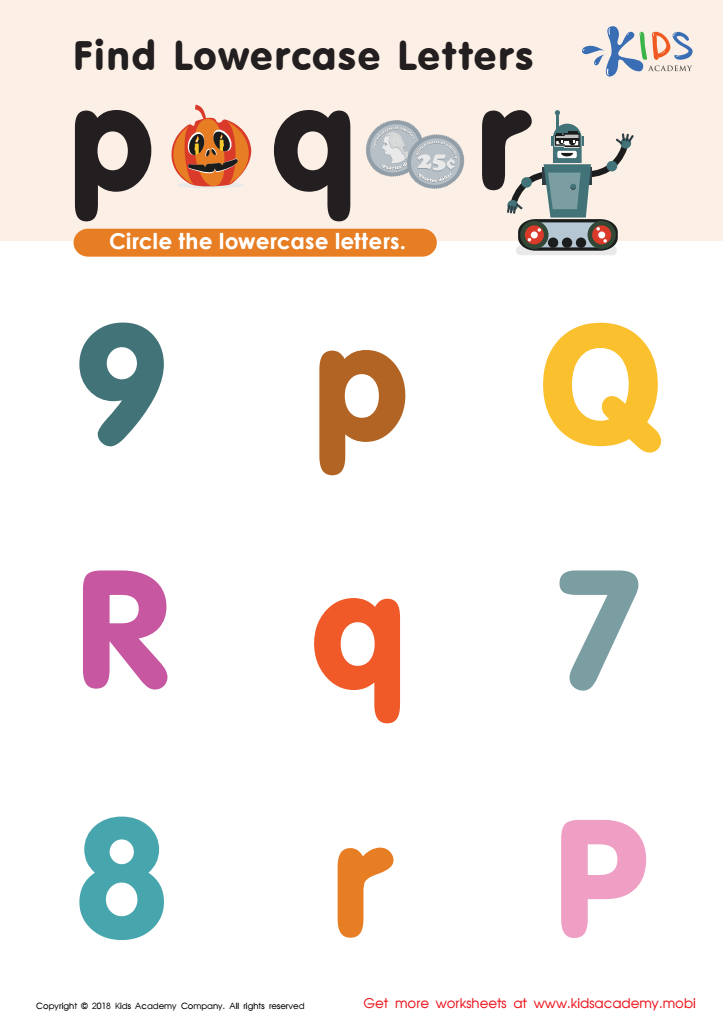
Find lowercase Letters p q r Worksheet
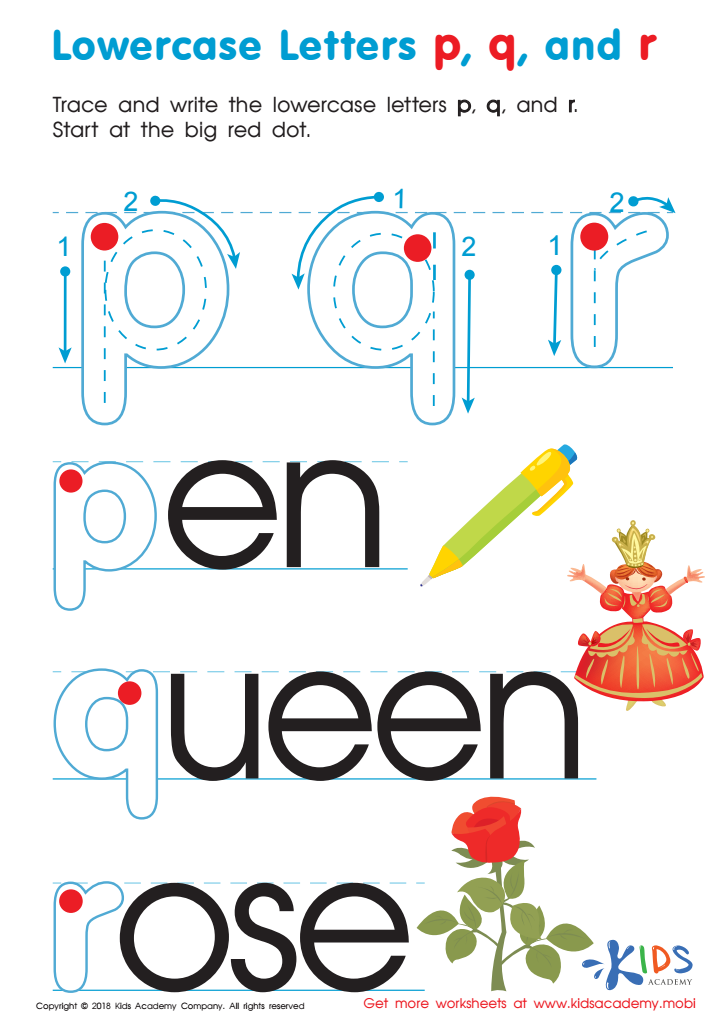
Lowercase Letters p q r Worksheet
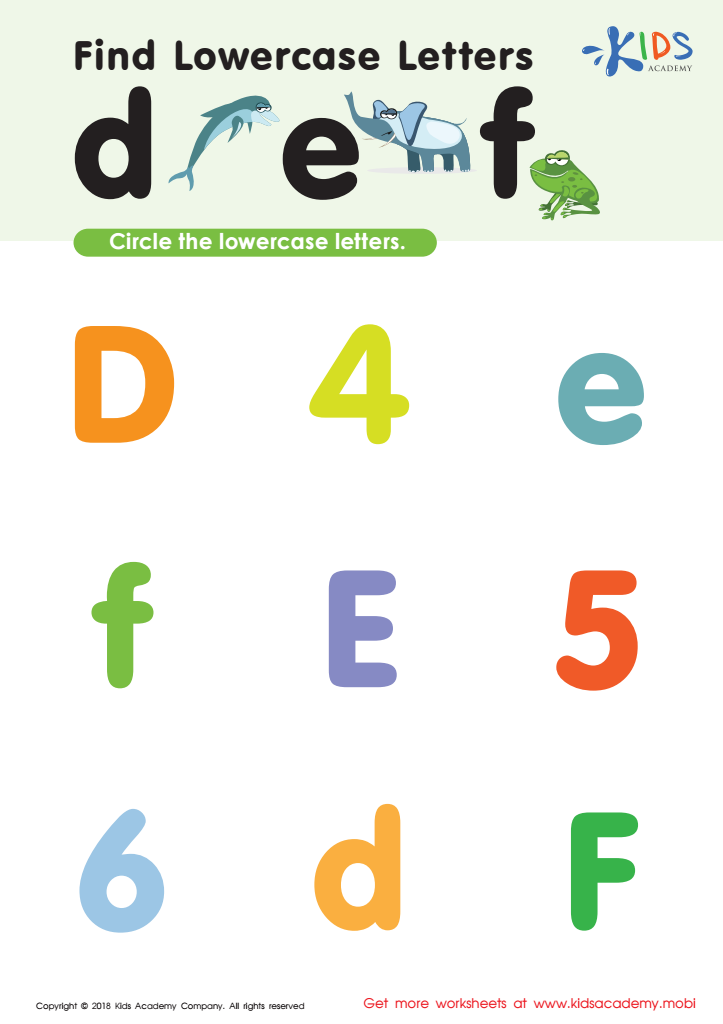
Find Lowercase Letters d e f Worksheet
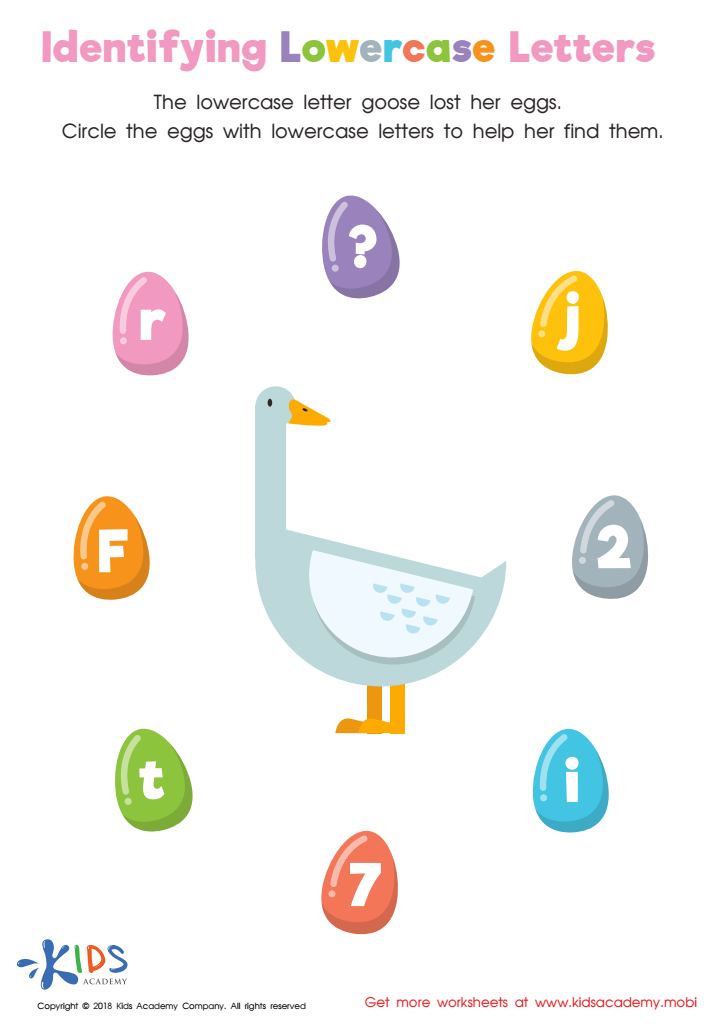
Identifying Lowercase Letters Worksheet
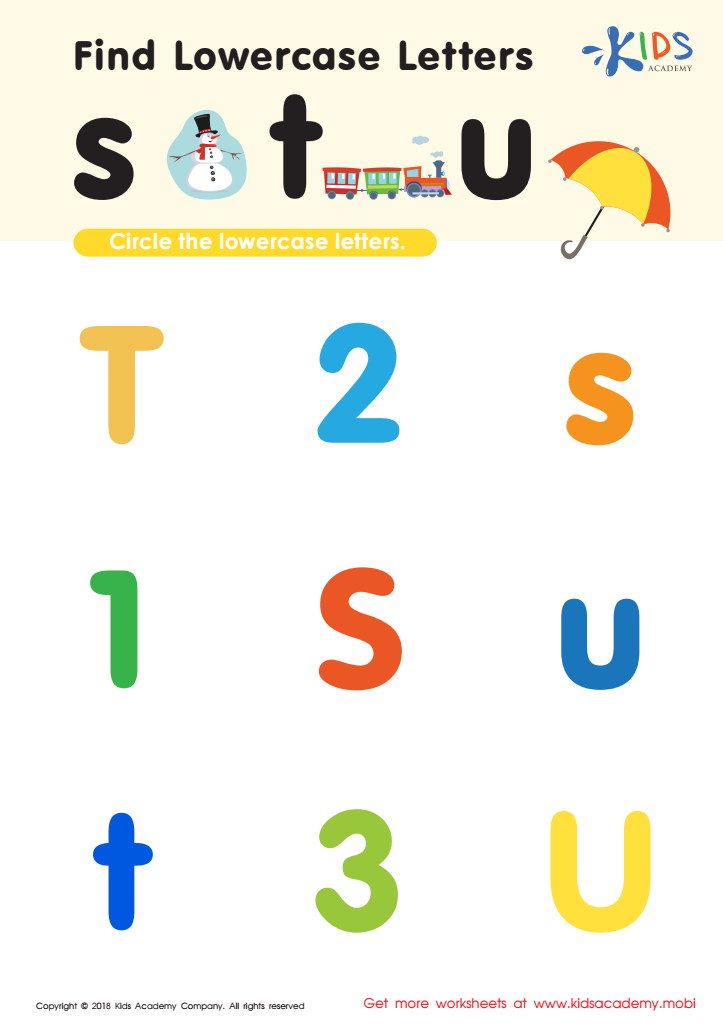
Find lowercase Letters s t u Worksheet
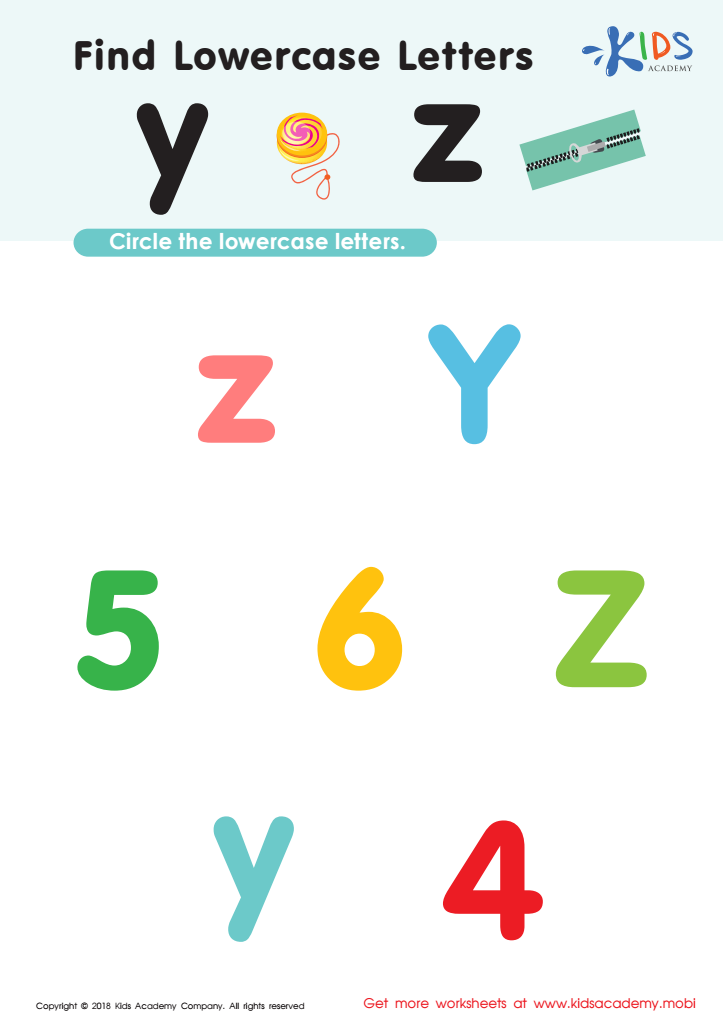
Find Lowercase Letters y z Worksheet
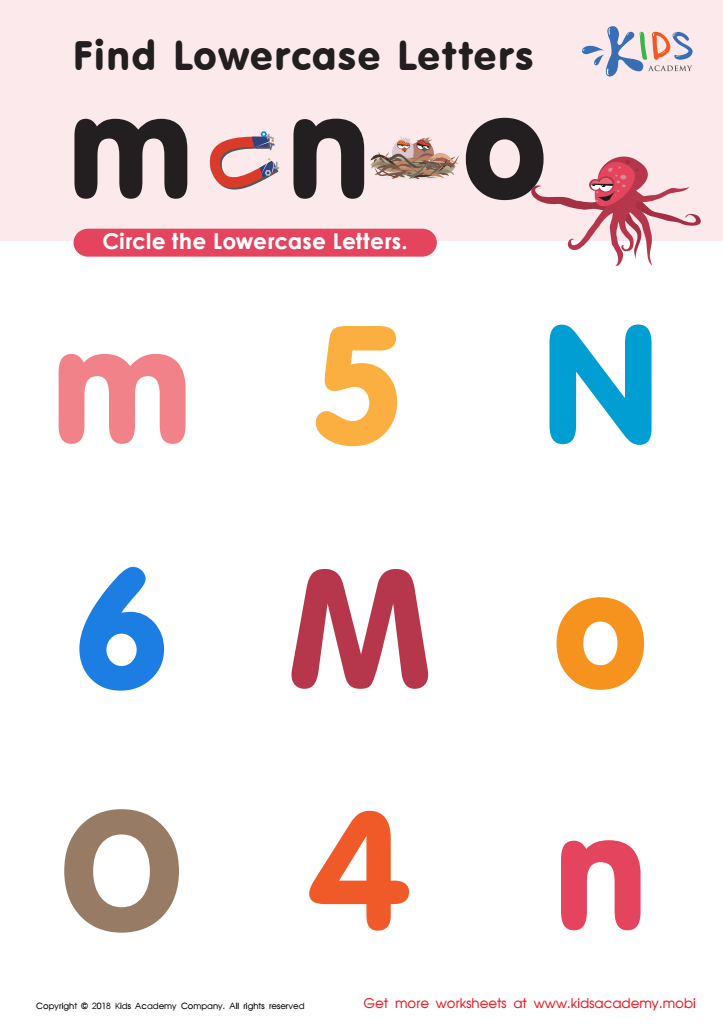
Find Lowercase Letters m n o Worksheet
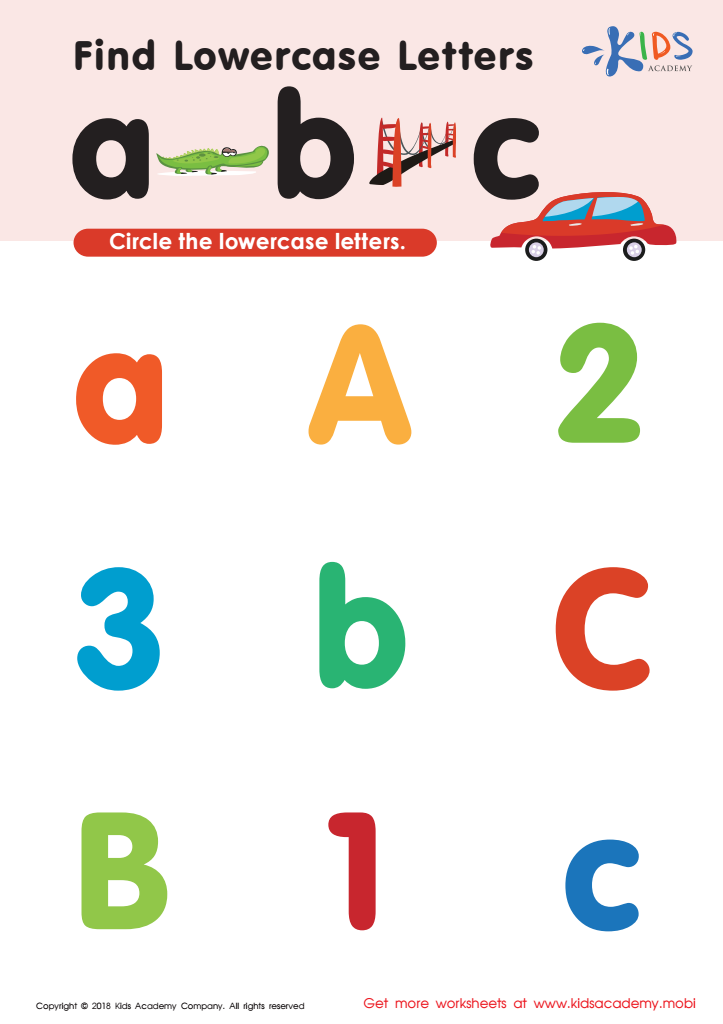
Find lowercase letters a b c Worksheet
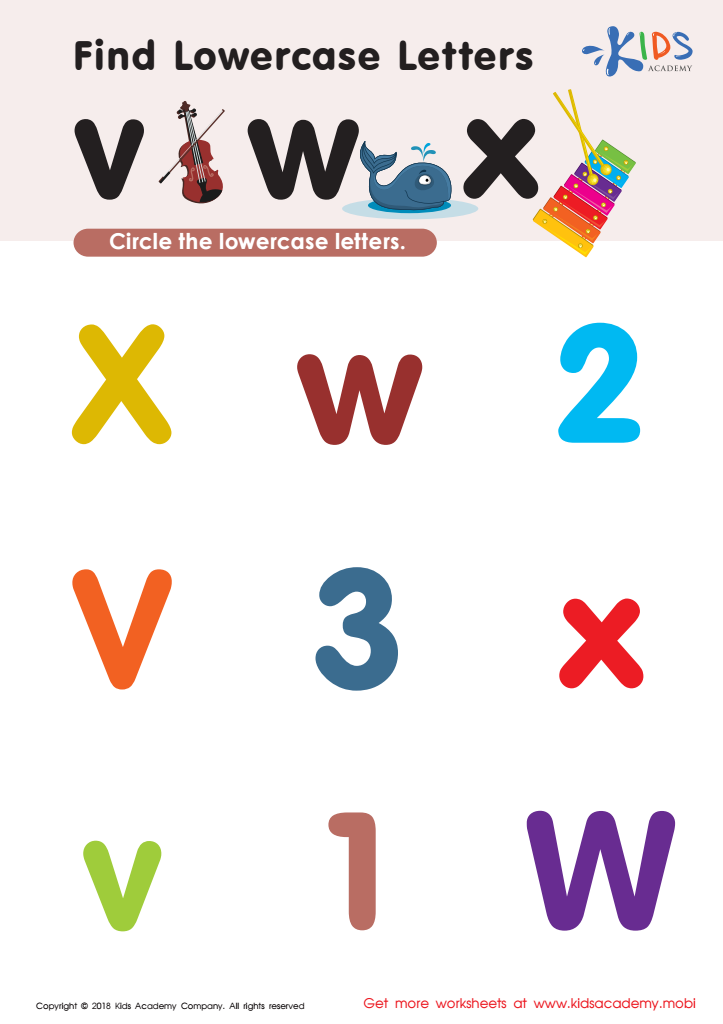
Find Lowercase Letters v w x Worksheet


Letter recognition of lowercase letters is a crucial skill for 5-year-olds as it lays the groundwork for reading and writing development. At this age, children are transitioning from recognizing only uppercase letters to understanding lowercase forms, which they will encounter in most reading materials, schoolwork, and everyday life. By focusing on lowercase letter recognition, parents and teachers help children develop essential literacy skills, including phonemic awareness and spelling.
When children can identify and differentiate lowercase letters, they gain confidence in their ability to read simple texts, which enhances their motivation and engagement in learning. Additionally, recognizing lowercase letters is vital for writing skills. Children begin to express themselves through writing and will need to use lowercase letters for their names, stories, and other written communication.
Moreover, fostering letter recognition aligns with broader educational goals, serving as a key indicator of a child's preparedness for more advanced literacy tasks. Engaging in activities that promote this skill—such as playful games, books, and hands-on writing exercises—encourages learning in a fun and enjoyable manner. Overall, letter recognition is a stepping stone in a child's educational journey, making it critical for parents and teachers to emphasize its importance.