
Subtraction practice Normal Worksheets for 5-Year-Olds
7 filtered results
Difficulty Level
Grade
Age
-
From - To
Subject
Activity
Standards
Looking for engaging and educational subtraction practice for your 5-year-old? Our carefully designed worksheets on Kids Academy are perfect for building foundational math skills through fun and interactive tasks. These worksheets use colorful illustrations and simple word problems, tailored to capture young learners' interest. Your child will gain confidence and strengthen their understanding of basic subtraction concepts while enjoying their practice sessions. Ideal for both classroom use and home learning, these resources provide an engaging way for children to develop their numerical skills. Discover effective and playful math learning today with our subtraction practice worksheets for 5-year-olds!
Favorites
With answer key
Interactive
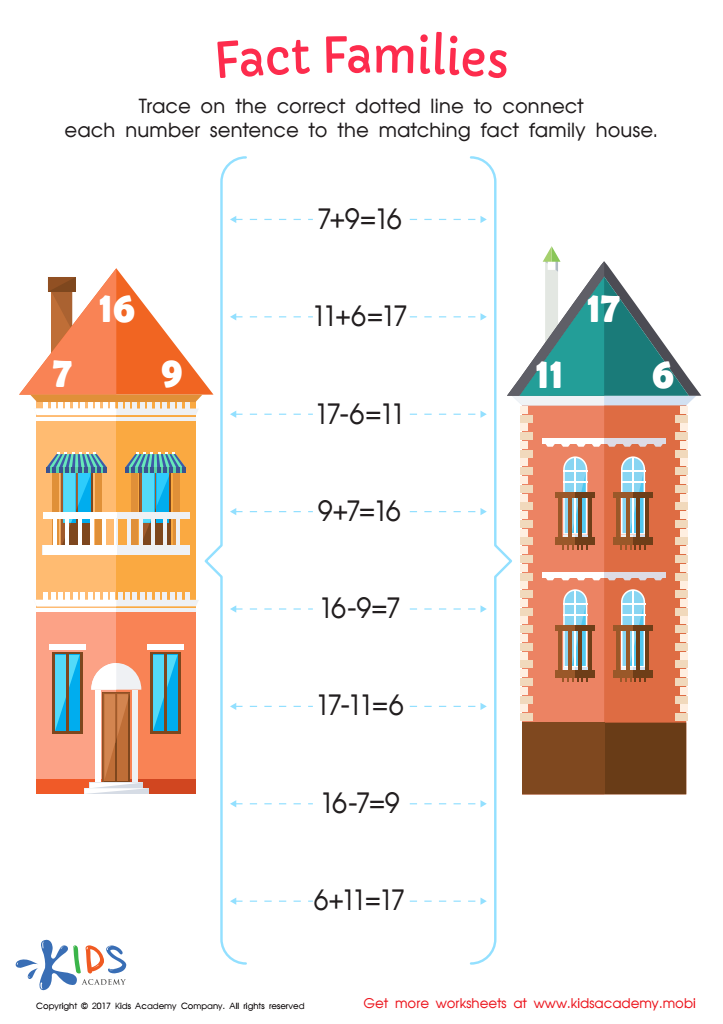
Fact Families — Add and Subtract Worksheet
Kids will love seeing how families of numbers "live" in their own houses!
 Assign to My Students
Fact Families — Add and Subtract Worksheet
Worksheet
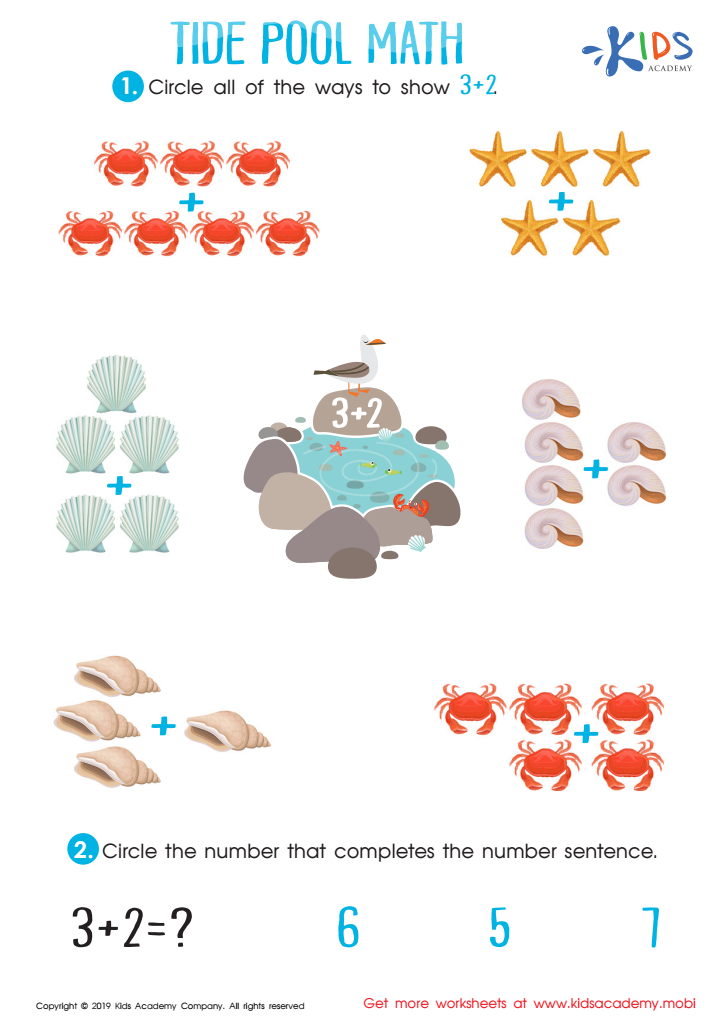
Tide Pool Math Worksheet
This exercise helps kids make math fun. Get them counting in groups and circling all the ways to show 3+2. It'll make addition and subtraction with larger numbers more enjoyable. Your kids will be better at math in no time!
Tide Pool Math Worksheet
Worksheet
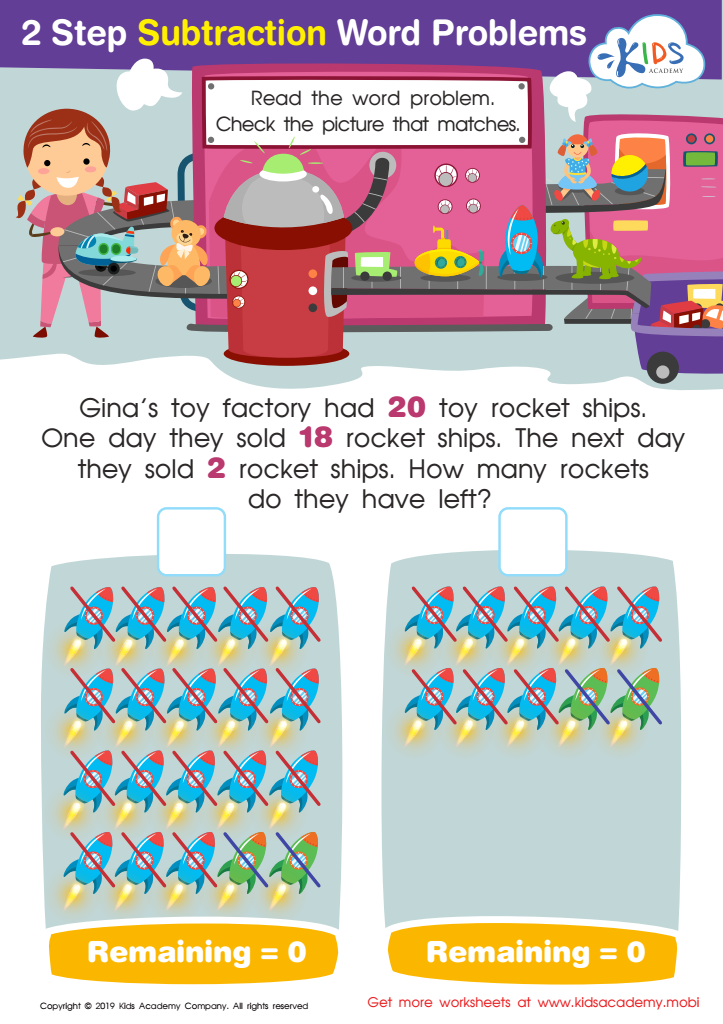
Step Subtraction Word Problems Worksheet
With this worksheet, kids can solve a multi-step subtraction problem with one-to-one number representation, helping Gina figure out her rocket count. Visualizing word problems is key, and this PDF will give your child a concrete image to work with. They'll be successful problem solvers in no time!
Step Subtraction Word Problems Worksheet
Worksheet
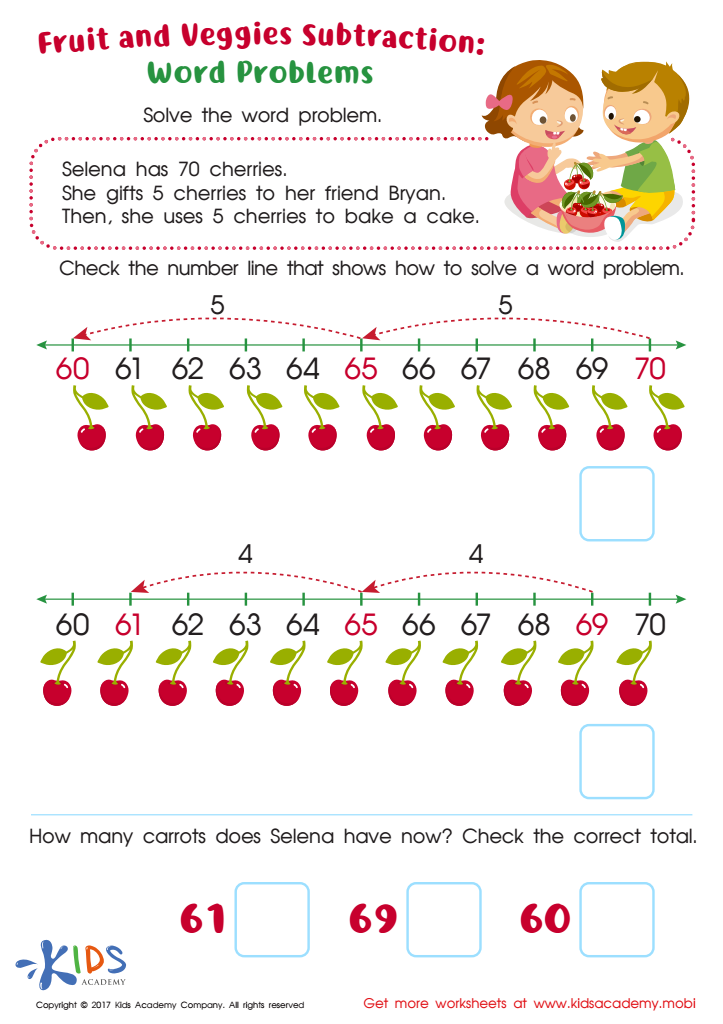
Subtraction Word Problems Free Printable
Try out this free printable subtraction worksheet! Your child can use number lines to solve challenging word problems – it's a great way to boost their problem-solving skills.
Subtraction Word Problems Free Printable
Worksheet
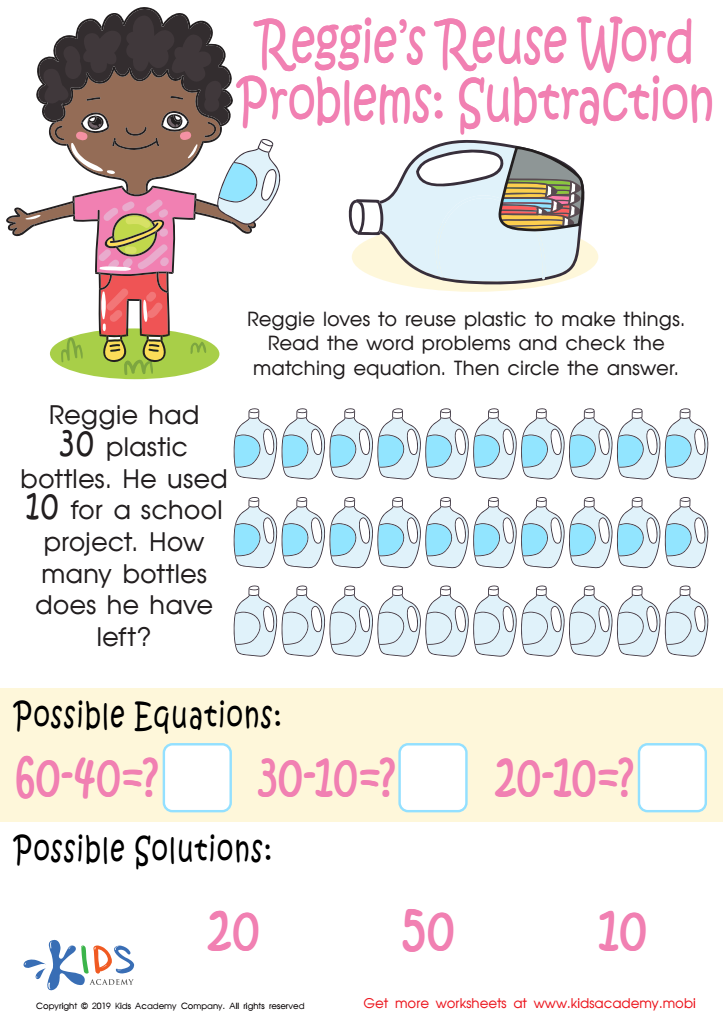
Reggie's Reuse Word Problems: Subtraction Worksheet
Kids can help pal Reggie become an eco-friendly friend! This PDF teaches kids subtraction and one-to-one number representation. They'll use pictures to solve word problems and find out how many plastic bottles Reggie can reuse. They'll also match number equations and solutions to get the right answer.
Reggie's Reuse Word Problems: Subtraction Worksheet
Worksheet
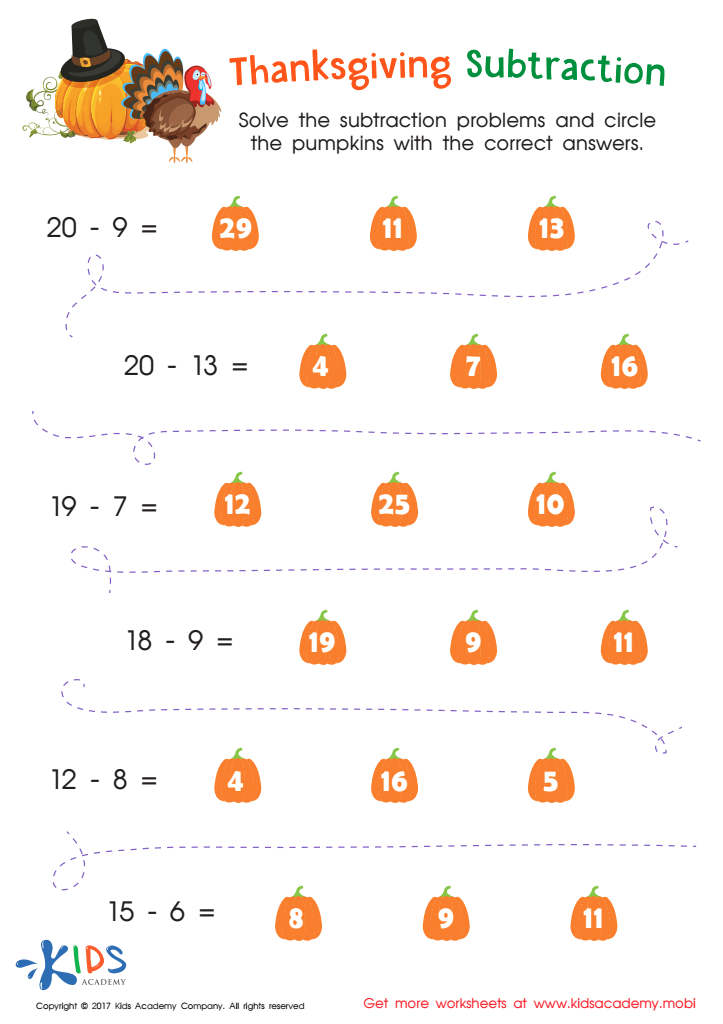
Thanksgiving Subtraction Substraction Worksheet
Enjoy a fun math activity this Thanksgiving! This subtraction worksheet gives kids a great chance to practice math skills while having fun. Solve attractive subtraction problems for a great learning experience.
Thanksgiving Subtraction Substraction Worksheet
Worksheet
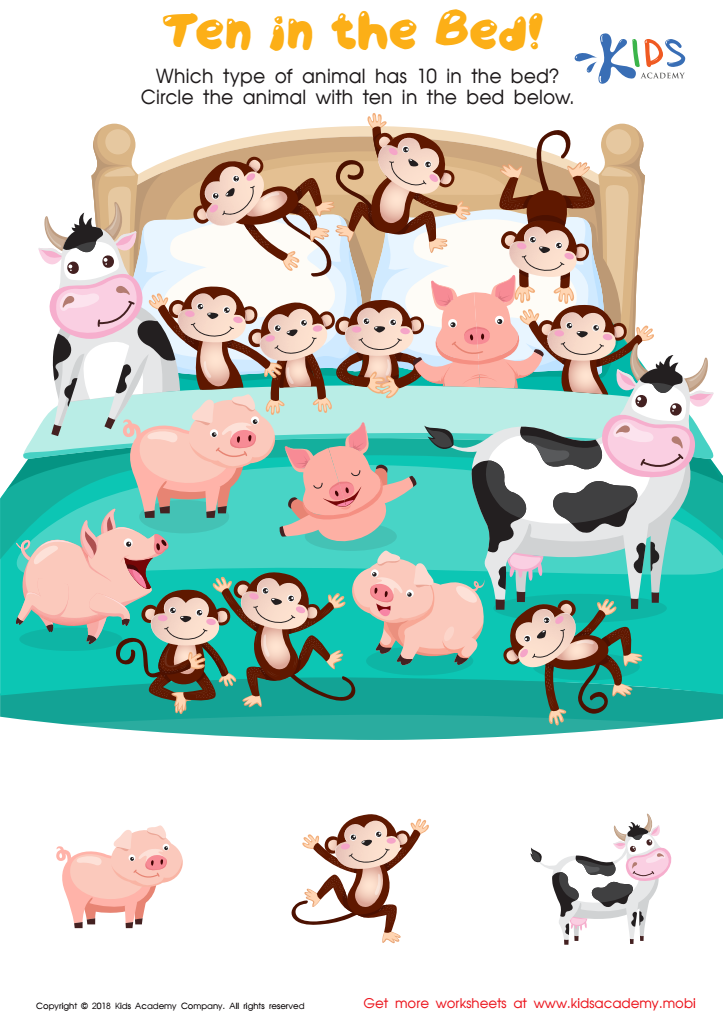
Ten in the Bed Worksheet
This fun worksheet has your kids counting and sorting friendly animal faces in a bed of ten! It's a great way for them to practice their mental math skills, like adding and multiplying more efficiently. Plus, it brings a new meaning to the classic song "Monkeys Jumping on the Bed"!
Ten in the Bed Worksheet
Worksheet
Join Kids Academy for Free
Who is primarily going to use this learning content?



.jpg)




Subtraction is a foundational math skill that plays a crucial role in the cognitive development of 5-year-olds. For parents and teachers, fostering proficiency in subtraction at an early age is essential for several reasons. First, subtraction is a building block for more advanced mathematical concepts; mastering it early paves the way for future success in math. As children practice subtraction, they enhance their problem-solving skills and learn to think logically and sequentially.
Moreover, subtraction helps children understand the concept of "taking away," which is integral to their comprehension of how numbers and quantities interact in real-world contexts. This understanding is vital for everyday tasks such as sharing, playing games, and managing small quantities of items, thereby boosting their confidence and independence.
Subtraction practice also fine-tunes fine motor and cognitive skills, as kids use tools like counting objects, drawing, and writing. Engaging in subtraction activities increases focus and attention to detail, crucial abilities across all areas of learning.
Parents' and teachers' involvement in subtraction practice provides support and encourages a positive attitude towards math. Through consistent practice and positive reinforcement, children not only grasp mathematic principles but also build a love for learning. Ultimately, these skills form a part of a child's educational foundation and lifelong analytical abilities.








