Critical Thinking Normal 2D Shapes Worksheets for 5-Year-Olds
5 filtered results
-
From - To
Enhance your child's critical thinking skills with our engaging 2D shapes worksheets designed specifically for 5-year-olds! These activities promote not only shape recognition and understanding but also encourage analytical reasoning as young learners explore various attributes of normal 2D shapes. Through fun-filled exercises, children will compare, sort, and classify different shapes, boosting their problem-solving abilities. Our worksheets are visually appealing and age-appropriate, ensuring that learning is both enjoyable and educational. Perfect for at-home practice or classroom use, these resources help lay a solid foundation for mathematical concepts while igniting a love for learning in young minds. Get started today!
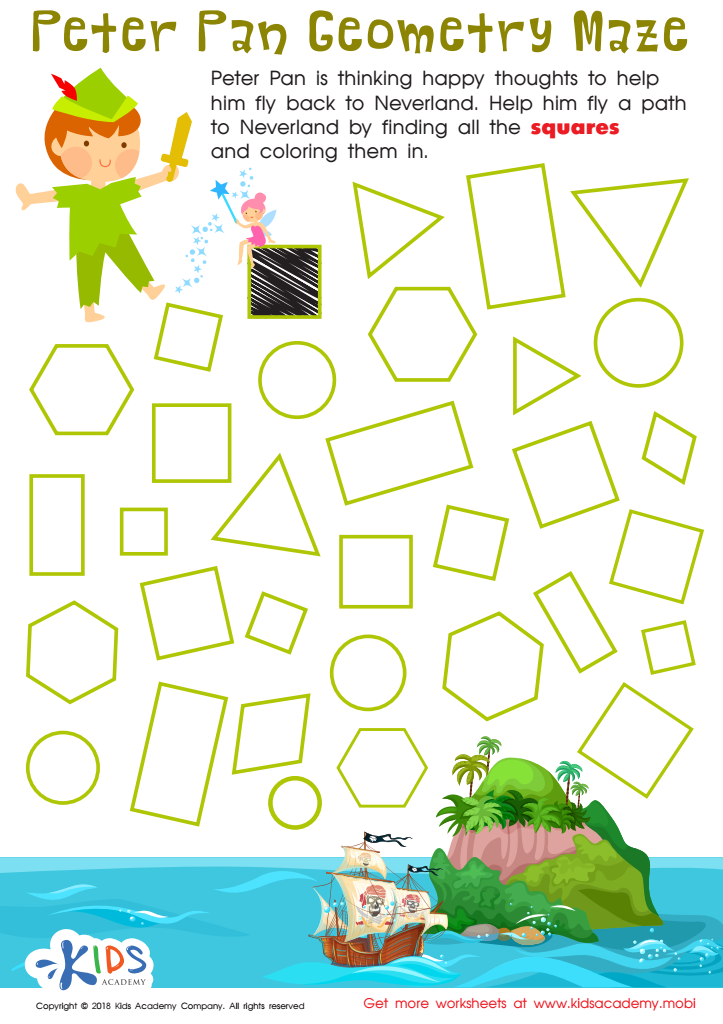
Peter Pan Worksheet
 Assign to My Students






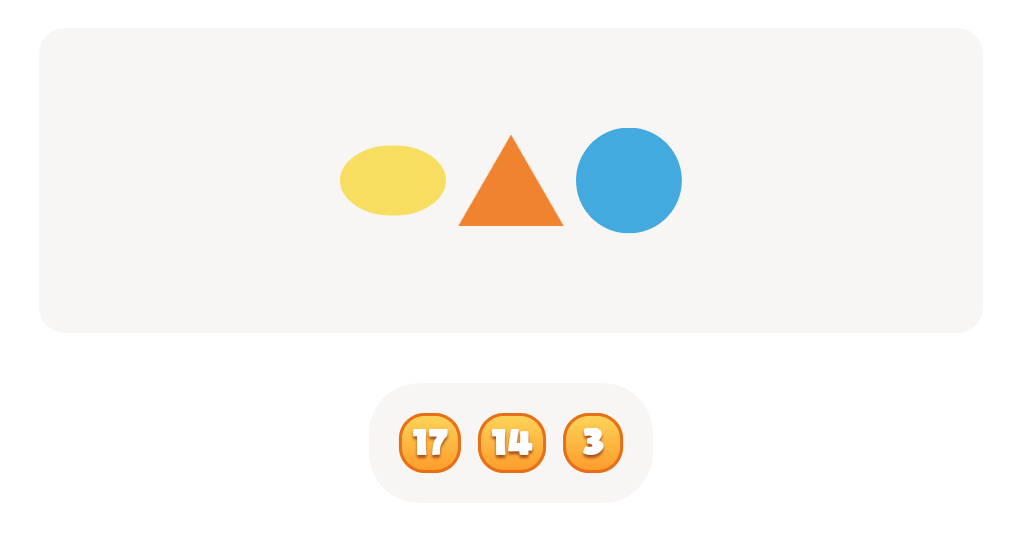





Find the Pattern Worksheet
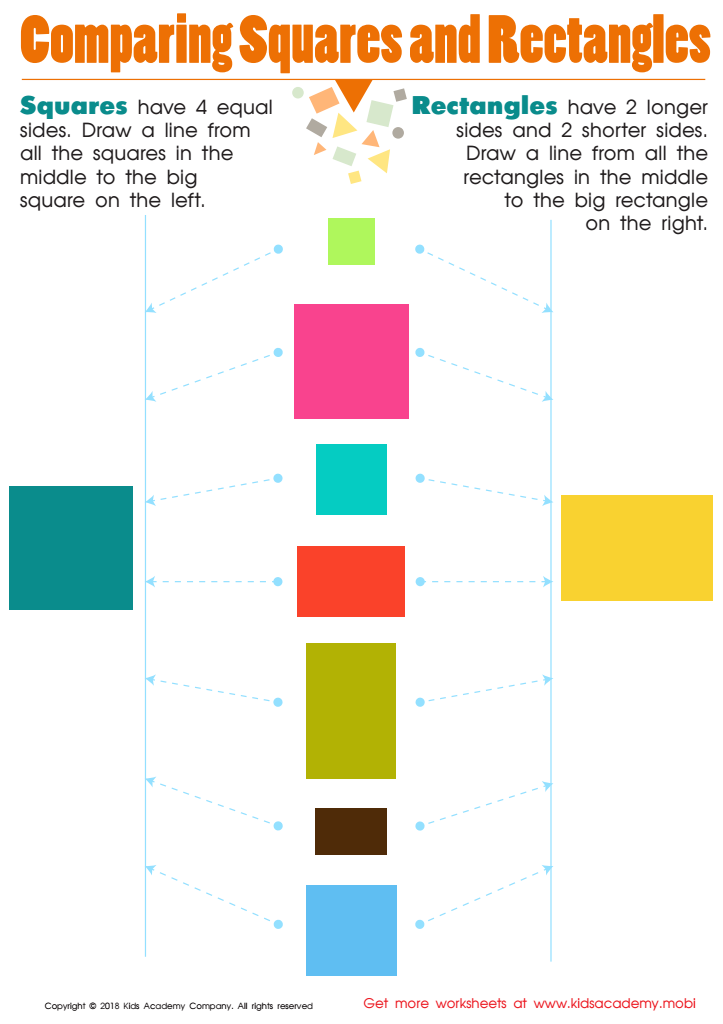
Comparing Squares Rectangles Worksheet
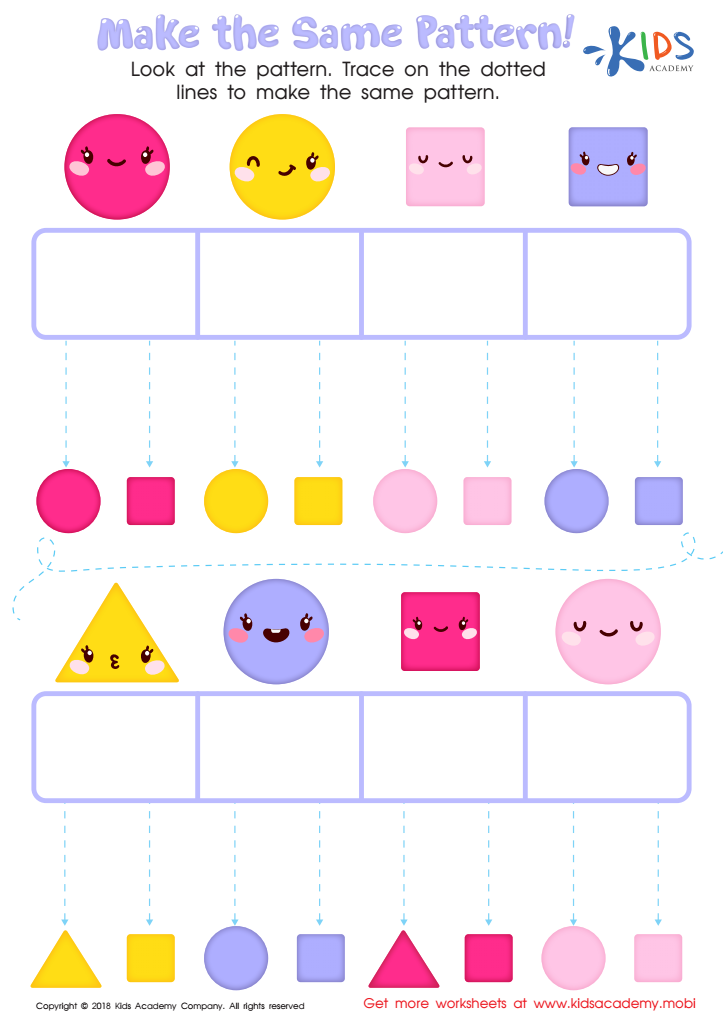
Make the Same Pattern Worksheet
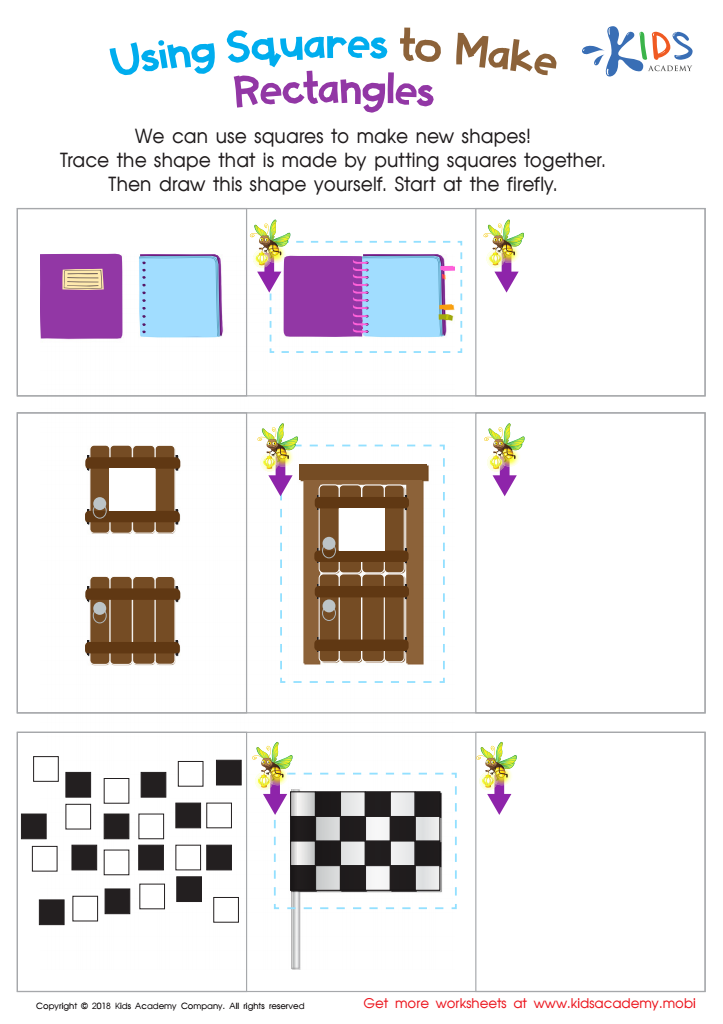
Using Squares to Make Rectangles Worksheet








Critical thinking skills are essential for young children, as they form the foundation for effective problem-solving, decision-making, and creativity. When it comes to understanding Normal 2D Shapes, incorporating critical thinking into this learning enhances a child's cognitive development.
Parents and teachers should care about this because critical thinking enables children to not only identify shapes but also to analyze their properties, compare them, and understand their relationships. For instance, instead of merely recognizing a square, children can explore questions like, "What makes a square different from a rectangle?" or "How can we use these shapes to create a picture?" This fosters curiosity and a deeper understanding of geometry and spatial awareness.
Moreover, critical thinking encourages kids to communicate their thoughts and reasoning, enhancing their language skills and confidence. Engaging with 2D shapes critically also lays the groundwork for more complex mathematics later in life. By cultivating an environment that values inquiry and exploration, parents and teachers can significantly boost a child's ability to think critically, preparing them for academic success and real-world challenges. Emphasizing this approach garners essential skills that extend beyond shape recognition, instilling a lifelong love for learning.