Fine Motor Skills Normal 2D Shapes Worksheets for 5-Year-Olds
4 filtered results
-
From - To
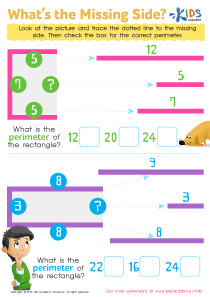
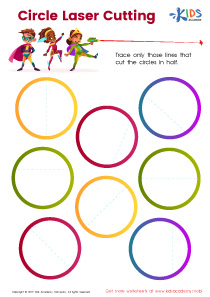
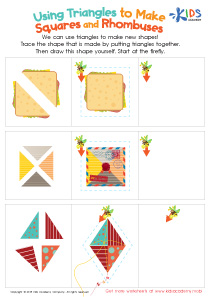
Discover our engaging Fine Motor Skills Normal 2D Shapes Worksheets designed specifically for 5-year-olds! These worksheets combine learning with play, helping young children master basic 2D shapes while enhancing their fine motor skills. Activities include tracing, coloring, and shape identification, making learning enjoyable as kids develop their hand-eye coordination and dexterity. Perfect for home or classroom use, our resources support early education by fostering essential skills needed for writing and drawing. Download our printable worksheets today and watch your little ones flourish as they explore the world of geometry through creative and interactive exercises!
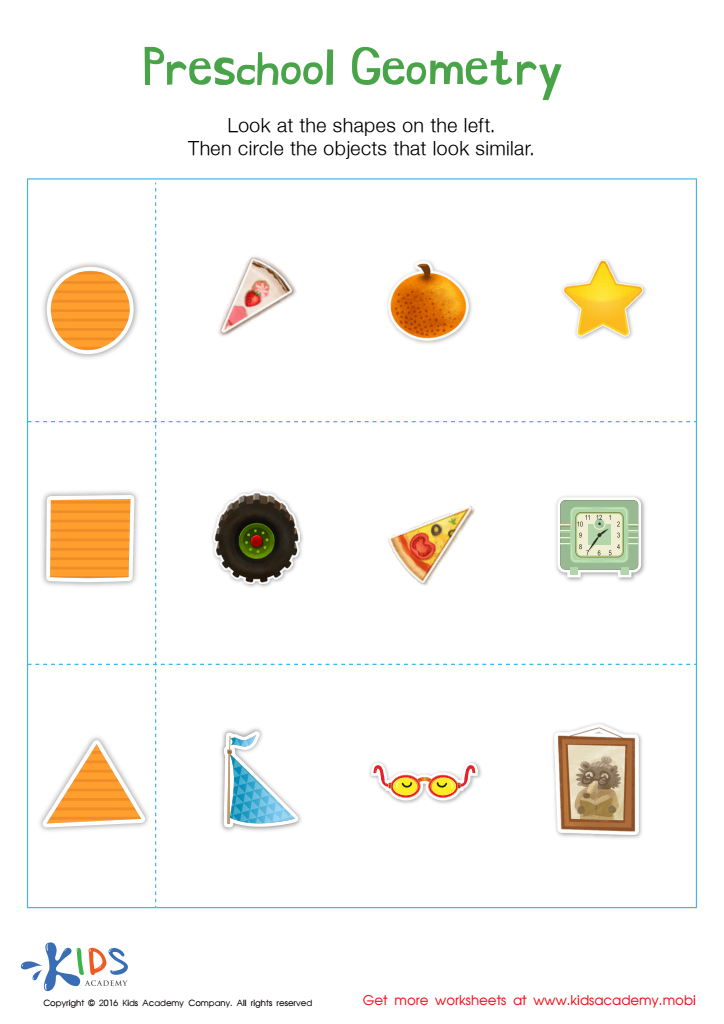
Preschool Geometry Match Up Worksheet
 Assign to My Students



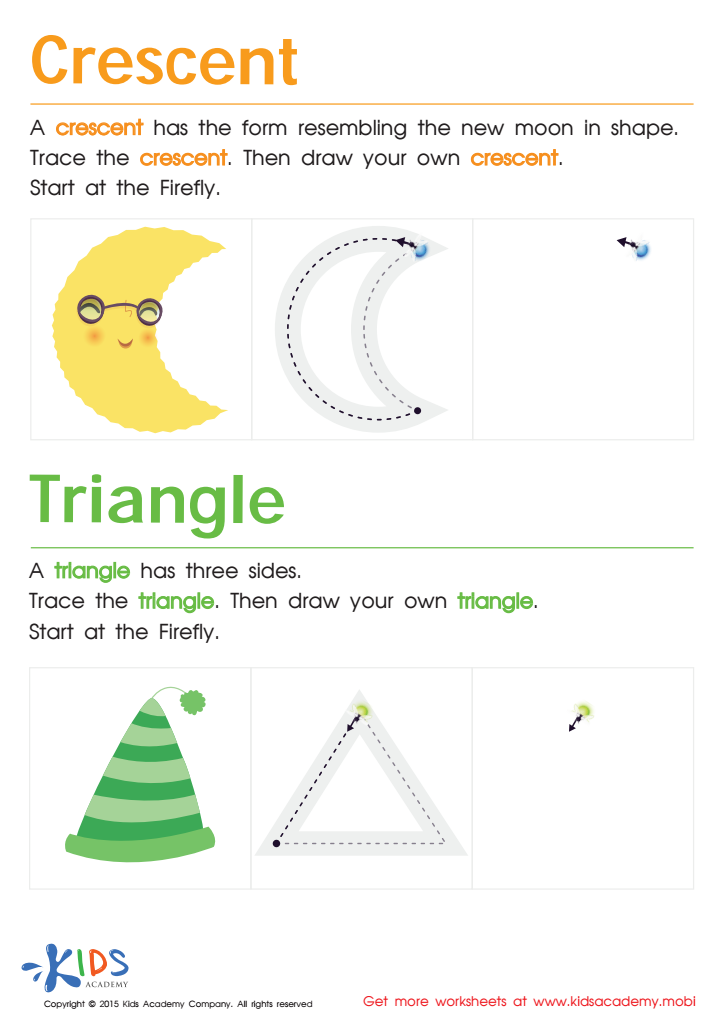
Learning to Draw Crescents And Triangles Worksheet
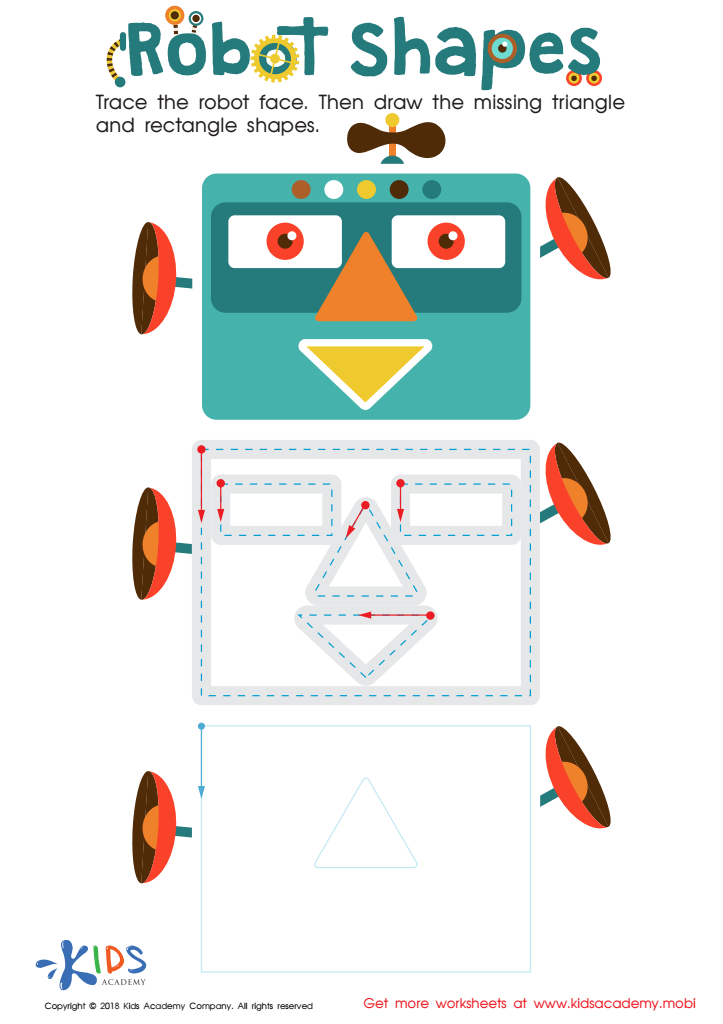
Robot Shapes Worksheet
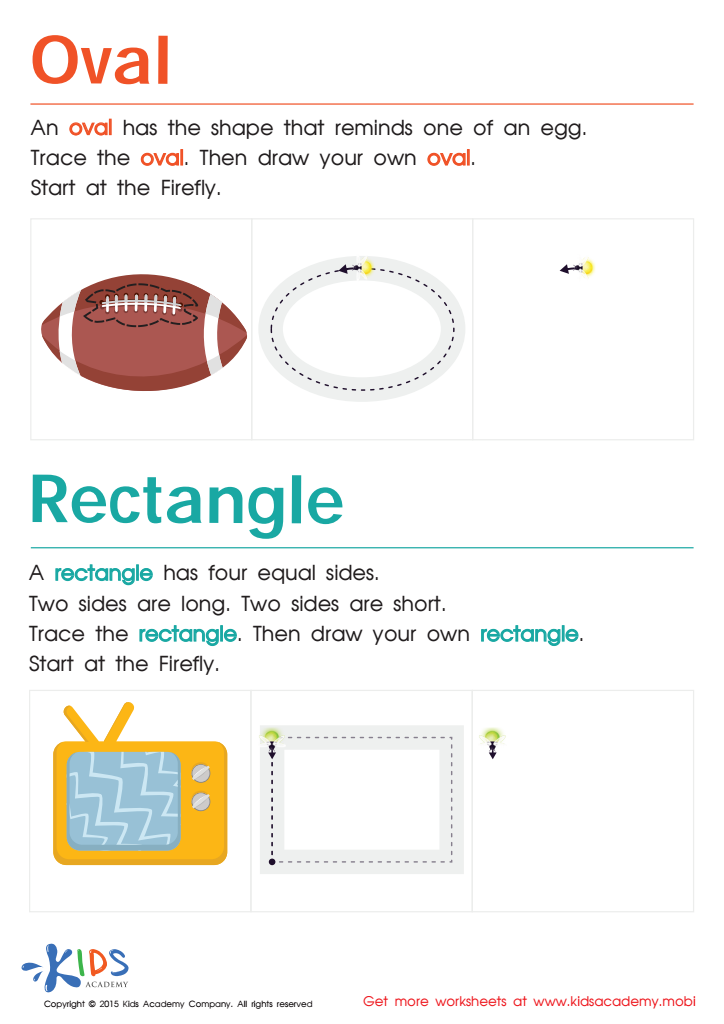
Easy Drawing of Ovals And Rectangles Worksheet








Fine motor skills are crucial for young children's overall development, particularly for 5-year-olds who are on the cusp of mastering a variety of essential tasks. These skills involve the coordination of small muscles in hands and fingers, allowing children to perform more intricate actions such as writing, drawing, and manipulating small objects. Understanding and recognizing basic 2D shapes plays a significant role in this process.
When parents and teachers prioritize fine motor skills alongside shape recognition, they are laying the foundation for future academic success. Shape activities can be a fun and engaging way for children to practice gripping, cutting, and tracing, thereby strengthening their hand-eye coordination and dexterity. Furthermore, knowledge of 2D shapes enhances cognitive development, aiding kids in problem-solving and spatial awareness.
As 5-year-olds often prepare for more structured schooling, these skills directly contribute to their ability to succeed in tasks like coloring within the lines, cutting shapes with scissors, and forming letters. By fostering both fine motor skills and shape understanding, adults can ensure that children are not only equipped for academic challenges but also more confident in their abilities, making learning a more enjoyable and fulfilling process. Thus, investing in these areas can positively impact a child's holistic growth.