Fine Motor Skills Normal Counting Worksheets for 5-Year-Olds
3 filtered results
-
From - To
Enhance your child's learning experience with our Fine Motor Skills Normal Counting Worksheets designed specifically for 5-year-olds! These engaging worksheets combine essential counting practice with activities that refine fine motor skills, helping young learners develop coordination and accuracy. Each worksheet features vibrant illustrations and age-appropriate exercises that encourage children to count, trace, and color, making learning fun and interactive. Our resources not only support mathematical understanding but also promote hand-eye coordination, pencil grip, and manual dexterity. Perfect for home or classroom use, these worksheets provide the perfect foundation for a lifetime of learning. Download now and watch your child's skills flourish!
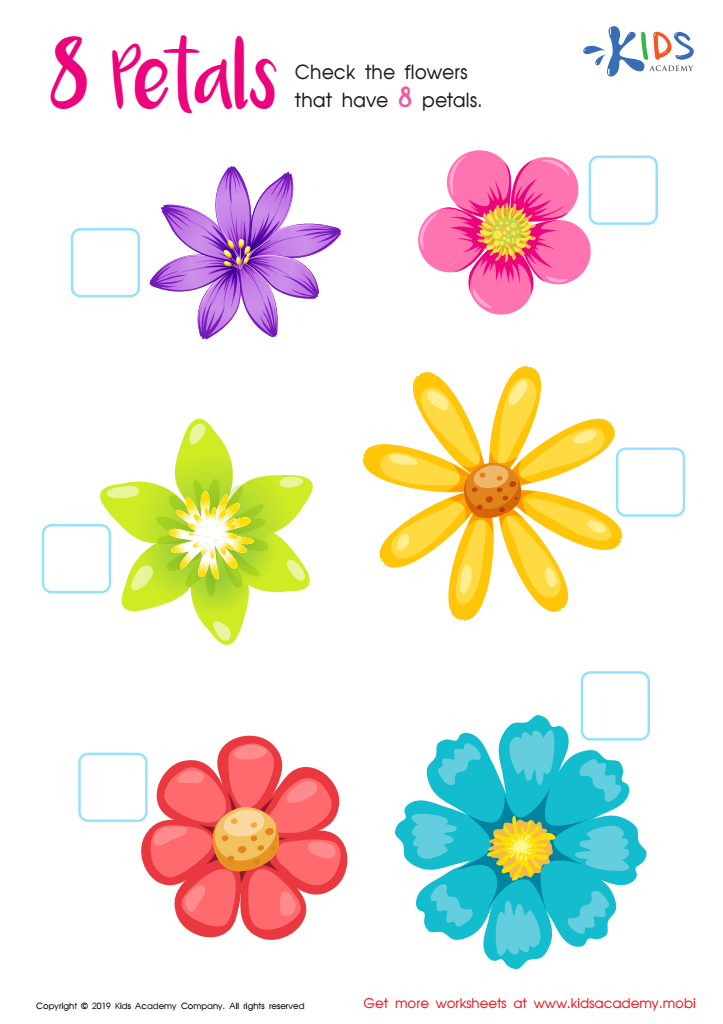
8 Petals Worksheet
 Assign to My Students


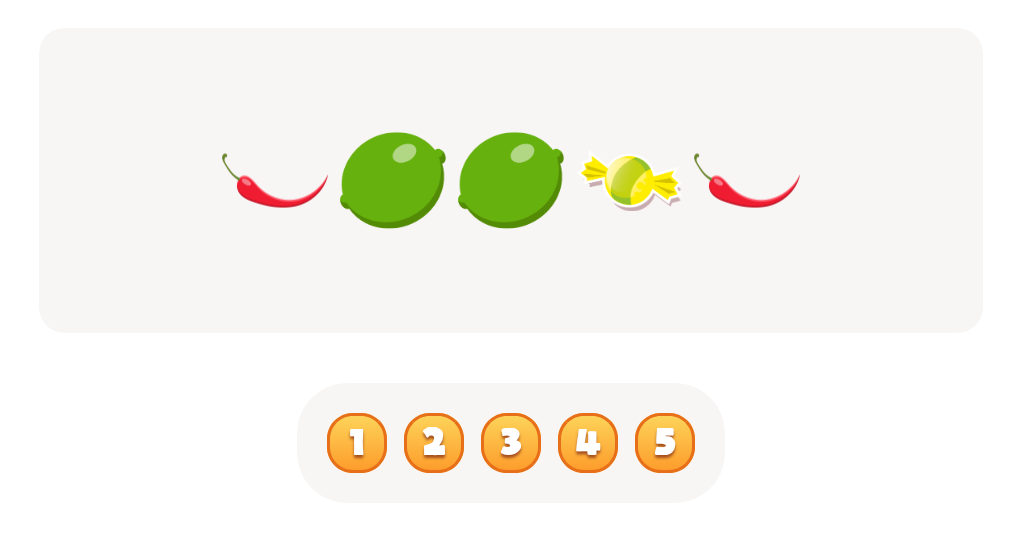
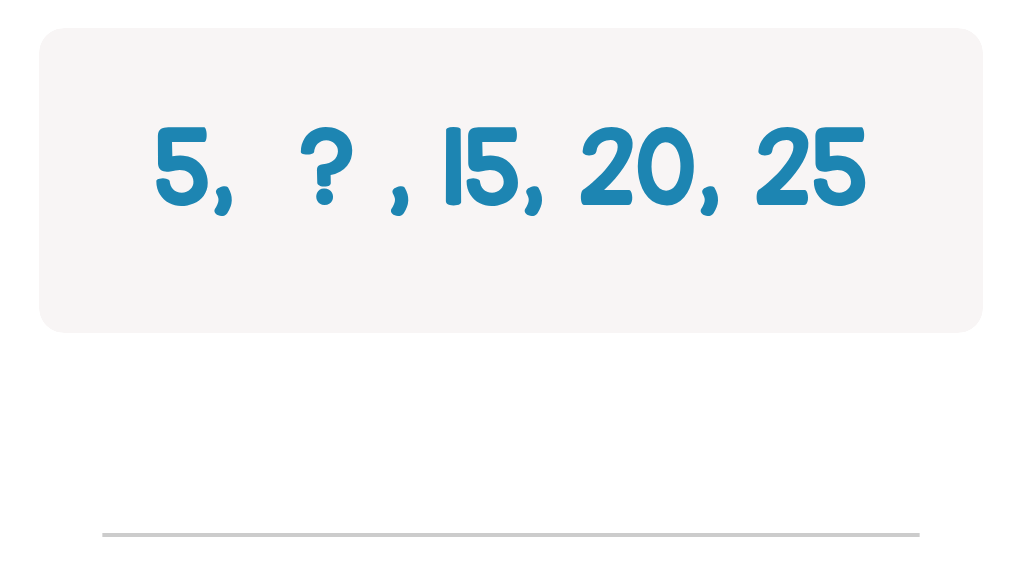
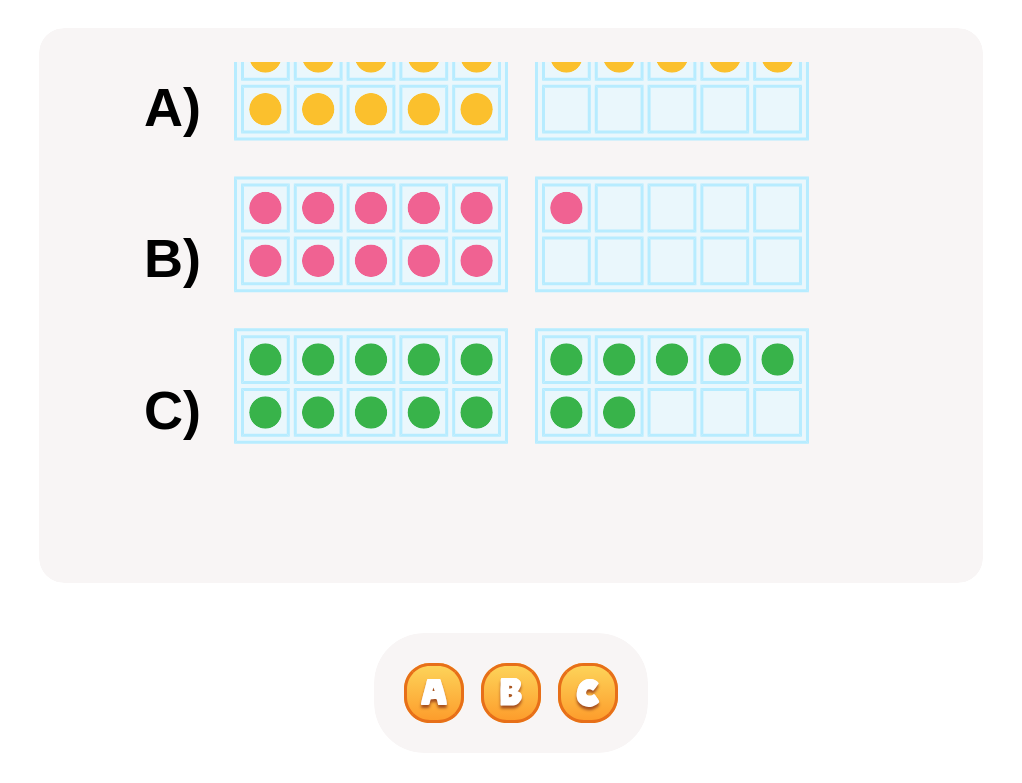
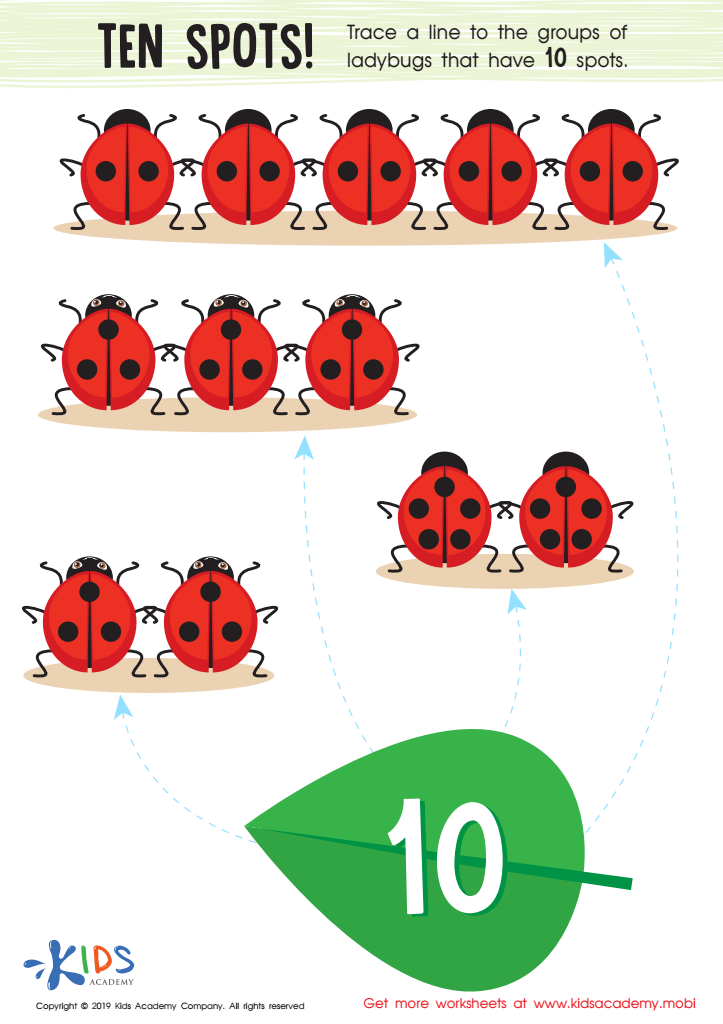
Ten Spots Worksheet
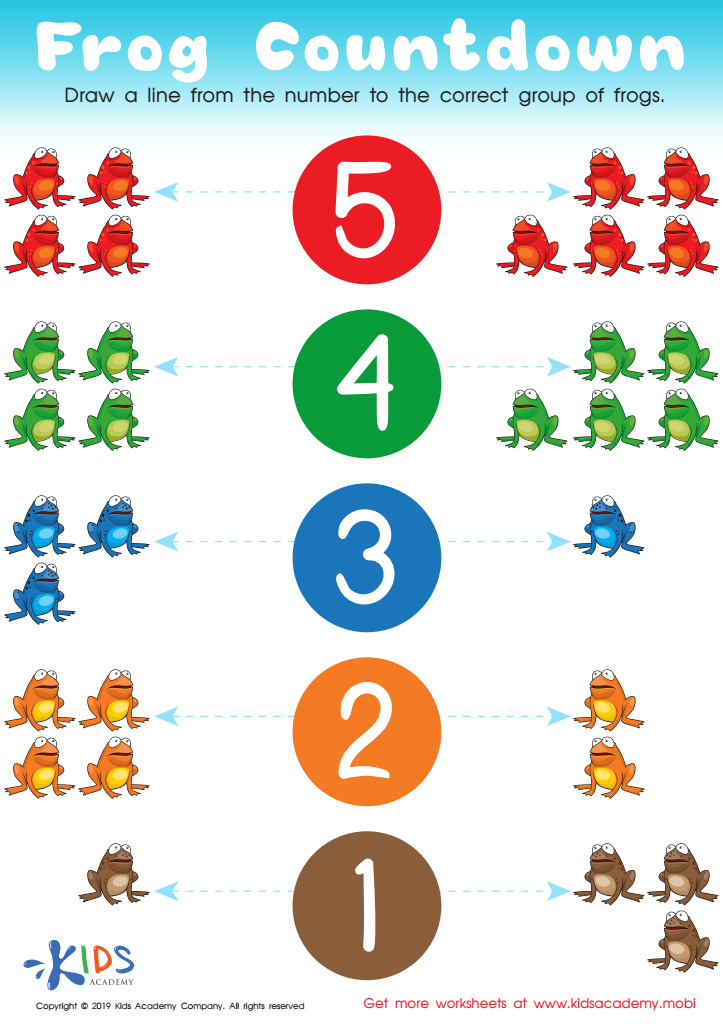
Frog Countdown Worksheet








Fine motor skills and counting are crucial developmental milestones for 5-year-olds, making it essential for parents and teachers to pay attention to these areas. Fine motor skills refer to the small movements of the hands and fingers, which are vital for a child's ability to perform everyday tasks such as writing, buttoning clothes, and manipulating small objects. Mastering these skills not only fosters independence but also builds confidence, enabling children to engage more fully in classroom activities and social interactions.
Normal counting encompasses more than just reciting numbers; it includes understanding quantity, number recognition, and the ability to engage in simple mathematical concepts. Encouraging counting in daily routines—such as counting toys, steps, or snacks—makes learning mathematical foundations more engaging and relatable. It helps children develop critical early academic skills, boosts cognitive development, and lays the groundwork for future math-related learning.
Overall, parents and teachers should care about fine motor skills and normal counting because they are foundational skills that can enhance a child’s cognitive, social, and emotional development, increase school readiness, and cultivate a lifelong love for learning. Fostering these skills early can bridge the gap to more advanced competencies down the road.








