Counting practice Normal Numbers Worksheets for 5-Year-Olds
8 filtered results
-
From - To
Discover a fun and engaging way for your 5-year-old to practice counting with our "Counting Practice Normal Numbers Worksheets." These expertly designed worksheets help young learners master counting skills, recognize numbers, and develop essential math foundations. Each worksheet offers diverse and interactive activities, ensuring your child remains motivated and entertained while learning. Ideal for both classroom and home use, our worksheets provide clear instructions and colorful illustrations tailored to capture the attention of young minds. Help your child build confidence in their math abilities with our practical and enjoyable counting practice resources. Start your child's math journey today!
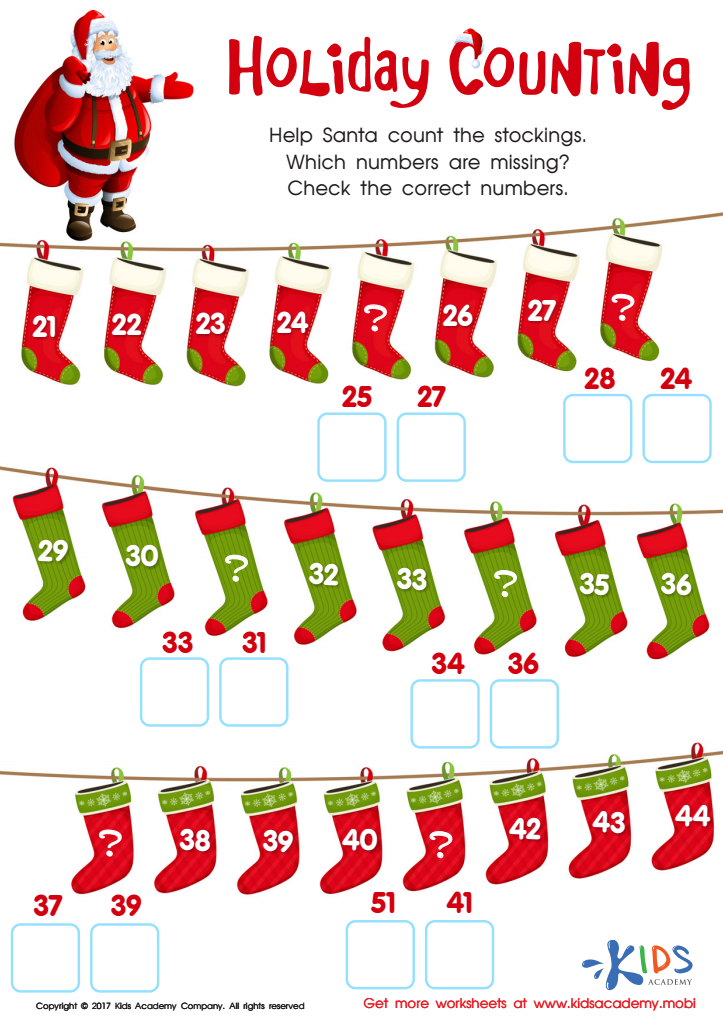
Holiday Counting Worksheet
 Assign to My Students
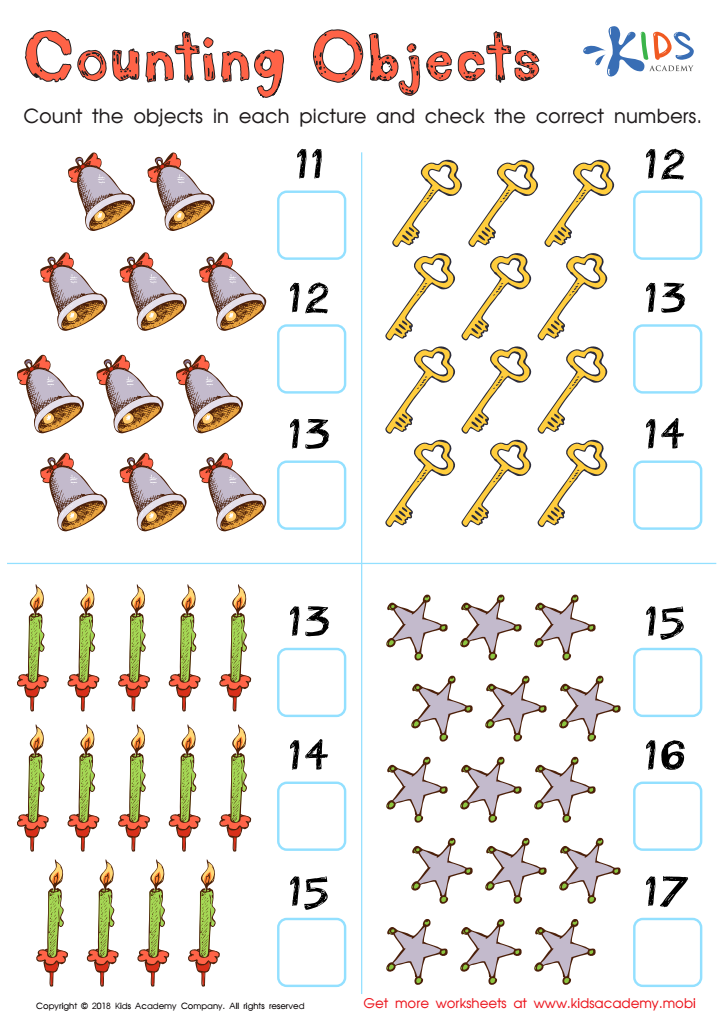
Counting Numbers Worksheet For Kindergarten
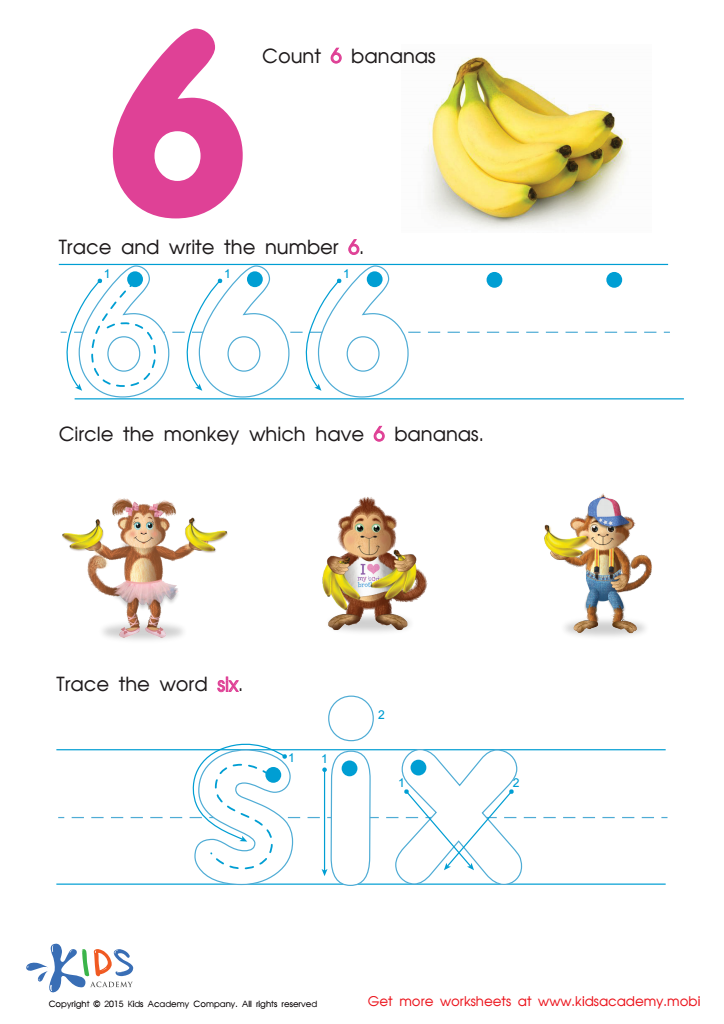
Tracing And Writing Number 6 Worksheet
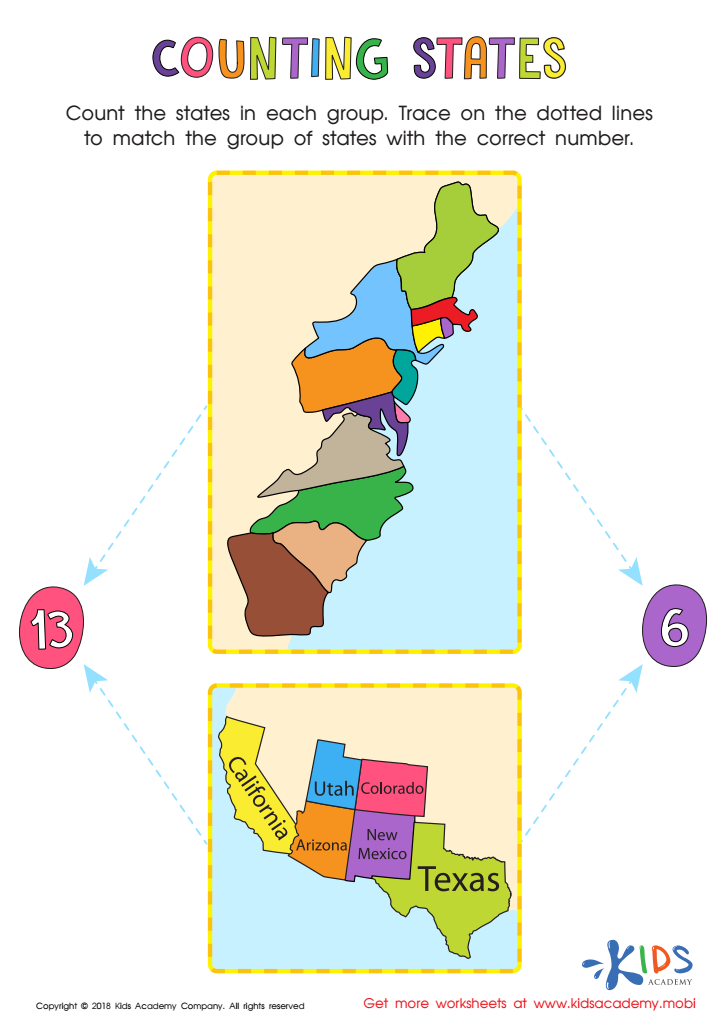
Counting States Worksheet
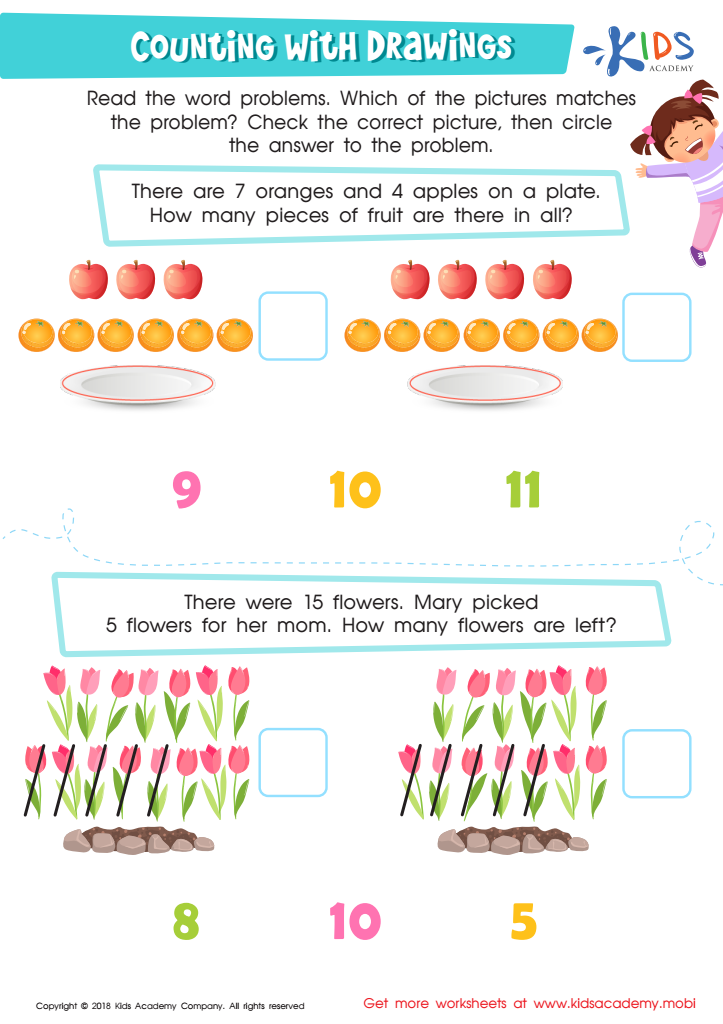
Counting with Drawings: Fruits & Chocolates Worksheet
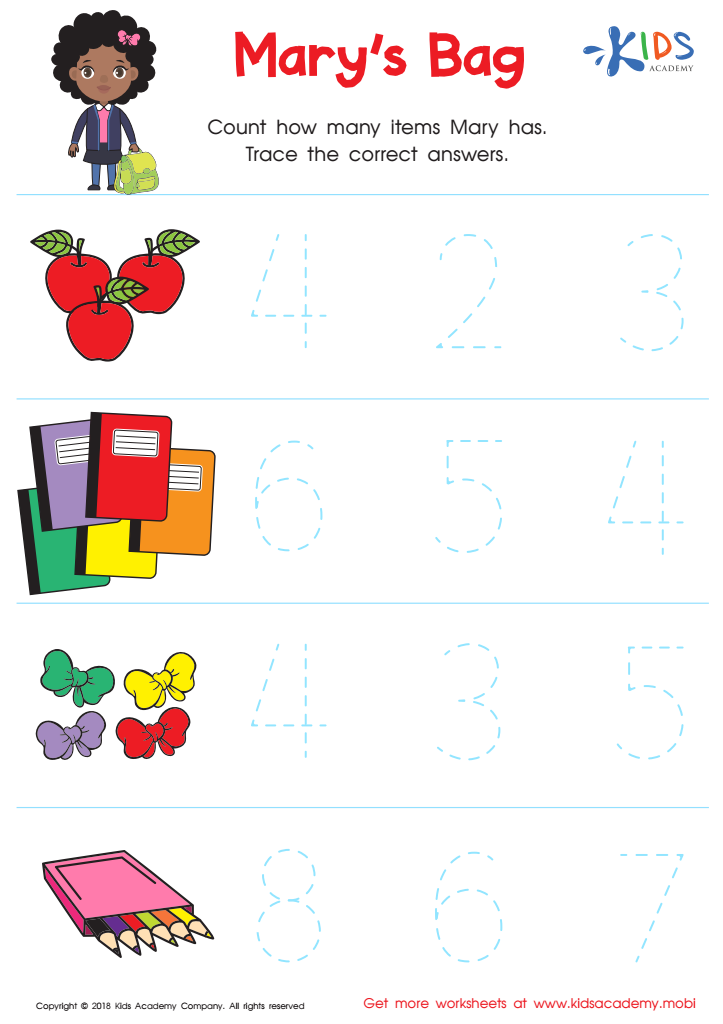
Kindergarten Number Tracing: Mary's Bag Worksheet
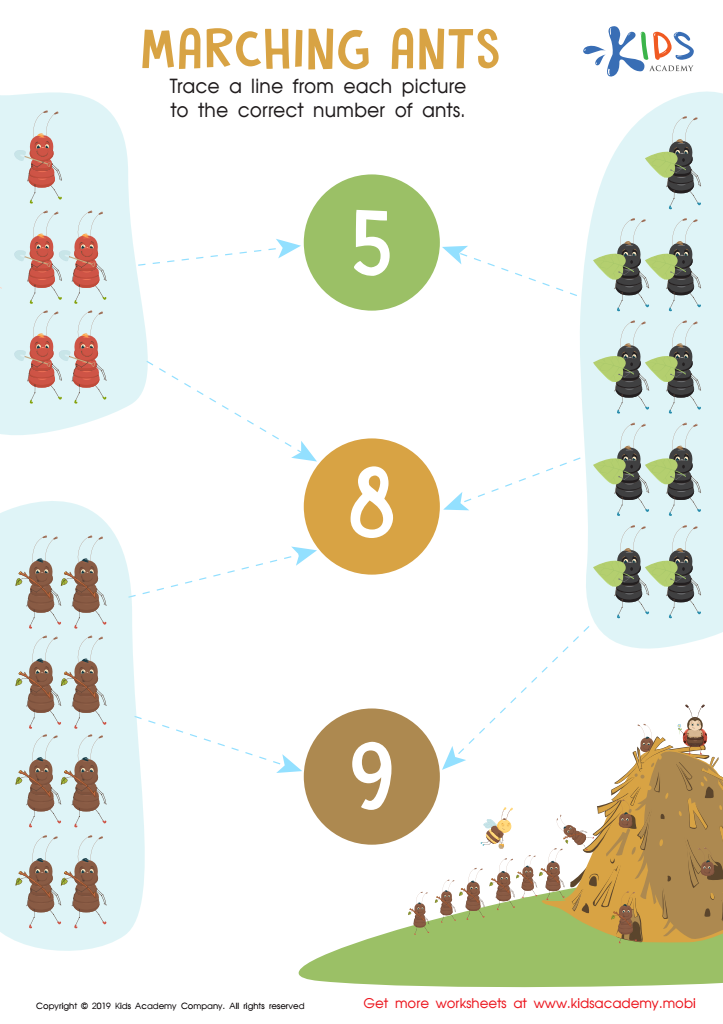
Marching Ants Worksheet
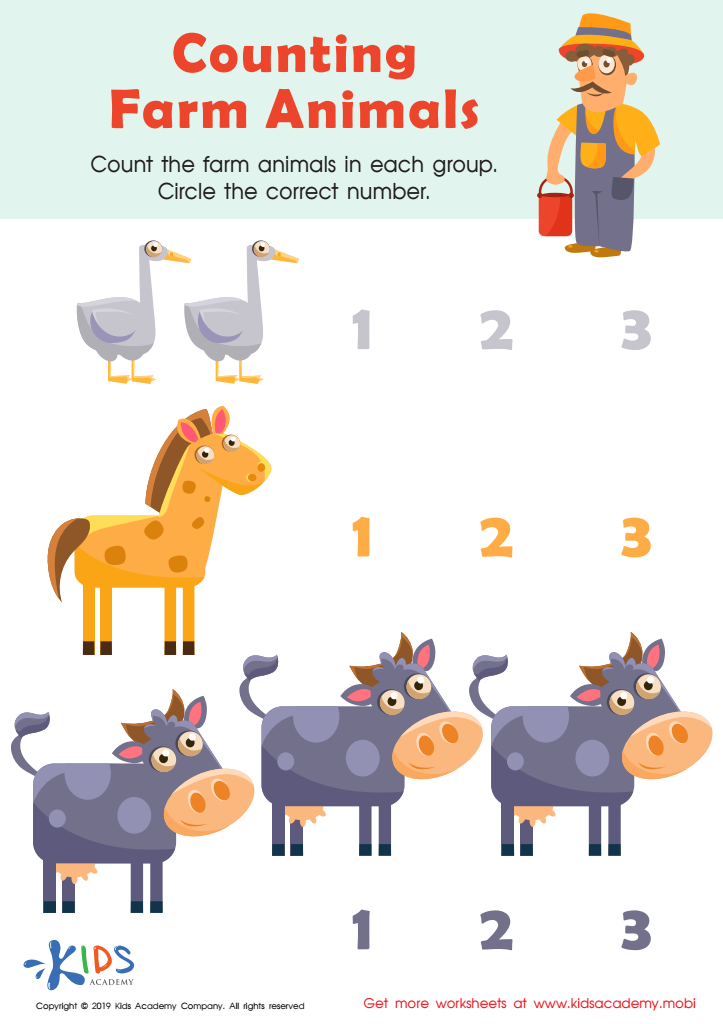
Counting Farm Animals Worksheet


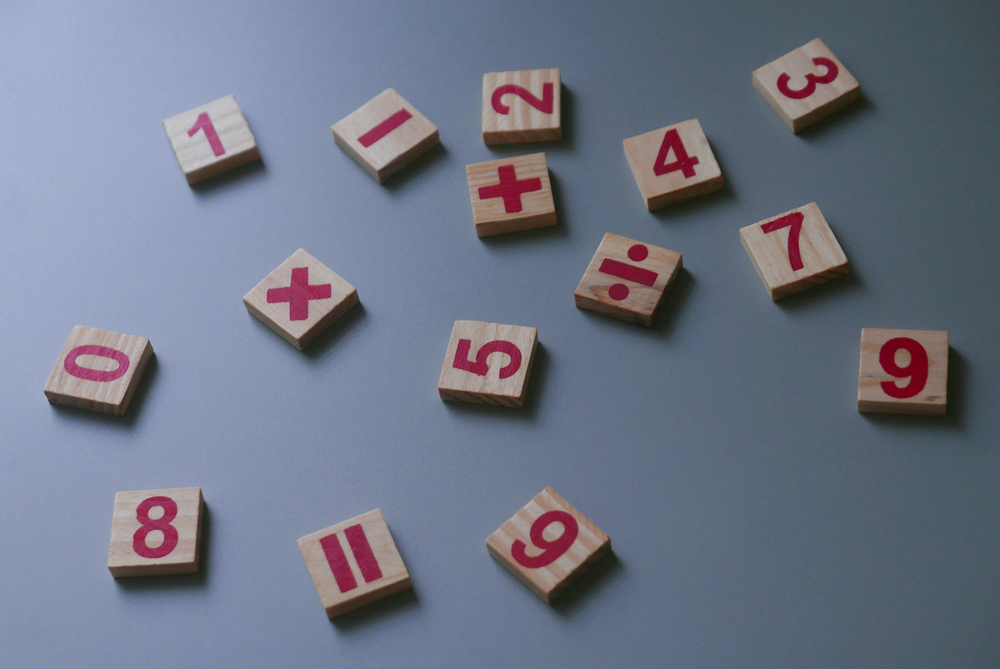




Counting practice is crucial for five-year-olds, laying the foundation for foundational mathematical skills and logical thinking. By engaging children in counting activities, parents and teachers help develop essential numeracy skills such as number recognition, ordering, and basic arithmetic operations. These skills are pivotal for more advanced mathematical concepts introduced in later grades.
When a child practices counting, they learn to associate numerical symbols with quantities and to understand the concept of "more" or "less," which is fundamental for comparing numbers. This concrete understanding fosters their ability to grasp addition, subtraction, and eventually multiplication and division.
Moreover, counting aids in enhancing cognitive development. It improves memory skills as children need to recall the correct sequence of numbers. They also develop problem-solving skills by learning to count forwards and backwards and by grouping objects.
Socially and emotionally, counting games and activities can make learning engaging and fun, fostering a positive attitude towards mathematics. Interactive counting activities with parents or peers can also improve communication skills and cooperative learning.
Overall, regular counting practice equips children with critical early life skills, boosting their confidence and readiness for school, and paving the way for successful lifelong learning.








