Basic geometry understanding Normal Math Worksheets for 5-Year-Olds
3 filtered results
-
From - To
Discover the engaging world of basic geometry with our meticulously crafted worksheets designed for 5-year-olds. At Kids Academy, we focus on foundational geometric concepts tailored to young learners. Our printable worksheets encourage children to recognize shapes, understand spatial relationships, and develop critical thinking skills. Each activity is thoughtfully created to captivate young minds, making learning both fun and effective. From identifying circles and squares to understanding patterns, our worksheets provide a solid start for early math success. Explore our collection today and give your child a head start in geometry with Kids Academy!
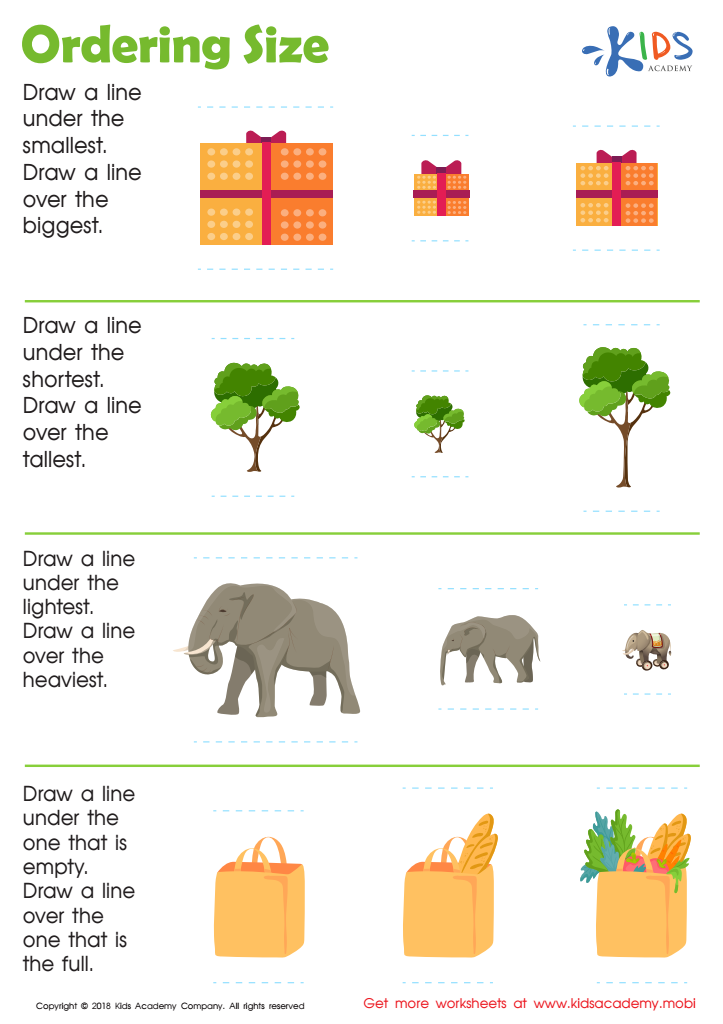
Ordering Size Worksheet
 Assign to My Students
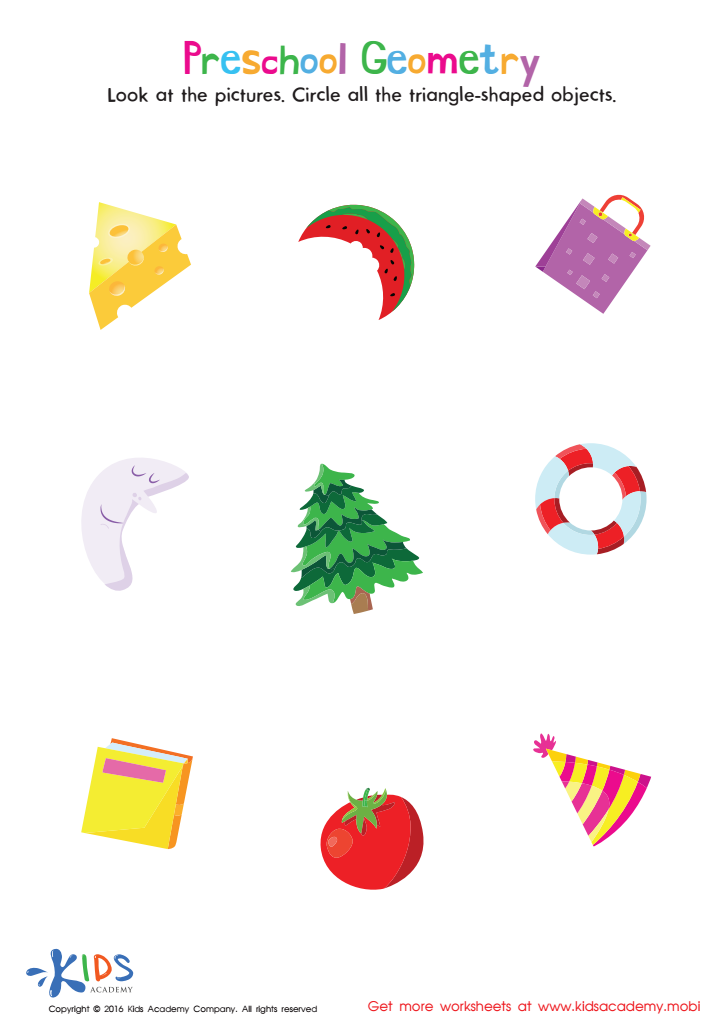
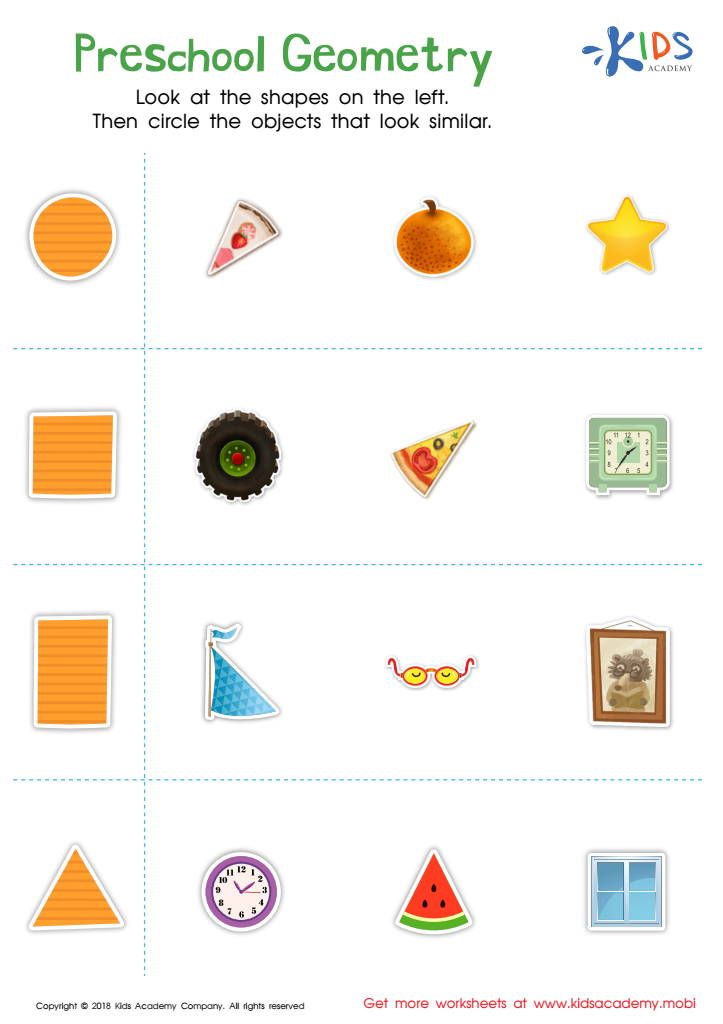
Preschool Geometry Worksheet








Parents and teachers should care about introducing basic geometry and general math to 5-year-olds because these early experiences lay the foundation for future academic success. Early math skills are not just about learning numbers and shapes; they also cultivate critical thinking, problem-solving abilities, and cognitive development. Geometry, for instance, helps children grasp spatial relationships and understand the world around them. When children recognize shapes and their properties, they improve their observational skills, which are crucial in everyday life.
Moreover, early exposure to math concepts boosts confidence and creates a positive attitude towards learning. By understanding basic geometric figures—like circles, squares, and triangles—along with simple math operations, children develop a sense of accomplishment. This early success can inspire a lifelong interest in math and science.
Furthermore, research indicates that early math skills are strong predictors of later academic achievement, more so than early reading skills. Proficiency in basic geometry and math prepares children for more complex concepts in higher grades, reducing anxiety and enhancing their academic trajectory. Engaging children with fun, hands-on learning activities also reinforces these skills in a way that feels like play, promoting continuous curiosity and engagement with learning. For these reasons, investing effort in early math education is crucial for holistic child development.








