
Basic measurement concepts Normal Math Worksheets for 5-Year-Olds
3 filtered results
Difficulty Level
Grade
Age
-
From - To
Subject
Activity
Standards
Explore our collection of Basic Measurement Concepts Normal Math Worksheets designed specifically for 5-year-olds. These engaging, age-appropriate worksheets introduce young learners to essential measurement skills, including comparing lengths, understanding heights, and recognizing weight differences. With colorful images and fun activities, children develop a foundational understanding of measurements through hands-on practice. Our worksheets foster critical thinking and allow children to explore concepts like "longer" and "shorter" in a playful and interactive way. Perfect for both home and classroom use, these resources support early math development and encourage a love for learning. Start your child’s measurement journey today!
Favorites
With answer key
Interactive
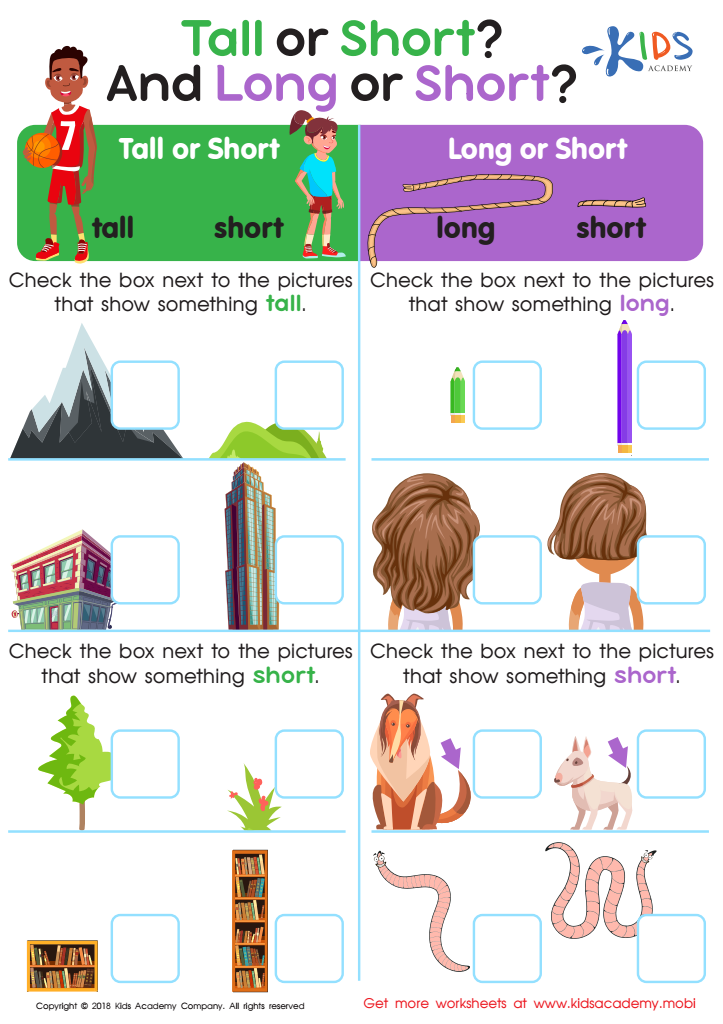
Tall or Short and Long or Short? Worksheet
This worksheet is fun and helpful for kids to understand the difference between height and length. With pictures of familiar objects, they can compare and choose the box with the right answer. This helps them gain skills and a better foundation for future measuring.
 Assign to My Students
Tall or Short and Long or Short? Worksheet
Worksheet
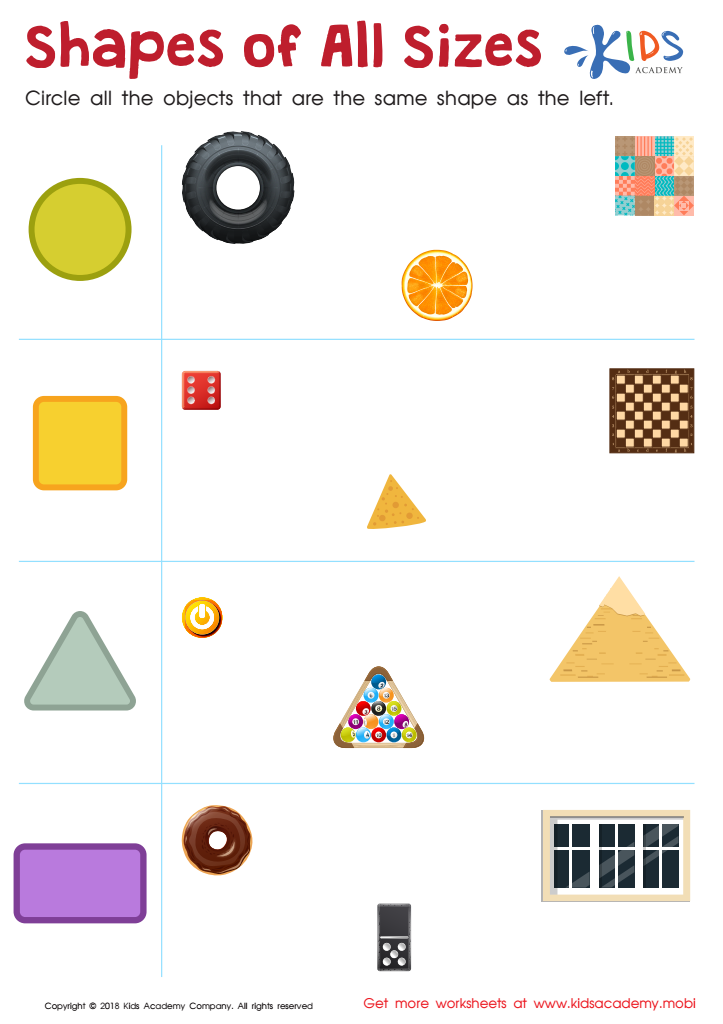
Shapes of All Sizes Worksheet
Students will have fun comparing basic shapes to familiar objects with this worksheet. It's an excellent way to help them recognize similarities in geometric shapes, building strong foundations for understanding congruence and similarity.
Shapes of All Sizes Worksheet
Worksheet
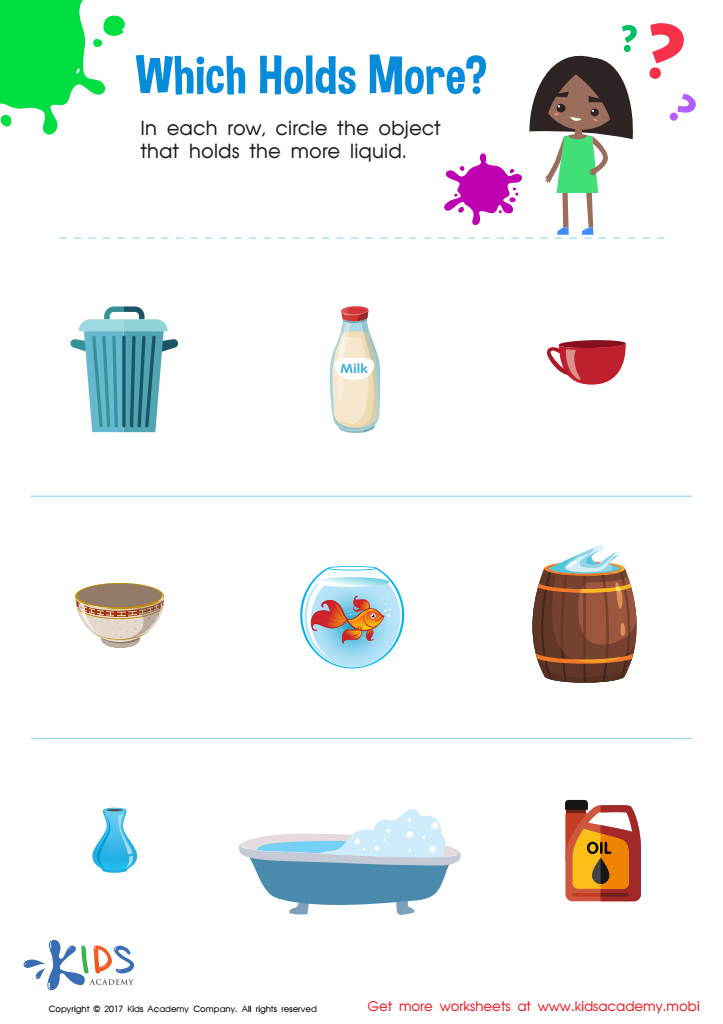
Which Holds More: Capacity Worksheet
Kids learn volume with containers of different capacities, such as mugs and barrels, and understand which can hold more liquid. A fun and interactive way to teach essential math concepts.
Which Holds More: Capacity Worksheet
Worksheet
Join Kids Academy for Free
Who is primarily going to use this learning content?








Understanding basic measurement concepts through normal math is crucial for 5-year-olds as it lays the foundation for their cognitive development and everyday skills. First, these concepts help children grasp the idea of size, volume, and weight, enabling them to compare objects effectively. For example, children can learn to categorize items as longer, shorter, heavier, or lighter, fostering critical thinking as they interpret the world around them.
Moreover, basic measurement also enhances a child's understanding of mathematics. When children engage in activities such as measuring ingredients for a simple recipe, they not only develop numeracy skills but also develop an early appreciation for the practical uses of math. This hands-on learning makes mathematical concepts more tangible and relatable.
Teachers and parents play a vital role in this process by incorporating measurement activities in daily routines, such as comparing toy lengths or measuring how much liquid fits in different containers. This contextual learning not only sparks curiosity but also nurtures a positive attitude towards math, ensuring children are better prepared for future academic challenges. Supporting children in this foundational phase aids their overall growth and development, helping them build essential skills they will carry with them throughout their educational journey.








