
Animal Classification Normal Sorting Worksheets for 5-Year-Olds
3 filtered results
Difficulty Level
Grade
Age
-
From - To
Subject
Activity
Standards
Introducing our engaging "Animal Classification Normal Sorting Worksheets" designed specifically for 5-year-olds! These fun and interactive worksheets help young learners explore the fascinating world of animals while developing essential sorting and classification skills. Your child will enjoy categorizing animals based on their unique characteristics, fostering their understanding of different species. Each worksheet provides colorful visuals and simple instructions, making learning enjoyable and accessible. Perfect for early grade classrooms or home learning, these worksheets also promote critical thinking and creativity. Help your child enhance their cognitive development through play and exploration with our Animal Classification sorting activities! Download and start today!
Favorites
With answer key
Interactive
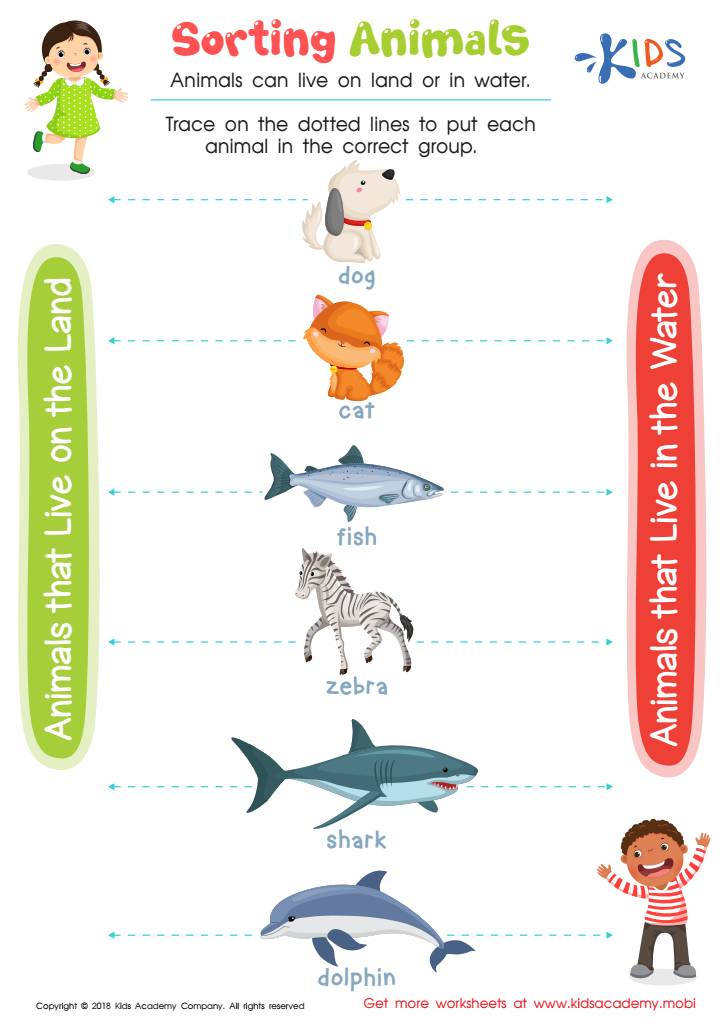
Sorting Animals Worksheet
Your kids will love this free, interactive worksheet! With image clues, they can read and trace the animal names, and then sort them into groups of land or water animals. It's an enjoyable way to boost their critical thinking, fine motor and prior knowledge skills.
 Assign to My Students
Sorting Animals Worksheet
Worksheet
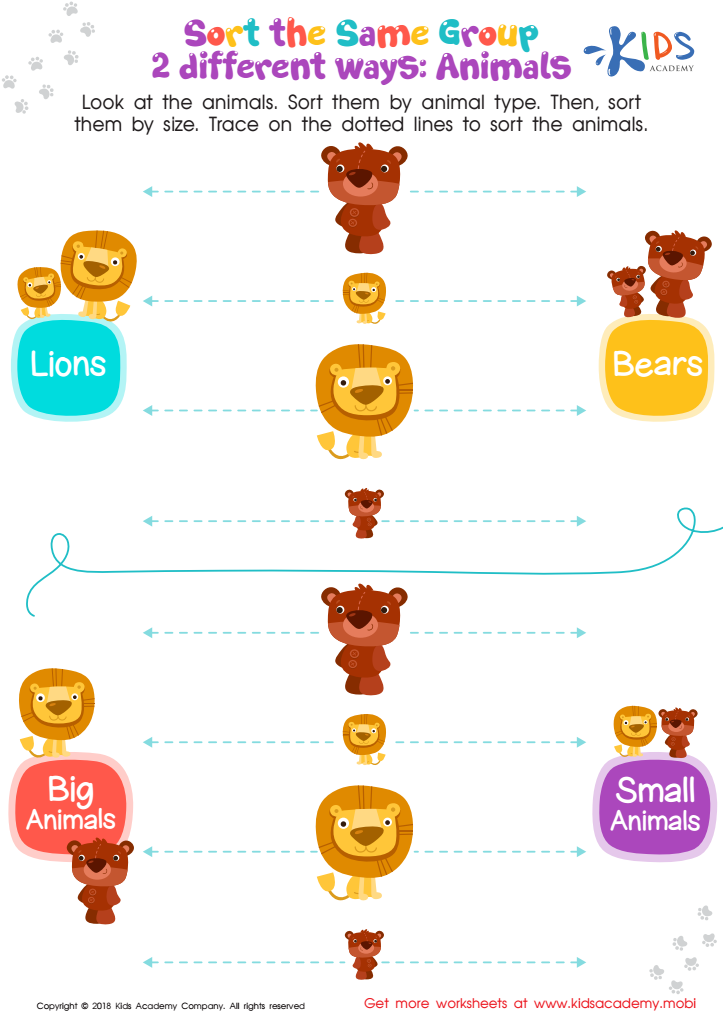
Sort the Same Group 2 Different Ways: Animals Worksheet
Look at the animals with your child. Ask them to name them, then sort them by type (e.g. lions and bears). Next, help them sort by size, tracing the dotted lines. This will teach them sorting skills.
Sort the Same Group 2 Different Ways: Animals Worksheet
Worksheet
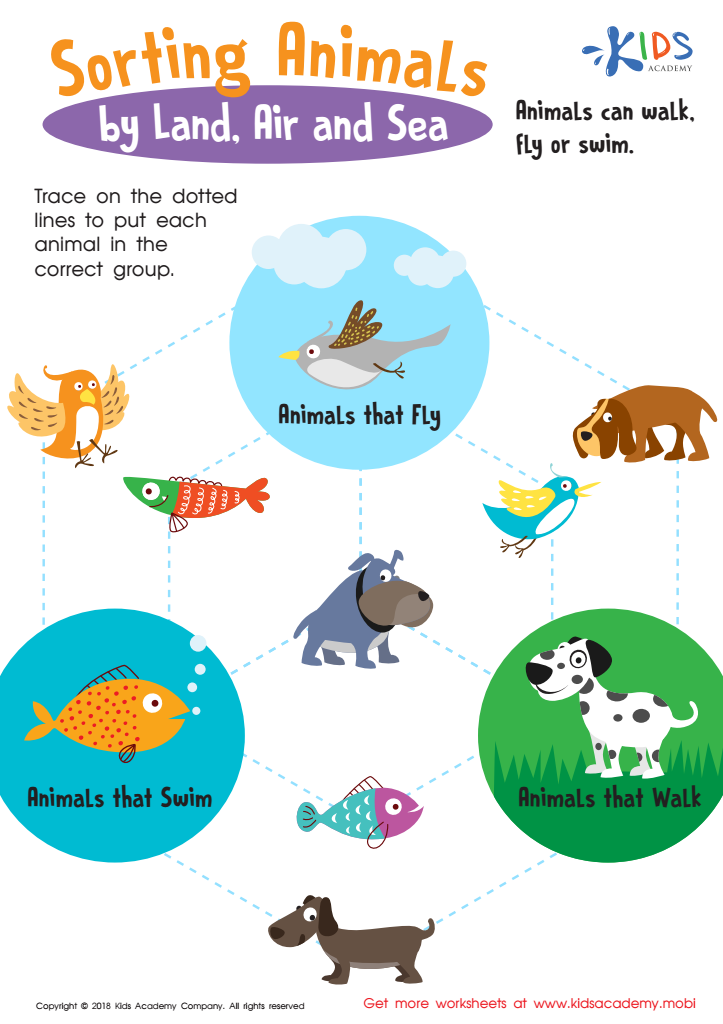
Sorting Animals by Land, Air and Sea Worksheet
Kids will use critical thinking and fine motor skills with this worksheet! They'll analyze animal traits and draw lines to sort them into groups of those that fly, swim, or walk. It's a fun way to hone skills and have a great time!
Sorting Animals by Land, Air and Sea Worksheet
Worksheet
Join Kids Academy for Free
Who is primarily going to use this learning content?







Animal classification is a fundamental concept in science that introduces 5-year-olds to the diverse world of animals and their unique characteristics. Understanding normal sorting in animal classification helps young learners develop critical thinking and observational skills. By categorizing animals based on shared traits—such as mammals, birds, reptiles, and amphibians—children gain insights into the natural world around them.
Parents and teachers should care about animal classification because it fosters curiosity and promotes environmental awareness. When children learn to recognize different animal groups and their habitats, they become more engaged with nature. This understanding cultivates empathy not just for animals but also for ecosystem health, encouraging responsible behavior towards wildlife and the environment.
Additionally, animal classification can support language development as children learn new vocabulary and concepts related to biology. It creates opportunities for collaborative learning and discussion, engaging children in conversations about their favorite animals and fostering social skills.
In summary, animal classification through normal sorting lays a strong educational foundation for young learners, encouraging curiosity, enhancing critical thinking, and nurturing a sense of responsibility towards the world around them. Investing time in this subject builds lifelong learners who appreciate and respect biodiversity.








