Story sequencing Normal Reading Fiction Worksheets for 5-Year-Olds
6 filtered results
-
From - To
Discover our engaging Story Sequencing Normal Reading Fiction Worksheets designed specifically for 5-year-olds! These worksheets help young learners enhance their comprehension and critical thinking skills by arranging story events in logical order. Kids will enjoy interactive tasks that involve colorful illustrations and fun characters, making learning both enjoyable and effective. Perfect for classroom settings or at-home practice, these worksheets encourage creativity while fostering literacy skills. Cultivate your child's love for reading and storytelling with our carefully crafted story sequencing activities that promote understanding of narrative structure and sequencing. Download today and watch your child's reading skills flourish!
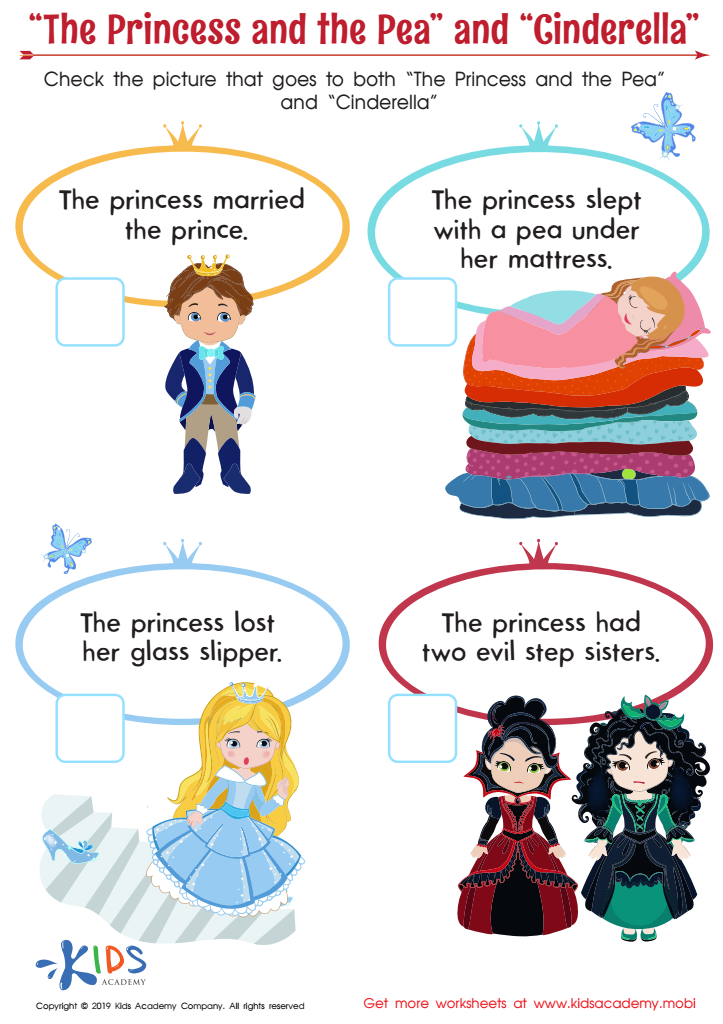
“The Princess and the Pea” and “Cinderella” Worksheet
 Assign to My Students
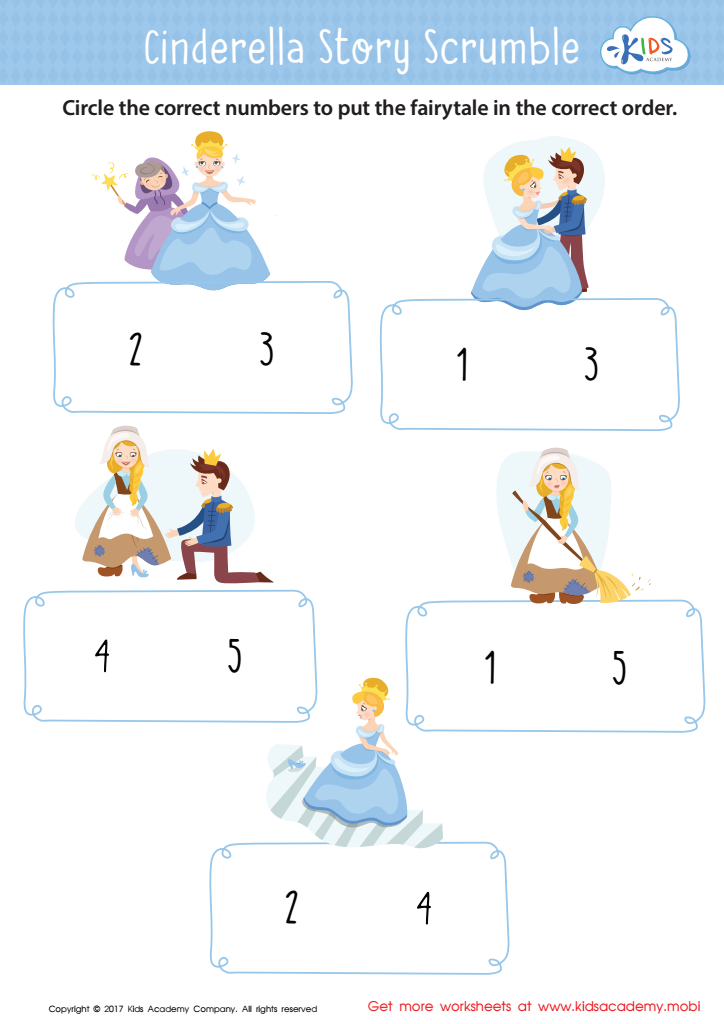
Cinderella Story Sequencing Worksheet
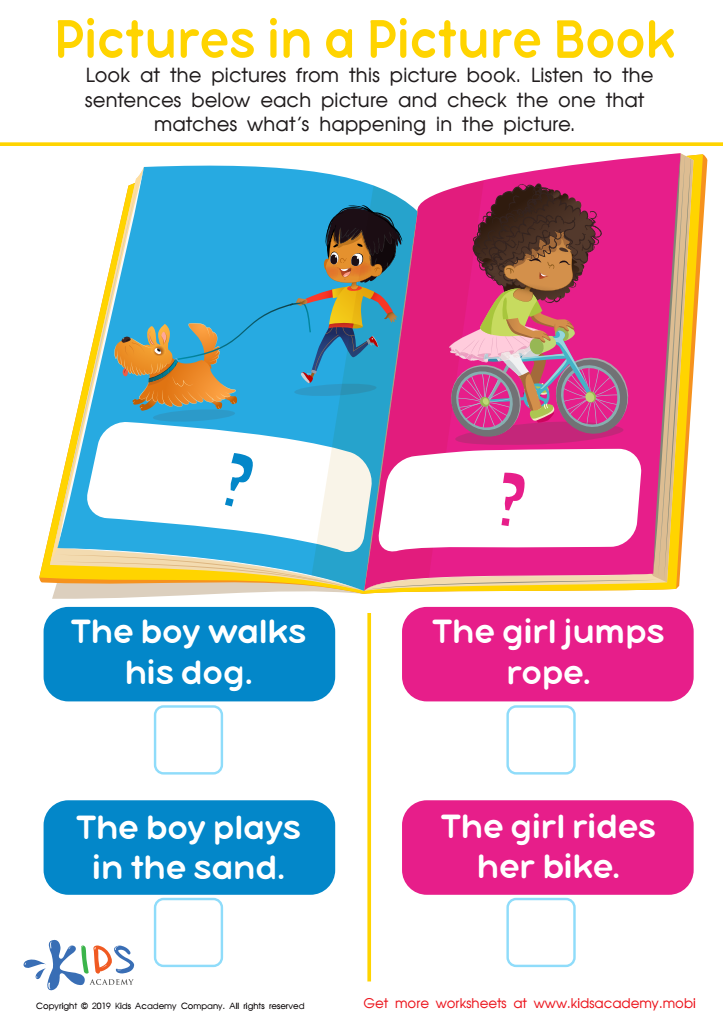
Picture in Books Worksheet
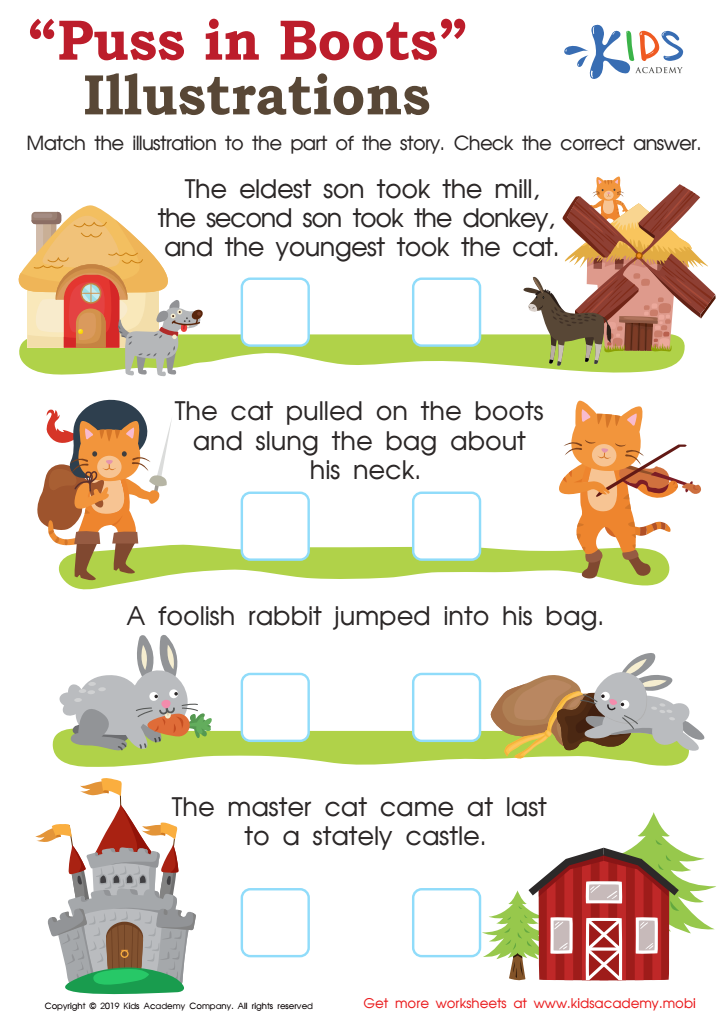
Puss in Boots Illustrations Worksheet
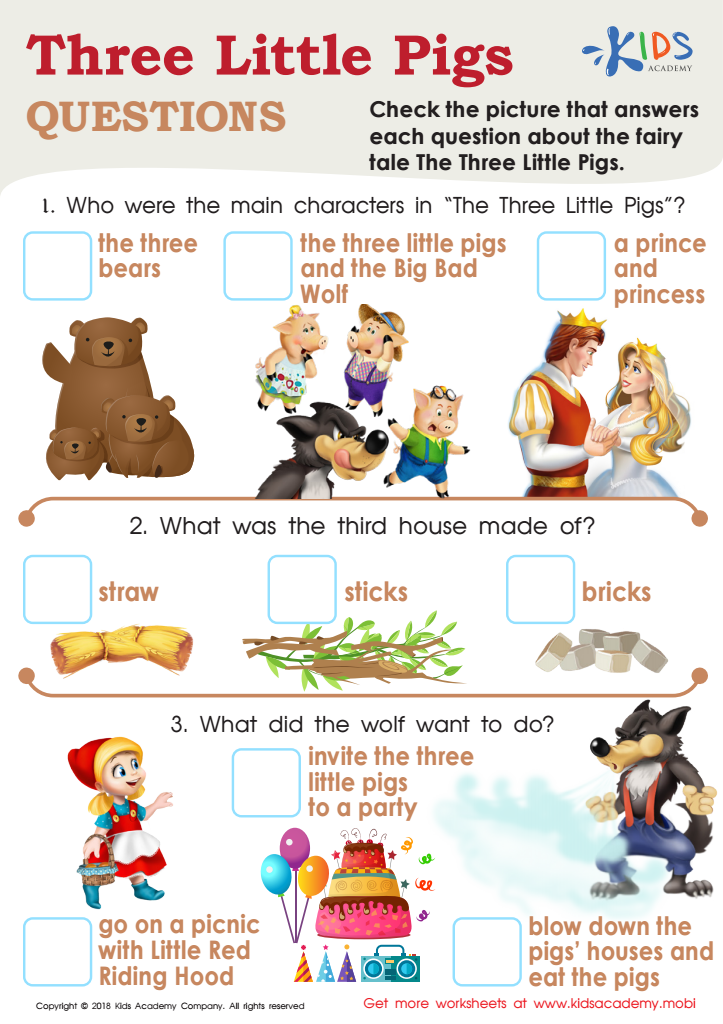
Three Little Pigs Questions Worksheet
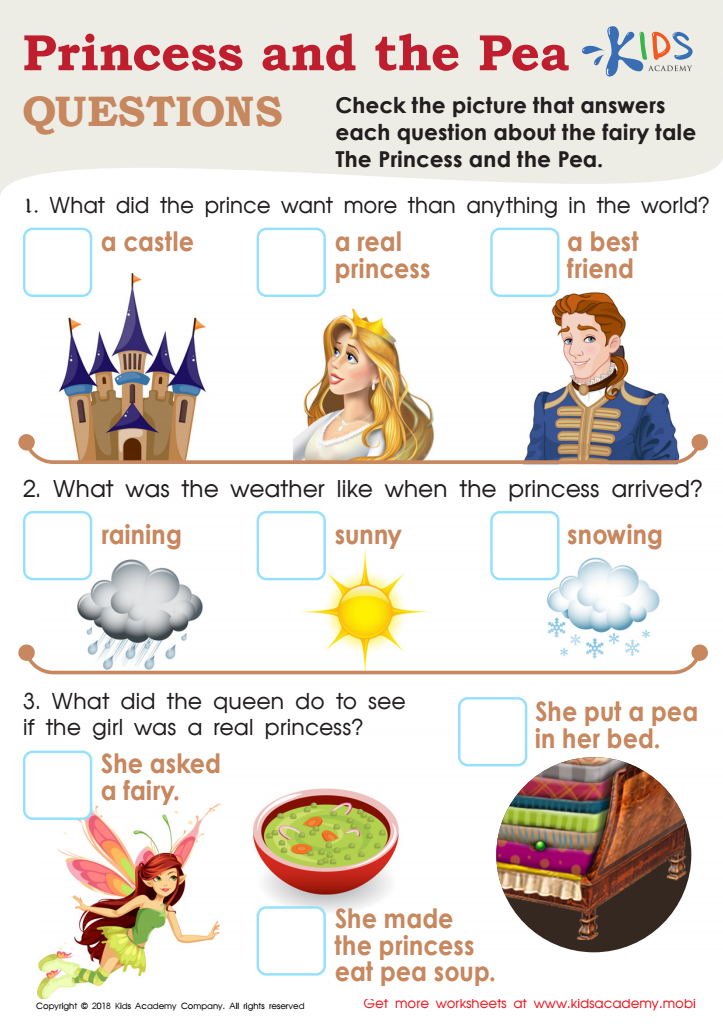
Princess and the Pea Questions Worksheet








Story sequencing is an essential component of reading comprehension and literacy development for 5-year-olds. It involves understanding the order in which events occur in a narrative, helping children to make connections between cause and effect, characters, and plot. For parents and teachers, fostering skill in story sequencing benefits children in several significant ways.
Firstly, sequencing enhances critical thinking skills as children learn to predict what might happen next or why a character acted a certain way. This promotes deeper engagement with the text, allowing young readers to interact with stories more meaningfully. Moreover, doing so strengthens memory and recall, which are pivotal for effective learning.
Secondly, story sequencing aids in vocabulary development. As children retell stories or rearrange events, they practice using new words and language structures, contributing to their overall linguistic development.
Lastly, understanding story sequences forms a foundation for writing skills. As children learn to structure stories logically, it encourages creativity and expression in their own writing.
In conclusion, engaging children in story sequencing during normal readings promotes holistic development, making it crucial for parents and teachers to prioritize this skill in early literacy initiatives.







