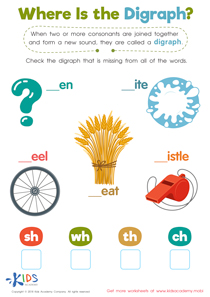
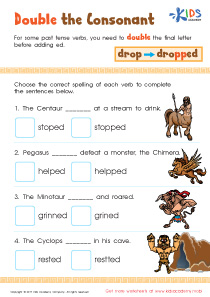
Normal Beginning Consonants Worksheets for Ages 6-7
9 filtered results
-
From - To
Help your 6-7 year old master early reading skills with our Normal Beginning Consonants Worksheets. Specially designed for young learners, these engaging worksheets focus on identifying, practicing, and reinforcing beginning consonant sounds. Each fun, illustrated exercise ensures children can recognize and pronounce initial letters in words, aiding in literacy development. Ideal for classroom or home use, these printables support learning through play and repetition. Give your child the confidence to explore language with our expertly crafted exercises, making the journey to reading both educational and enjoyable. Download and start boosting your child’s phonics foundation today!
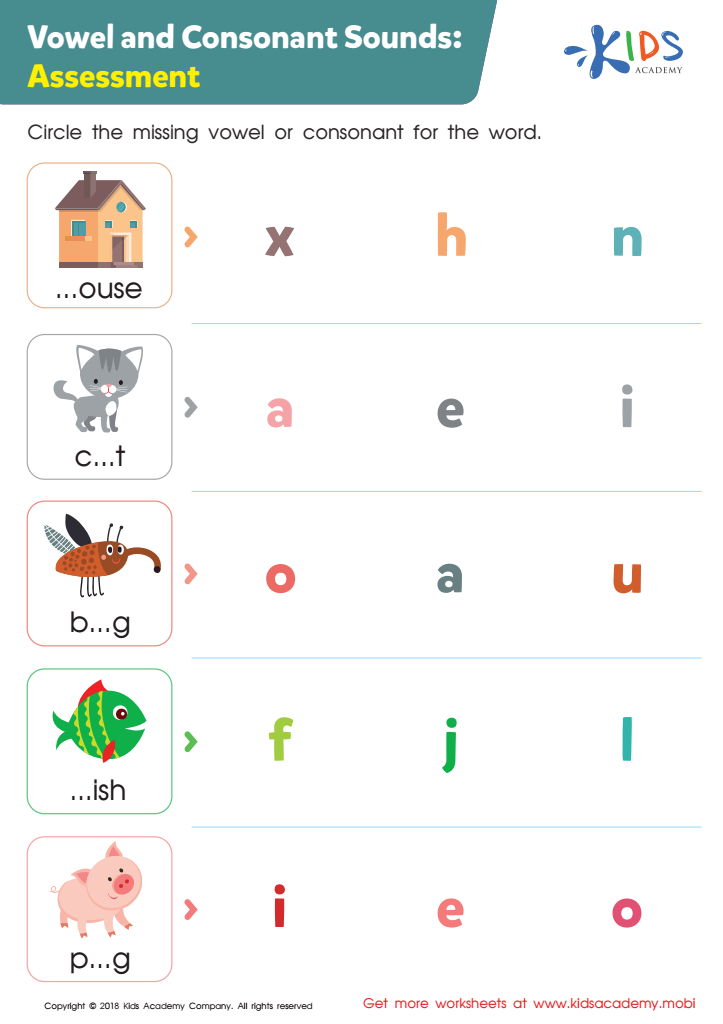
Vowel and Consonant Sounds: Assessment Worksheet
 Assign to My Students
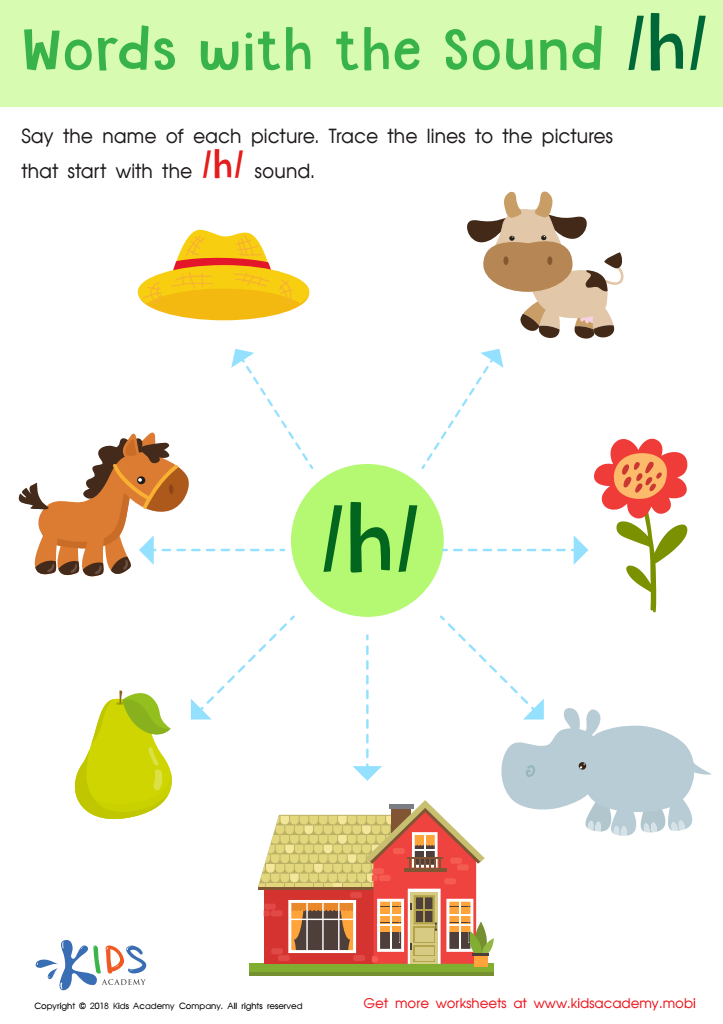
Words with sound h Reading Worksheet
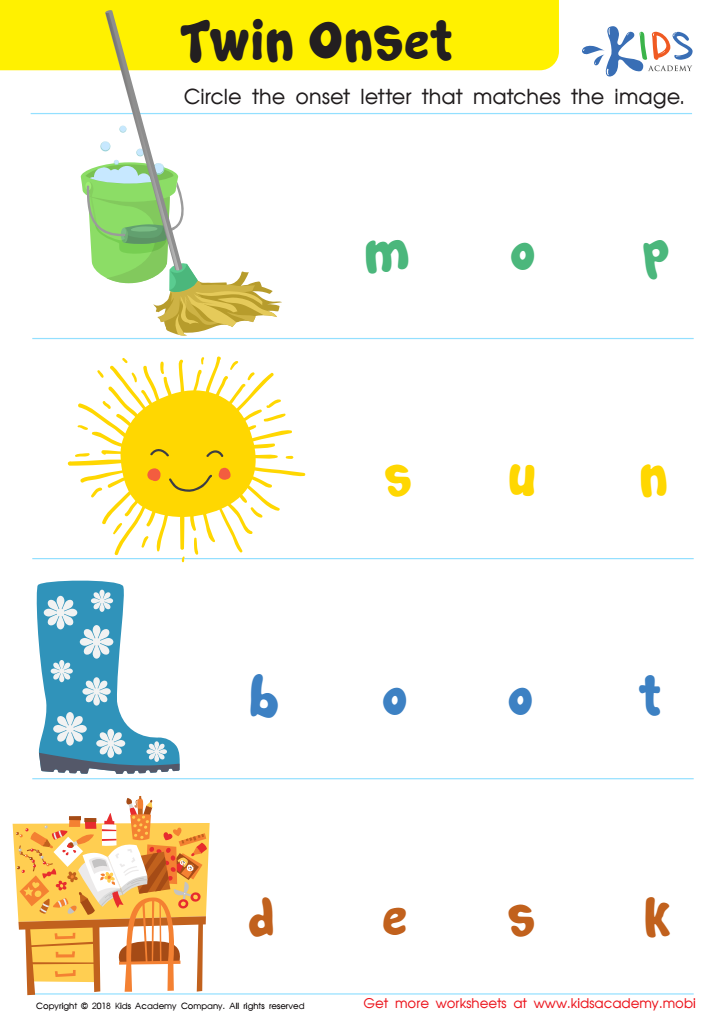
Twin Onset Worksheet
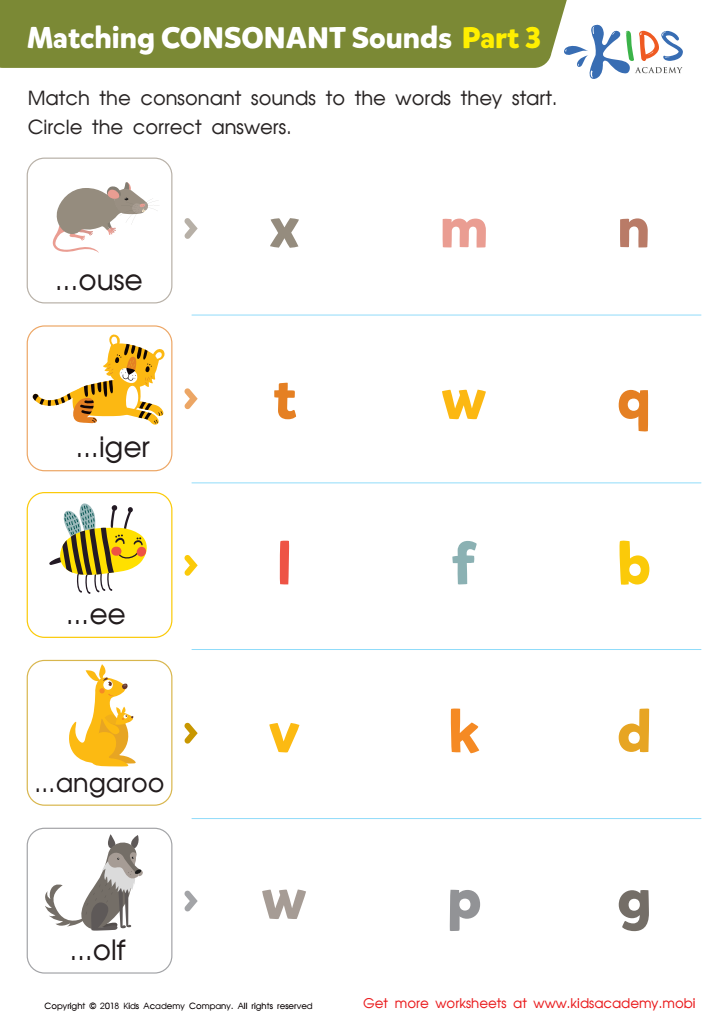
Matching Consonant Sounds: Part 3 Worksheet
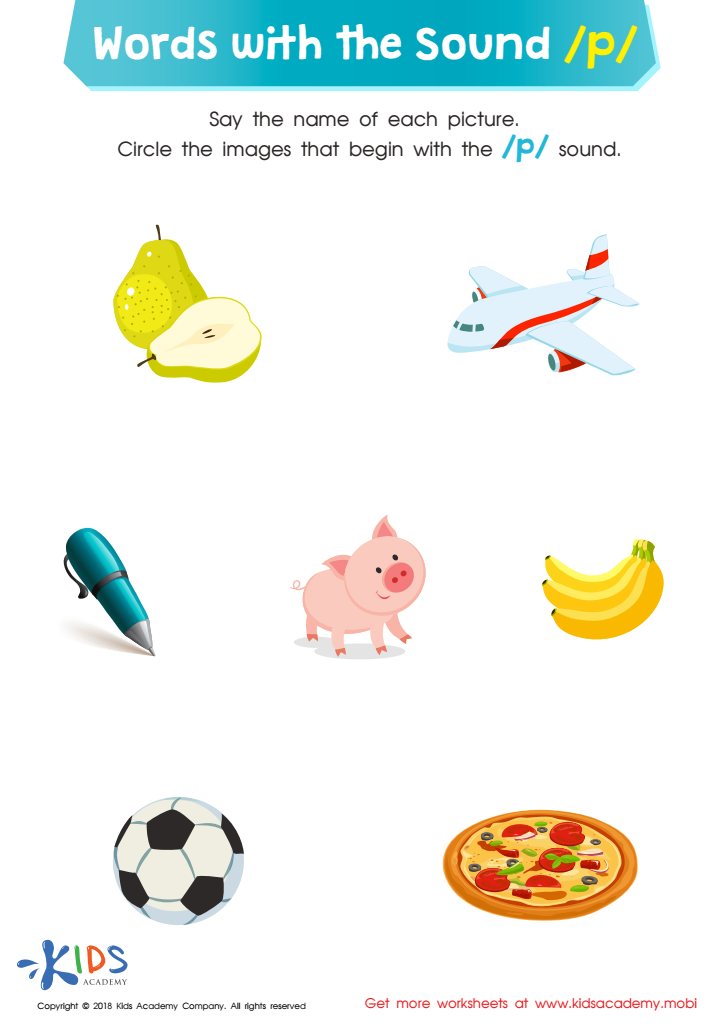
Words with sound p Reading Worksheet
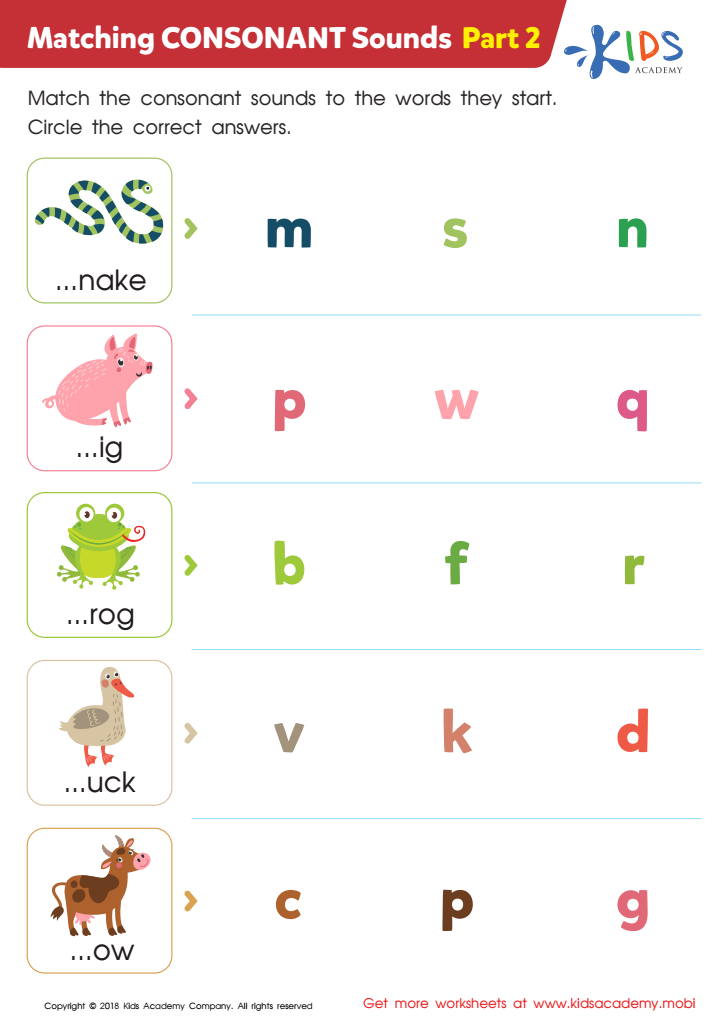
Matching Consonant Sounds: Part 2 Worksheet
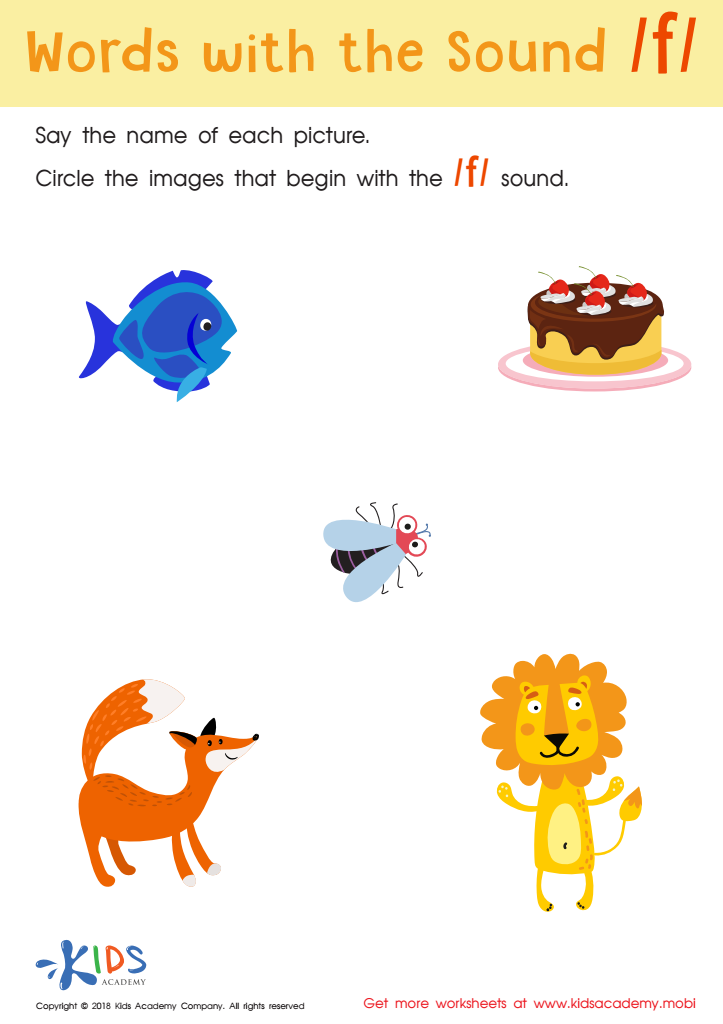
Words with sound f Reading Worksheet
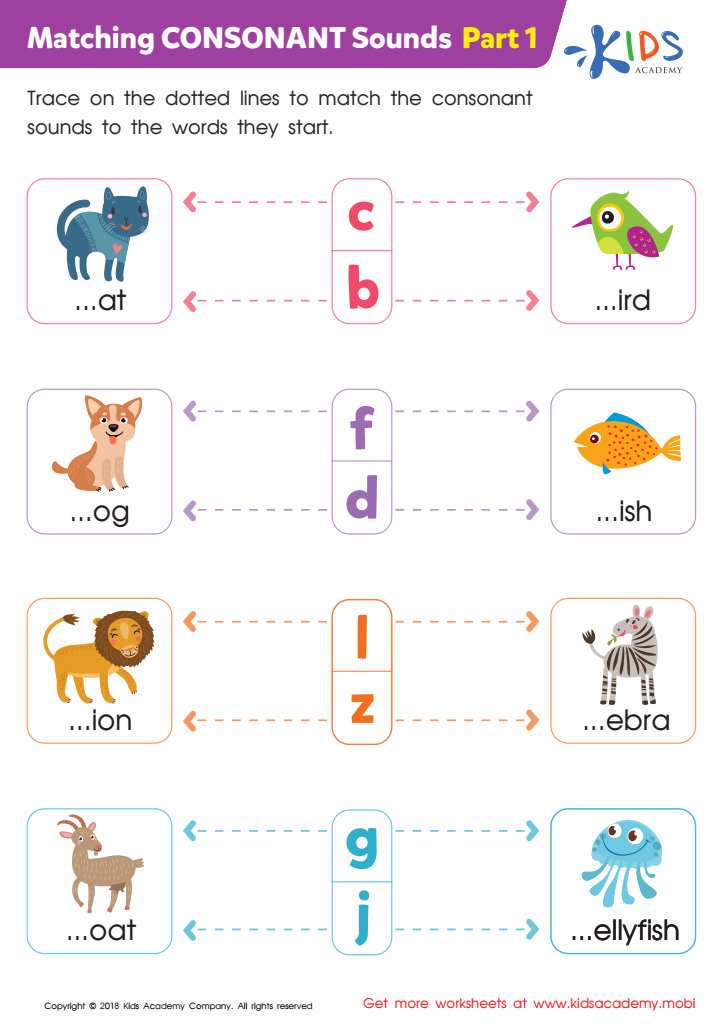
Matching Consonant Sounds: Part 1 Worksheet
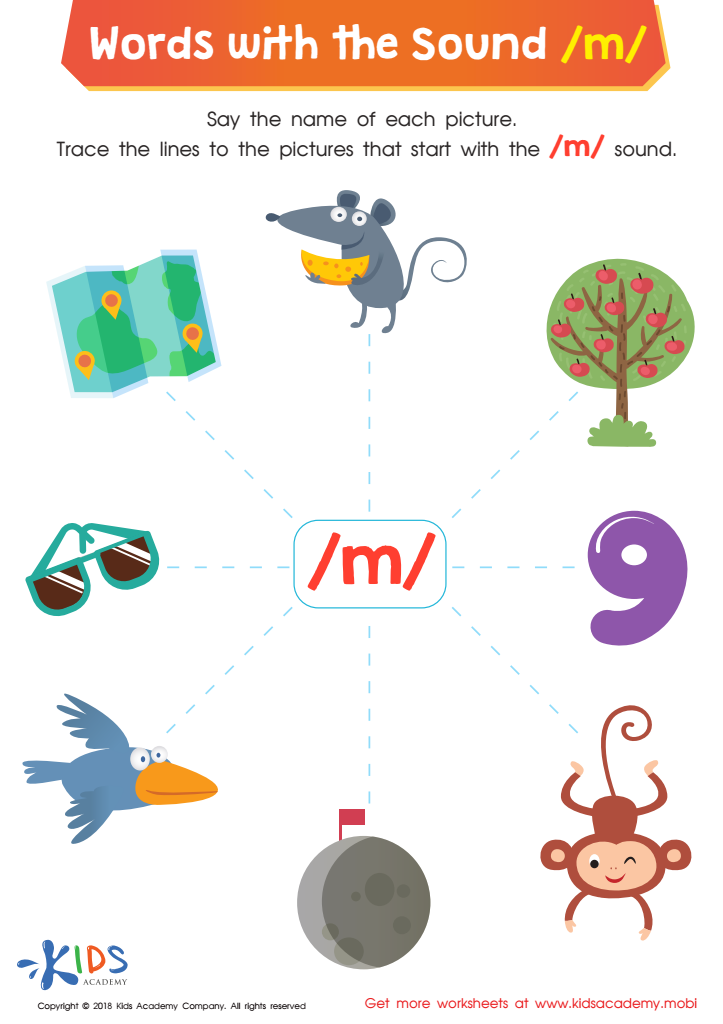
Words with Sound M Reading Worksheet


Normal beginning consonants are a fundamental aspect of early literacy development for children ages 6-7, which is typically around first grade. At this stage, children are transitioning from recognizing letters to reading words and sentences. Mastering beginning consonants (such as 'b' in "bat," 'c' in "cat," 'd' in "dog") is crucial because it helps children decode words, fostering both their phonemic awareness and reading skills.
Being able to identify and produce consonant sounds allows children to blend sounds together to form words, an essential component of phonological processing. Phonics skills, including knowing beginning consonants, directly impact children's reading fluency and comprehension. If children cannot identify beginning consonants, they may struggle with word recognition, which can hinder their overall reading ability and confidence.
For parents and teachers, investing time in teaching and reinforcing beginning consonants can pave the way for academic success. Through engaging activities like phonics games, reading aloud, and practice worksheets, adults can support children in solidifying these foundational skills. Early proficiency in this area lays the groundwork for more complex reading tasks, reduces frustration, and instills a love for reading. Consequently, paying attention to normal beginning consonant development is not just beneficial but essential for young learners.