Filters

7 filtered results

Clear all filters
Favorites
With answer key
Interactive

7 filtered results

Difficulty Level

Grade


Enhance your child's reading comprehension skills with our engaging Normal Consonants Worksheets designed for ages 6-7. These expertly crafted worksheets focus on assisting young learners in mastering consonant sounds, aiding in their overall reading fluency and understanding. Through a variety of fun and educational activities, children will practice identifying and pronouncing normal consonants within words, sentences, and short passages. Perfect for integrating into your child's daily learning routine, our worksheets not only promote phonetic awareness but also foster a lifelong love of reading. Join us today at Kids Academy to support your child's reading journey!

Check out this FREE Trial Lesson on Consonants for age 6-7!

Review Blends

Favorites
With answer key
Interactive
  • 6-7
  • Reading comprehension
  • Consonants
  • Normal
Let's Look for Blends Worksheet

Let's Look for Blends Worksheet

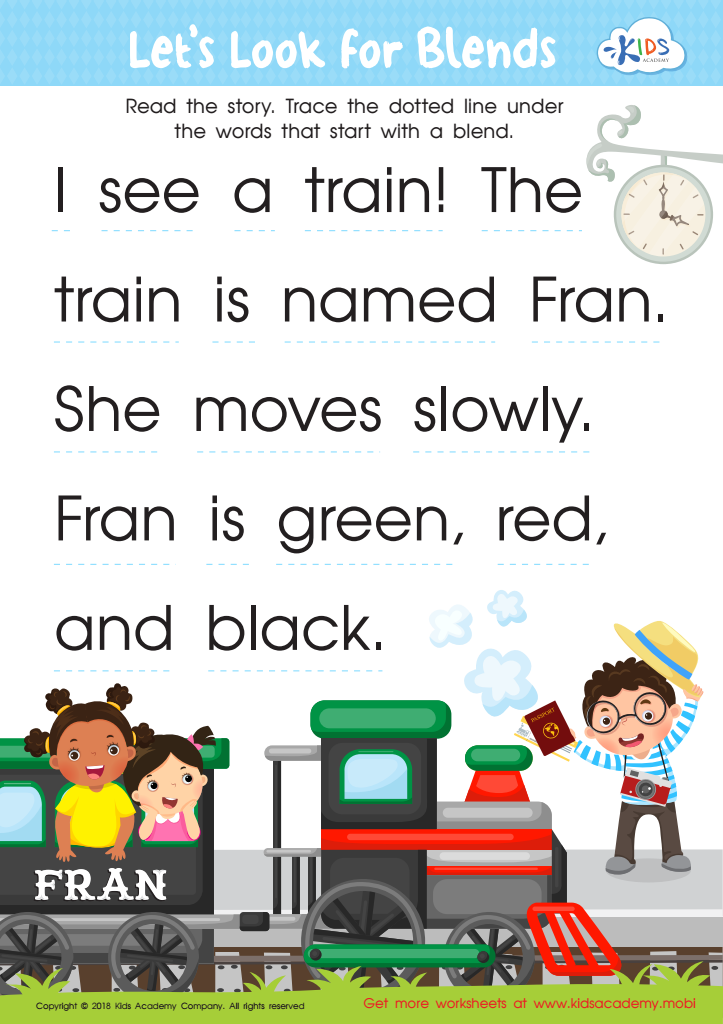
Does your child love trains? Get them to read the story or help them read it aloud. Ask them to trace the words that start with blends on the dotted lines. This exercise will help them improve their blend-identifying skills!
Let's Look for Blends Worksheet
Worksheet
Vowel and Consonant Sounds: Assessment Worksheet

Vowel and Consonant Sounds: Assessment Worksheet

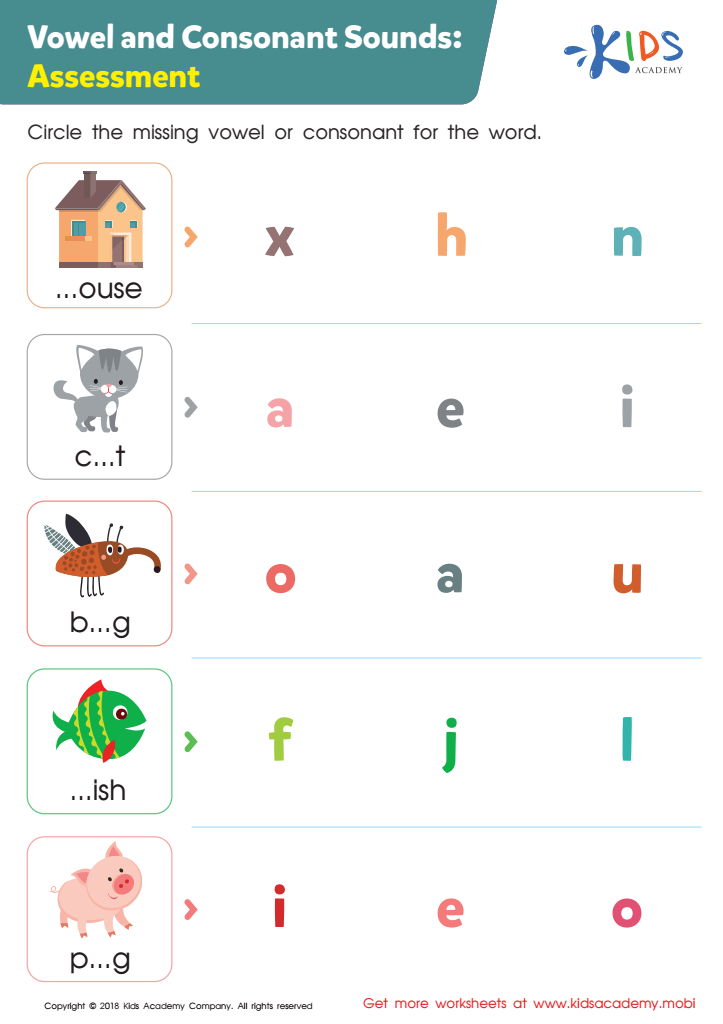
Test young elementary students on vowel and consonant sounds with this friendly phonics assessment worksheet. Get kids to name each image and look at the word underneath. Ask them to sound out the word, then circle the missing letter to complete. This will help assess their knowledge and skills!
Vowel and Consonant Sounds: Assessment Worksheet
Worksheet
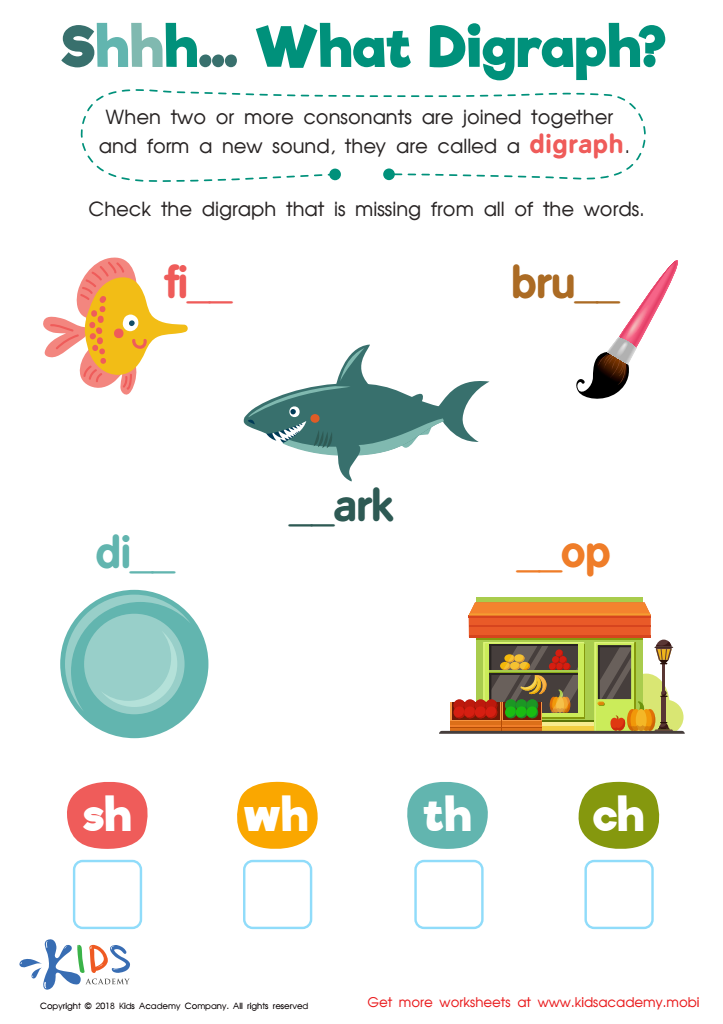
Shhh... What Digraph? Worksheet

Shhh... What Digraph? Worksheet

Phonetics sounds can be combined to create a new sound - like a digraph. A great example is the /sh/ sound. Words like 'brush' and 'fish' can be heard. Ask your child to provide more examples. Look at the pictures in the PDF and see if they can identify the objects. Additionally, help them find the digraph missing from each word.
Shhh... What Digraph? Worksheet
Worksheet
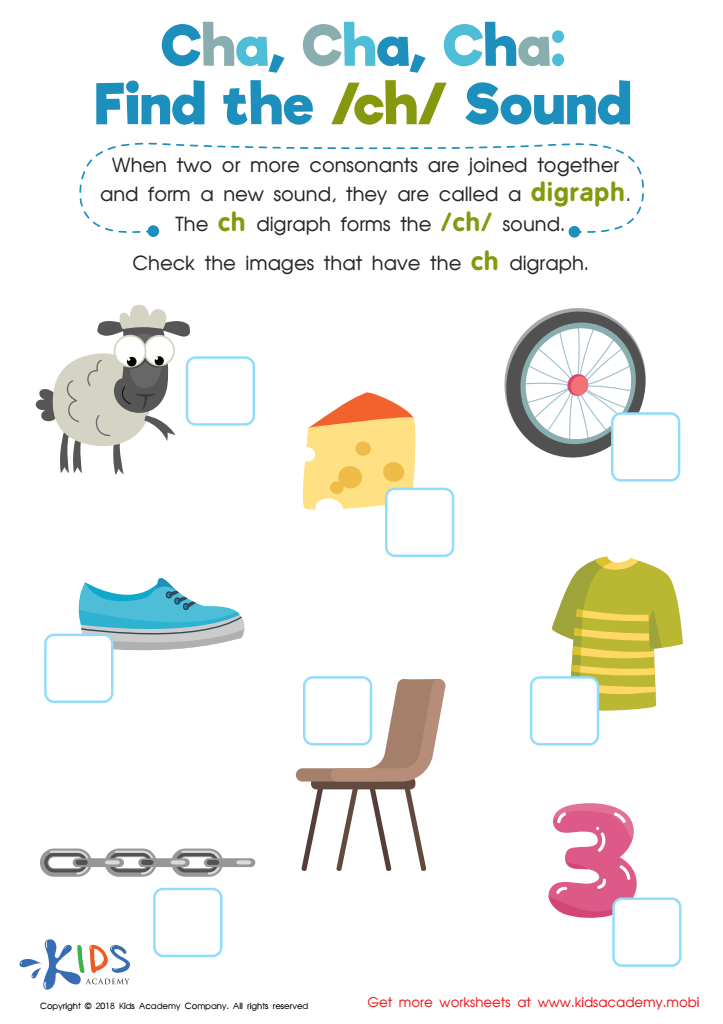
Cha, Cha, Cha: Find the /Ch/ Sound Worksheet

Cha, Cha, Cha: Find the /Ch/ Sound Worksheet

Have your students identify the objects in the images and if they struggle, help them check for the /ch/ digraph. This digraph forms a new sound when two or more consonants are combined, so it can be helpful to point it out to them in the colourful printout.
Cha, Cha, Cha: Find the /Ch/ Sound Worksheet
Worksheet
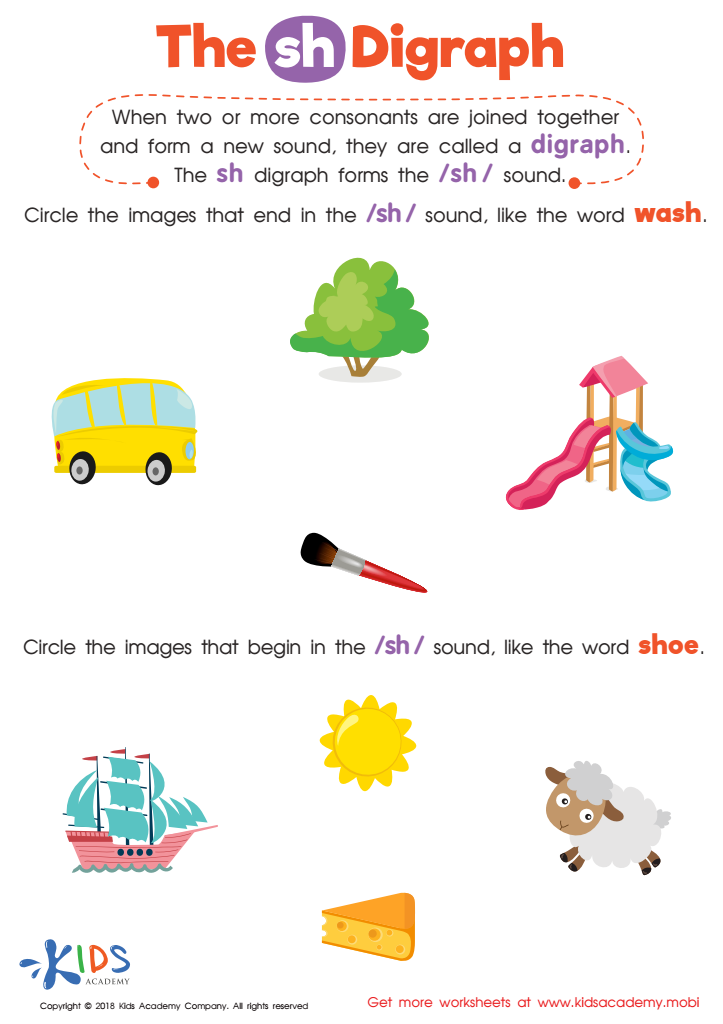
The SH Digraph Worksheet

The SH Digraph Worksheet

There are many phonetic sounds, each with its own unique sound. When two or more consonants are combined to create a new sound, it's called a digraph. Example: the sh digraph creates the /sh/ sound. Have kids look at the pictures and say the words aloud. Help them circle the images ending with /sh/, like 'wash'.
The SH Digraph Worksheet
Worksheet
Consonant Blend Dr and Tr Printable Worksheet

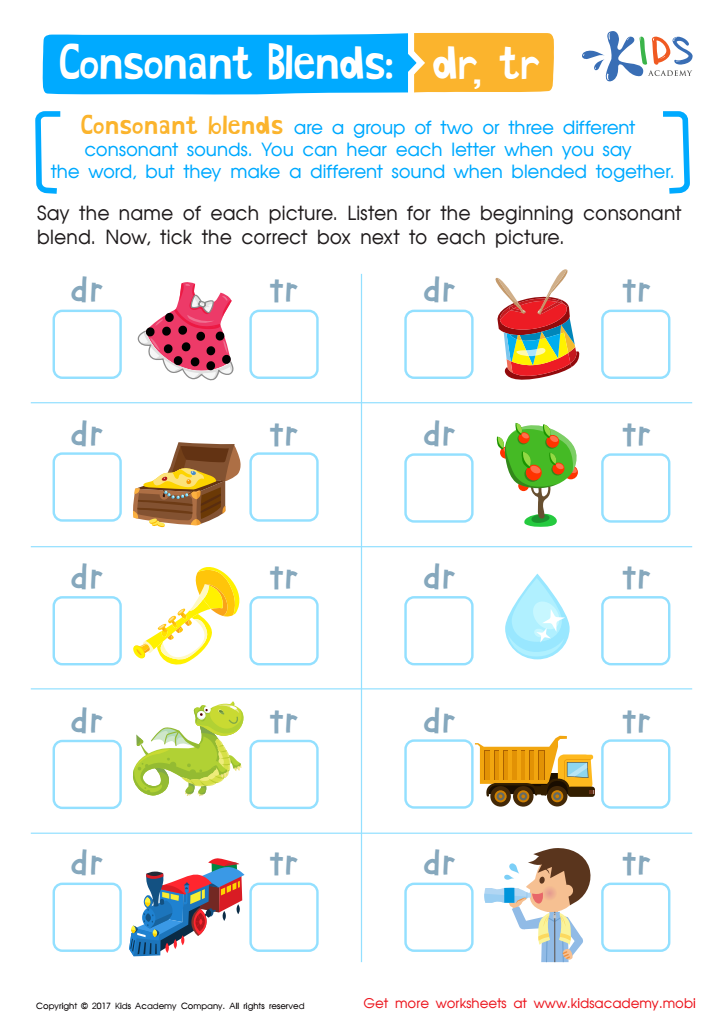
Consonant Blends: "Dr" and "Tr" Printable
Pictures of the words provide a visual cue, and sound-outs help with auditory cues.
Consonant Blends: "Dr" and "Tr" Printable
Worksheet
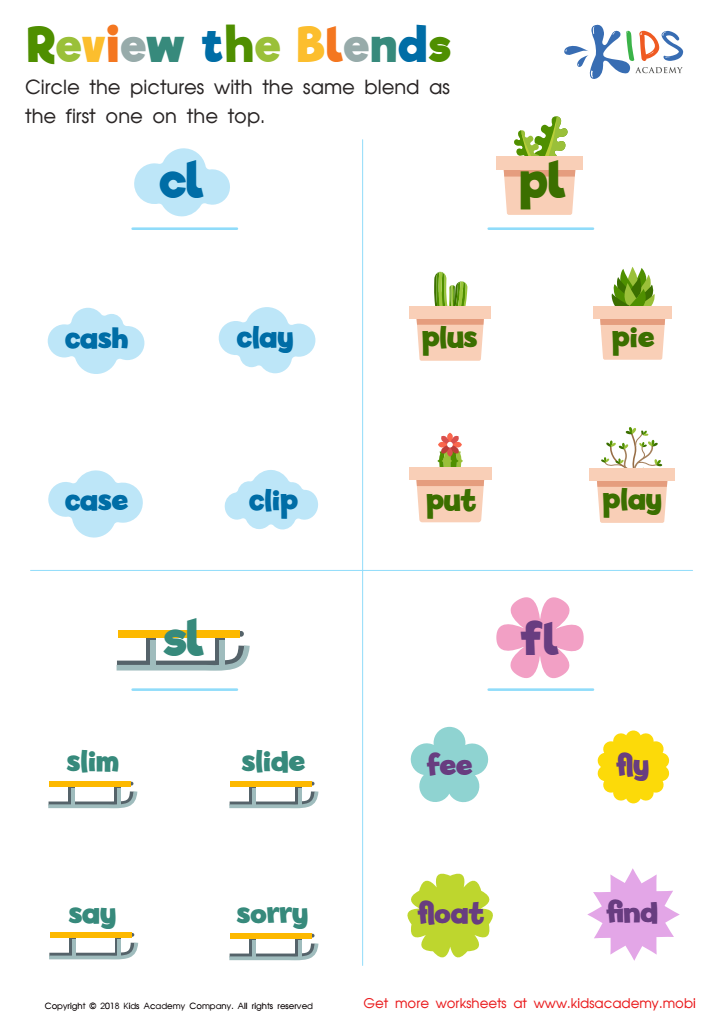
Review the Blends Worksheet

Review the Blends Worksheet

Consonant blends are two or three consonants that make a sound when pronounced together. L-blends like cl, bl, sl, fl and 3-letter blends like str, slp are common. This phonics worksheet helps early readers identify words containing two letter L-blends. Students must circle the words then read them aloud.
Review the Blends Worksheet
Worksheet


Reading comprehension is foundational for children's academic success and overall cognitive development, making it crucial for both parents and teachers to prioritize, especially when it comes to normal consonants for ages 6-7. At this age, kids are typically in the first grade and beginning to transition from learning to read to reading to learn. Solid understanding of consonant sounds plays an integral role in decoding words, which in turn aids in fluency and comprehension.

Consonants are the building blocks of many words, and without a firm grasp on them, children may struggle to pronounce and understand new vocabulary. This can hinder their ability to extract meaning from texts and negatively impact their overall academic performance. Moreover, reading comprehension involves not just recognizing words, but also processing and interpreting information, skills that extend to all subject areas including math and science.

Ensuring children develop strong reading comprehension skills also benefits their emotional and social development. It enables them to follow instructions, understand stories, and engage in conversations more effectively, thus boosting their confidence. By focusing on these foundational skills, parents and teachers set children on a trajectory for lifelong learning and curiosity, cultivating resilient, informed, and articulate individuals.