Alphabet familiarity Normal Alphabet Worksheets for Ages 6-7
7 filtered results
-
From - To
Discover our engaging Alphabet Familiarity Normal Alphabet Worksheets designed for children aged 6-7! These carefully crafted worksheets from Kids Academy make learning letters fun and interactive, helping young learners master the alphabet with ease. Each worksheet encourages kids to recognize, trace, and write both uppercase and lowercase letters, fostering essential literacy skills. Colorful illustrations and varied activities keep children motivated and excited about learning. Perfect for classroom use or at-home practice, these worksheets provide a strong foundation for reading and writing success. Enhance your child's alphabet familiarity effortlessly with Kids Academy’s top-quality educational resources!
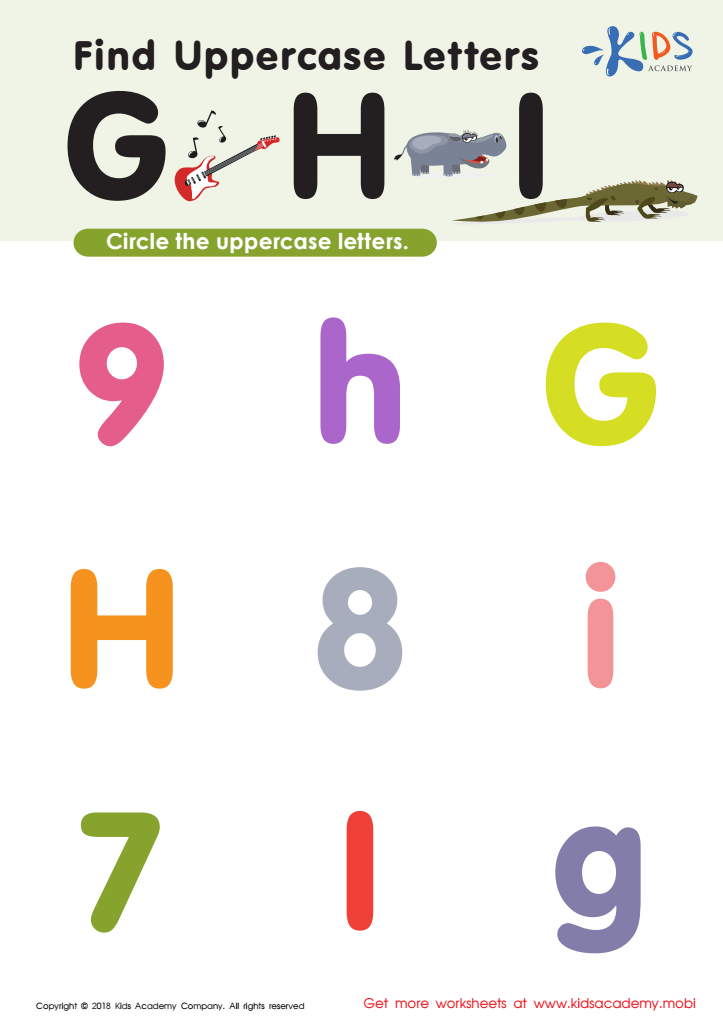
Find Uppercase Letters G, H, and I Worksheet
 Assign to My Students
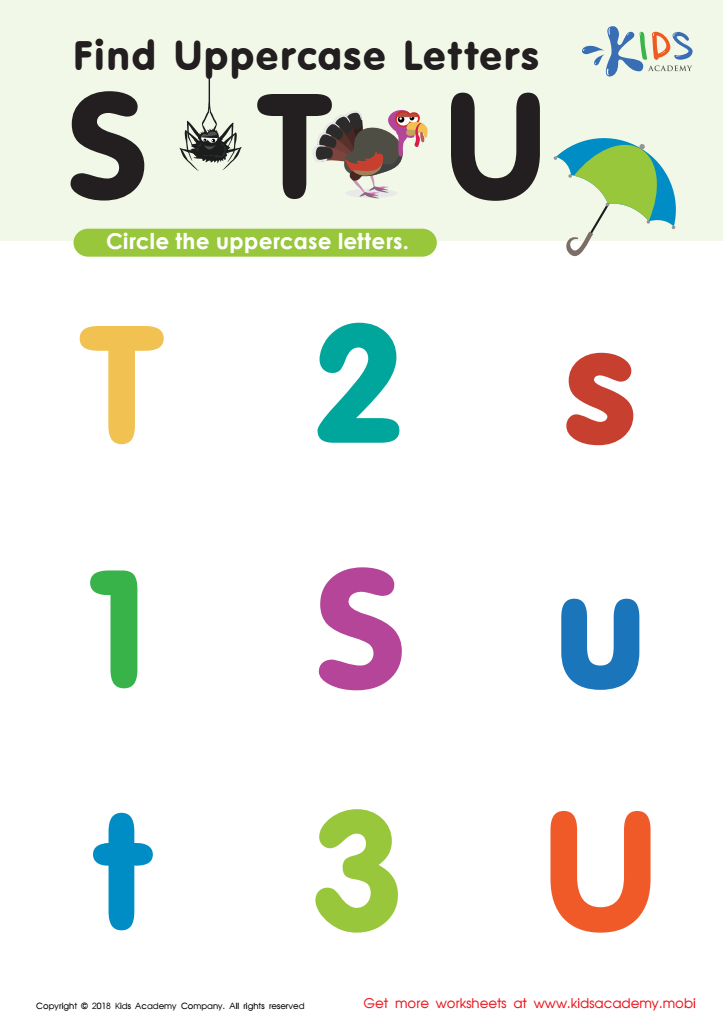
Find Uppercase Letters Worksheet
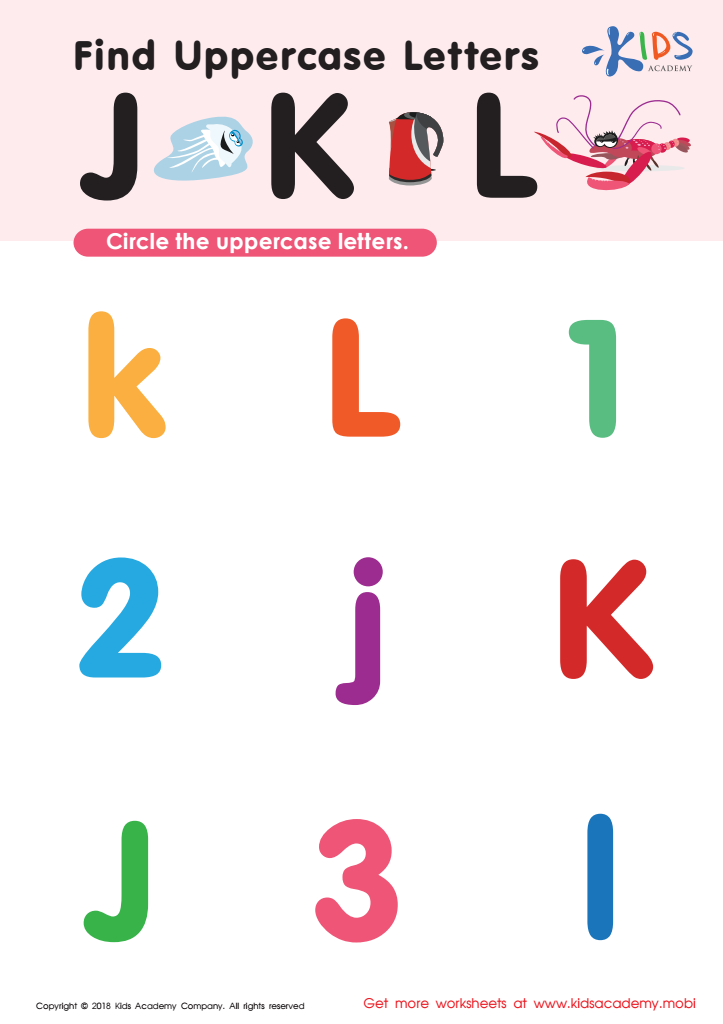
Find Uppercase Letters J, K, and L Worksheet
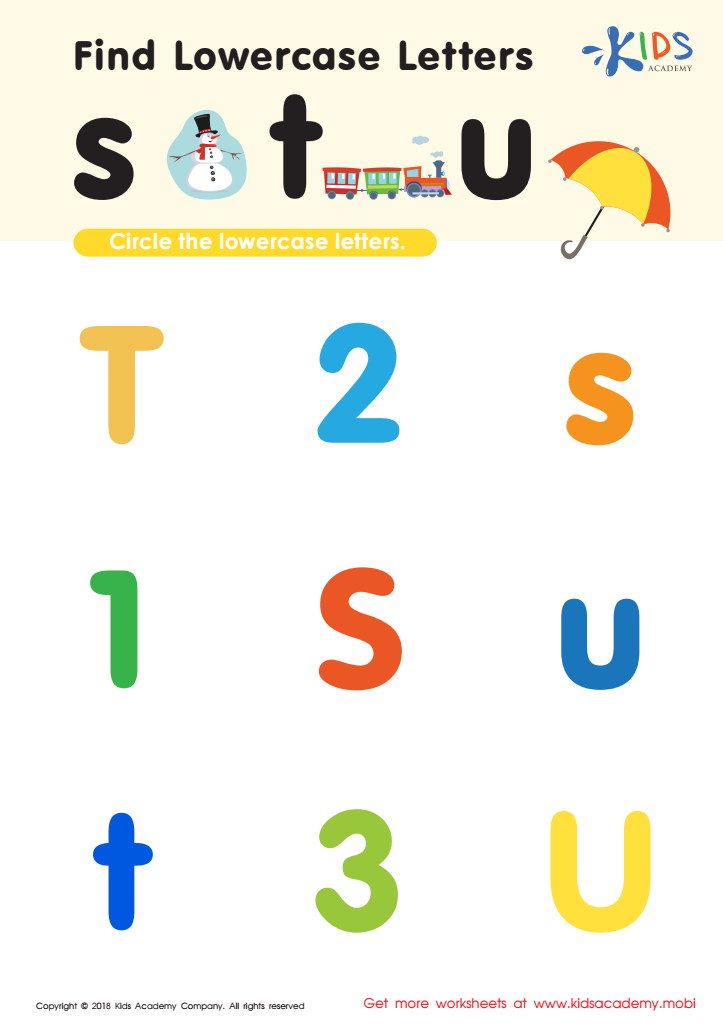
Find lowercase Letters s t u Worksheet
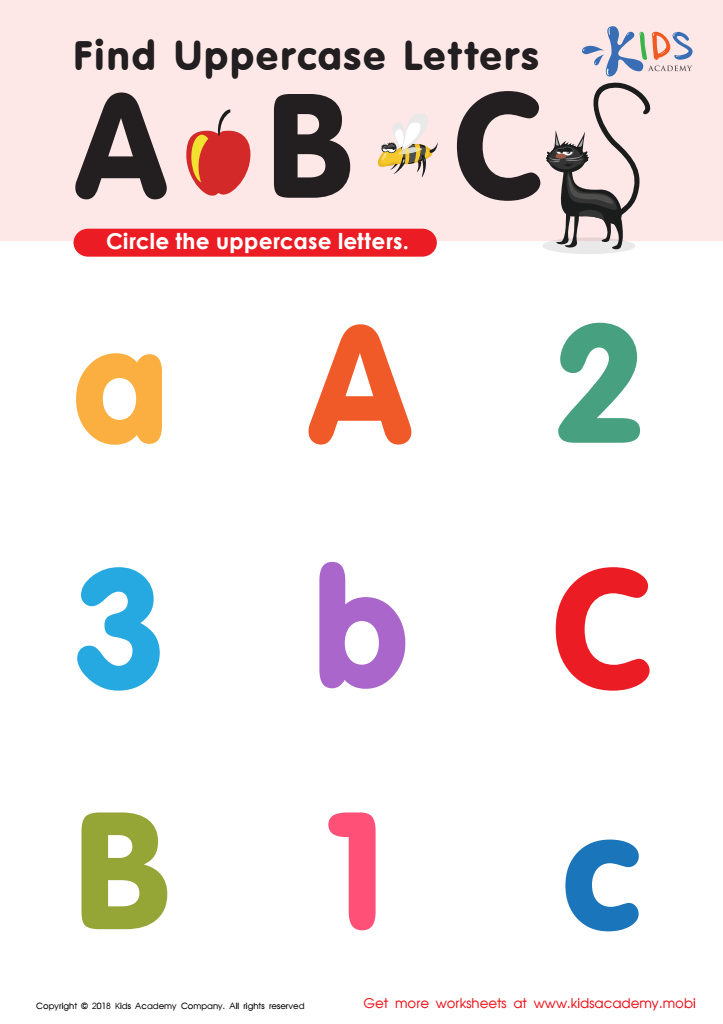
Find Uppercase Letters A, B, and C Worksheet
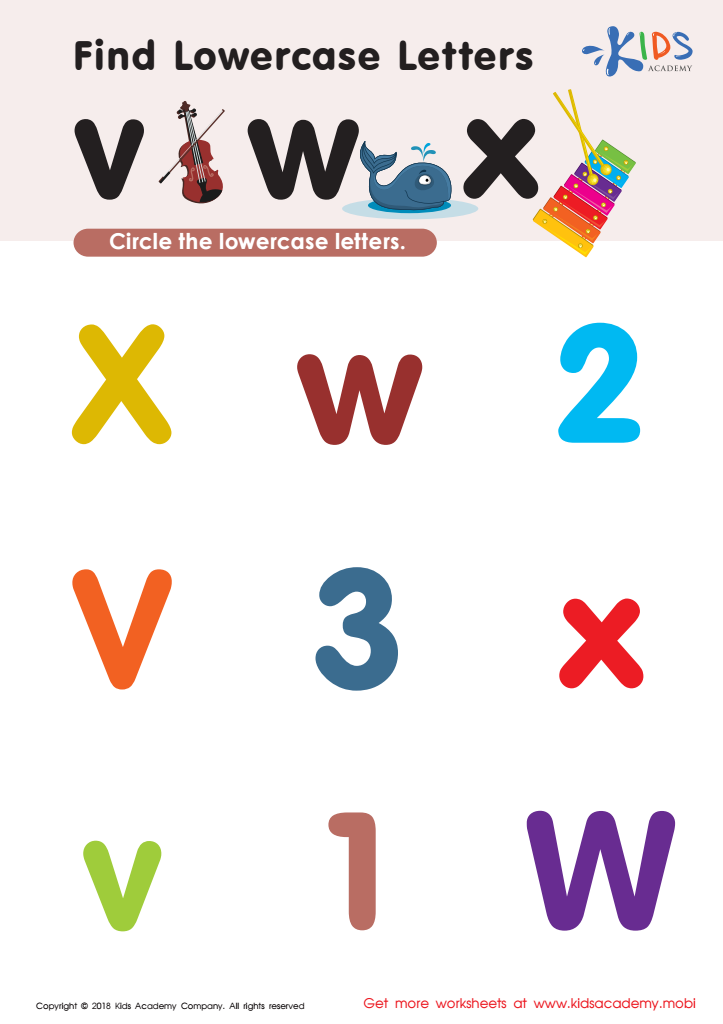
Find Lowercase Letters v w x Worksheet
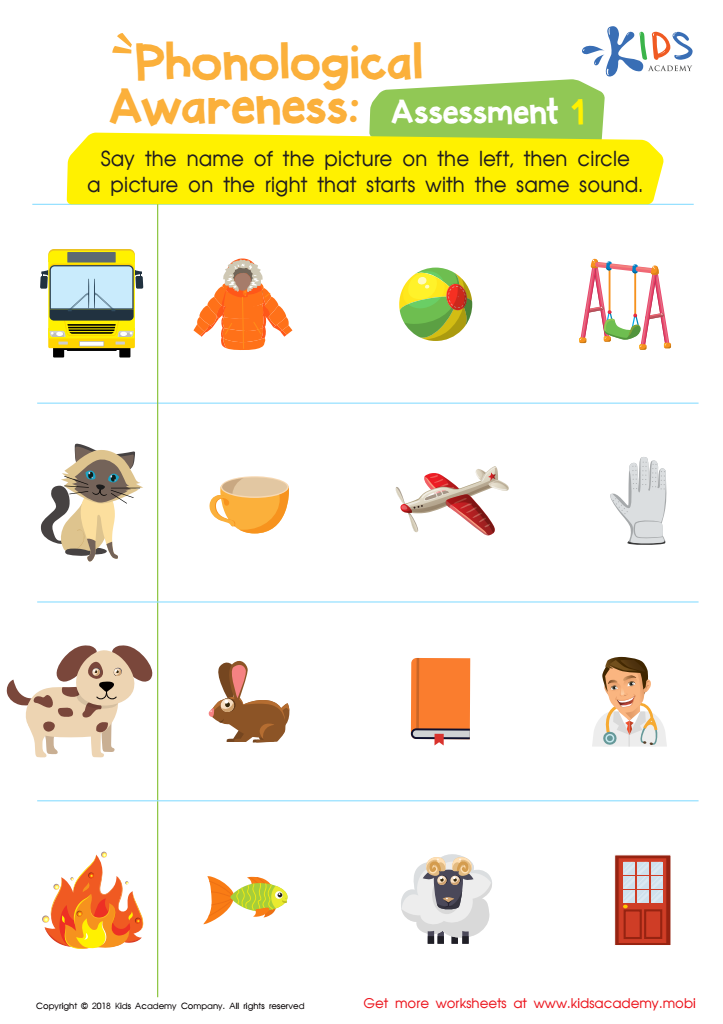
Phonological Awareness: Assessment 1 Worksheet





Alphabet familiarity for children aged 6-7 is foundational for their literacy development. At this age, most children are in the early stages of reading and writing, and understanding the normal alphabet is critical for their success in these skills. Knowing the alphabet enables children to recognize letter shapes, sounds, and names, which are essential for decoding words during reading and forming letters when writing.
Parents and teachers play a pivotal role in ensuring children become proficient in the alphabet. This foundational knowledge lays the groundwork for phonemic awareness, which is the ability to hear and manipulate sounds in words. This skill is a strong predictor of future reading success. A strong grasp of the alphabet connected transparently to its sounds enables smoother transition to more complex literacy tasks, such as blending sounds into words and spelling.
Moreover, alphabet familiarity fosters confidence in young learners. Children who struggle with basic letter recognition may find reading and writing activities frustrating, potentially leading to a lack of interest in academics. Conversely, children who are comfortable with the alphabet are more likely to participate actively in classroom activities, read independently, and enjoy learning.
Thus, investing time in teaching the alphabet benefits children by equipping them with critical early literacy skills, building confidence, and setting a positive trajectory for lifelong learning and academic achievement.







