Sound differentiation Normal Alphabet Worksheets for Ages 6-7
3 filtered results
-
From - To
Our "Sound Differentiation Normal Alphabet Worksheets for Ages 6-7" provide engaging and educational activities designed to help young learners distinguish between different sounds associated with letters and words. These worksheets are tailored to enhance phonemic awareness, a crucial skill for early literacy development. Through interactive exercises, children will practice identifying and differentiating sounds, improving their reading and pronunciation skills. Each worksheet features colorful illustrations and age-appropriate tasks, making learning fun and accessible. Perfect for classroom use or home study, these resources empower children to build a strong foundation in language skills while boosting their confidence. Explore the joy of learning with our worksheets!
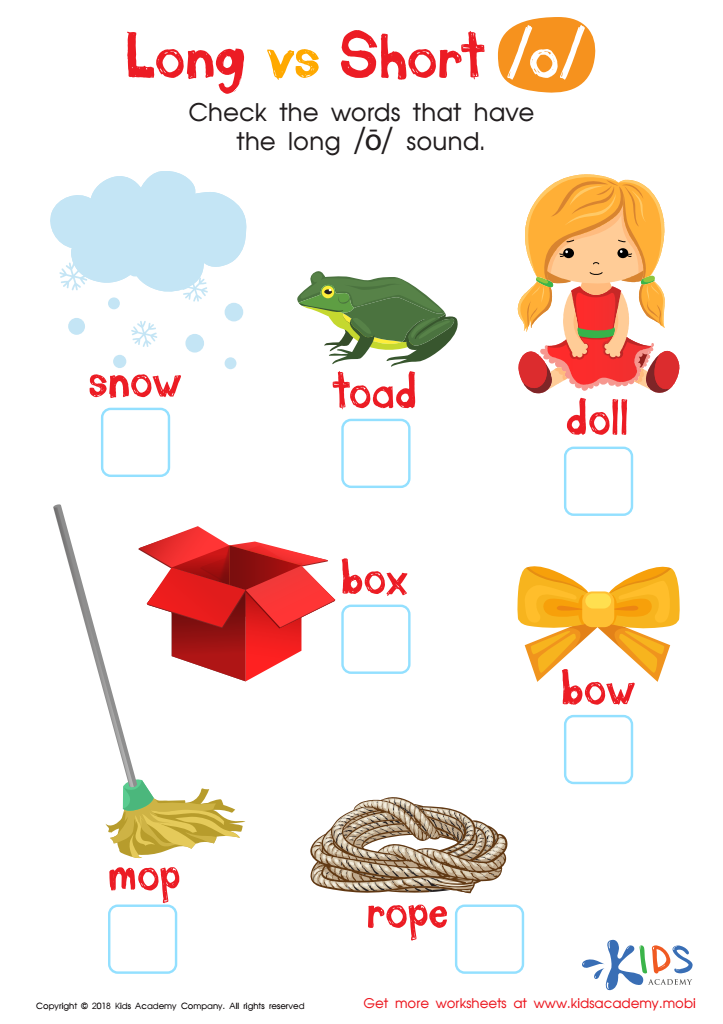
Long vs Short O Reading Worksheet
 Assign to My Students
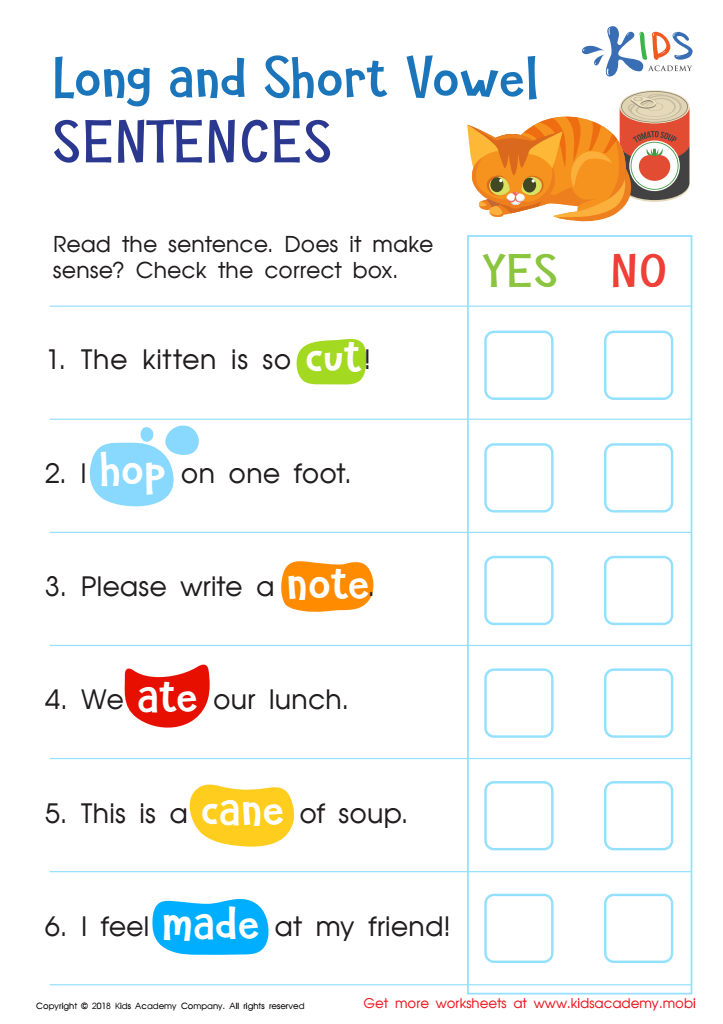
Long and Short Vowel Sentences: Assessment Worksheet
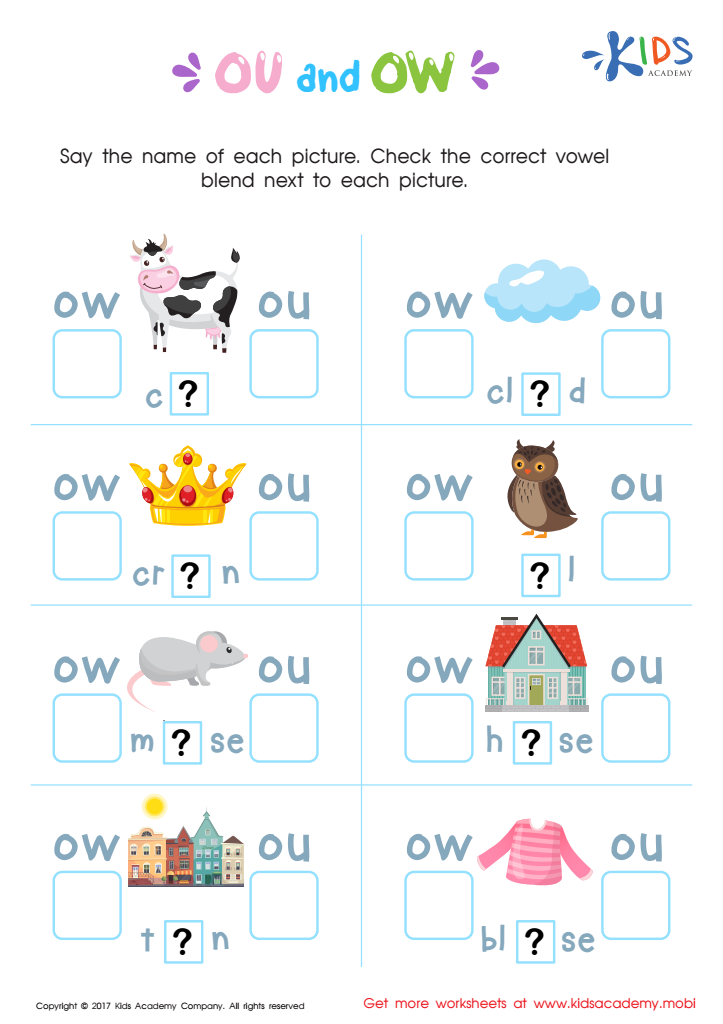
OU and OW Words Worksheet








Sound differentiation using a normal alphabet is crucial for young learners aged 6-7 as it lays the foundation for reading and writing skills. At this stage, children are developing phonemic awareness, which is the ability to hear, identify, and manipulate sounds in spoken language. Sound differentiation refers to distinguishing between similar sounds, which is essential when learning to read and decode words.
When children can differentiate between sounds associated with different letters and letter combinations, they are better equipped to understand phonics and improve their vocabulary. This skill enhances their ability to spell more accurately and fosters greater fluency in reading. Furthermore, mastering sound differentiation supports overall language development and comprehension skills.
Moreover, teachers and parents play a vital role in reinforcing these concepts through targeted activities and engaging phonics games. An environment rich in phonetic awareness will not only boost confidence but also instill a love for reading early on. Encouraging children to explore sounds through various activities, such as rhyming, blending, and segmenting, addresses diverse learning styles and keeps them motivated. Therefore, both parents and teachers should prioritize sound differentiation as it profoundly influences a child’s academic success and enjoyment of language.







