Sound-letter association Normal Alphabet Worksheets for Ages 6-7
3 filtered results
-
From - To
Discover engaging "Sound-letter Association Normal Alphabet Worksheets" tailored for ages 6-7! These dynamic resources support early literacy by aligning sounds with corresponding letters through fun, interactive activities. Ideal for developing essential reading skills, our worksheets help young learners identify letter sounds, blend them into words, and build a strong phonics foundation. Perfect for teachers and parents alike, these printables are designed to make learning enjoyable and effective, fostering your child’s confidence and proficiency in language arts. Unlock the joy of reading with Kids Academy’s expertly crafted sound-letter association worksheets!
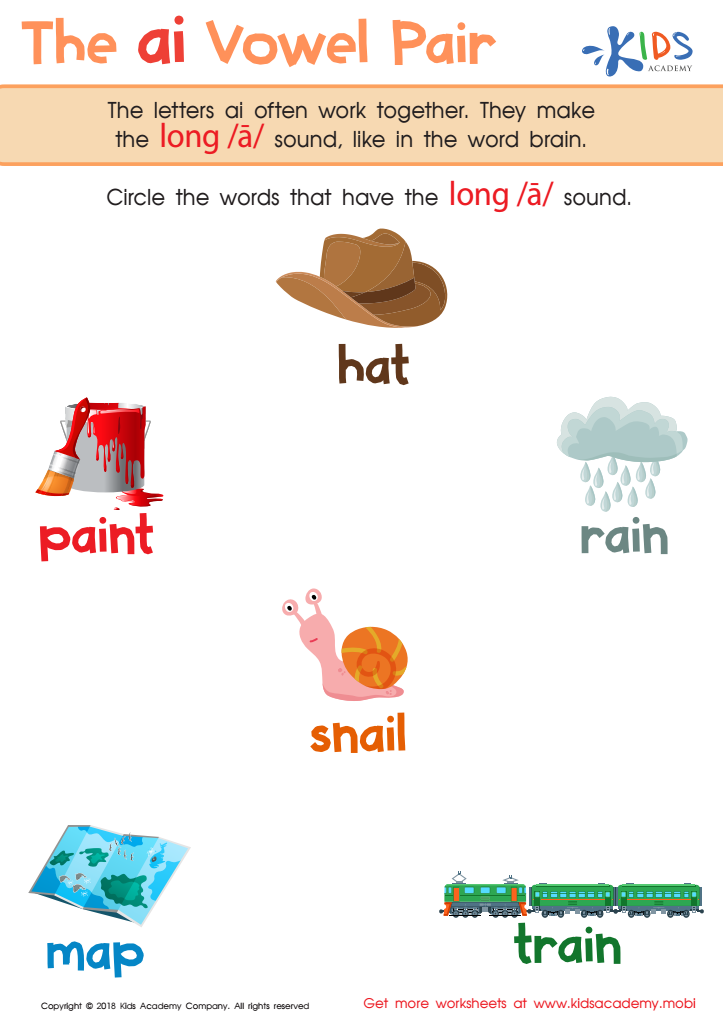
The AI Vowel Pair Worksheet
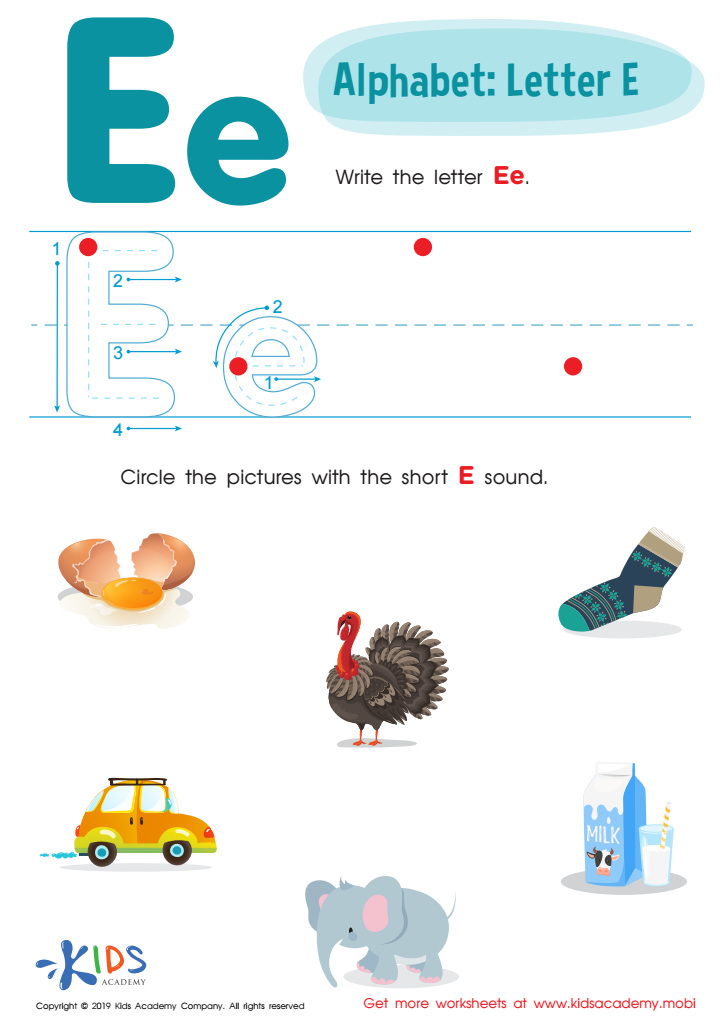
Letter E Tracing Worksheet
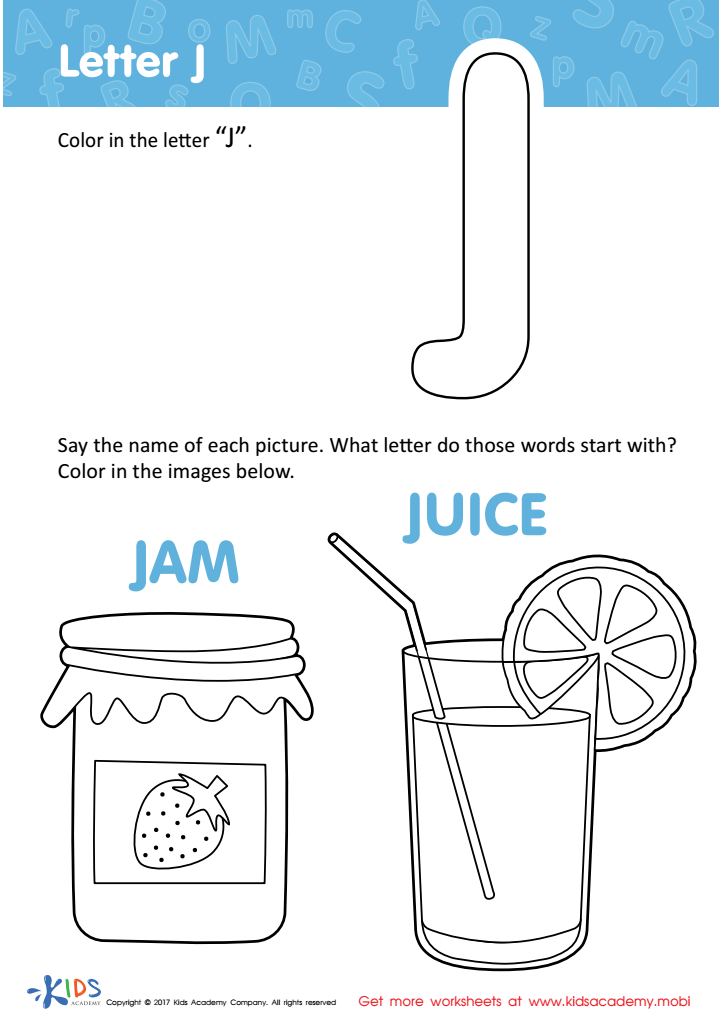
Letter J Coloring Sheet
 Assign to My Students







Sound-letter association is fundamental for children's reading and writing skills development, especially in ages 6-7. At this stage, learners are typically in the first or second grade, where they begin formal education. Understanding sound-letter associations helps children decode words when reading and spell words correctly when writing. This is a critical step in achieving literacy.
When parents and teachers emphasize sound-letter association, they equip children with the skills to segment and blend sounds to form words. For example, knowing that the letter "B" represents the /b/ sound enables a child to recognize "bat" by breaking it into individual sounds—/b/ /a/ /t/—and then blending them.
Improved sound-letter association can directly impact a child's ability to read fluently. Fluent reading, in turn, contributes to better comprehension and a more positive attitude toward reading. These skills are not only crucial for academic success but also boost a child's confidence and motivation to learn.
Moreover, early proficiency in sound-letter association can identify potential learning difficulties, such as dyslexia, enabling timely intervention. Investing time in this foundational skill assists children in building a robust cornerstone for their future education and cultivates a love for reading and learning, making the role of parents and teachers paramount.







