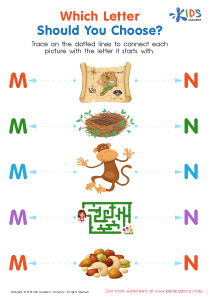
Letter recognition Normal Lowercase/Small Letters Worksheets for Ages 6-7
10 filtered results
-
From - To
Help your child master letter recognition with our engaging Lowercase/Small Letters Worksheets, designed for ages 6-7. These carefully crafted activities provide the perfect blend of fun and education, allowing children to effortlessly identify and differentiate between lowercase letters. Our worksheets feature a variety of exercises, including tracing, matching, and coloring, to keep young learners motivated and attentive. As kids work through each activity, they'll develop foundational reading skills crucial for their academic success. Empower your child's literacy journey with Kids Academy's expertly designed resources, and watch them confidently navigate the alphabet. Ideal for both classroom use and at-home practice!
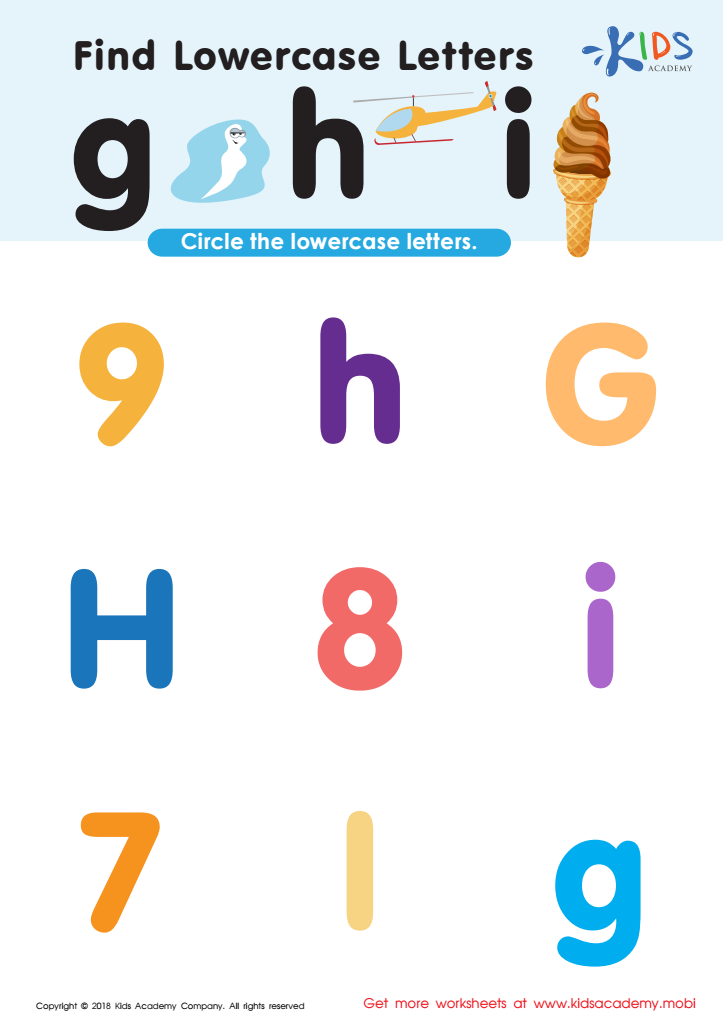
Find Lowercase Letters g h i Worksheet
 Assign to My Students
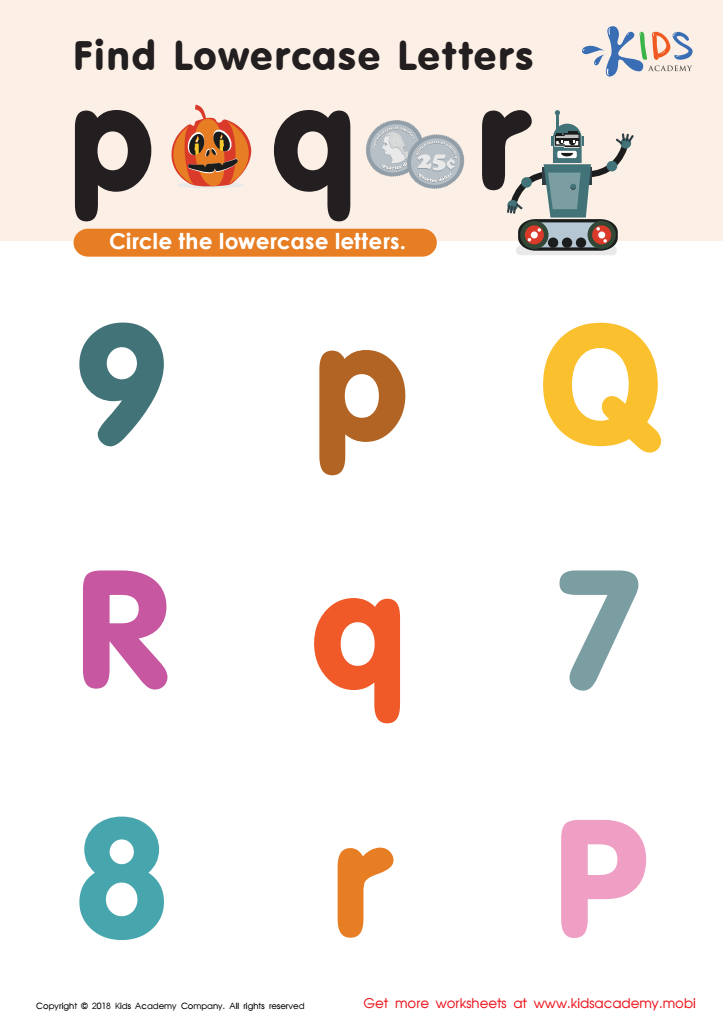
Find lowercase Letters p q r Worksheet
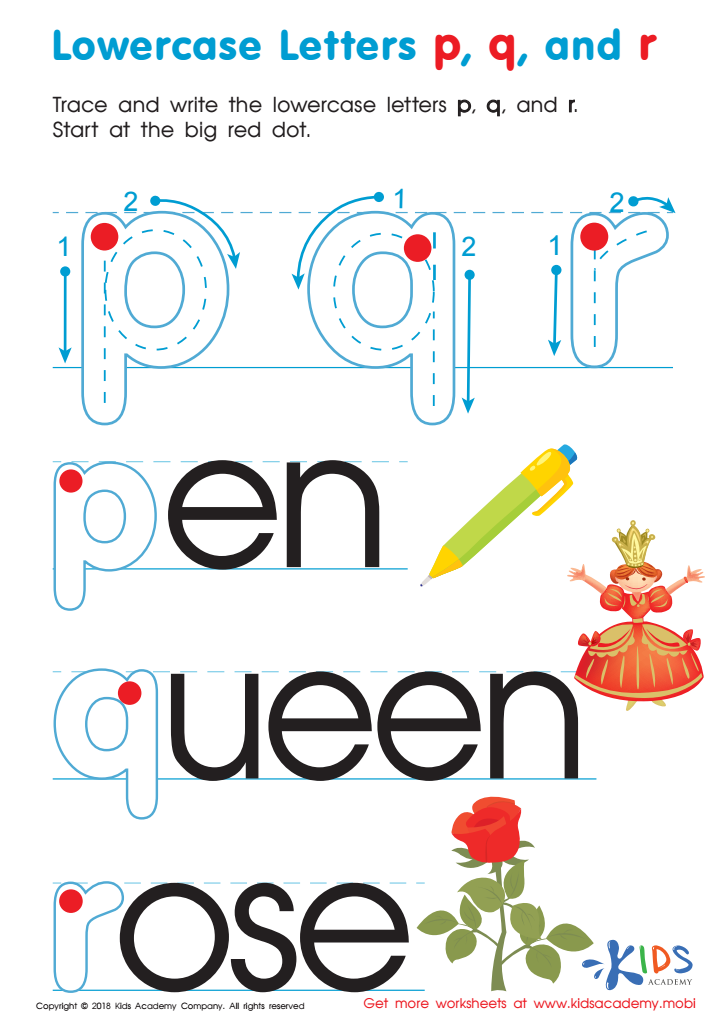
Lowercase Letters p q r Worksheet
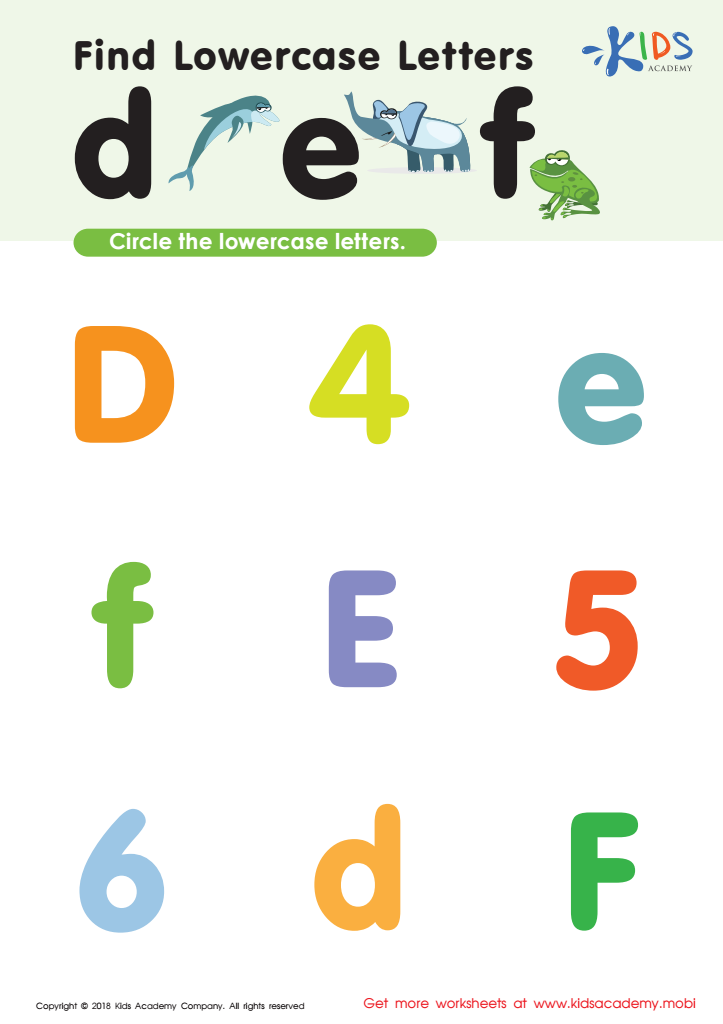
Find Lowercase Letters d e f Worksheet
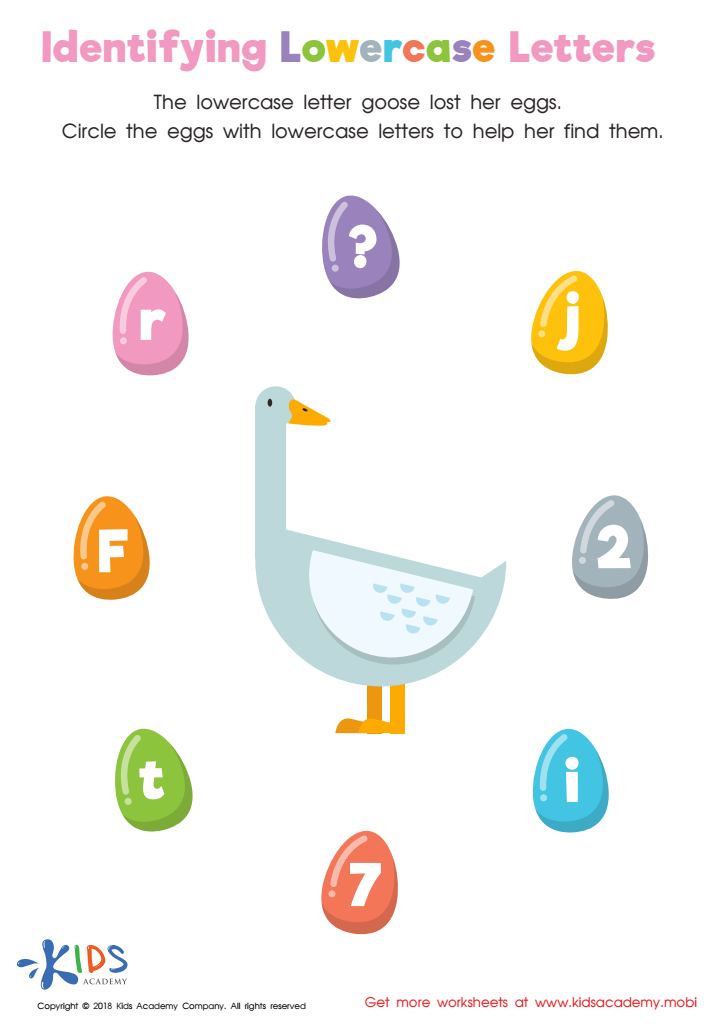
Identifying Lowercase Letters Worksheet
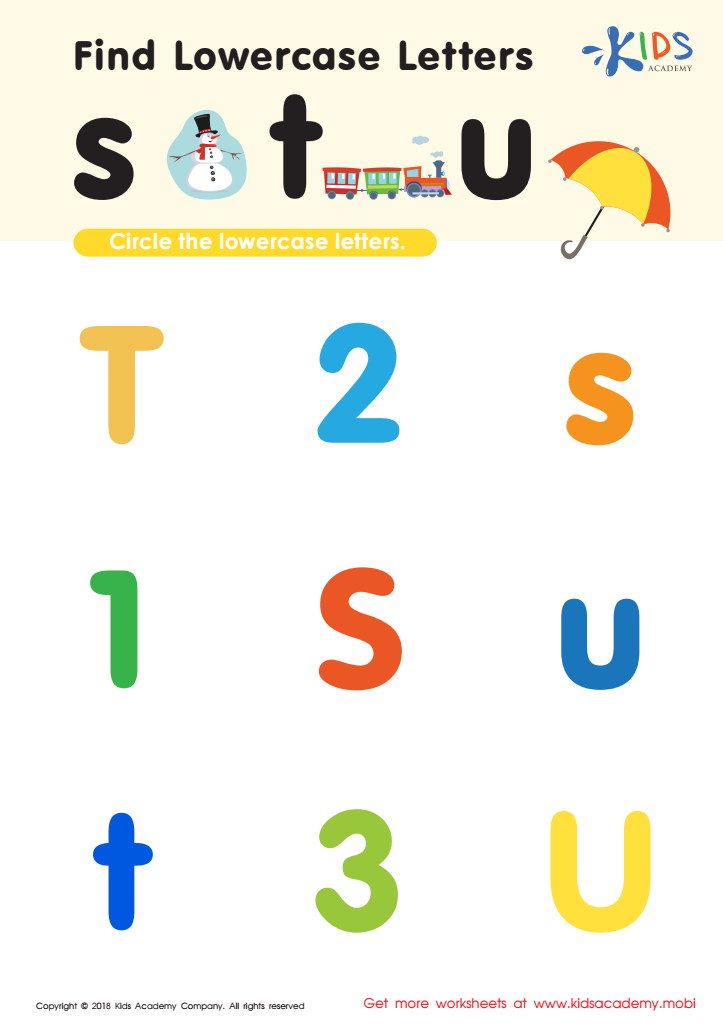
Find lowercase Letters s t u Worksheet
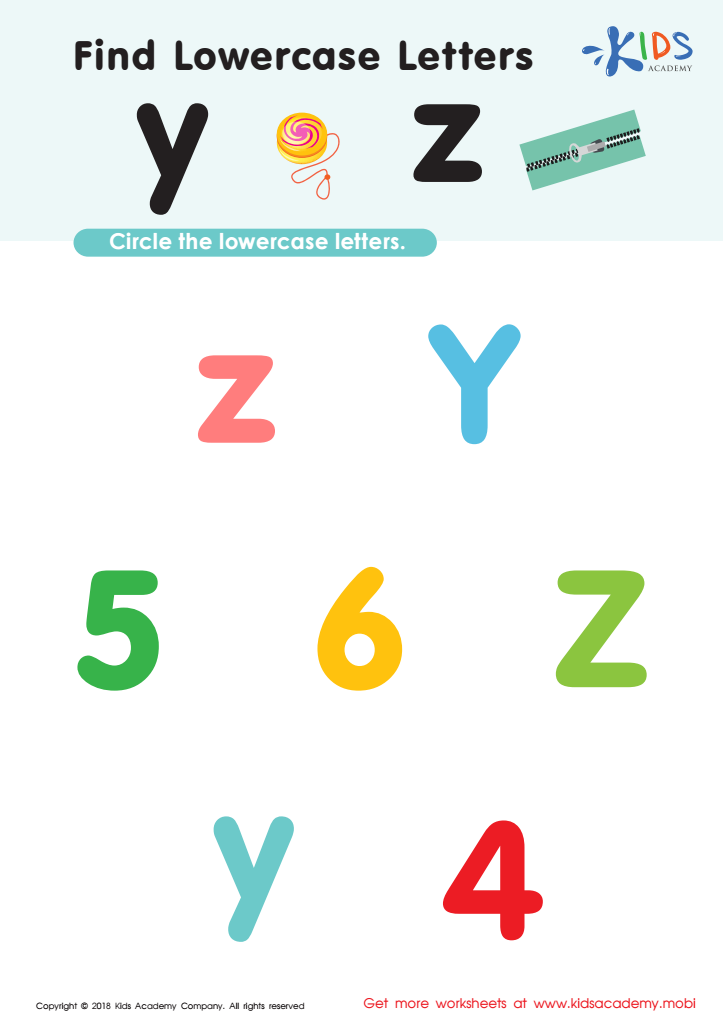
Find Lowercase Letters y z Worksheet
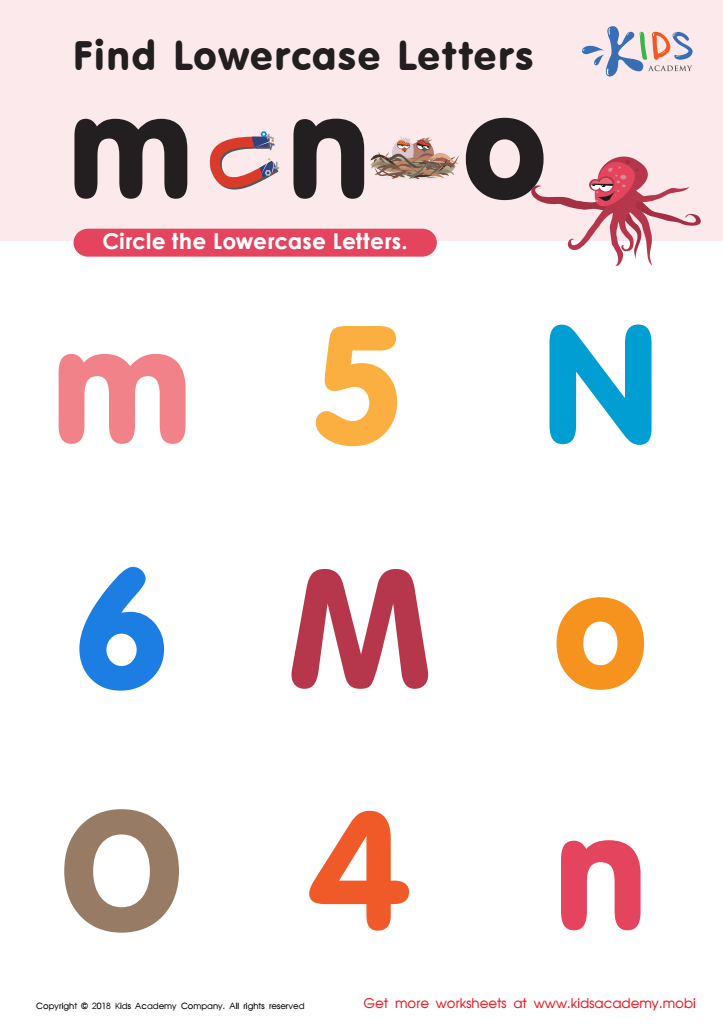
Find Lowercase Letters m n o Worksheet
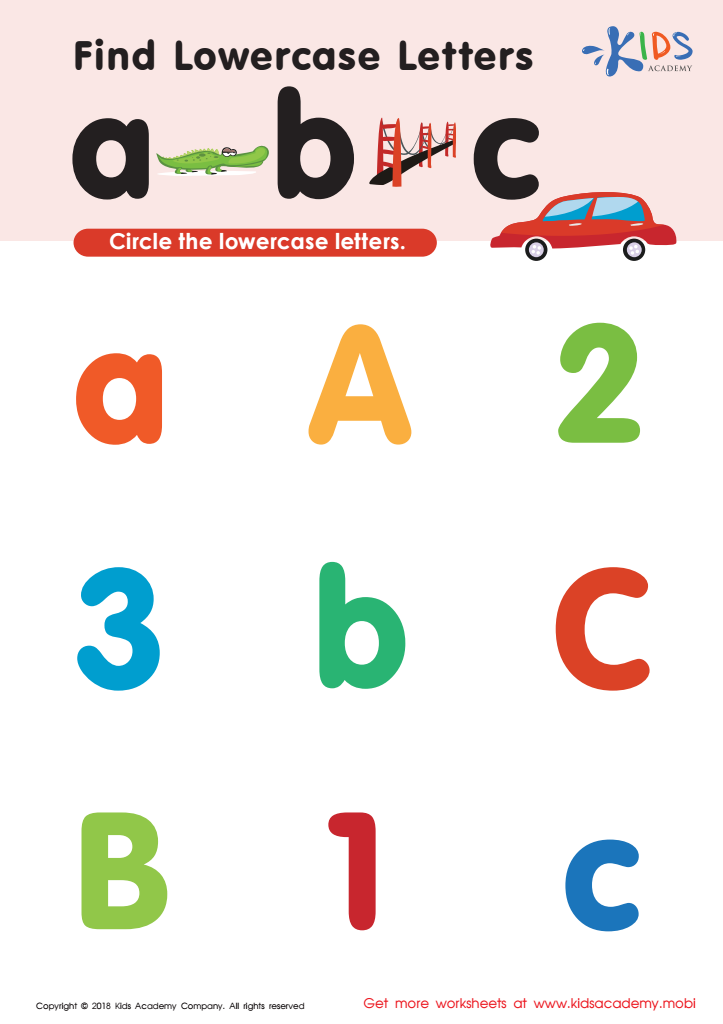
Find lowercase letters a b c Worksheet
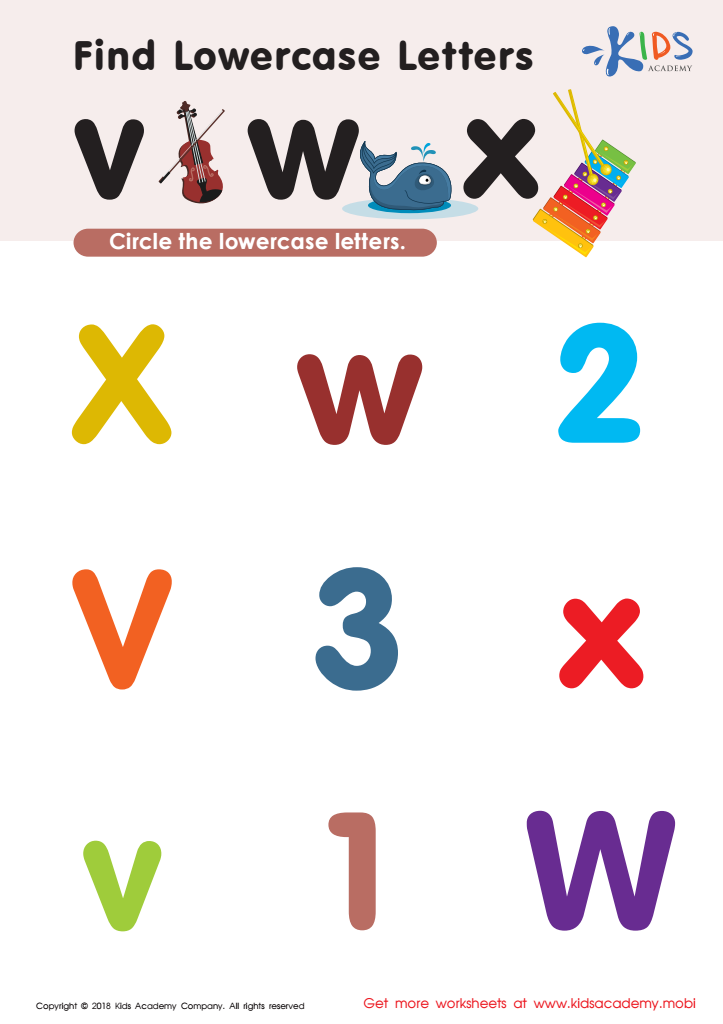
Find Lowercase Letters v w x Worksheet


Letter recognition, especially of lowercase letters, is a cornerstone in early childhood education, particularly for children aged 6-7. At this stage, children transition from recognizing individual letters to forming coherent words and sentences, making the ability to accurately identify lowercase letters crucial.
First, most text in children's books, classroom materials, and written communication is in lowercase letters. Proficiency in recognizing these helps children read more fluently, which in turn boosts their confidence and fosters a love for reading.
Second, letter recognition is intimately tied to phonics, the method used to teach reading by associating sounds with letters. When children can quickly identify letters, they can more easily sound out words, understand phonetic patterns, and read smoothly.
Furthermore, poor letter recognition skills can contribute to difficulties in writing. Writing in lowercase letters is a primary school skill, essential for note-taking, composing stories, and completing assignments.
In addition, strong letter recognition promotes cognitive development. Distinguishing between similar-looking letters (e.g., 'b' and 'd') enhances visual discrimination skills, which also translates to better overall academic performance.
Parents and teachers who prioritize the development of letter recognition skills in lowercase letters are laying a vital foundation for their students' future reading, writing, and learning success.