Vocabulary expansion Normal Vowel Diphthongs Worksheets for Ages 6-7
11 filtered results
-
From - To
Enhance your child’s vocabulary with our engaging Normal Vowel Diphthongs Worksheets, designed specifically for ages 6-7. These worksheets provide a fun and interactive way for young learners to explore vowel sounds, enabling them to distinguish between normal diphthongs while enriching their language skills. With a variety of exercises, including matching, fill-in-the-blanks, and creative activities, children will develop a solid understanding of diphthongs and expand their lexicon effortlessly. Ideal for at-home practice or classroom use, our resources facilitate early literacy development through enjoyable learning experiences. Give your child the tools to express themselves confidently with our vibrant and educational worksheets!
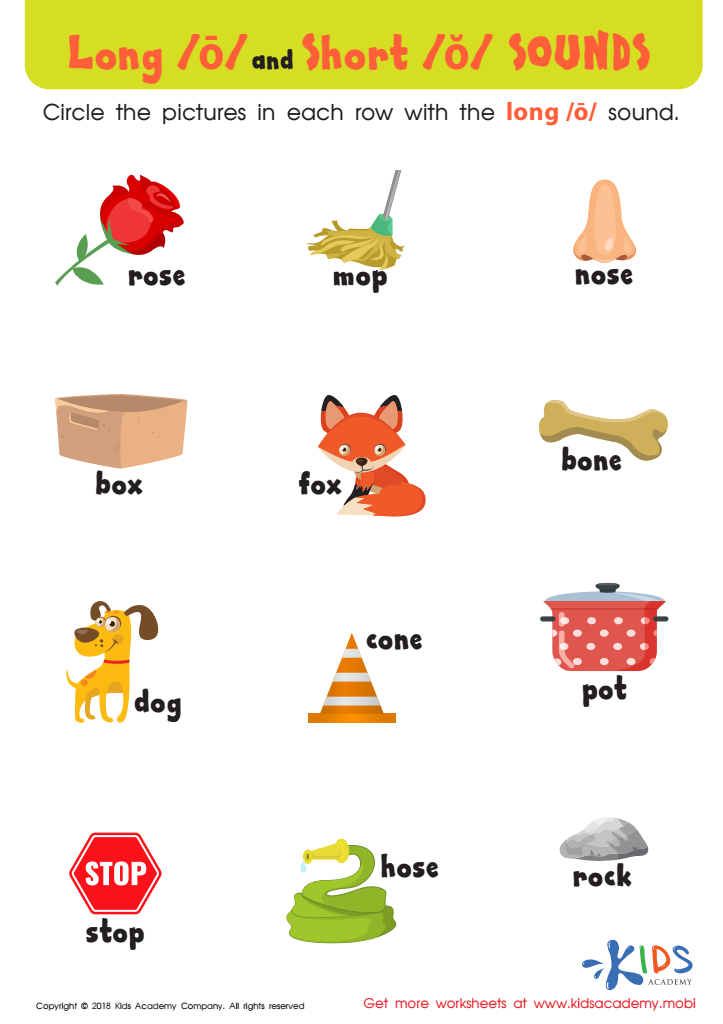
Reading: Long O and Short O Sounds Worksheet
 Assign to My Students
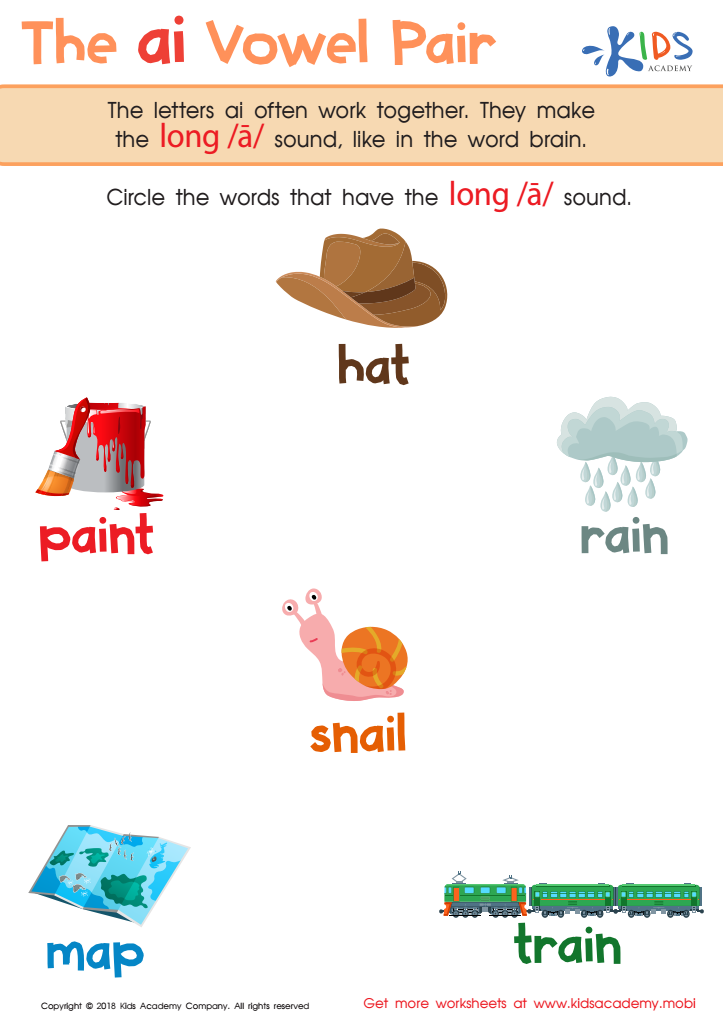
The AI Vowel Pair Worksheet
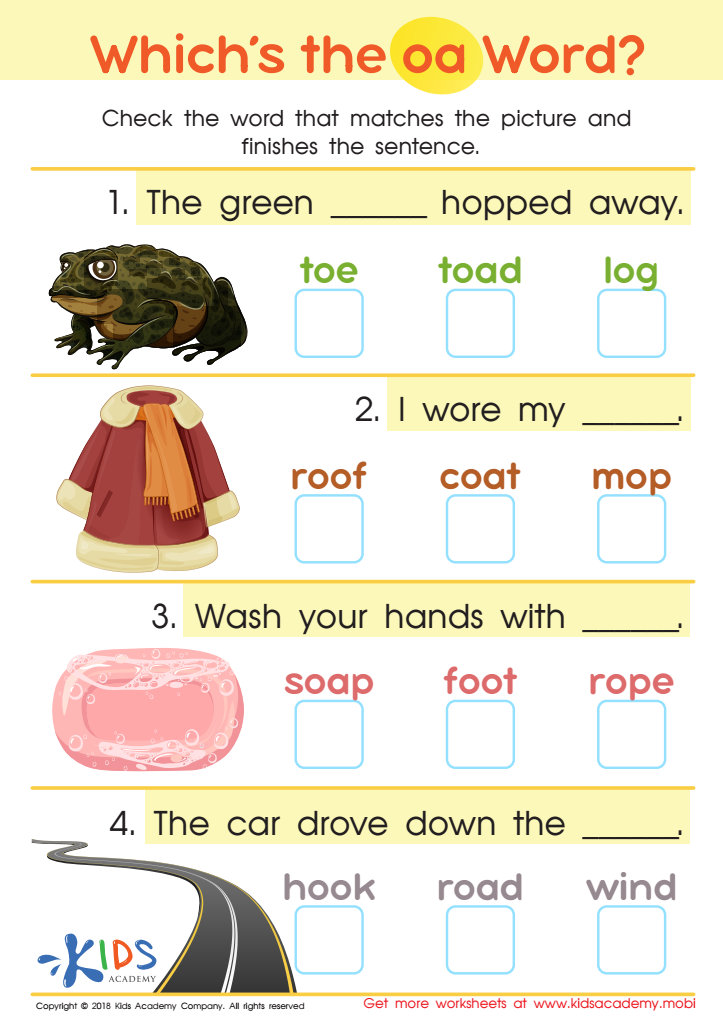
Which's the OA Word? Worksheet
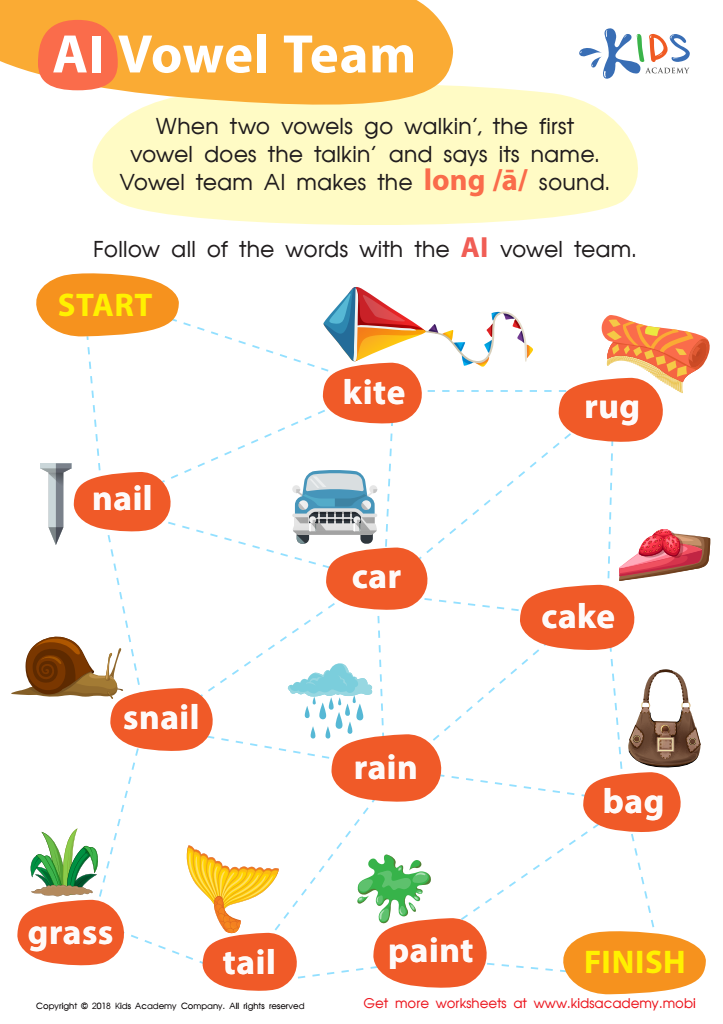
Reading: AI Vowel Team Worksheet
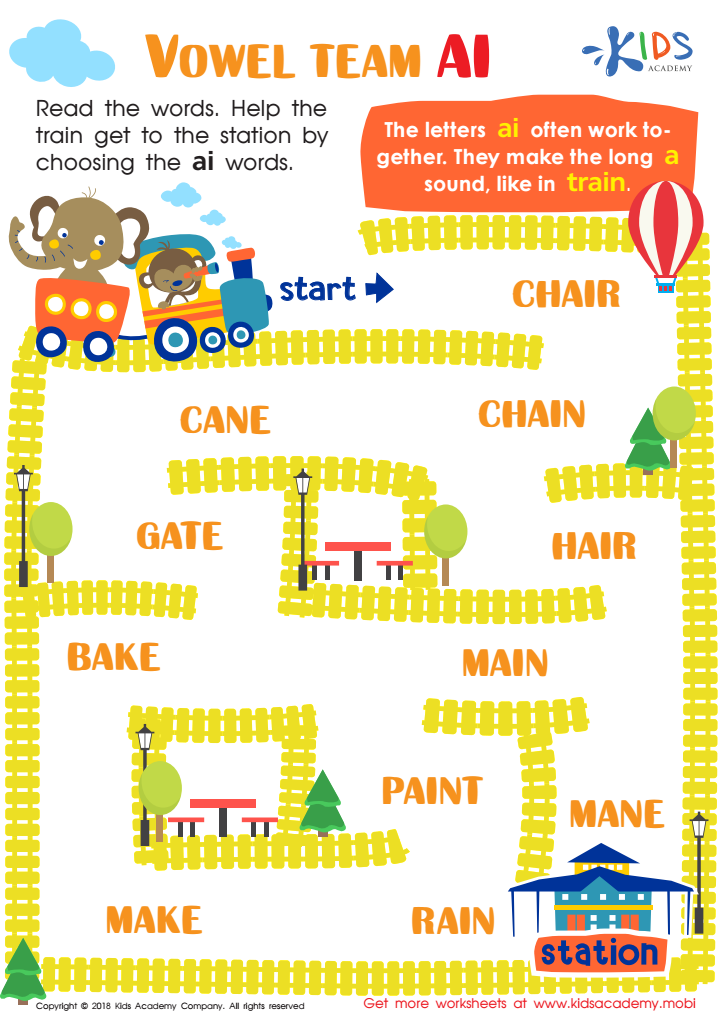
Vowel team ai Worksheet
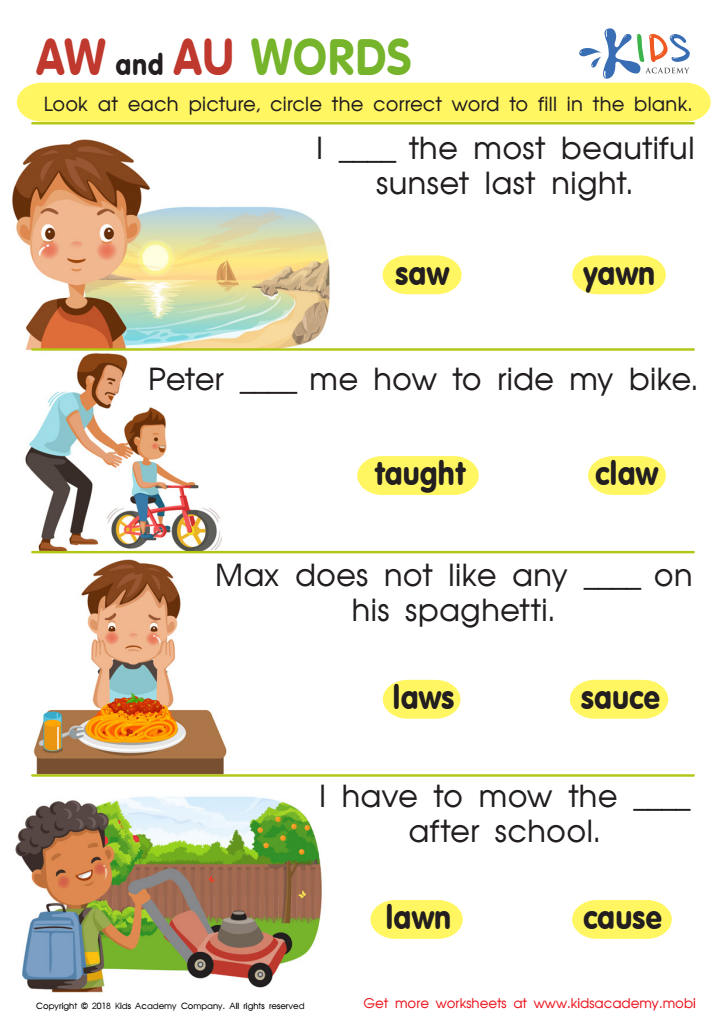
Reading: AW and AU Words Worksheet
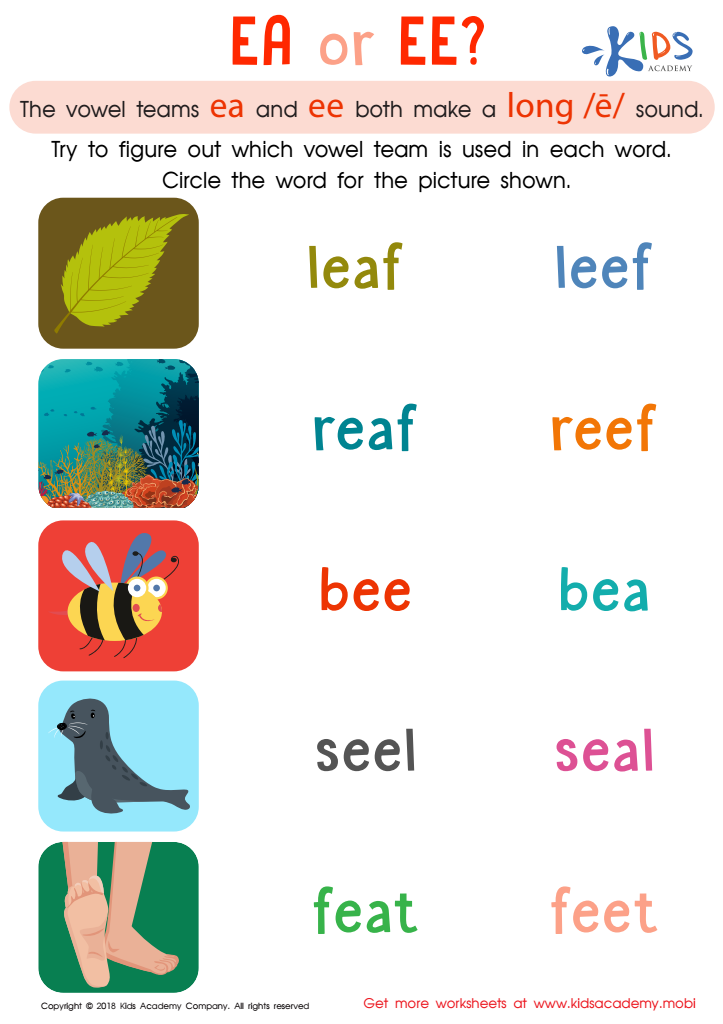
Reading: EA and EE Worksheet
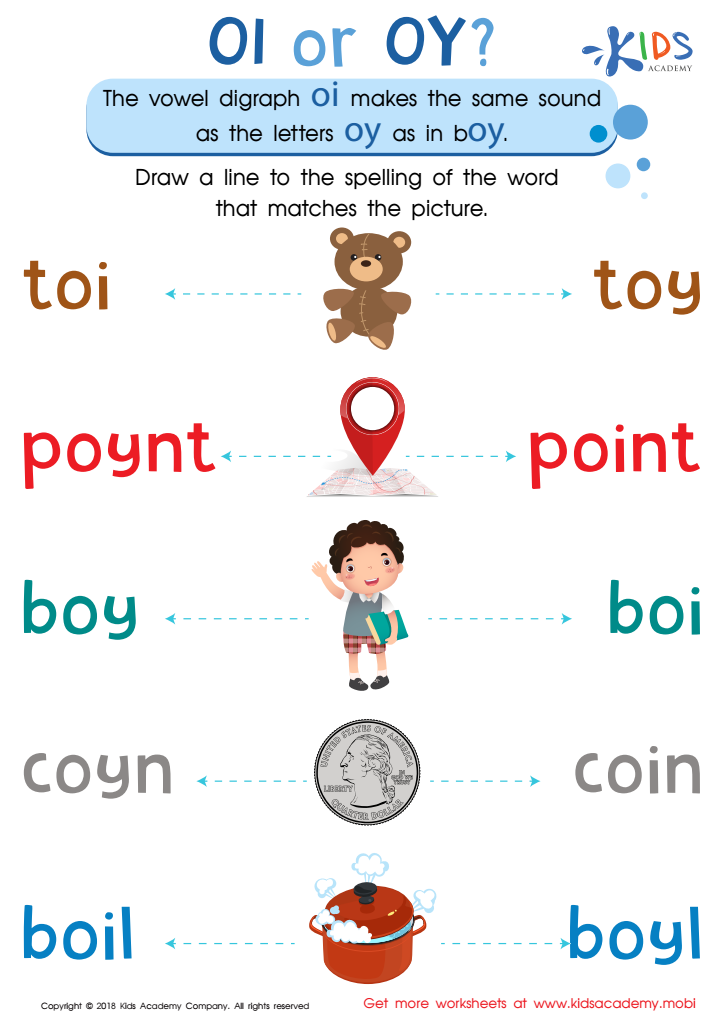
Reading: OI and OY Worksheet
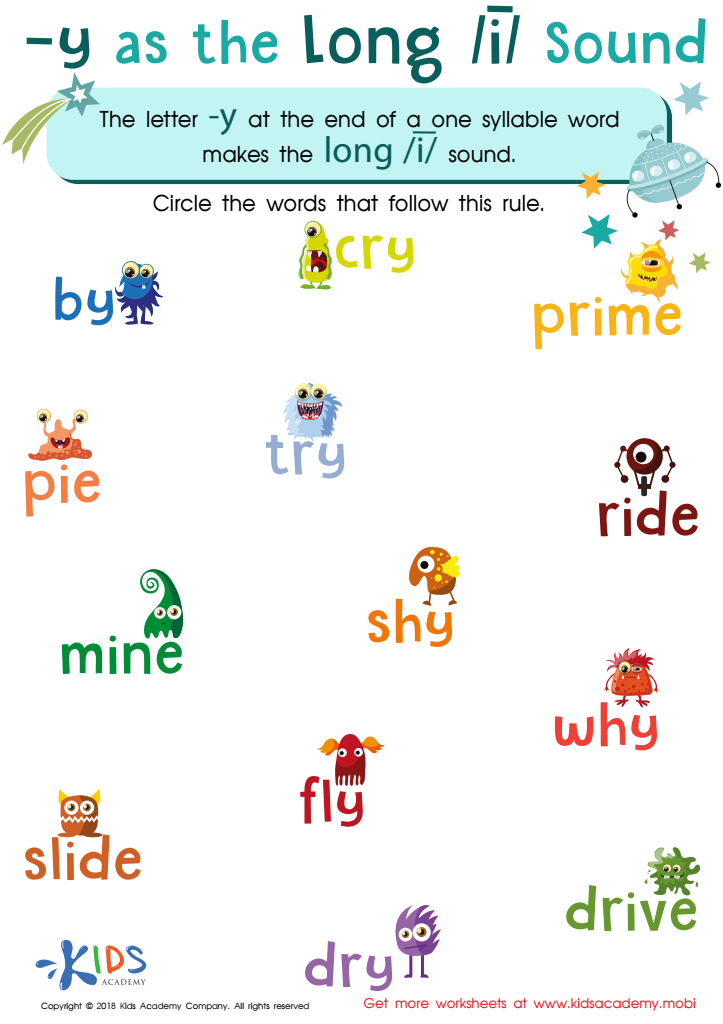
Reading: Y as Long I Worksheet
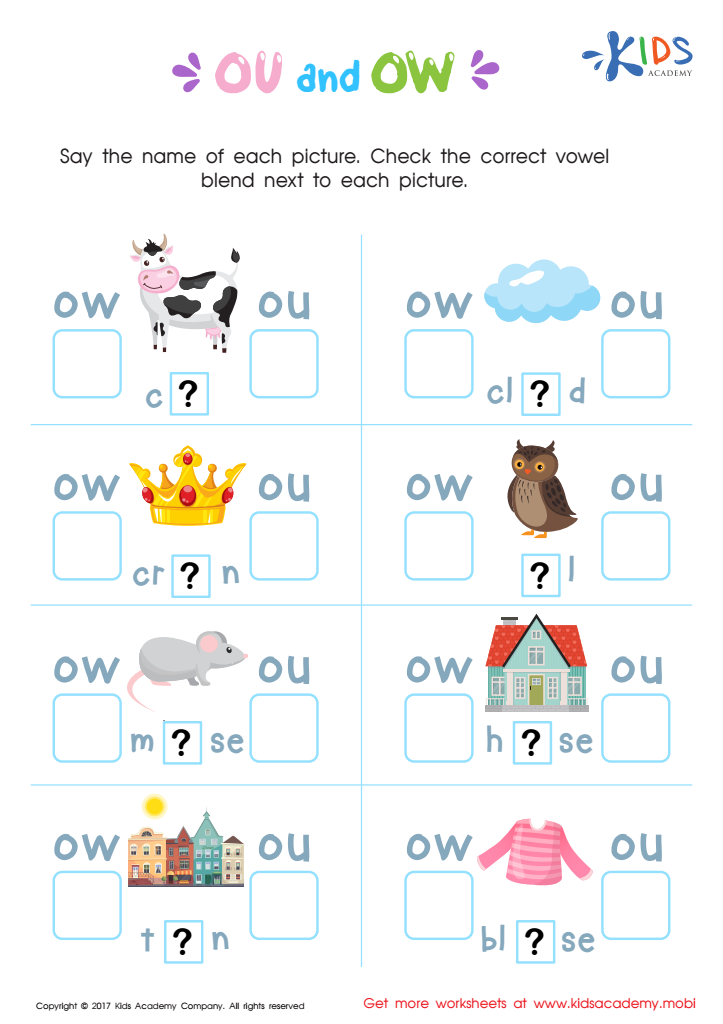
OU and OW Words Worksheet
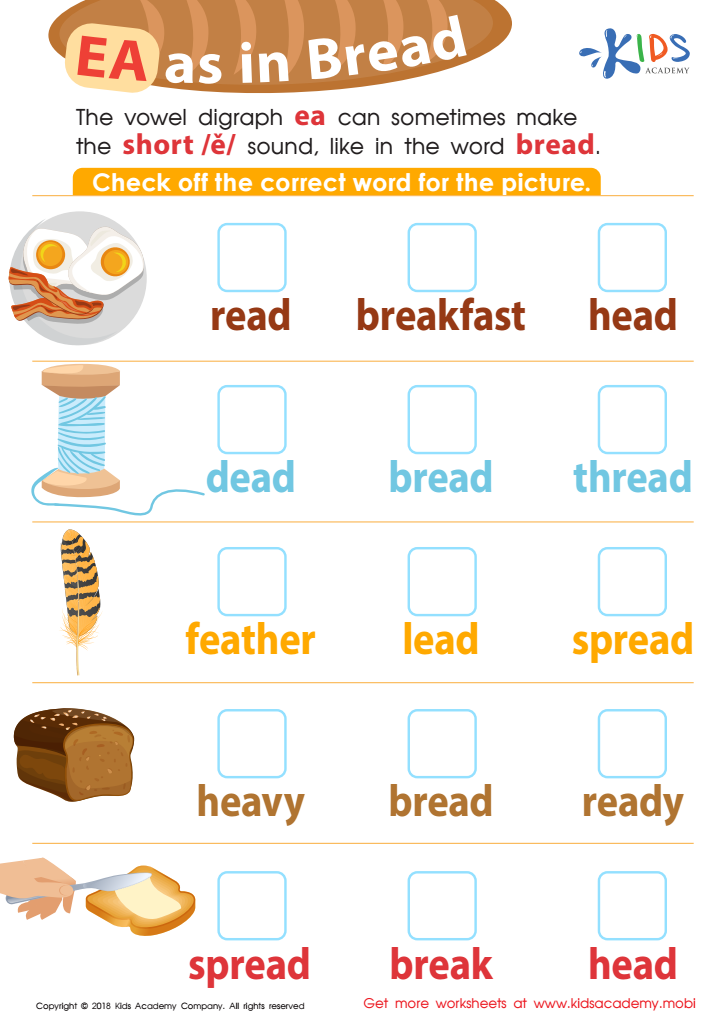
Reading: EA as in Bread Worksheet


Parents and teachers should prioritize vocabulary expansion, especially focusing on Normal Vowel Diphthongs, for children aged 6-7 for several reasons. At this age, children are developing essential language skills that lay the foundation for reading and writing. Diphthongs, which are complex vowel sounds formed by the glide from one vowel to another within a single syllable (like in "coin" or "out"), are key to improving pronunciation and understanding of language nuances.
An extensive vocabulary that includes diphthongs enhances children's ability to express themselves and comprehend spoken and written texts. Recognizing these sounds helps them decode words more easily, ultimately fostering better literacy skills. Moreover, engaging with diverse vocabulary can cultivate children’s creative thinking and communication abilities.
Through activities such as reading diverse stories, singing songs, and playing word games that emphasize these sounds, children can improve their phonemic awareness while having fun. This sense of play also builds a lifelong love for learning and language, setting the stage for future educational success. In short, investing in vocabulary expansion around Normal Vowel Diphthongs during this critical developmental stage is vital for children’s linguistic and cognitive growth.








