Phonics Skills Normal Vowels Worksheets for Ages 6-7 - Page 2
29 filtered results
-
From - To
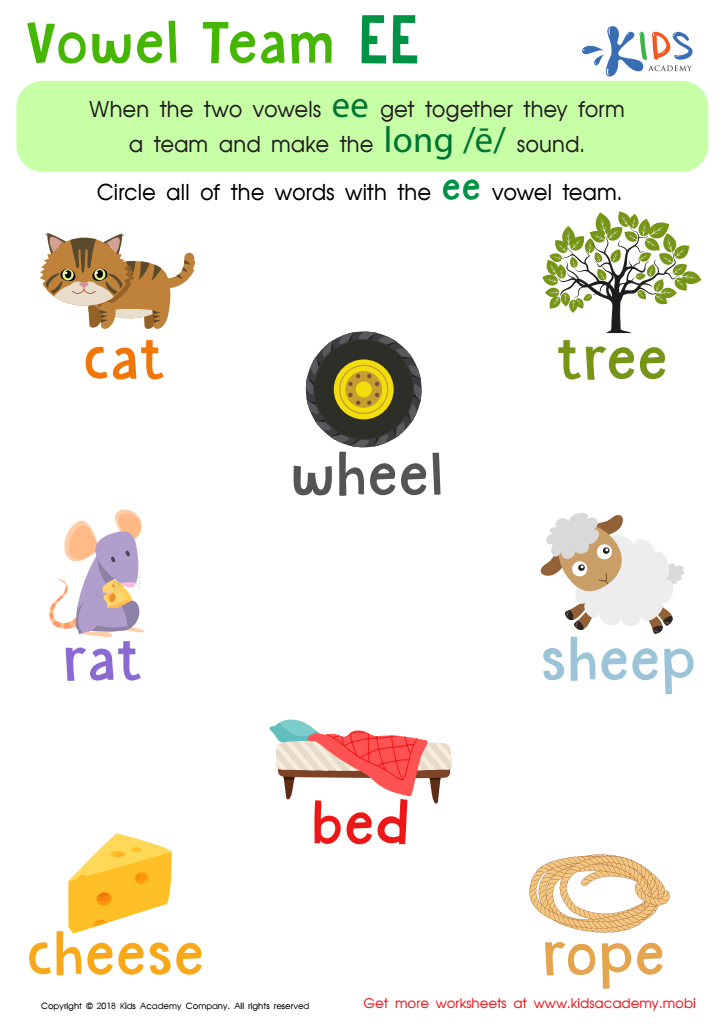
Reading: Vowel Team EE Worksheet
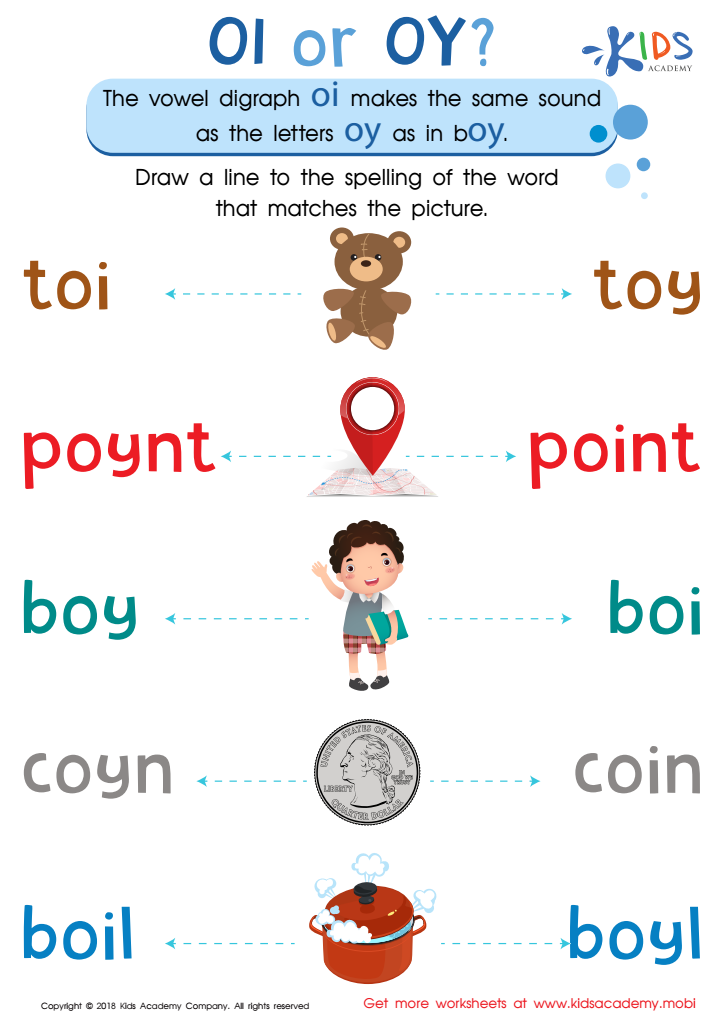
Reading: OI and OY Worksheet
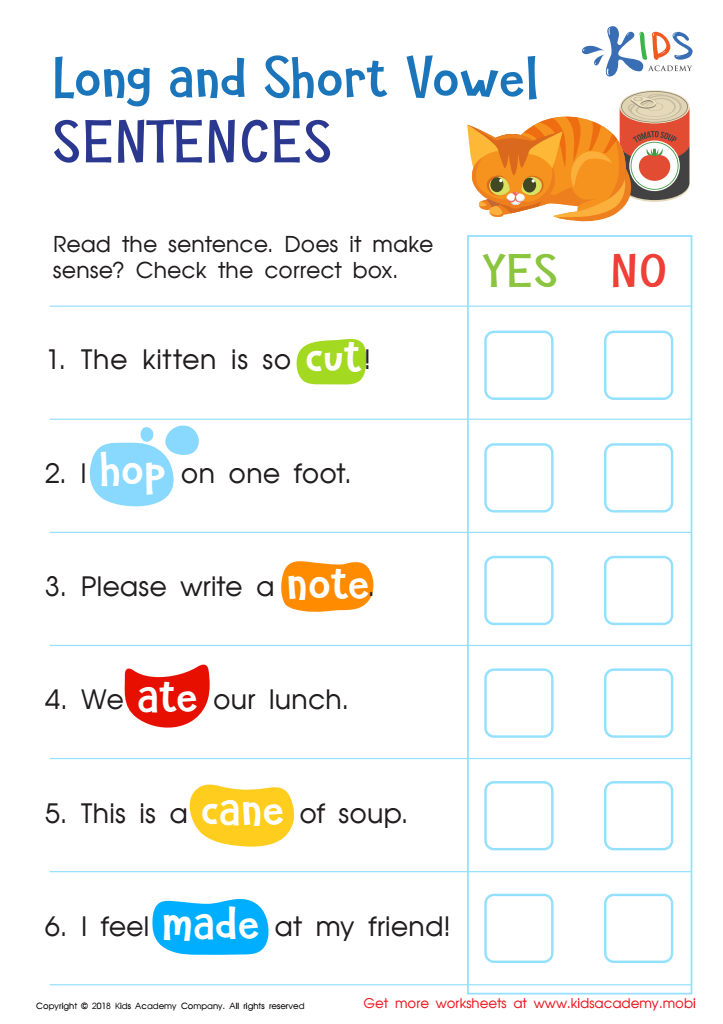
Long and Short Vowel Sentences: Assessment Worksheet

Long and Short E Worksheet
 Assign to My Students
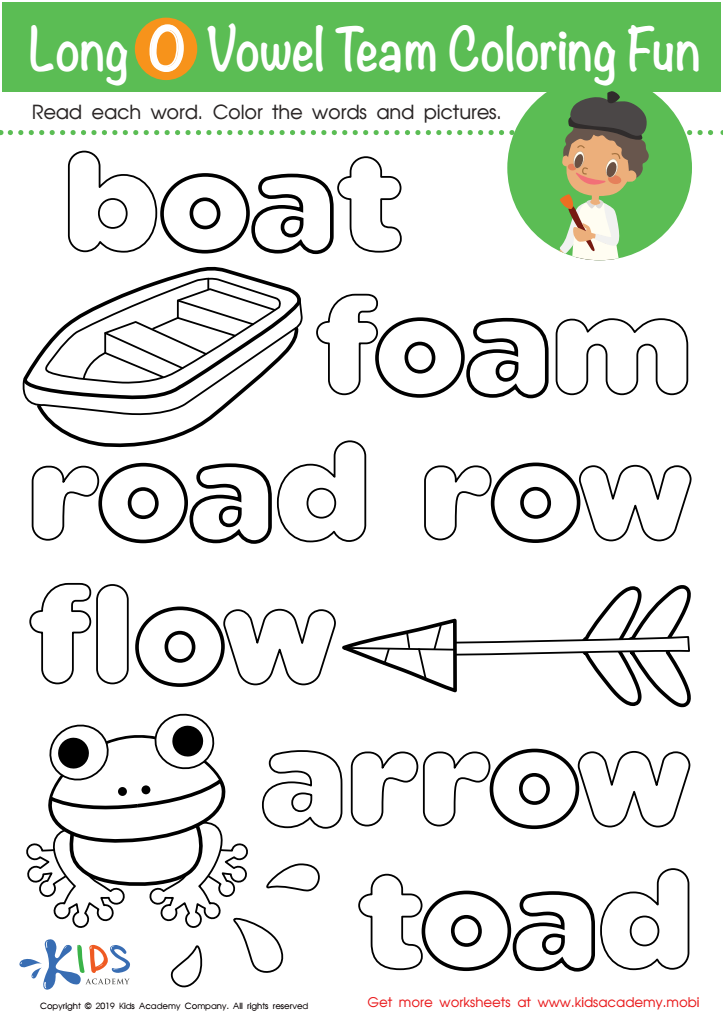
Long O Vowel Team Coloring Worksheet
Assign to My Students





Phonics skills, particularly normal vowels, are vital for children aged 6-7 as they form the foundation for reading and language development. At this age, learners begin to blend sounds and recognize word patterns, enhancing their ability to decode unfamiliar words. Mastery of normal vowels—like A, E, I, O, and U—helps children make important connections between spoken and written language, essential for effective communication.
By focusing on phonics, parents and teachers equip children with strategies to tackle reading challenges confidently. This skillset is correlated with overall literacy success; children who excel in phonics are more likely to become proficient readers, setting a trajectory for academic achievement. Moreover, understanding vowel sounds can lead to stronger spelling abilities, as it aids in recognizing word structures.
Investing time and effort in phonics instruction nurtures a child's love for reading and enhances their comprehension skills, ultimately facilitating engagement with diverse literacy materials. By prioritizing phonics, parents and teachers create a supportive learning environment, enabling children to develop the necessary tools for lifelong learning and a brighter future. Supporting phonics skills at this critical stage can yield profound results, benefiting not just reading ability, but also fostering confidence and a passion for literature.






