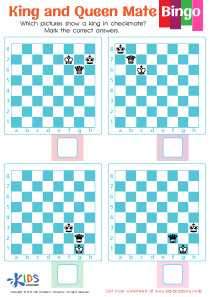
Cognitive Development Normal Chess Worksheets for Ages 6-7
4 filtered results
-
From - To
Boost your child’s cognitive development with our "Cognitive Development Normal Chess Worksheets for Ages 6-7". Designed for young minds, these engaging chess worksheets seamlessly blend fun and learning to enhance critical thinking, problem-solving, and strategic planning skills. Each activity is tailored to suit children aged 6-7, fostering improved focus, memory, and logical reasoning through the ancient game of chess. Give your kids a head start in cognitive development with worksheets that make learning both enjoyable and effective, paving the way for a lifetime of intellectual growth. Unlock their full potential with Kids Academy!
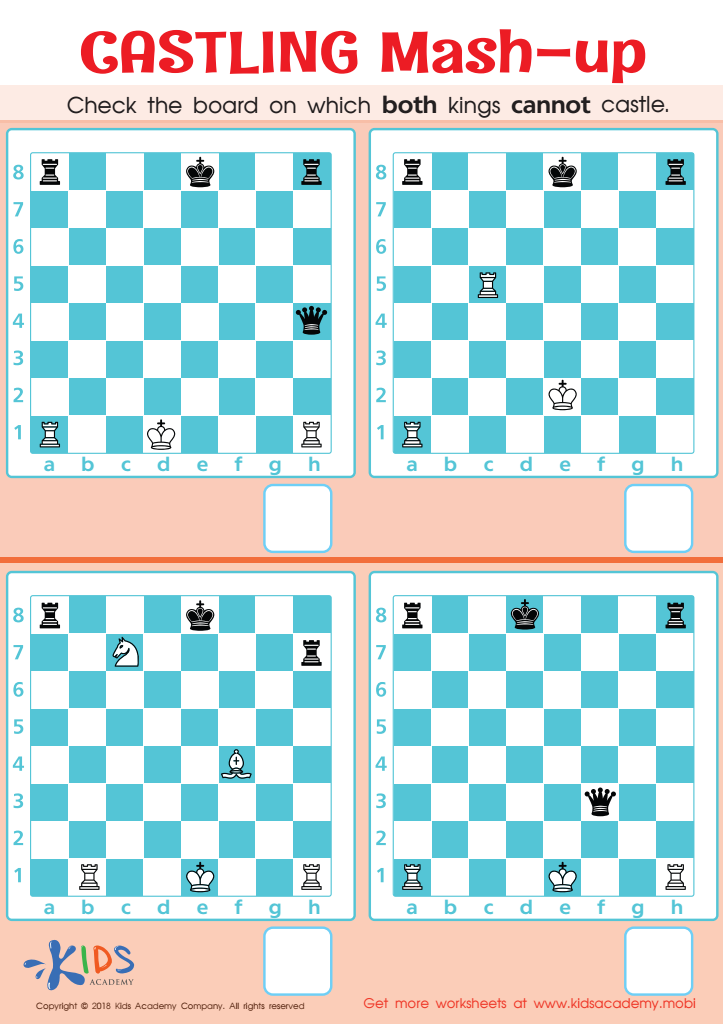
Castling Mash–up Worksheet
 Assign to My Students
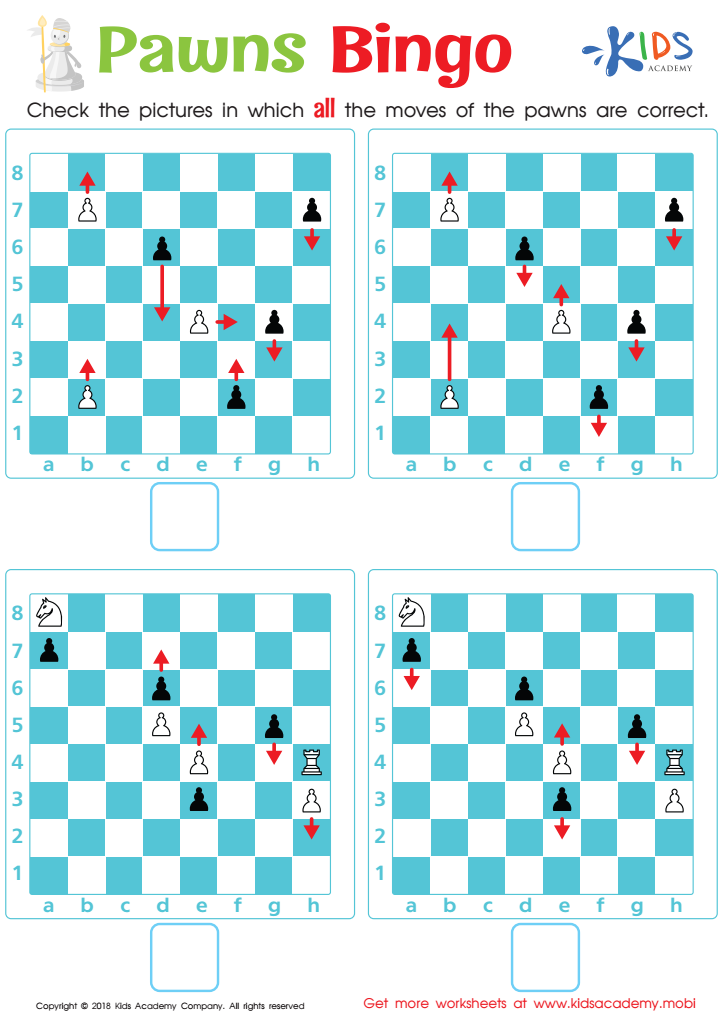
Pawns Bingo Worksheet
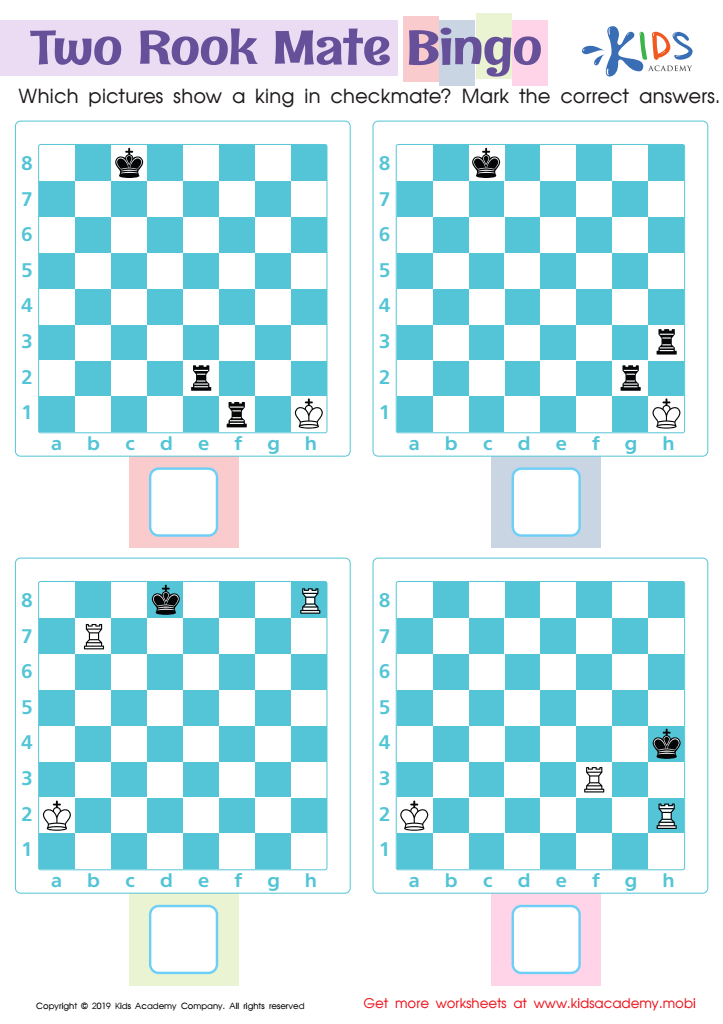
Two Rook Bingo Worksheet
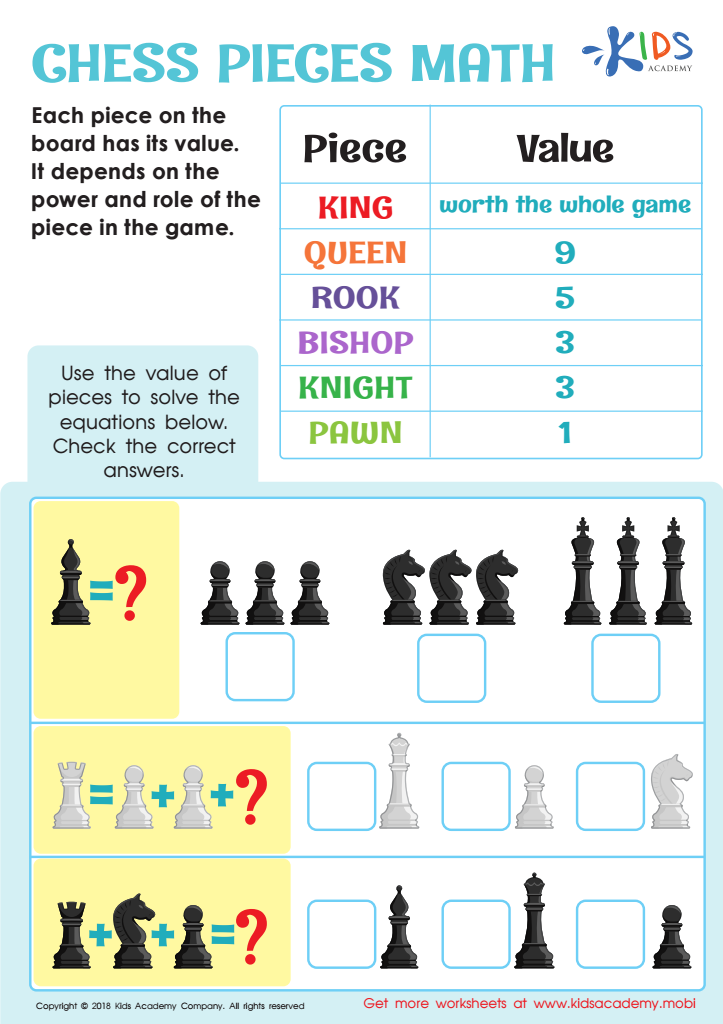
Chess Pieces Math Worksheet





Cognitive development during early childhood is crucial, as it forms the foundation for lifelong learning and problem-solving. Normal chess for ages 6-7, often termed Junior Chess, offers significant cognitive benefits that parents and teachers should consider.
Firstly, chess enhances critical thinking and problem-solving skills. The game's strategy requires children to think ahead, anticipate their opponent's moves, and make decisions based on logic. This strengthens their cognitive abilities, particularly in areas such as planning, foresight, and analytical thinking.
Secondly, playing chess improves concentration and attention span. The focus required to analyze and execute multiple potential moves reduces distractions, helping children develop better attention management. These skills are transferable to academic tasks, where strong attention and focus are essential.
Thirdly, chess encourages memory enhancement. Remembering and recalling the rules, potential moves, and strategies boosts both short-term and long-term memory. For young children, this can align well with other memory-dependent learning activities.
Furthermore, chess fosters emotional development by teaching discipline, patience, and resilience. Children learn to cope with losses and celebrate victories gracefully, contributing to a well-rounded emotional intelligence.
In conclusion, encouraging 6-7-year-olds to play chess supports cognitive growth, cultivates essential life skills, and prepares them for academic success, making it a vital activity for any child's development.