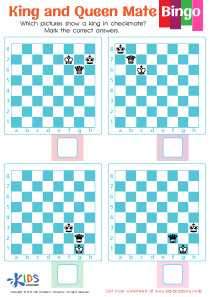
Understanding chess rules Normal Chess Worksheets for Ages 6-7
5 filtered results
-
From - To
Welcome to our "Understanding Chess Rules Normal Chess Worksheets for Ages 6-7" page! Designed specifically for young learners, these engaging worksheets will introduce children to the fundamental rules of chess in a fun, age-appropriate way. Our activities promote critical thinking and problem-solving skills while helping kids understand piece movement, special moves, and basic game strategies. Each worksheet features colorful illustrations and clear instructions, making it easy for parents and educators to guide children through the learning process. Start fostering a love for chess and developing cognitive abilities with our thoughtful resources crafted for budding chess enthusiasts!
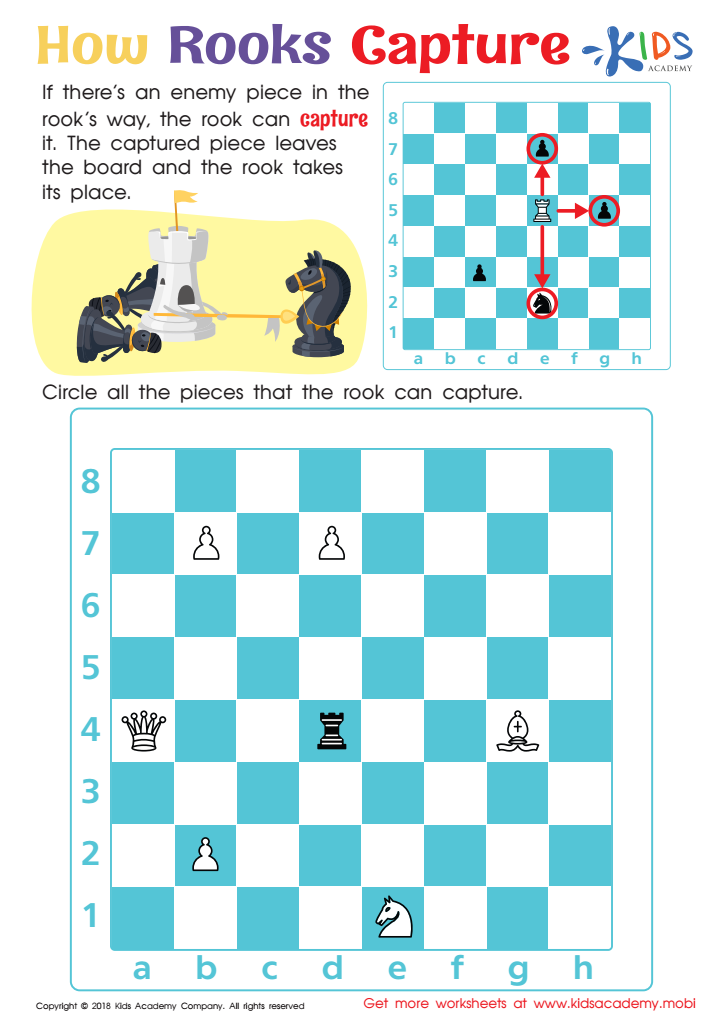
How Rooks Capture Worksheet
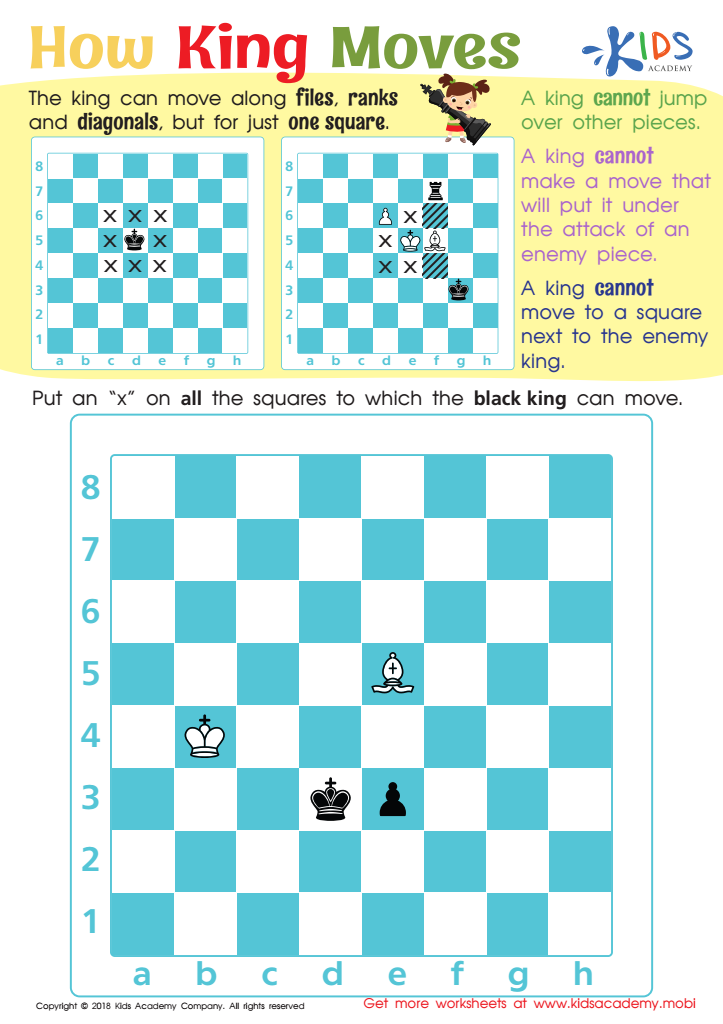
How King Moves Worksheet
 Assign to My Students
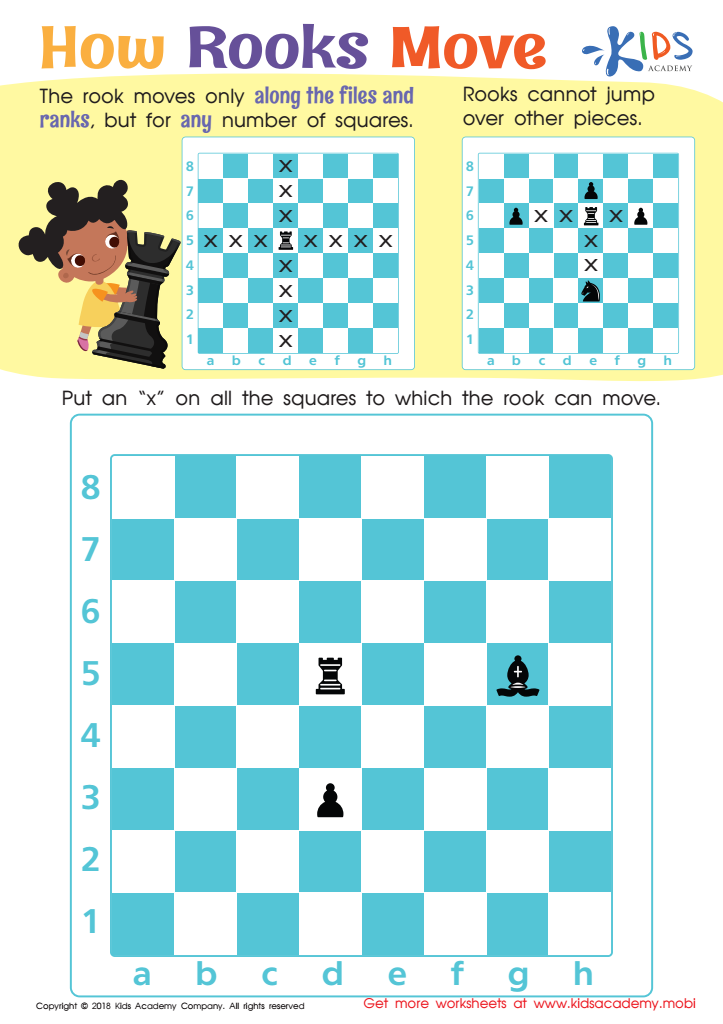
How Rooks Move Worksheet
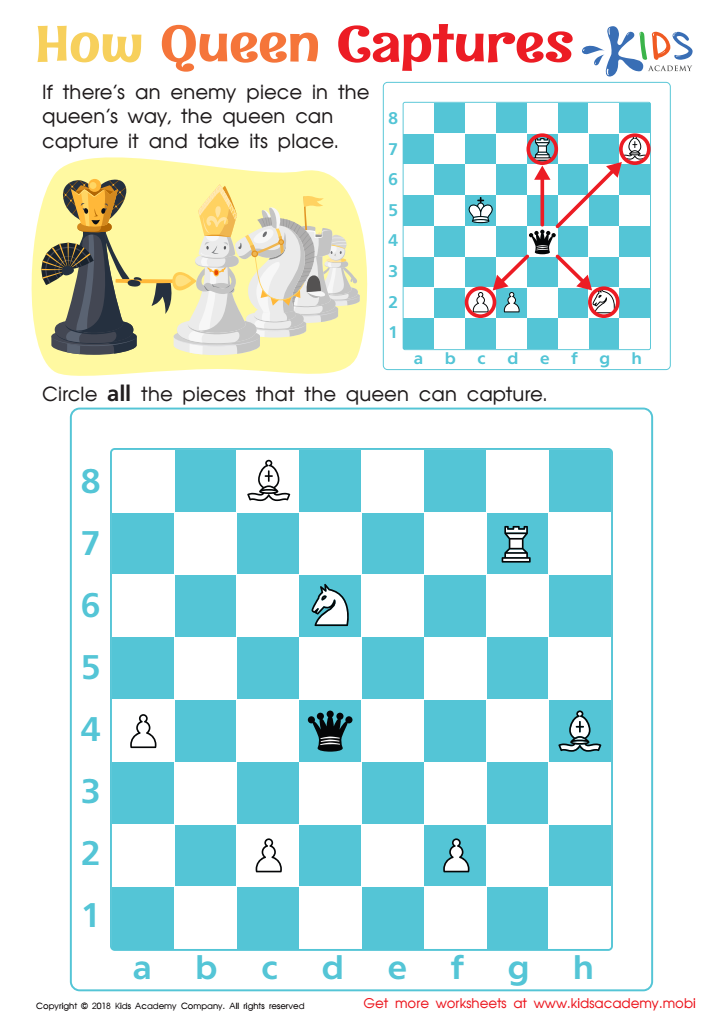
How Queen Captures Worksheet
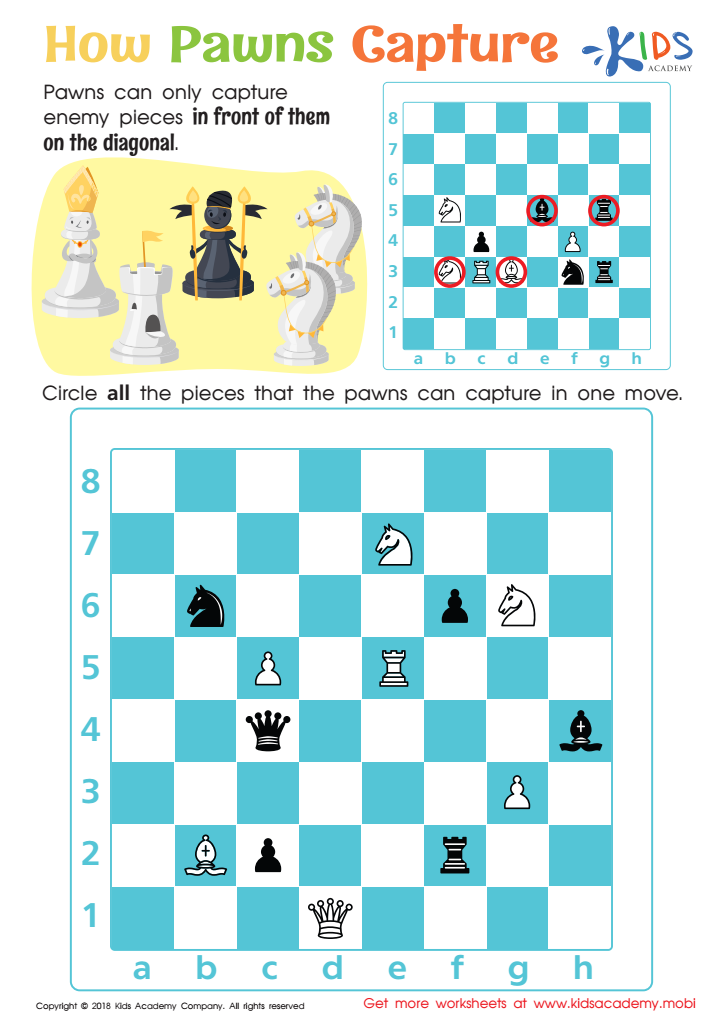
How Pawns Capture Worksheet






Understanding the rules of chess at a young age is crucial, especially for children aged 6-7, as it promotes essential cognitive and social skills. Firstly, chess enhances critical thinking, problem-solving, and strategic planning. As children learn to navigate the complexities of the game, they develop the ability to analyze situations, foresee consequences, and make informed decisions. These skills extend beyond the chessboard and benefit their academic performance and daily life.
Secondly, chess fosters concentration and patience. The game requires sustained focus and encourages children to think carefully about their moves, teaching them the value of persistence and discipline. This focus can improve their learning habits and attention spans in other subjects.
Moreover, chess is an excellent tool for social interactions. It provides opportunities for collaboration, sportsmanship, and respectful competition. Children learn to communicate, negotiate, and empathize with others, building their interpersonal skills.
Furthermore, understanding chess rules promotes inclusivity and expands social circles, as the game offers children shared experiences and connections. Overall, parents and teachers should care about teaching chess because it lays the foundation for developing vital life skills while also being an enjoyable and enriching activity for young minds.