
Chess strategy understanding Normal Worksheets for Ages 6-7
3 filtered results
Difficulty Level
Grade
Age
-
From - To
Subject
Activity
Standards
Unlock your child's potential with our "Chess Strategy Understanding" worksheets, designed specifically for ages 6-7. These engaging and educational worksheets introduce young learners to fundamental chess strategies, fostering critical thinking and problem-solving skills. Each activity is crafted to nurture beginners through entertaining and age-appropriate challenges, helping them grasp essential concepts such as piece movement and positional play. Perfect for at-home practice or classroom use, our expertly designed materials will lay the groundwork for your child's future chess mastery and boost their overall cognitive development. Teach your child the joy of chess today with our trusted resources!
Favorites
With answer key
Interactive
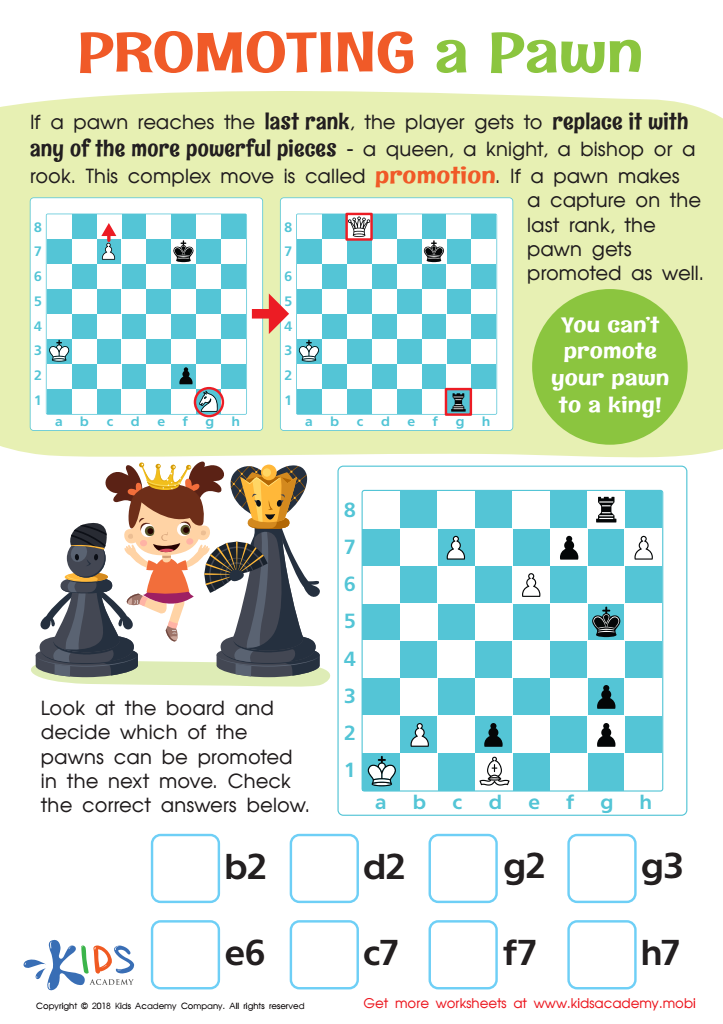
Promoting a Pawn Worksheet
Teach your kids all about pawns with this fun worksheet! Pawns may seem restricted, but experienced players can guide them across the board. If a pawn reaches the last rank, the player can upgrade it to a more powerful piece (e.g. queen, knight), or promote it if it captures an enemy piece. Give them the tools to master the game!
 Assign to My Students
Promoting a Pawn Worksheet
Worksheet
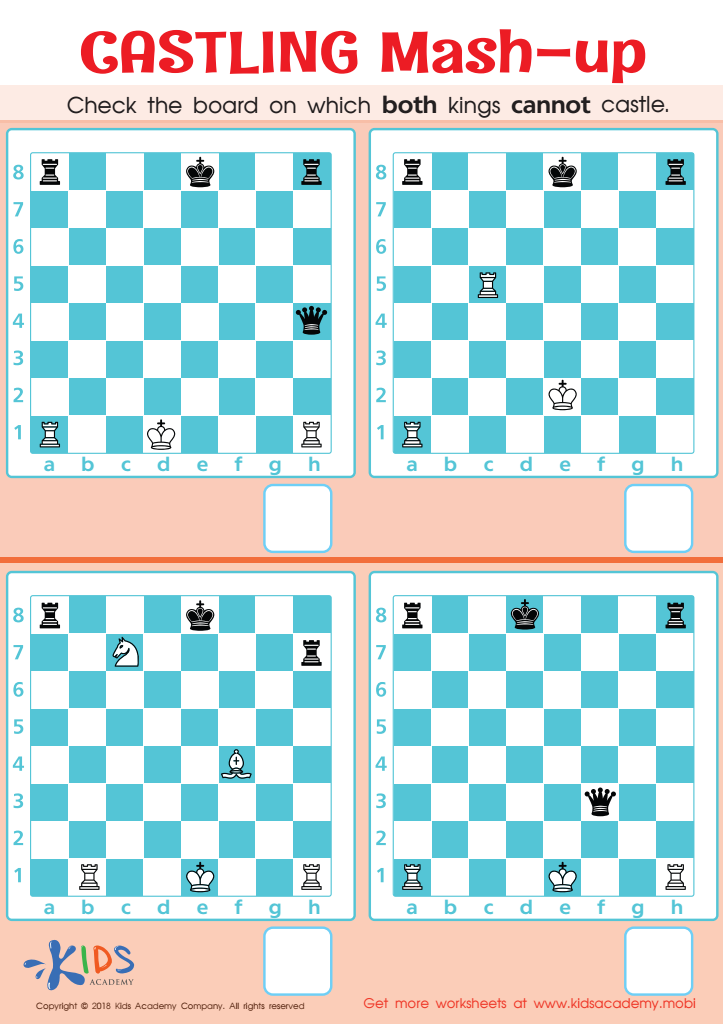
Castling Mash–up Worksheet
Before starting the worksheet, ensure your child understands castling in chess. If not, take time to explain it. Once they have a clear grasp of the rules, help them complete the exercise. Check the board to ensure that neither king can castle.
Castling Mash–up Worksheet
Worksheet
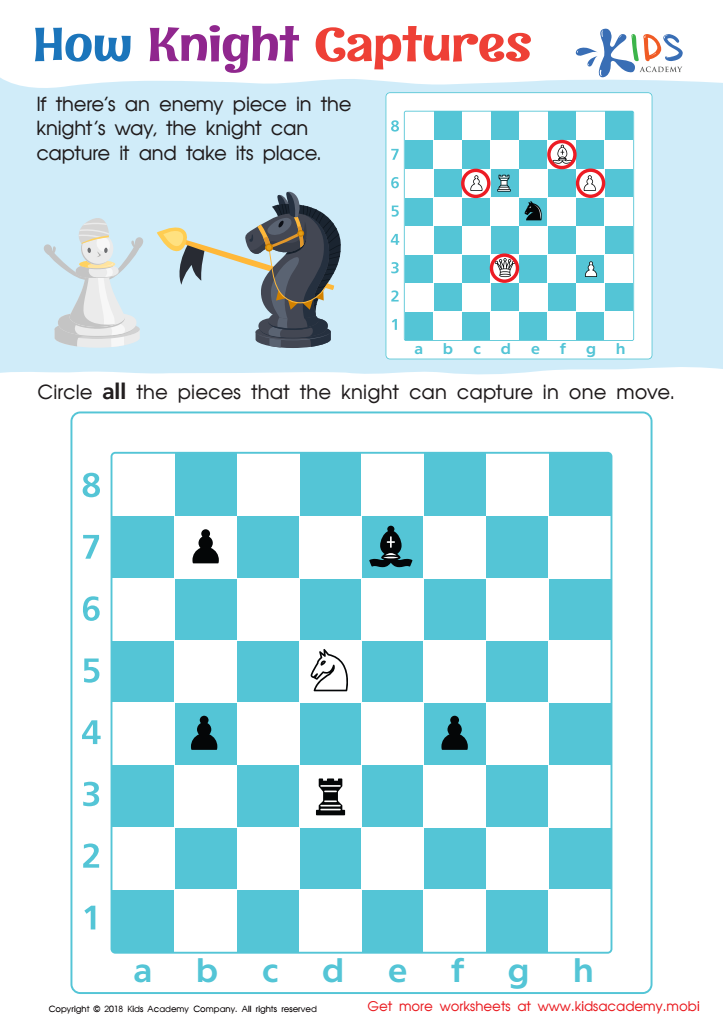
How Knight Captures Worksheet
Test your child's knowledge of chess pieces by asking them to identify the knight. It is shaped like a horse and its goal is to capture the enemy king in order to win the game. The knight has the advantage of being able to jump over other pieces, taking them out and taking their place. See how many pieces the knight can capture in one move with this worksheet.
How Knight Captures Worksheet
Worksheet
Join Kids Academy for Free
Who is primarily going to use this learning content?







Parents and teachers should care about introducing chess strategy to children aged 6-7 because it significantly benefits cognitive development and academic achievement. Chess requires critical thinking, problem-solving, and strategic planning, skills that are pivotal for young learners. By engaging in chess, children learn to think ahead, consider consequences, and make decisions based on logical analysis.
Additionally, chess enhances memory and concentration. Children must remember the movements of various pieces and remain focused throughout the game. This improved concentration can translate to better attention spans in academic settings. Furthermore, playing chess can foster important life skills such as patience, resilience, and sportsmanship. They learn to cope with setbacks and view challenges as opportunities for improvement.
Learning chess also introduces children to mathematical thinking. Understanding chess involves recognizing patterns and sequences, which can sharpen early math skills.
Moreover, the social environment created when playing chess encourages communication and respect. Children must interact, share, and sometimes explain their ideas to others. This social and emotional learning can form a foundation for collaboration and respectful competition.
In essence, chess serves as both a mental workout and a fun recreational activity, supporting holistic child development by combining elements of logic, memory, mathematics, and social skills.








