Comparing sizes Normal Worksheets for Ages 6-7
3 filtered results
-
From - To
Enhance your child's learning with our "Comparing Sizes" worksheets tailored for ages 6-7. These engaging, vibrant printables help young learners develop essential skills in comparing and contrasting different sizes. Through fun and interactive exercises, children practice evaluating objects, understanding relative size concepts, and using appropriate vocabulary. Each worksheet is designed by educators to ensure they meet early grade standards and effectively support classroom teachings. Perfect for both home and school use, our worksheets make learning about sizes an enjoyable and enriching experience. Download now to give your child a head start in mastering fundamental math and observation skills.
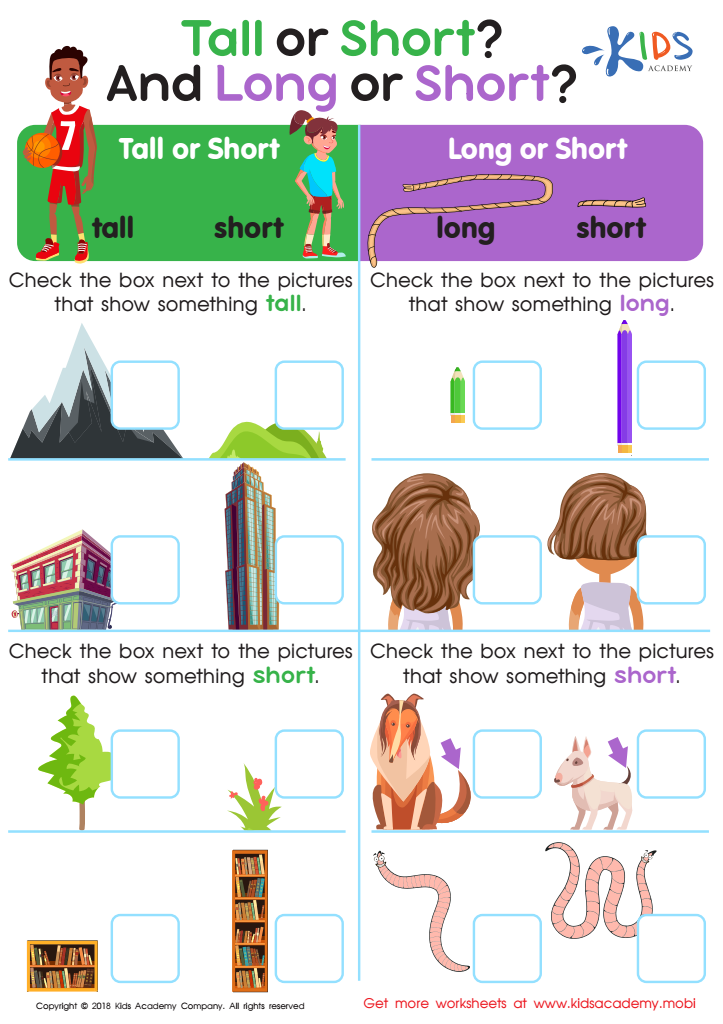
Tall or Short and Long or Short? Worksheet
 Assign to My Students
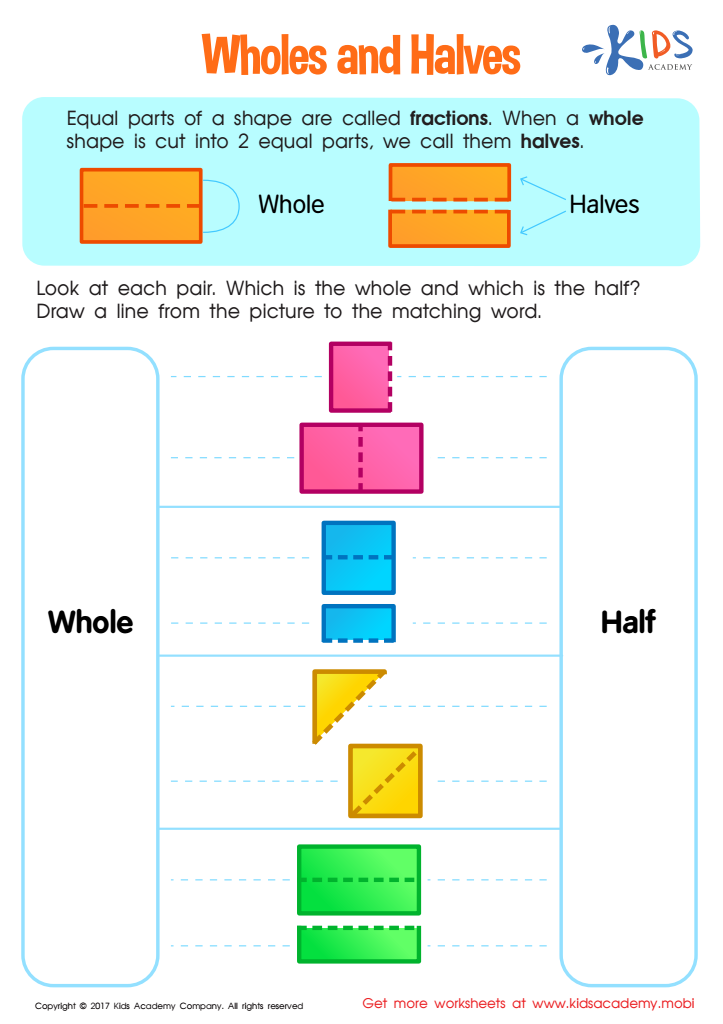
Wholes and Halves Worksheet
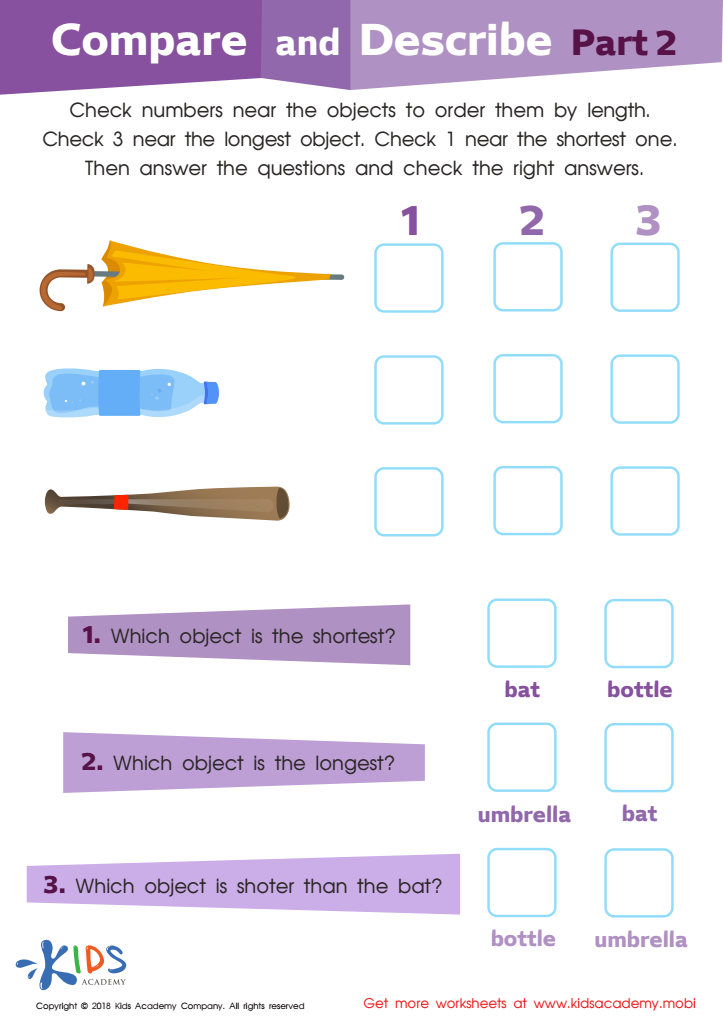
Compare and Describe: Part 2 Worksheet





Comparing sizes is an essential foundational skill for children ages 6-7, and it's important for parents and teachers to recognize its value. At this stage, kids are developing critical cognitive abilities, and understanding basic concepts of size and comparison helps to fortify these skills. Comparing sizes enhances a child's ability to observe, categorize, and rank different objects, which are key components of logical thinking and problem solving.
Engaging in activities that encourage size comparison can also strengthen mathematical understanding. These activities lay the groundwork for future lessons in measurement, geometry, and other math-related areas. For example, when children compare the heights of two objects or determine which of two containers holds more liquid, they are learning early principles of measurement and volume.
Moreover, these comparisons foster language development. Describing objects and discussing size helps children articulate their thoughts and broadens their vocabulary. Phrases such as "bigger than," "smaller than," and "as tall as" become part of their everyday language.
Socially and emotionally, mastering these skills can build a child's confidence. By successfully navigating tasks and relating them to the real world, children develop a sense of achievement. Teachers and parents who encourage and facilitate these comparisons help nurture well-rounded developmental growth in their children.








