Lowercase identification Normal Worksheets for Ages 6-7
4 filtered results
-
From - To
Enhance your child's literacy skills with our Lowercase Identification Normal Worksheets designed specifically for ages 6-7. These engaging and interactive worksheets provide young learners with practice in recognizing and writing lowercase letters. Each activity is crafted to help children differentiate between uppercase and lowercase forms, boosting their confidence in reading and writing. With vibrant illustrations and fun exercises, these worksheets capture attention and make learning enjoyable. Suitable for both classroom and home use, our resource supports early childhood education and ensures a solid foundation in reading. Download and watch your child's skills flourish as they master lowercase letter identification!
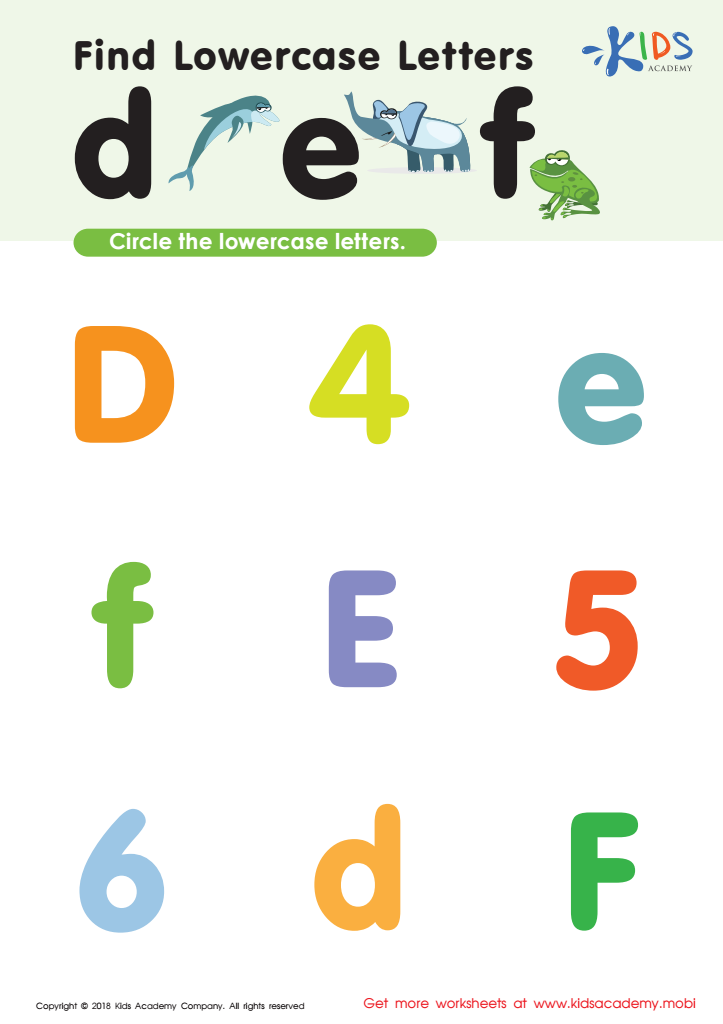
Find Lowercase Letters d e f Worksheet
 Assign to My Students
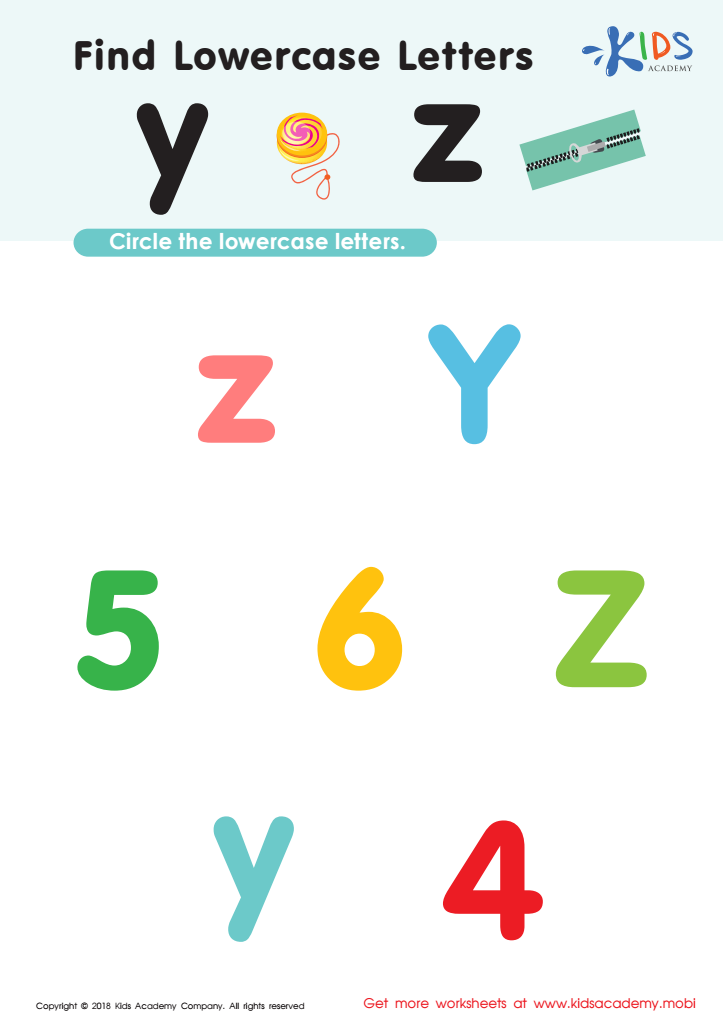
Find Lowercase Letters y z Worksheet
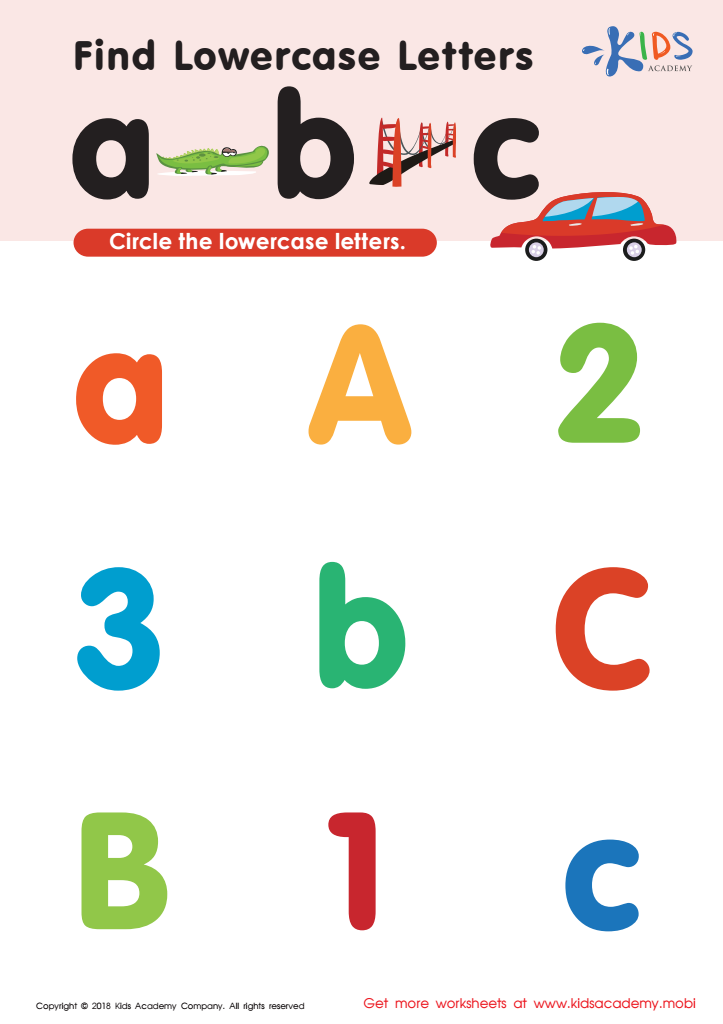
Find lowercase letters a b c Worksheet
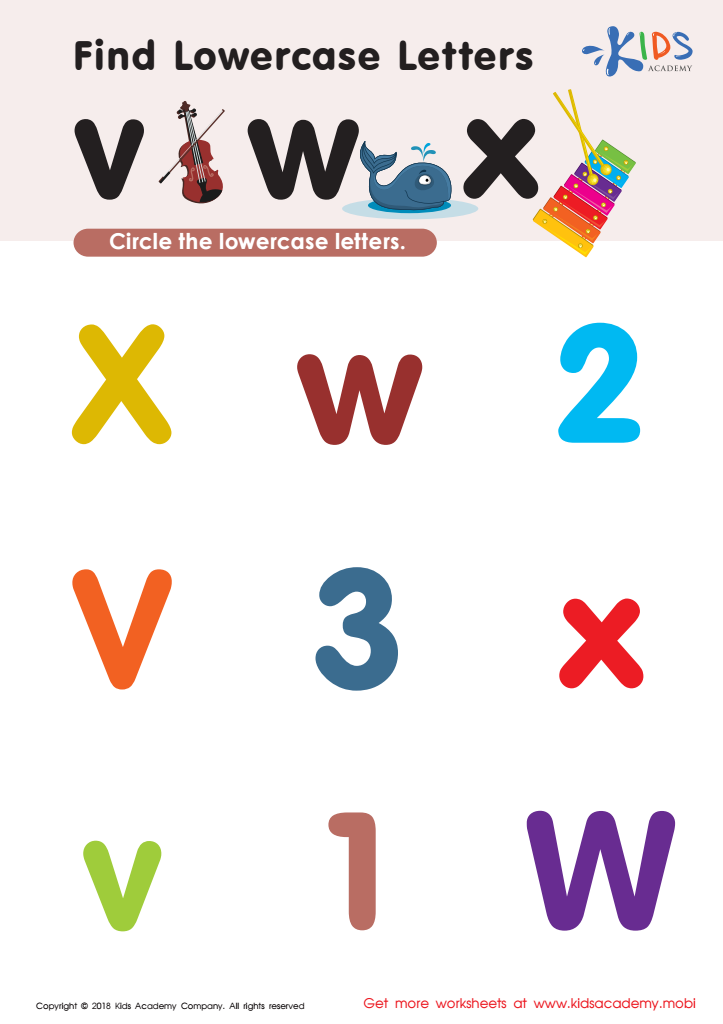
Find Lowercase Letters v w x Worksheet






Identifying lowercase letters is crucial for children aged 6-7 as it lays the foundation for literacy development. At this age, children are transitioning from learning to read to reading to learn. Mastering lowercase letters enables them to recognize familiar words in books, enabling them to build their vocabulary and comprehend text better.
Lowercase letters are more frequently used in reading materials than uppercase letters, so proficiency in recognizing and producing these letters is key for developing reading fluency. Additionally, lowercase letters comprise the majority of print in everyday life, from street signs to children's books.
Teachers and parents should prioritize lowercase letter identification because it contributes to overall academic performance. Recognizing these letters strengthens phonemic awareness, an essential skill for spelling and writing, and fosters confidence in young learners. Engaging in fun activities, such as letter games and reading sessions, can make the learning process enjoyable and effective.
Ultimately, supporting children's lowercase letter identification enables them to engage more fully with texts, thereby sparking a lifelong love of reading and learning. When parents and teachers work together in this educational endeavor, children are more likely to thrive both academically and socially.








