Rhyming skills Normal Worksheets for Ages 6-7
3 filtered results
-
From - To
Enhance your child's rhyming skills with our engaging worksheets designed for ages 6-7. Our resources promote phonemic awareness and improve vocabulary through fun, interactive activities. Kids will enjoy matching, completing rhymes, and exploring word families while developing essential literacy skills. These worksheets cater to varying learning styles, ensuring that every child can grasp the concept of rhyming effectively. Perfect for classroom use or at-home practice, our thoughtfully crafted activities foster creativity and a love for language. Discover the joy of rhyming with Kids Academy, where learning becomes an exciting adventure for young minds! Explore our collection today!
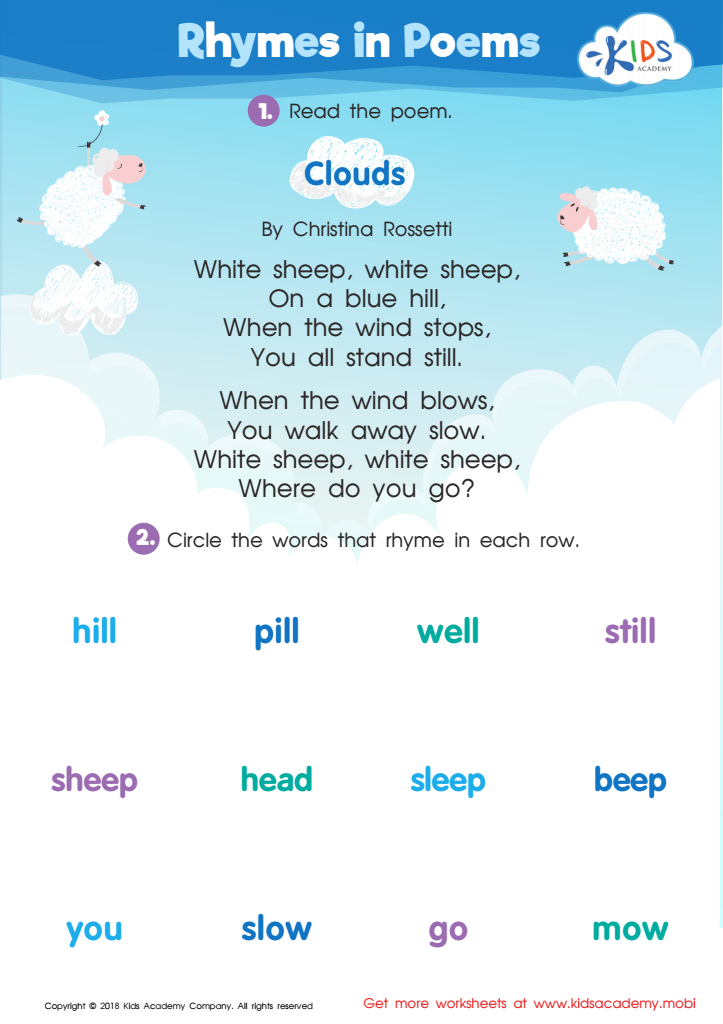
Rhymes in Poems Worksheet
 Assign to My Students
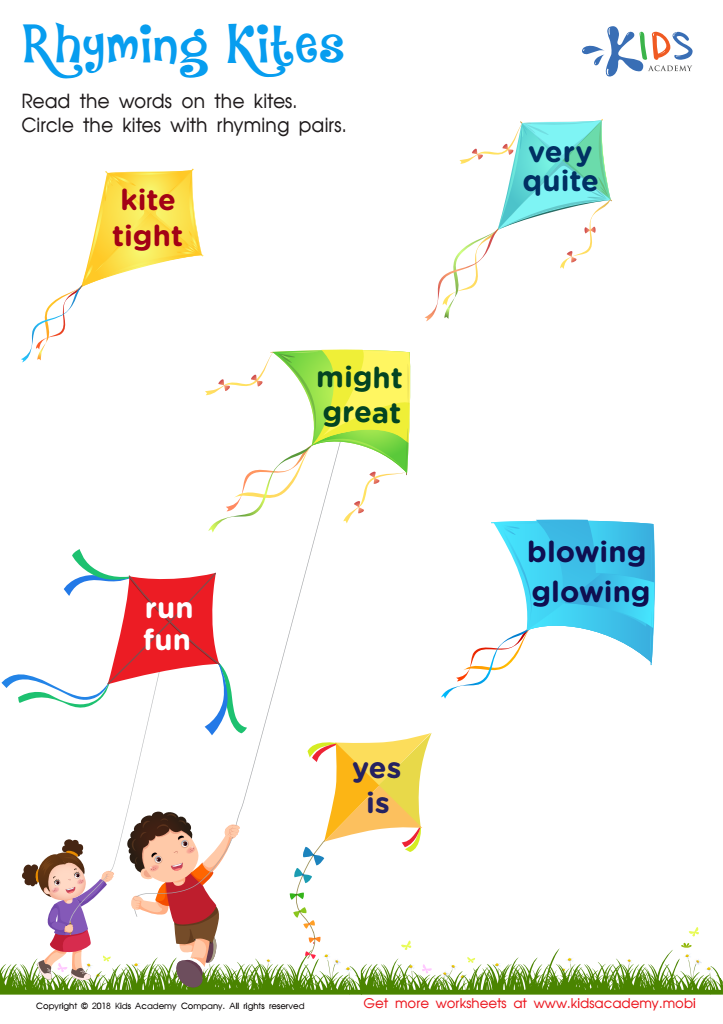
Rhyming Kites Worksheet
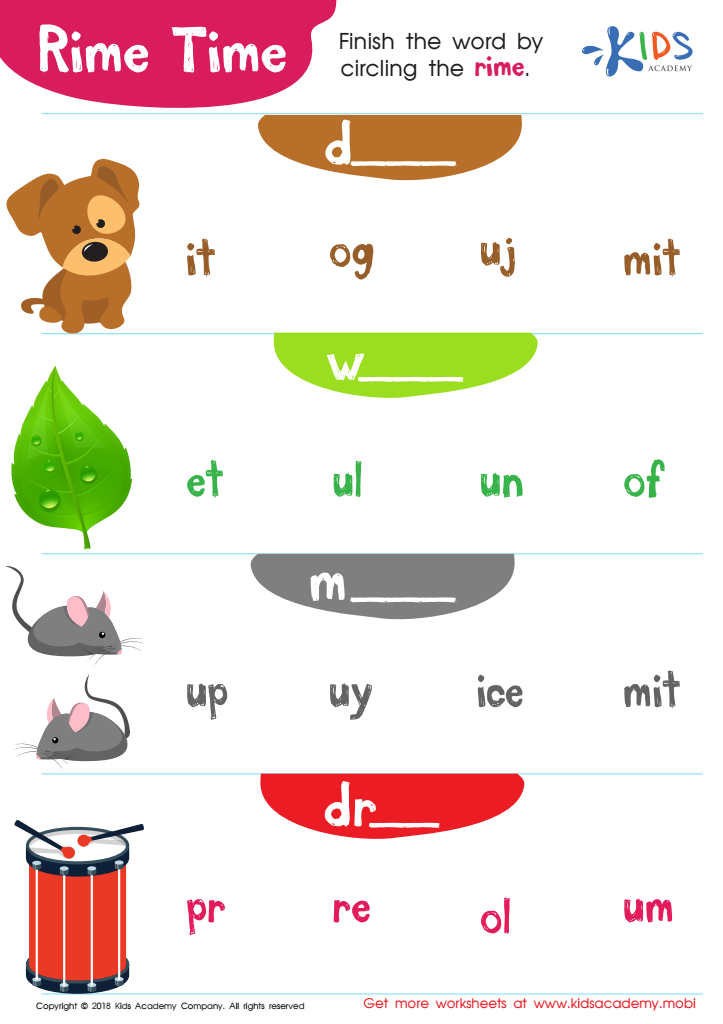
Rime Time Worksheet







Rhyming skills are crucial for children aged 6-7 as they significantly contribute to overall literacy development. At this age, children are rapidly expanding their vocabulary and beginning to read independently. Mastering rhyming helps them recognize sound patterns in words, making it easier to decode unfamiliar words and enhance their phonemic awareness. Phonemic awareness is the ability to hear and manipulate the sounds in words, which is foundational for reading.
Additionally, rhyming encourages language play, fostering creativity and expression. Engaging with rhymes can enhance memory retention, as rhythmic patterns help children recall words and sentences more easily. This not only supports reading fluency but also boosts comprehension as children connect words and meanings in an enjoyable format.
Further, rhyming serves as a bridge to writing, as it introduces children to the concept of word families and encourages experimentation with language. Parents and teachers play a vital role in cultivating a love for reading by incorporating rhyming games, songs, or poetry into learning experiences. Supporting rhyming skills enriches children’s linguistic abilities while providing a solid foundation for their academic journey and love for literature. Thus, prioritizing rhyming is essential for fostering confident and skilled learners.








