Time recognition Normal Worksheets for Ages 6-7
5 filtered results
-
From - To
Develop essential time-telling skills with our Time Recognition Normal Worksheets for Ages 6-7 at Kids Academy! Designed for young learners, these engaging worksheets help children master reading clocks, understanding hours and minutes, and sequenced daily activities. Colorful visuals coupled with simple exercises ensure a fun and effective learning experience. Ideal for reinforcing both analog and digital time-telling, these worksheets are perfect for classroom use or home practice. Set a strong foundation in time recognition and boost your child's confidence and independence. Visit Kids Academy for more interactive learning tools tailored to your child's needs!
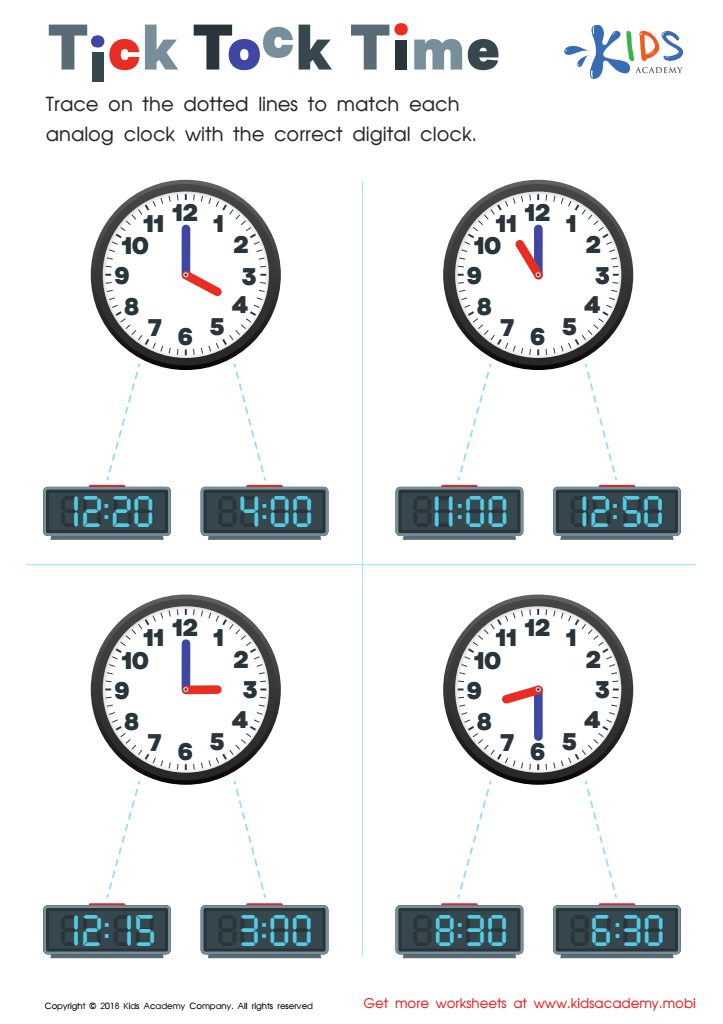
Tick Tock Time Worksheet
 Assign to My Students
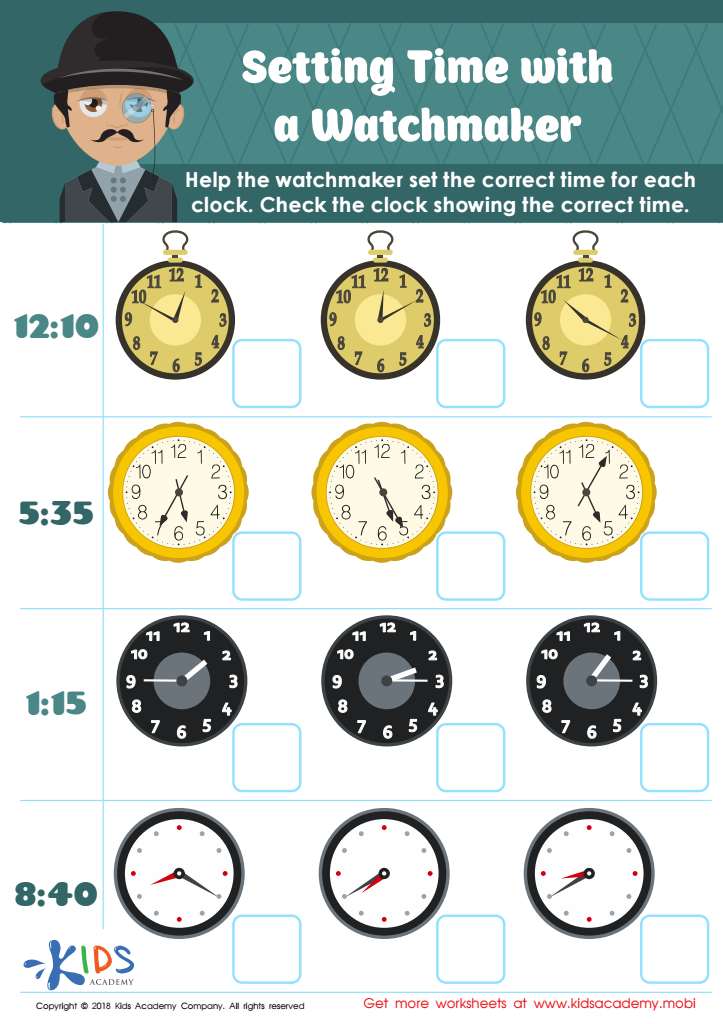
Setting Time with Watchmaker Worksheet
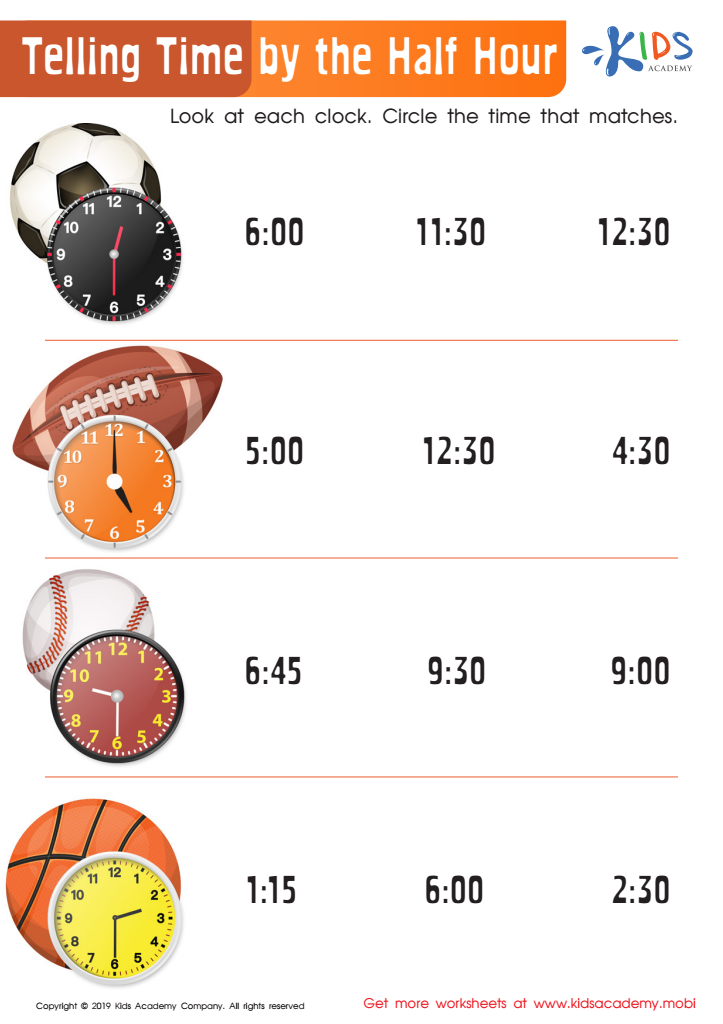
Telling Time by the Half Hour Worksheet
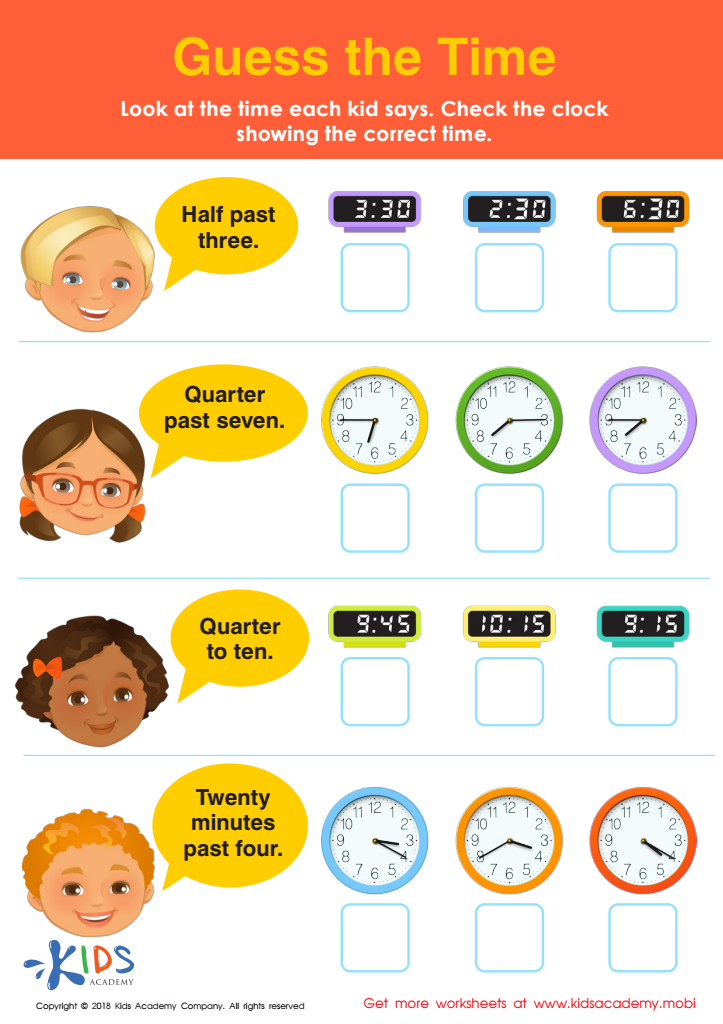
Guess the Time Worksheet
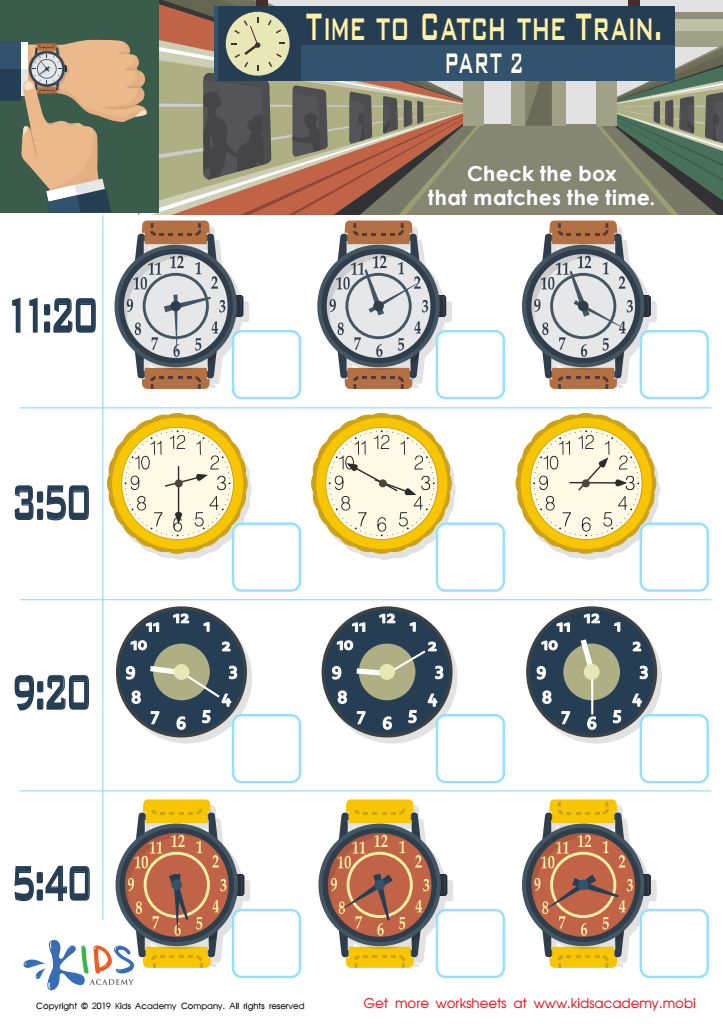
Time to Catch the Train Part 2 Worksheet







Time recognition is a fundamental skill for children aged 6-7 as it lays the groundwork for their future academic and life success. First, mastering the concept of time enhances their ability to follow daily routines such as chores, homework, and bedtime, thereby fostering independence and responsibility. Parents and teachers can nurture a child’s organizational skills by helping them internalize the importance of punctuality and the sequencing of events.
Moreover, understanding time has cognitive benefits. Learning to tell time sharpens a child's mathematics skills, as it involves recognizing and interpreting numbers, understanding past and future, and basic arithmetic when calculating time intervals. Consequently, time recognition is not just a mechanical process but a sophisticated cognitive activity that strengthens logical reasoning abilities.
Additionally, time-related concepts are crucial for social development. Many aspects of life are time-bound - from school schedules to social appointments. If children can tell and manage time effectively, they are less likely to miss out on important social interactions, which can affect their development of essential social skills.
In summary, parents and teachers should prioritize time recognition to enhance children's independence, cognitive abilities, and social interactions, setting them on a successful path for future responsibilities and opportunities.








