Understanding communities Normal Worksheets for Ages 6-7
5 filtered results
-
From - To
"Understanding Communities Normal Worksheets for Ages 6-7" by Kids Academy introduces young learners to the vital concepts of community roles and responsibilities. Designed for first graders, this set enhances social studies skills through engaging activities and printable worksheets. Children gain insights into various community helpers and their functions, understanding how everyone’s role is interconnected and important. Through themed exercises and interactive tasks, it seamlessly blends learning with fun, fostering critical thinking about civic duties and teamwork. Ideal for classroom use or homeschooling, these worksheets help cultivate a sense of belonging and awareness in budding citizens.
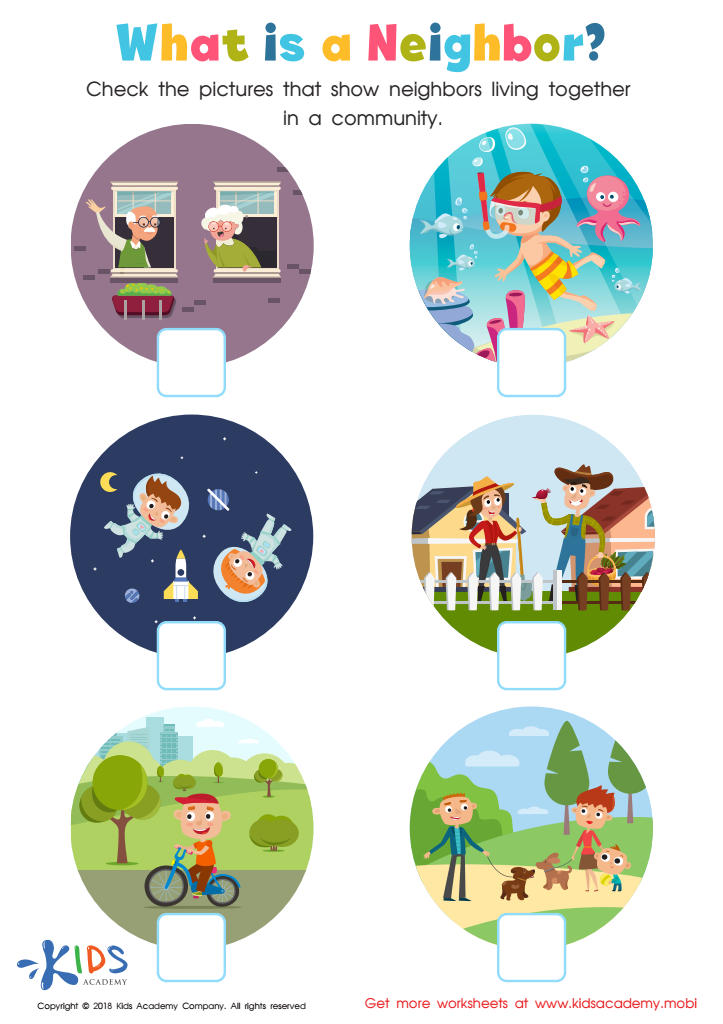
What is a neighbor Worksheet
 Assign to My Students
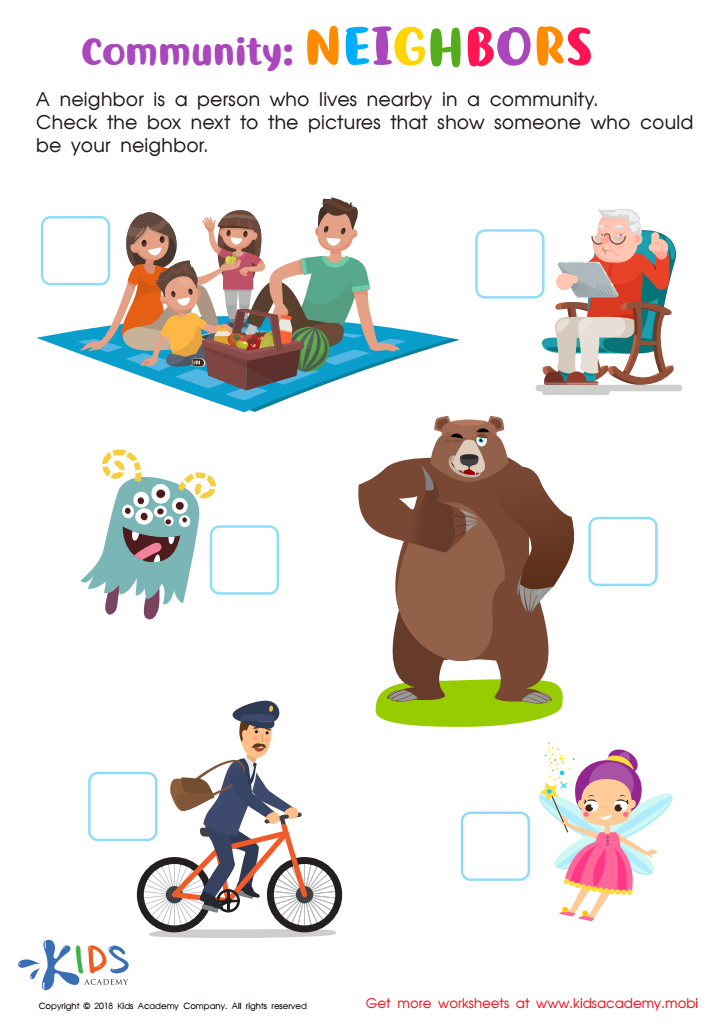
Community: Neighbors Worksheet
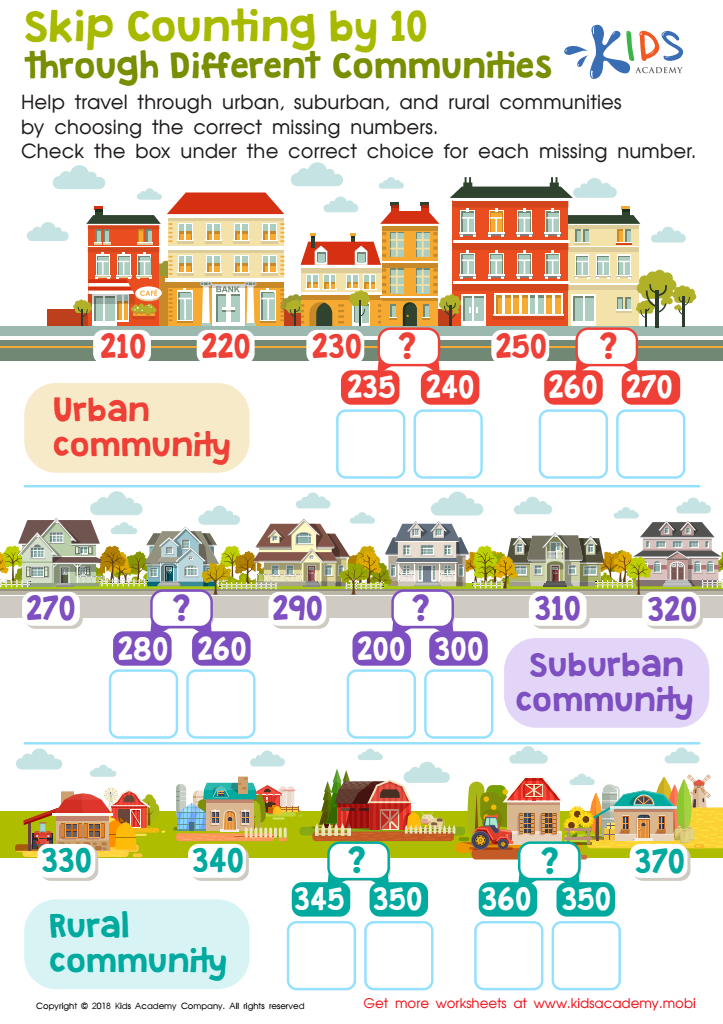
Skip Counting by 10 through Different Communities Worksheet
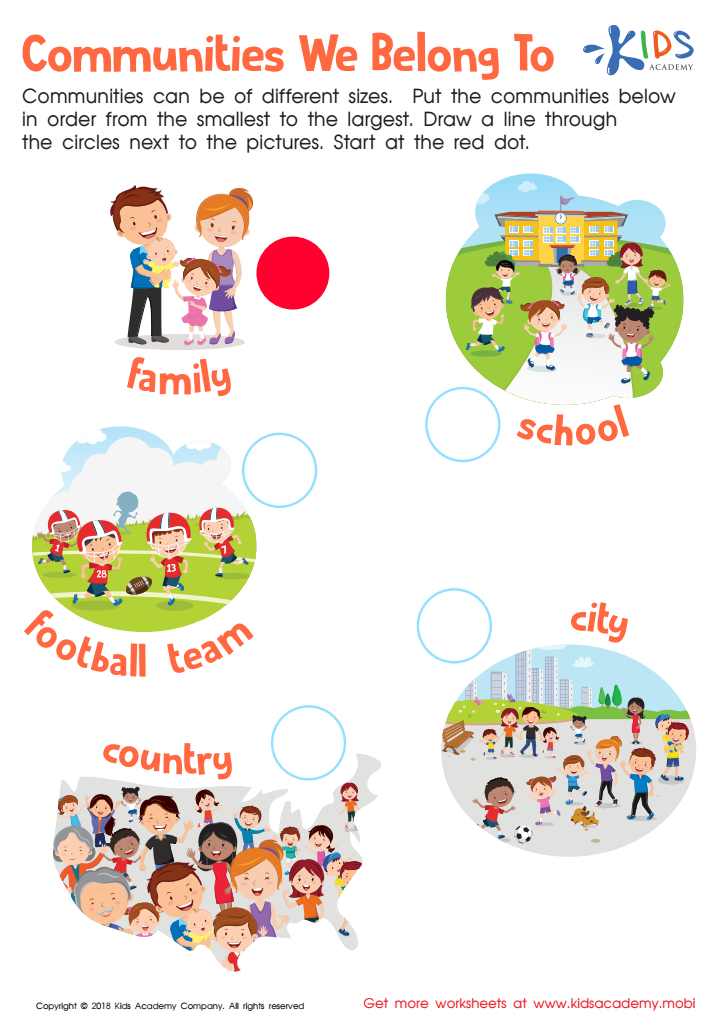
Communities We Belong to Worksheet
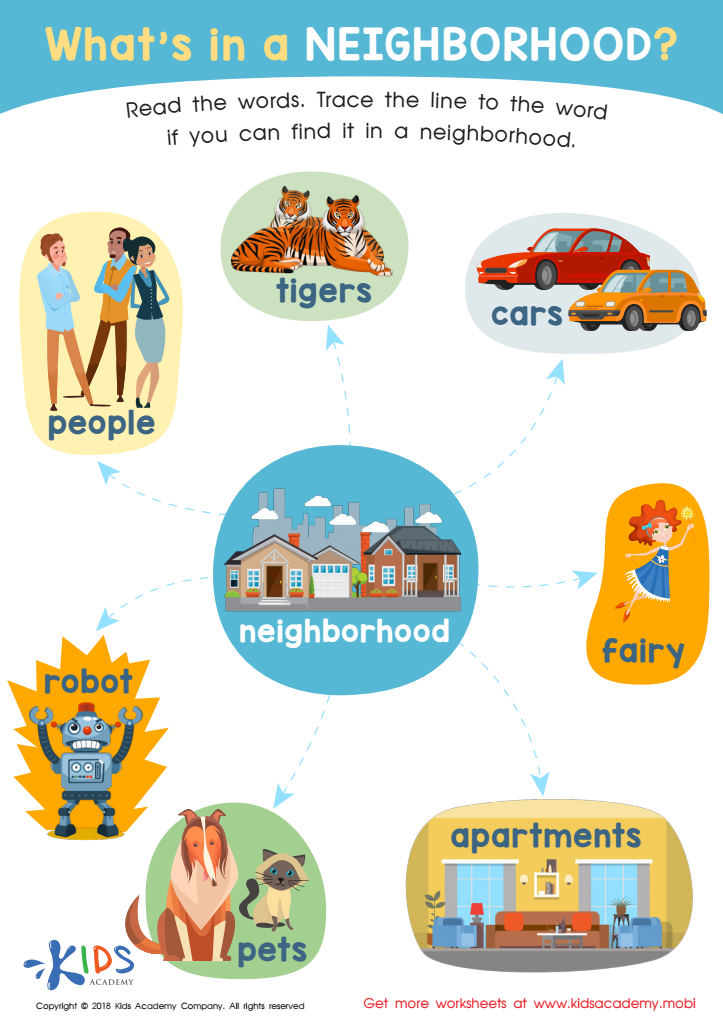
What's in a Neighborhood? Worksheet






Understanding communities is crucial for children aged 6-7 because it lays the foundation for their social development and sense of belonging. At this age, children are beginning to understand the world beyond their immediate family and learning how to interact within a larger community. By grasping the concept of community norms and structures, they develop essential skills like cooperation, empathy, and responsibility.
Parents and teachers play a pivotal role in guiding children through these formative years. Teaching kids about community norms helps them recognize accepted behaviors and understand the importance of rules, which promotes a sense of security and predictability. These lessons also foster respect for diversity and encourage inclusivity by exposing children to different cultures and lifestyles within their community.
Moreover, understanding communities helps kids build positive relationships and effective communication skills. When they comprehend how their actions impact others, they become more considerate and inclined to contribute positively. This nurtures a supportive learning environment at school and fosters stronger family bonds at home.
In essence, introducing community concepts to young children equips them with the social tools necessary for success in both personal and academic settings. It helps them grow into conscientious individuals who value cooperation and kindness in their interactions with others.








