Understanding fractions Normal Worksheets for Ages 6-7
6 filtered results
-
From - To
Discover the essential "Understanding Fractions" worksheets tailored for 6-7-year-olds. These engaging and interactive resources are designed to introduce young learners to the fundamental concepts of fractions in a fun and approachable way. With colorful visuals and relatable examples, children will explore halves, quarters, and other fractions through various activities that promote critical thinking and problem-solving. These worksheets cater to different learning styles, ensuring every child grasps the concept. Perfect for classroom activities or at-home practice, our materials foster a solid foundation in math. Help your child develop confidence and a love for learning fractions with our expertly crafted worksheets today!
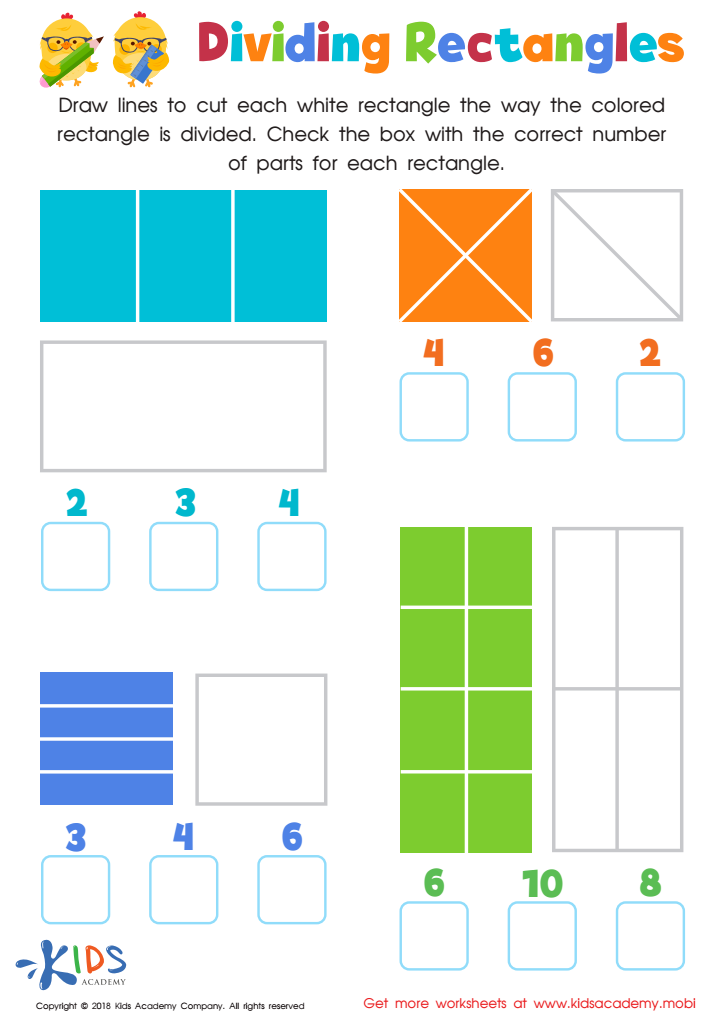
Dividing Rectangles Worksheet
 Assign to My Students
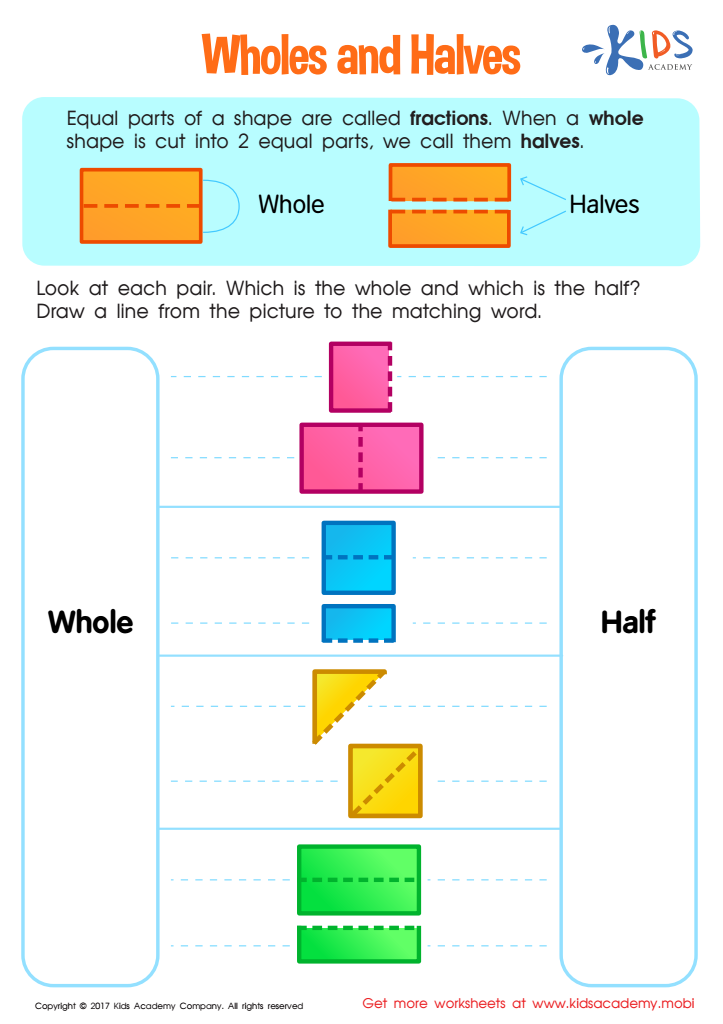
Wholes and Halves Worksheet
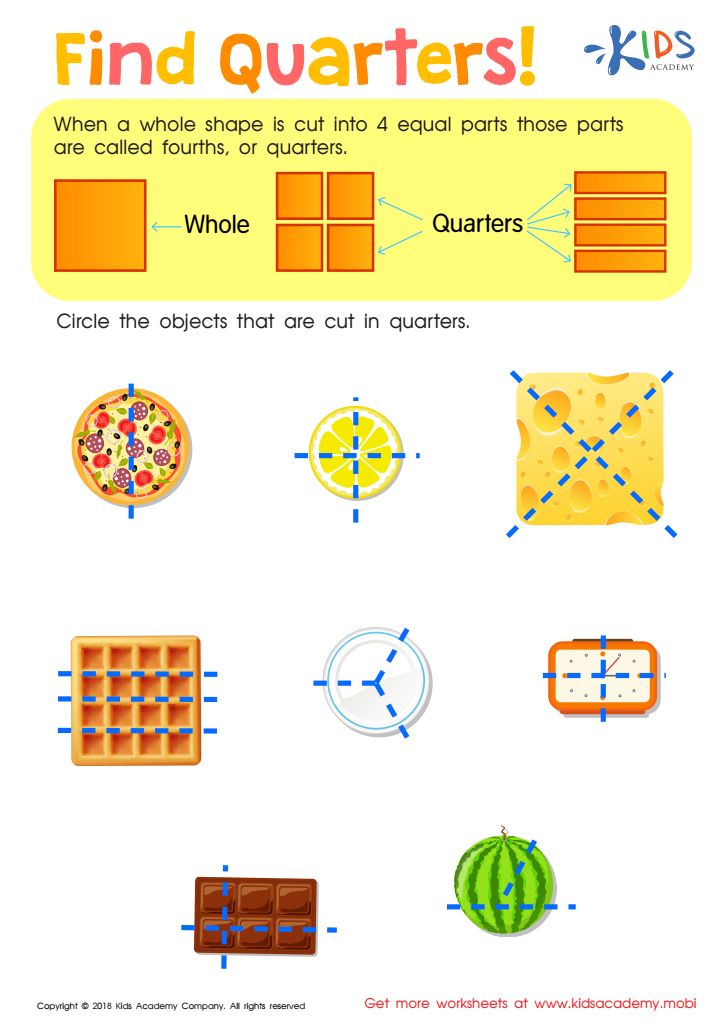
Find Quarters Worksheet
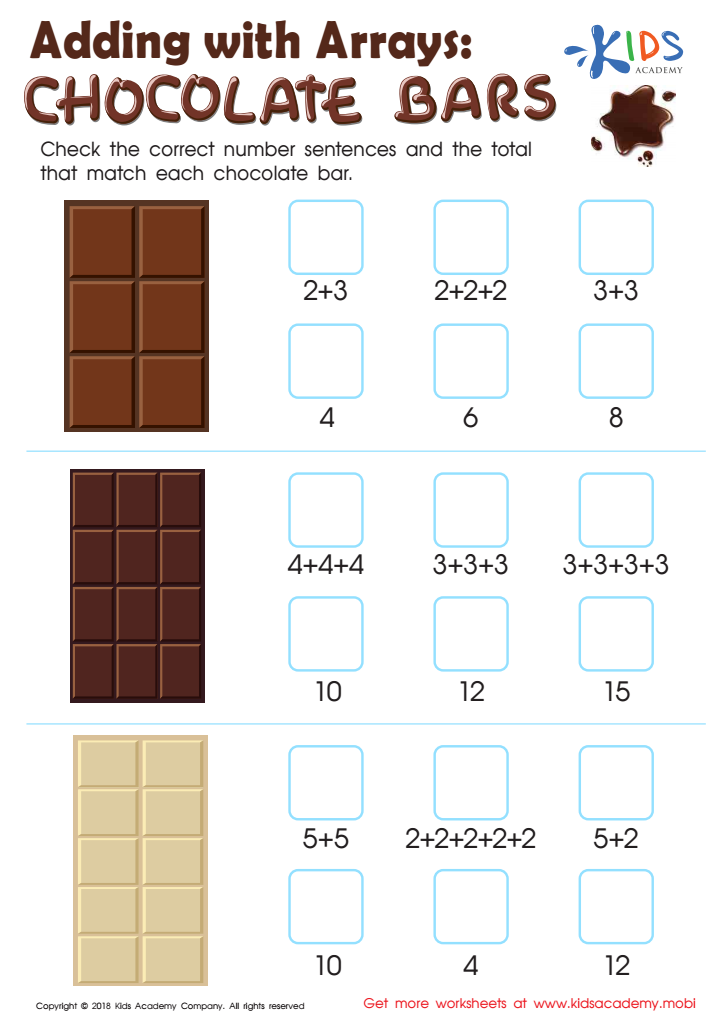
Adding with Arrays: Chocolate Bars Worksheet
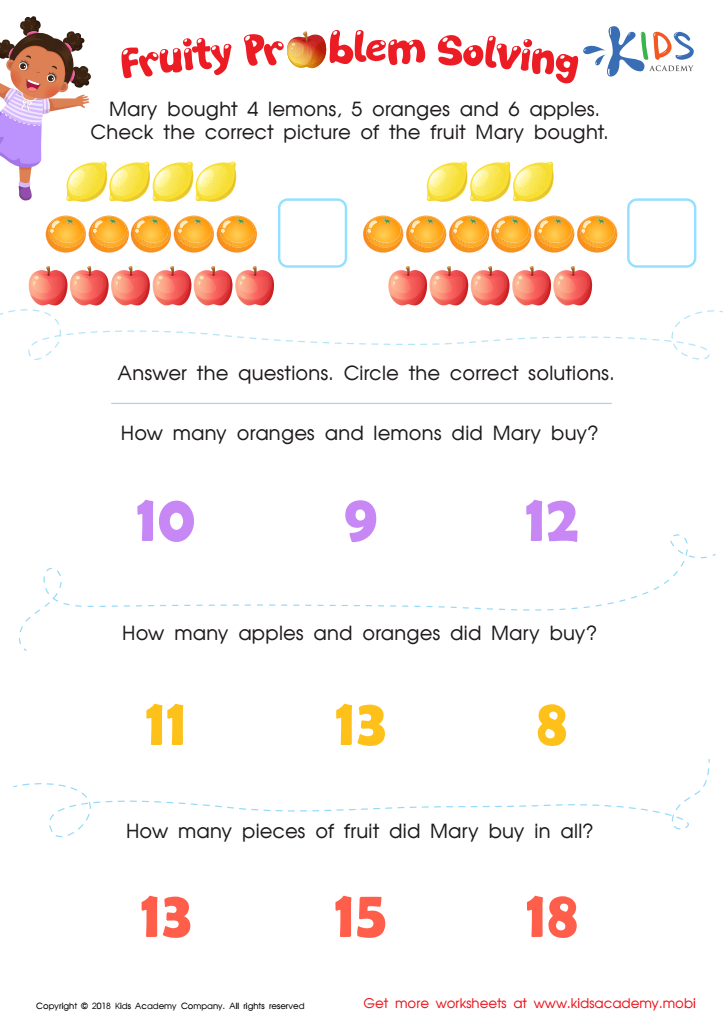
Fruity Problem Solving Worksheet
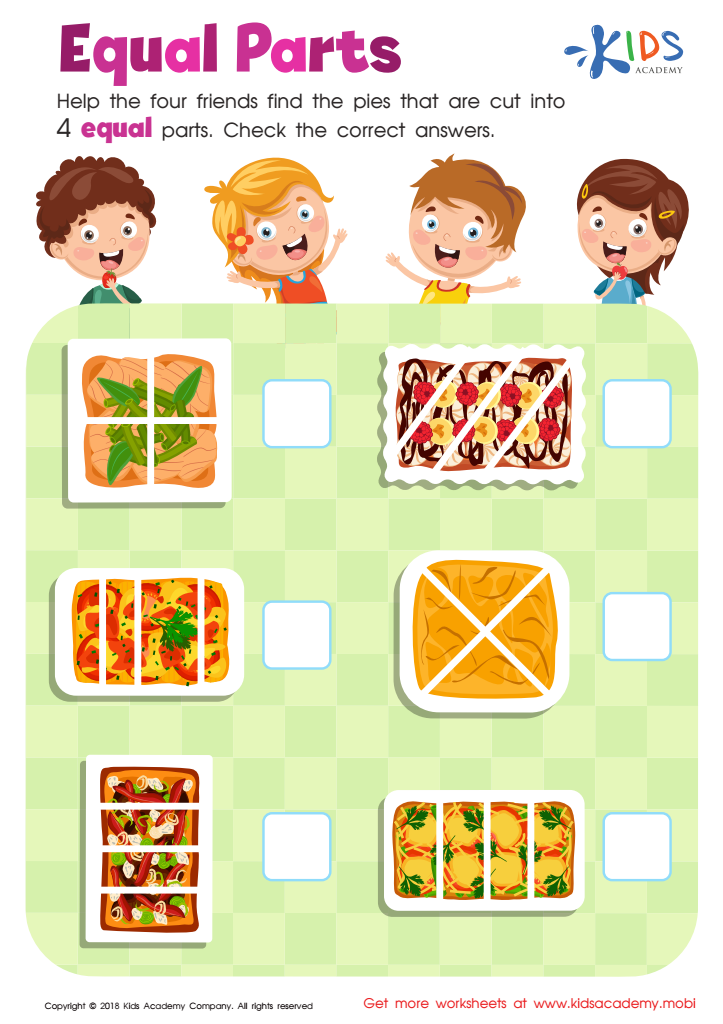
Equal Parts: Food Worksheet





Understanding fractions is crucial for children ages 6-7 as it lays the foundation for essential mathematical concepts and skills they will encounter later in their education. At this developmental stage, children begin to grasp the idea of part-to-whole relationships, which is fundamental for comprehending more complex topics such as division, ratios, and even algebra as they progress.
Learning about fractions enhances critical thinking and problem-solving skills. When students understand how to divide a whole into parts, they develop a sense of fairness and proportionality, which often translates into everyday situations, like sharing food. This early grasp of fractions can also nurture an appreciation for mathematics and build confidence, reducing anxiety related to numbers.
Moreover, understanding fractions supports literacy skills as students learn to interpret various contexts (such as recipes or measurements), which often involves fractional components. By emphasizing the importance of fractions, parents and teachers can foster a more positive attitude towards math, ignite curiosity, and provide children with a toolset necessary for success in their future academic endeavors. Engaging children in fraction activities, whether through games, visual aids, or practical applications, will make learning both enjoyable and meaningful.








