
Understanding patterns Normal Worksheets for Ages 6-7
5 filtered results
Difficulty Level
Grade
Age
-
From - To
Subject
Activity
Standards
Discover our "Understanding Patterns: Normal Worksheets for Ages 6-7," designed to build critical thinking and foundational math skills in young learners. These engaging, age-appropriate worksheets help 6-7-year-olds recognize, analyze, and create patterns through a variety of exercises and activities. Each worksheet is carefully crafted to enhance logical reasoning, problem-solving abilities, and attentiveness. Perfect for classroom and home use, these printables make learning fun and interactive. Watch as your child’s confidence grows while mastering essential early mathematical concepts in an enjoyable and supportive manner. Explore the collection now and empower your little one’s learning journey!
Favorites
With answer key
Interactive
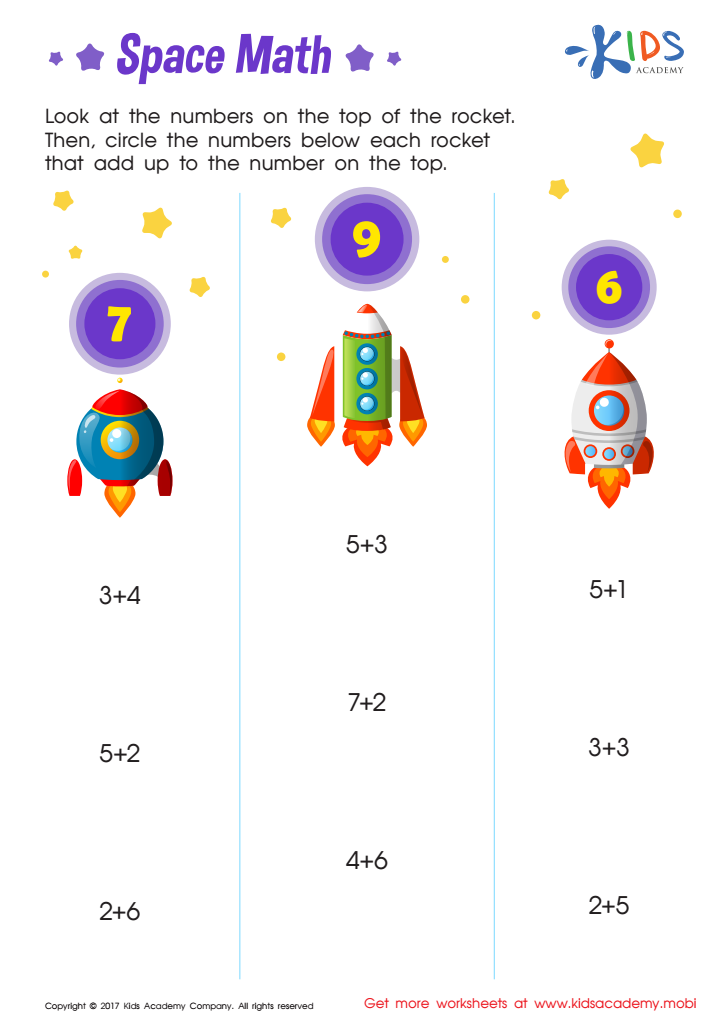
Addition: Space Math Worksheet
Fun and engaging space-themed practice with vivid pictures and matching numbers will make learning more meaningful. Take their math skills out of this galaxy today with Kids Academy!
 Assign to My Students
Addition: Space Math Worksheet
Worksheet
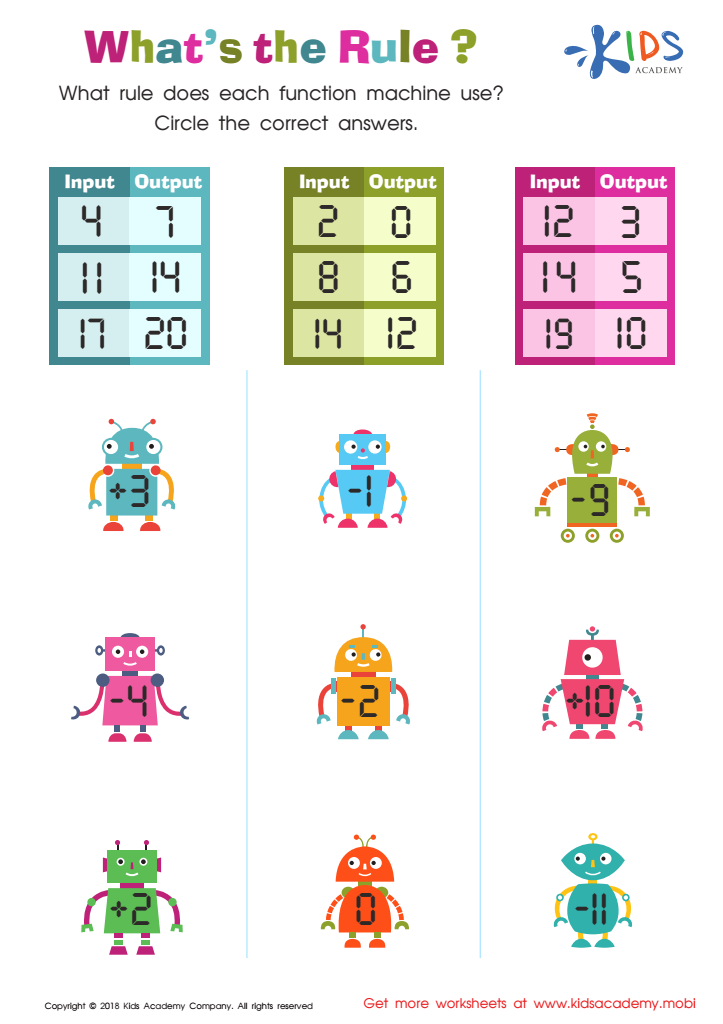
What's the Rule Worksheet
Robots are here to help your child find the relationship between each set of numbers! Adorably illustrated worksheets use vivid pictures that each contain a rule. Look at each function machine and find the pattern or relationship between the input and output. Then, complete the sheet by circling the correct answer!
What's the Rule Worksheet
Worksheet
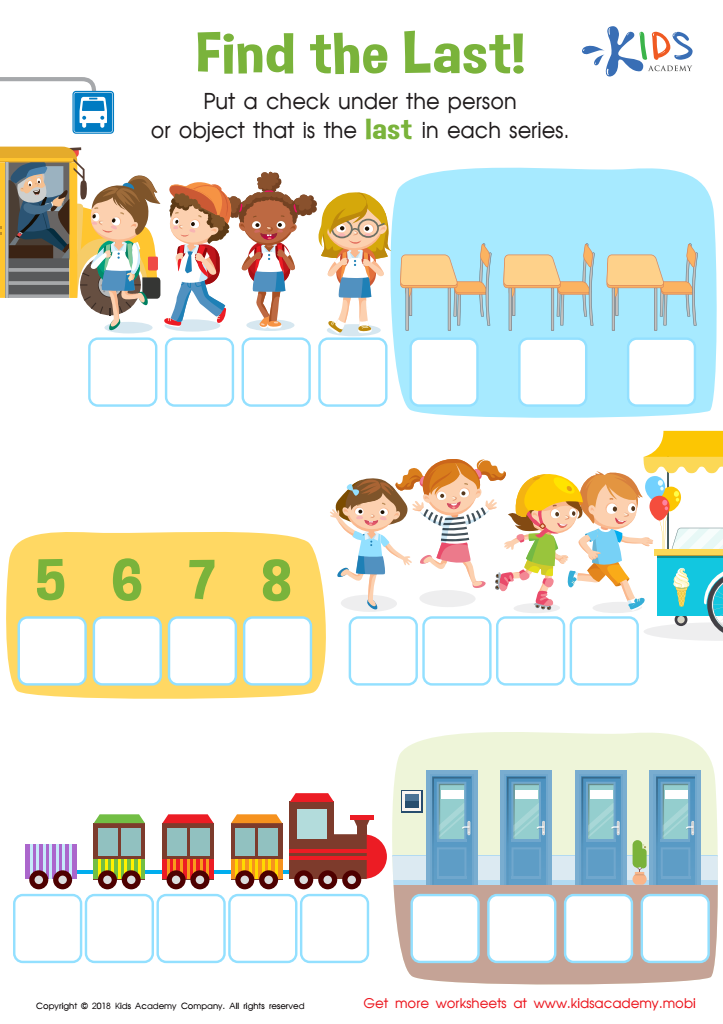
Find the Last! Worksheet
Teach young students about sequence words with this free worksheet. Have them look at sets of people or objects and choose the one that is last. Engage them further by having them describe or act out their day, and what happens last? Enjoy this printout and have fun!
Find the Last! Worksheet
Worksheet
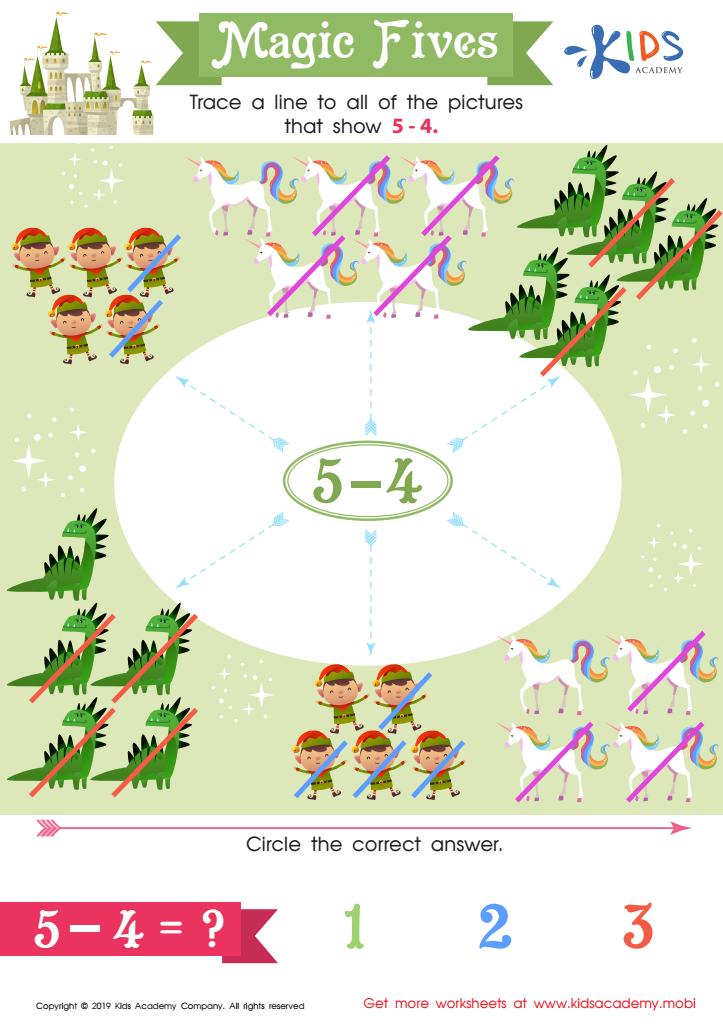
Magic Fives Worksheet
Help your students identify the objects & people in the worksheet. Point to the equation 5 -4 in the center, then get them to count the items and trace a line connecting those that add up to 5 - 4.
Magic Fives Worksheet
Worksheet
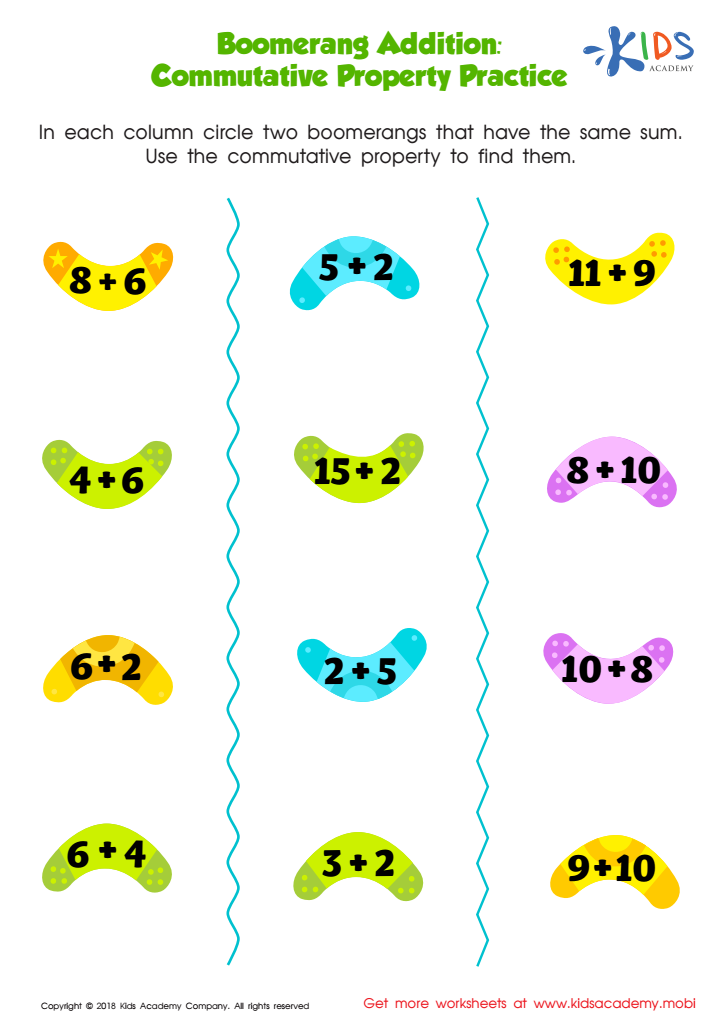
Boomerang Addition Worksheet
Kids know that when a boomerang is thrown, it reverses its path back. The same goes for addition: numbers can be rearranged and the sum will remain the same. Use this worksheet to find matching pairs of colorful boomerangs and equations. Look through each column and use the commutative property to find the pairs with the same sum.
Boomerang Addition Worksheet
Worksheet
Join Kids Academy for Free
Who is primarily going to use this learning content?


.jpg)
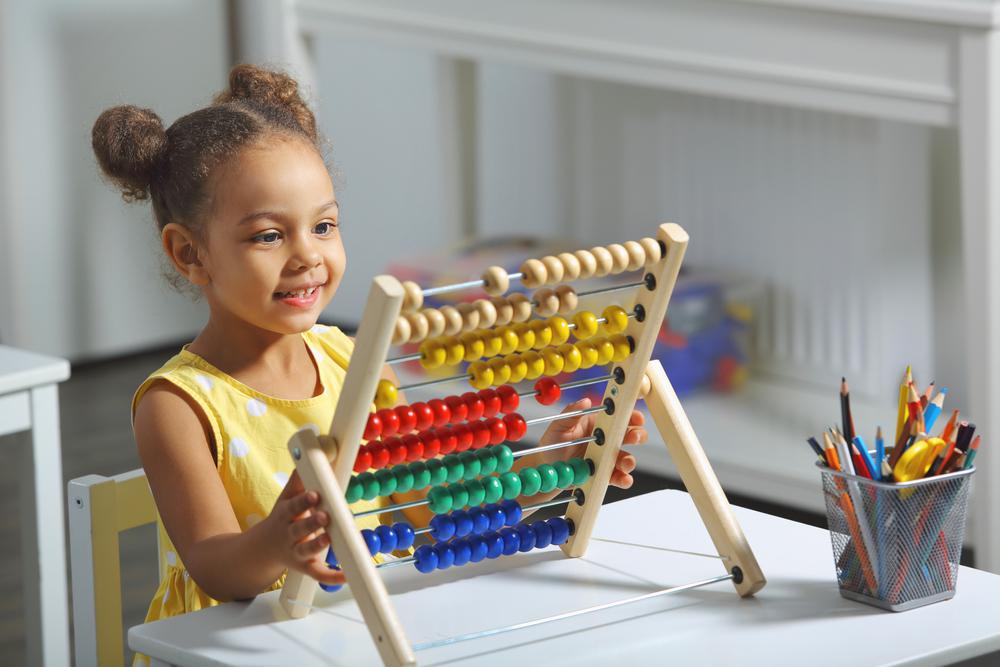




Understanding patterns is a crucial skill for children ages 6-7, and both parents and teachers should care deeply about nurturing this ability. At this developmental stage, recognizing and creating patterns lay a foundational understanding for more complex mathematical concepts like counting, sequencing, and problem-solving. When children identify patterns, they are essentially learning to predict what comes next, which bolsters their logical thinking and enhances their cognitive abilities.
Moreover, patterns are not confined to just mathematics. They appear in language, too. For instance, recognizing common spelling patterns helps children with reading and writing by reinforcing the understanding of word structures. This, in turn, improves literacy skills. Socially, grasping patterns in daily routines or social behaviors can help children feel more secure and understand expectations within their environments.
Parents and teachers can make pattern recognition fun and engaging through activities like sorting objects, playing musical rhythm games, or exploring patterns in nature. Not only does this make learning enjoyable, but it also deepens the child's ability to apply pattern recognition in diverse situations. By fostering a strong groundwork in understanding patterns, we equip children with essential skills that will benefit them academically and socially, laying a positive foundation for lifelong learning.








